

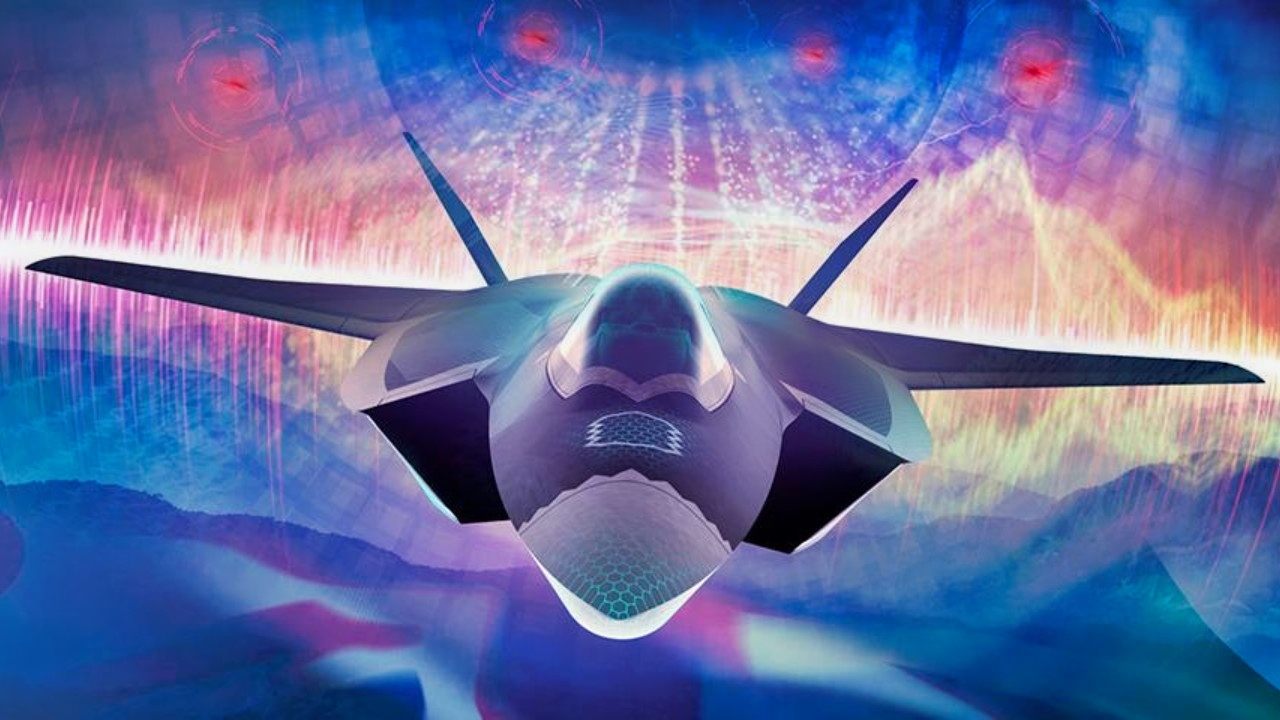
Ankara, Turkey – The London Financial Times reports that the UK Treasury is preparing to seize control of spending on the Global Combat Air Program (GCAP) from the Ministry of Defense (MoD). The aircraft, which is supposed to be a 6th-generation fighter jet, is projected to cost in the billions of pounds Sterling, which is what prompts the Treasury’s move to take over the financial reins of the effort “before it is too late,” said one long-time UK defense analyst who spoke to National Security Journal.
The GCAP Fighter Problem: All About the Money

GCAP 6th Generation Fighter.
Treasury’s concern is that there has traditionally been a considerable – if not yawning – gap between planned increases in defense outlays and the actual cost of programs, particularly in their out years.
The Treasury Ministry’s wish to exert oversight this early in the program is being explained as a “safeguard against the past practice of major new projects ending up in causing significant cost overruns.”
At present, there is also still an active internal debate and conflict regarding the UK government’s long-delayed 10-year military funding plan.
That plan is currently entering its final phase, but at the same time, it is anticipated that Labour Prime Minister Sir Keir Starmer will announce a plus-up of about £15 billion into the defense budget to be dispersed between now and 2030.
This increased funding is being described as a portion of the adjustments that are required as part of the UK’s Defence Investment Plan (DIP). The head of the UK’s military chief warned on Friday, 5 June, that after months of delays, it is becoming perilously late to make adjustments to the country’s future defense strategy.
“Russia is definitely raising the stakes and risks crossing a line,” UK Chief of the Defence Staff Richard Knighton told BBC Radio. “We need to spend more on defence and do it faster.”
Compromise and the GCAP Stealth Fighter Budget
Knighton also told the UK broadcaster that risks and threats to Britain were greater than at any time since the Cold War. The UK Government needs to make the appropriate increases in defense outlays to head off the anticipated challenges that Russia is already positioning against London and its NATO allies.
The £15 billion compromise on the DIP comes following what has been reported as a long-running back-and-forth conflict between the £12 billion that Chancellor of the Exchequer Rachel Reeves proposed and the £18 billion that Defense Secretary John Healey and heads of the different UK armed service chiefs insisted was the bare minimum they could live with, according to the sources who spoke with the FT.
Of that sum, £6 billion represents an additional funding injection for the GCAP. The UK is developing the 6th-generation stealth fighter jet in cooperation with Italy and Japan, but part of the “strings attached to that money” is the proposal to hand over the purse strings on the program to the Treasury.
The Treasury is reportedly justifying the move based on the “complexity of the programme and its structure involving international partners, and in part by pointing to the MoD’s dismal record of cost overruns on big military projects,” said the FT reporting. One Whitehall source described the MoD as demonstrating a “delinquent” attitude towards the taxpayer burden and as being required to manage the program with an eye towards “achieving value for money.”
Another High-Tech Financial Black Hole
Reeves has added her voice to others that the GCAP could easily end us as “just the next HS2”, said an unnamed government figure. HS2 is the long-suffering high-speed rail network that has become known for spiraling costs, numerous delays, and a progressively smaller design for the overall network of proposed rail lines.
Current projections indicate that the HS2 project could cost up to US$ 138 billion when all is said and done.
In the meantime, there is a rumored “fundamental disagreement” over the GCAP between the prime minister and Reeves. But other sources speaking to UK press outlets on terms of anonymity disagreed with that description of their respective positions.
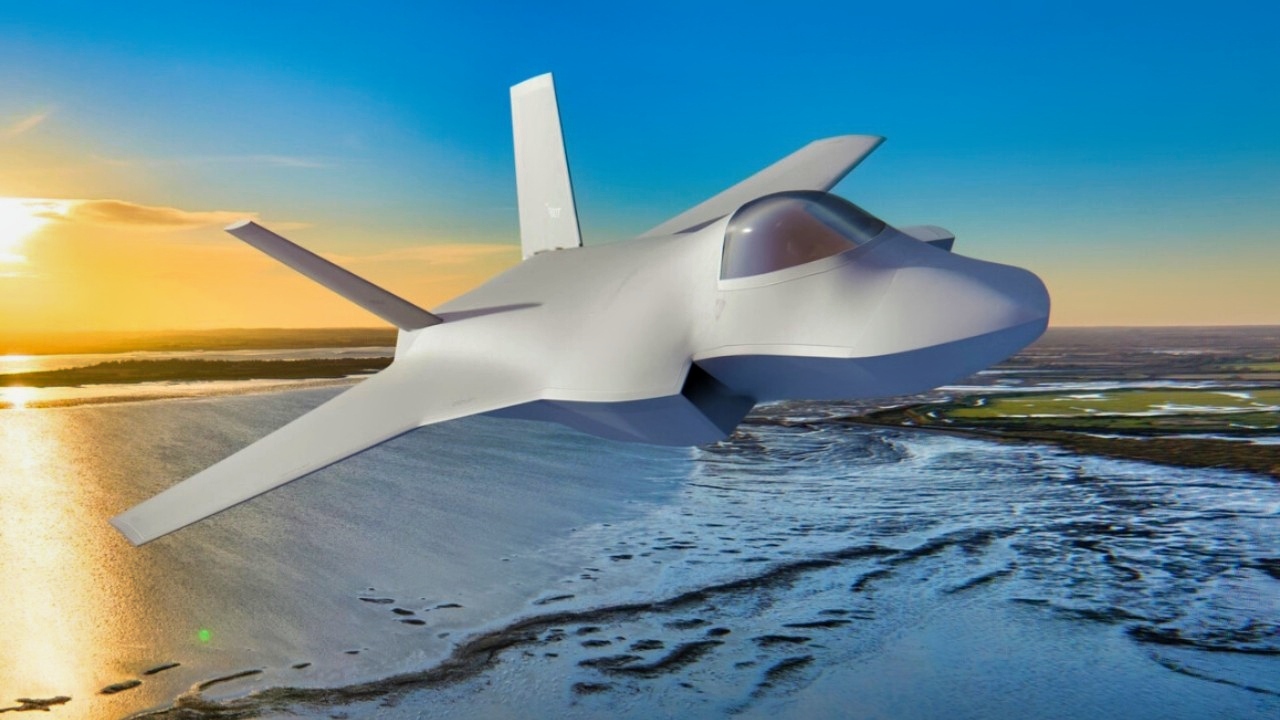
Tempest Fighter from BAE Systems.

Tempest Fighter. Image Credit: Creative Commons.
This issue of long-term funding for the GCAP is a looming deadline, as the clock on the interim agreement on the program’s funding runs out at the end of June. This has rung alarm bells in Japan, whose Prime Minister Sanae Takaichi will visit the UK this coming week.
The Japanese head of government is expected to make the GCAP one of the number one items in her discussions with Starmer. The three partner nations signed a treaty committing to the program in December 2023, but the effort is being managed not by their respective MoDs, but by a multinational industrial consortium known as Edgewing.
About the Author: Reuben F. Johnson
Reuben F. Johnson has thirty-six years of experience analyzing and reporting on foreign weapons systems, defense technologies, and international arms export policy. Johnson is the Director of Research at the Casimir Pulaski Foundation. He is also a survivor of the Russian invasion of Ukraine in February 2022. He worked for years in the American defense industry as a foreign technology analyst and later as a consultant for the U.S. Department of Defense, the Departments of the Navy and Air Force, and the governments of the United Kingdom and Australia. In 2022-2023, he won two awards in a row for his defense reporting. He holds a bachelor’s degree from DePauw University and a master’s degree from Miami University in Ohio, specializing in Soviet and Russian studies. He lives in Warsaw.


Michael
June 7, 2026 at 8:05 am
The treasury has no real lever of control over GCAP.
Their only lever is releasing funding on time, but the GIGO treaty has clear funding milestones and is fully legally vested with trinational authority that goes beyond the UKs treasury. If HMT tries to delay funding they’ll just be in material breach of an international treaty. Which comes with heavy penalties that include forfeiting any IP generated though the program.
Further GIGO/Edgewing was fully vested with legal design authority and airworthiness certification back in April, so HMT can’t threaten to change the design to save money, or delay airworthiness certification.
So what exactly are they taking control of? Either they are dumb enough to think their domestic authority overrides Japanese and Italian sovereignty, or it’s just political theater being used to try and force the MoD to reign in expenditures elsewhere in the budget that doesn’t violate an international treaty.
Either way, HMT has no real way to control GCAP spending, they can only use it as a threat to coerce the MoD to cut funding elsewhere.