

Iran’s Islamic Revolutionary Guard Corps (IRGC, aka Sepah or Pasdaran) is at it again. Not quite three weeks after the official signing of the Memorandum of Understanding (MOU) between the United States of America and the Islamic Republic of Iran that was intended to get the ball rolling on ending the war between the two nations (not to mention Iran’s war with Israel), the IRGC has once again launched attacks against commercial shipping attempting to transit the vital Strait of Hormuz, once again casting doubts upon the peace negotiations’ long-term prospects for bearing fruit. (More specifically, the MOU sets a 60-day period of negotiations to reach a final agreement.)
Bottom Line Up Front (BLUF): The Next Iran Crisis?
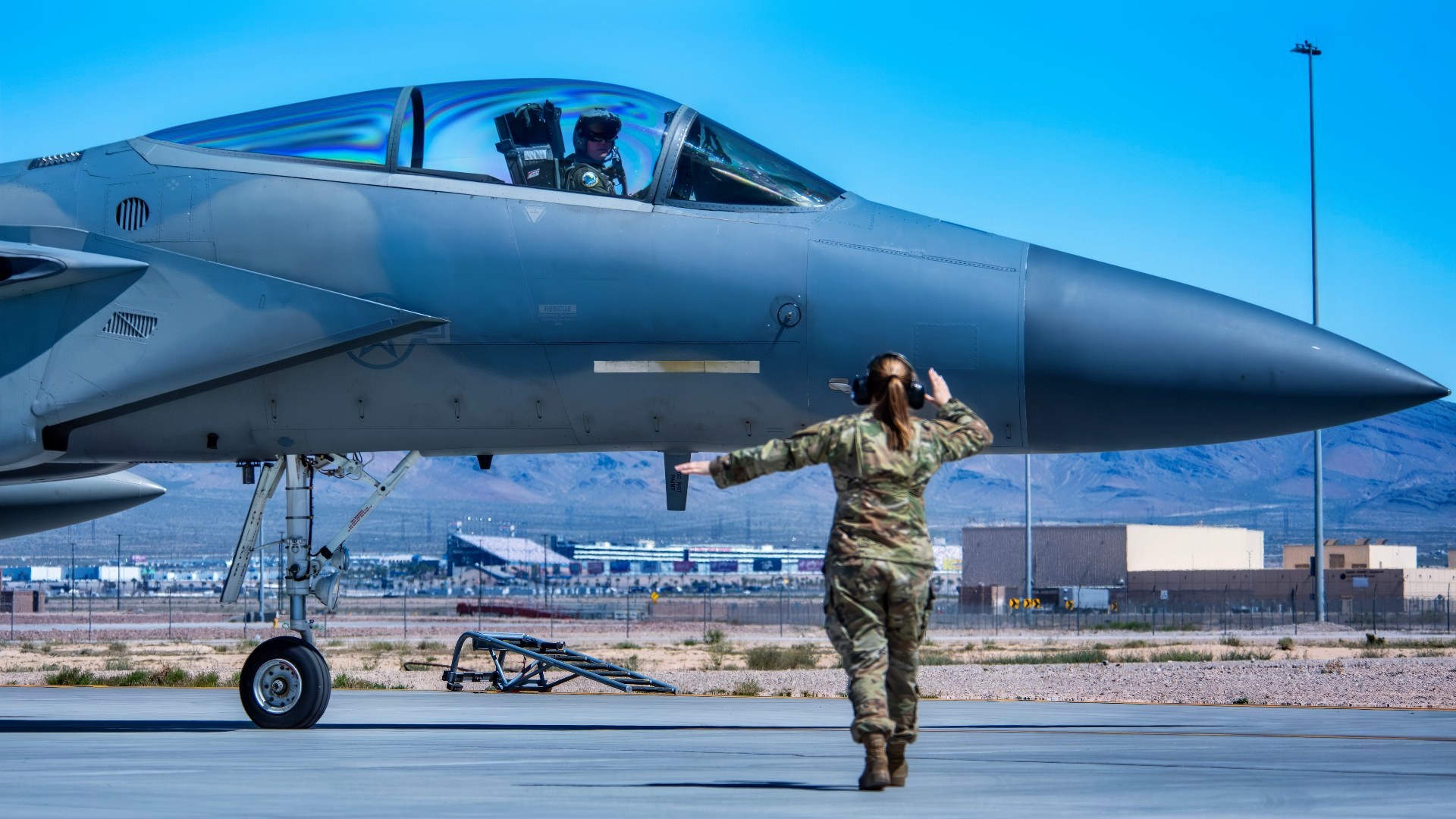
U.S. Air Force Senior Airman Marydith Stidham, a 125th Aircraft Maintenance Squadron crew chief, marshals Capt. Steven Fleming, a 125th Fighter Squadron F-15C Eagle pilot, while taxiing on the flightline at Nellis Air Force Base, Nevada, April 16, 2024. Units assigned to the 125th Fighter Wing participated a two-week exercise in support of the USAF Weapons School. During the exercise, the wing operated in both daytime and nighttime vulnerability periods in a contested degraded environment, preparing students for real-world conditions. (U.S. Air Force photo by Senior Airman Jose Miguel T. Tamondong)

Lt. COl. Stephen ‘Steagle’ Mindek, 104th Fighter Wing pilot, takes off in an F-15C Eagle for Maj. John “Space’ Stout’s fini-flight, January 10, 2025, at Barnes Air National Guard Base, Westfield, Massachusetts.
Following the fini-flight, Maj. Stout was greeted with cheers from his fellow Airmen, friends, and family. Maj. Stout’s final ride in the F-15C Eagle resulted in over 1100 hours flown in the legendary aircraft.
(U.S. Air National Guard photo by Jay Hewitt)
Our primary source of information is a 7 July 2026 report in The Wall Street Journal titled “Iran’s Revolutionary Guard Fires Missiles at Ships Near Hormuz,” authored by Shelby Holliday and Rebecca Feng; beneath the title is the somewhat understated blurb “Attacks could complicate negotiations to end U.S. war with Iran.”
According to an unnamed senior U.S. official, the IRGC fired missiles at two commercial ships near the Strait of Hormuz early Tuesday.
One of the victimized vessels was reportedly the M/V Al Rekayyat, a Marshall Islands-flagged liquefied natural gas (LNG) tanker owned and managed by Nakilat, the shipping arm of Qatar’s LNG industry.
(Nakilat hadn’t responded to a request for comment by the time the WSJ article was published.) Holliday and Feng elaborate that “The ship had been hit on the port side, at the top of the engine room, according to a recording shared with the Journal. ‘Engine room fire and full of smoke. Unable to assess further damage. All crew are safe and mustered on the starboard side,’ the recording said.
The audio recording also revealed that the Al Rekayyat was at the mouth of the strait, in the Gulf of Oman, when the attack transpired. The vessel hasn’t transmitted GPS signals since 18 June, according to the London Stock Exchange Group (LSEG).
Digging Deeper
The WSJ report doesn’t give much in the way of specifics on the second victimized vessel, though it does cite a U.K. Maritime Trade Operations (UKMTO) report that a “tanker was hit by an unknown projectile on the port side about 8 nautical miles east of Limah, Oman, causing a fire.
The vessel was traveling south, according to the notice. No casualties or environmental impact were reported.” As an additional wee bit of good news (or at least partial mitigation of bad news), maritime security company Vanguard Tech reported that the shipboard fire was subsequently brought under control.
Turning to other sources, such as a Reuters report and a Hindustan Times article published on the same day as the WSJ piece, the second stricken ship was apparently the Saudi-flagged crude oil supertanker M/V Wedyan.
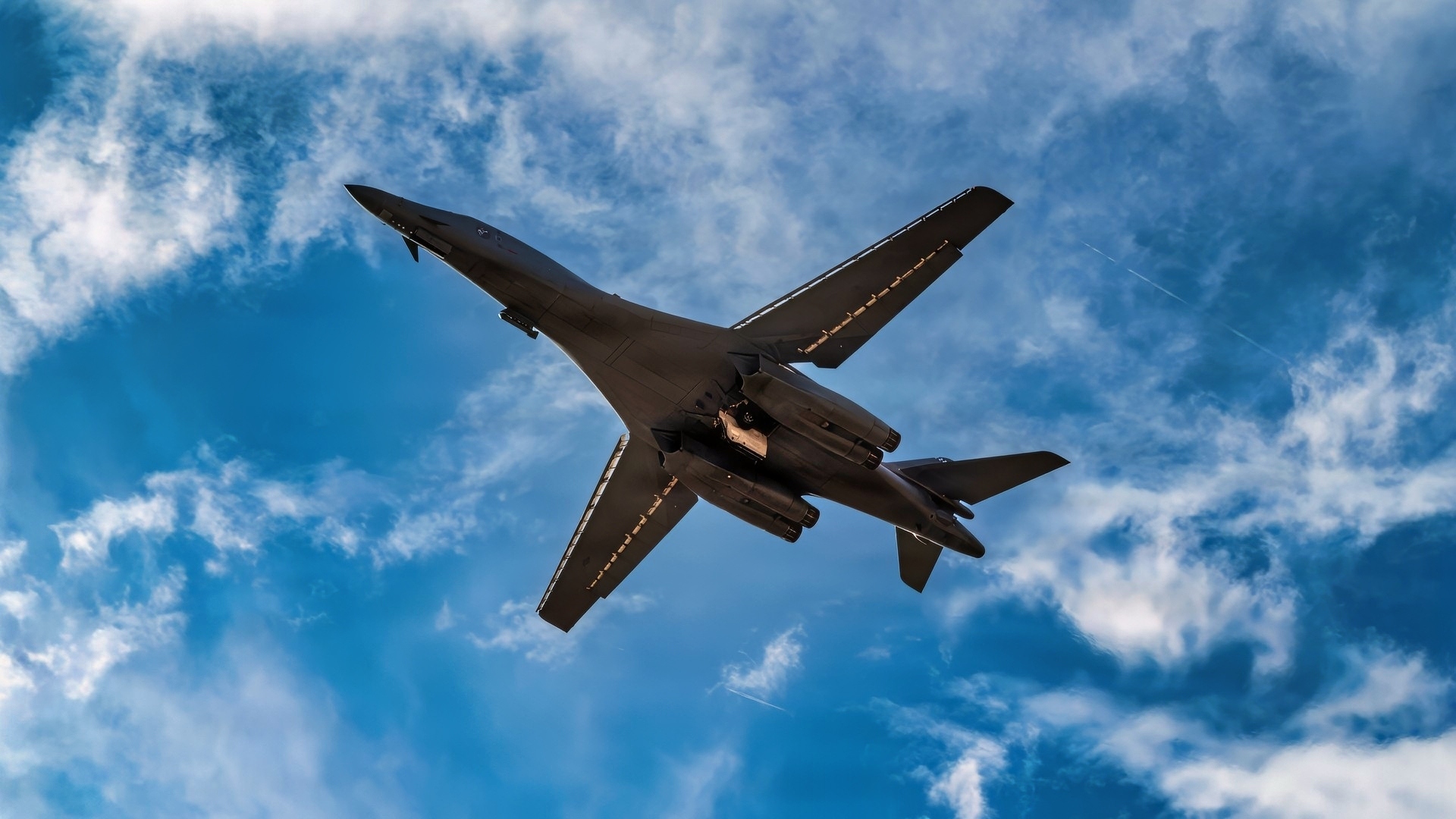
A U.S. Air Force B-1B Lancer assigned to the 28th Bomb Wing takes off in support of a U.S. Air Force Weapons School Integration at Nellis Air Force Base, Nevada, Nov. 18, 2025. The Weapons School trains students to be tactical experts in their combat specialty while also mastering battlespace dominance and integration of joint assets. (U.S. Air Force photo by Airman 1st Class Heather Amador)

Four B-1B Lancers assigned to the 9th Expeditionary Bomb Squadron, deployed from Dyess Air Force Base, Texas, arrive Feb. 6, 2017, at Andersen AFB, Guam. The 9th EBS is taking over U.S. Pacific Command’s continuous bomber presence operations from the 34th EBS, assigned to Ellsworth AFB, S.D. The B-1B’s speed and superior handling characteristics allow it to seamlessly integrate in mixed force packages. While deployed at Guam the B-1Bs will continue conducting flight operations where international law permit. (U.S. Air Force photo/Tech. Sgt. Richard P. Ebensberger)

A U.S. Air Force B-1B Lancer departs after conducting aerial refueling with a 28th Expeditionary Air Refueling Squadron KC-135 Stratotanker during a mission in the U.S. Central Command area of operations, Oct. 25, 2019. The B-1B flew directly from its home station of Ellsworth Air Force Base, S.D., demonstrating the U.S. Air Force’s ability to rapidly deploy strategic bombers anywhere in the world. (U.S. Air Force photo by Master Sgt. Russ Scalf)
(NOTE: “M/V” stands for “Motor Vessel.)
Backdrop and Foreshadowing
In the days leading up to the attacks, the IRGC had warned ships via maritime radio that “Our missiles and drones are ready to fire at you,” and these attacks proved that these words weren’t mere bluster or bluffing.
Moreover, Islamic Republic of Iran Broadcasting (IRIB), Tehran’s sole radio and television broadcaster, stated that the Saudi tanker had tried to cross through a U.S.-backed Omani route and was targeted after repeatedly ignoring Iran’s warnings.
The attacks also coincide with the Islamic Republic’s official mourning—via state funeral—of the Ayatollah Ali Khamenei, the former Supreme Leader killed at the start of the Iran war (known as Operation Epic Fury in the U.S. and Operation Roaring Lion in Israel). Presumably, this state of mourning could have provided extra motivation for the IRGC attacks.
Current and Potential Future Repercussions
In response to these latest provocations, the Trump Administration revoked a general license that had authorized the sale of Iranian oil.
An unnamed U.S. official (possibly the same one cited in the WSJ report) warned that Iran’s actions in the Strait of Hormuz were “wholly unacceptable” and would be met with consequences. Vlad Schepkov of Investing.Com reported that “Oil futures were trading over 3% higher midday” as a result of that rescission order.
It remains to be seen if those “consequences” will include renewed military action. The most recent U.S. military kinetic strikes against Iran took place on or about 28 June 2026, when U.S. forces hit Iranian military surveillance, air defenses, communications, and drone facilities in retaliation for an Iranian ceasefire violation consisting of a drone launch that struck an oil tanker near the Strait of Hormuz.
Profiles of the Victims and Victimizer
According to the VesselFinder website, M/V Al Rekayyat (IMO 9397339, MMSI 538003347) was built in 2009, with a hull length of 315 meters and a beam width of 50 meters, whilst the M/V Wedyan (IMO 9524970, MMSI 403499000) was built in 2010, with a hull length of 333 meters and a beam width of 60 meters.
As for the weaponry employed by the IRGC, specifics are yet unknown. However, possible candidates include antiship ballistic missiles (ASBMs) such as the Khalij Fars (“Persian Gulf”—a variant of the Fateh-110 baseline missile—and Anti-Ship Cruise Missiles (ASCMs) such as the Sardine/CS 801.
About the Author: Christian D. Orr
Christian D. Orr is a Senior Defense Editor. He is a former Air Force Security Forces officer, Federal law enforcement officer, and private military contractor (with assignments worked in Iraq, the United Arab Emirates, Kosovo, Japan, Germany, and the Pentagon). Chris holds a B.A. in International Relations from the University of Southern California (USC) and an M.A. in Intelligence Studies (with a concentration in Terrorism Studies) from American Military University (AMU). He is also the author of the book “Five Decades of a Fabulous Firearm: Celebrating the 50th Anniversary of the Beretta 92 Pistol Series,” the second edition of which was recently published.


