

Donald Trump has very clearly wanted certain things out of the war with Iran, whether it’s the end of the Iranian regime, a full, permanent elimination of Iran’s nuclear capability, or, more recently, a full reopening of the Strait of Hormuz, or a return to the waterway’s pre-war status quo.
It’s now looking increasingly unlikely that Trump will emerge from the conflict with any of those things. So now the president, who prides himself on being a dealmaker, will need to find a deal he can live with—one that will likely include some sort of compromise on his original, lofty goals.
Donald Trump In New York City White House Photo
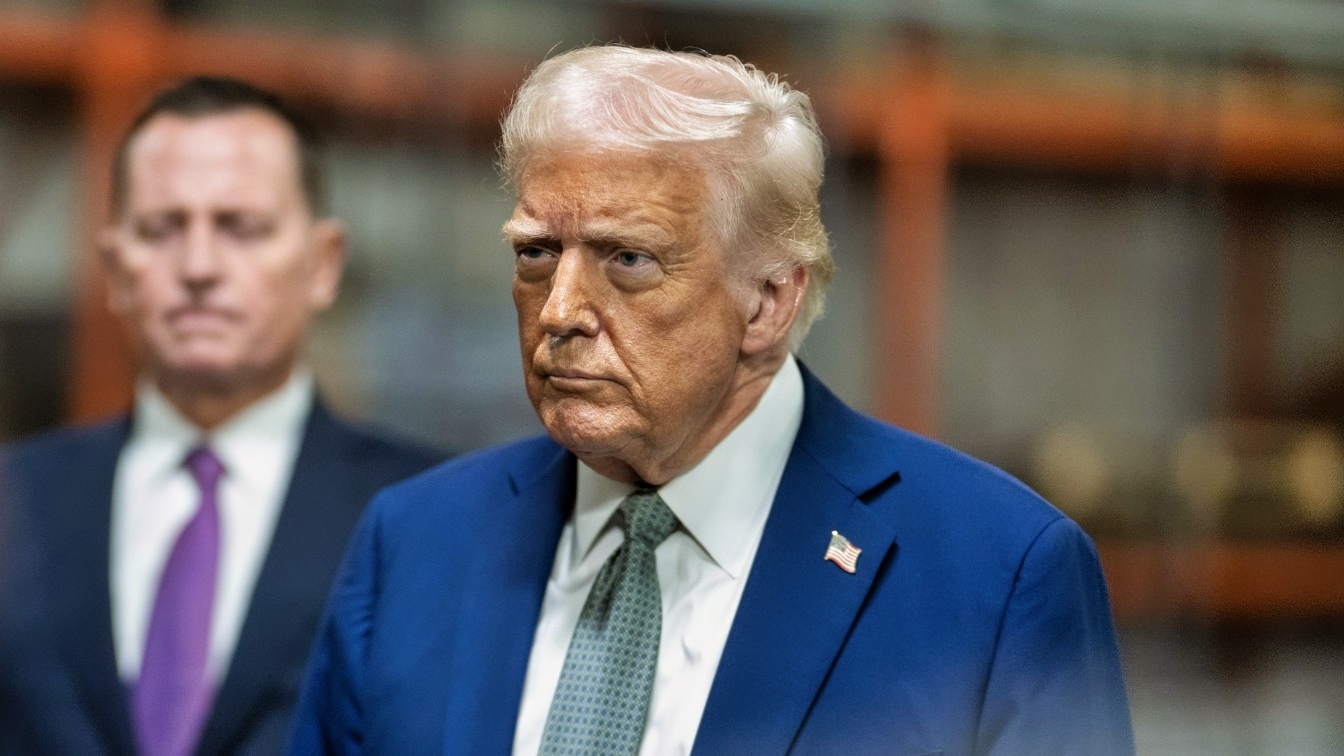
President Donald Trump participates in a Kennedy Center Board Meeting, Monday, March 17, 2025, at the John F. Kennedy Center Performing Arts Center in Washington, D.C. (Official White House Photo by Daniel Torok)
An analysis published Friday by the Associated Press examined what Trump might need to agree to in order to get out of the war, and how different it might be from what he previously envisioned.
Trump, one expert said, will not want to agree to any deal that makes it look as though he “lost” the negotiation.
“He divides the world into winners and losers, and this would make him a loser,” Eliot Cohen, a retired U.S. diplomat, told the AP. “And the image of being a loser, I think, would be intolerable for him.”
The problem for Trump is that Iran has the ability to fire drones and missiles to enforce its control of the Strait, and the U.S., in the last several months, has not been able to bomb Iran into compliance.
And now, there have been widespread reports about the U.S. munitions stockpile running low. Trump and his allies have, at the same time, denied that there are shortages, acknowledged that some stockpiles are “a little bit tighter,” blamed the Biden Administration for leaving the stockpiles in their current condition, and vowed to hunt down leakers who have told the press about the state of the stockpiles. Trump also, this week, accused the Washington Post of being “treasonous,” following a report that he was unhappy with Defense Secretary Pete Hegseth about the munitions stockpiles.
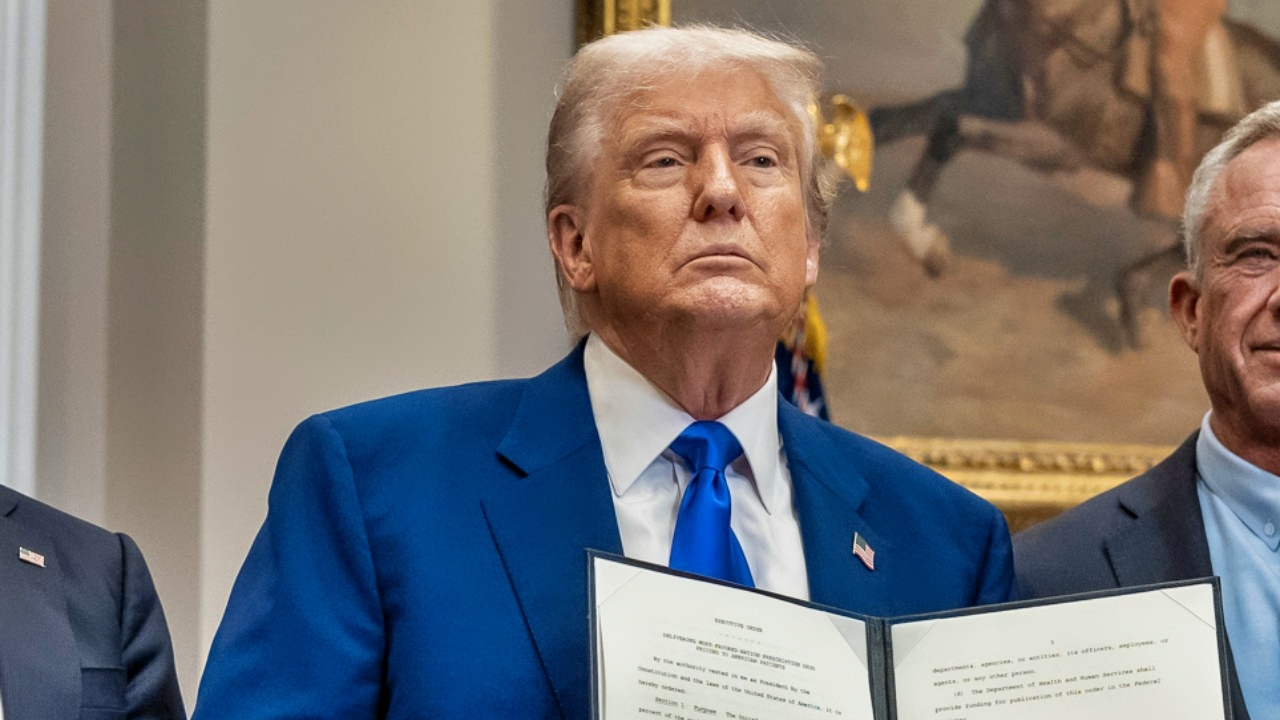
President Donald Trump signs an executive order on Delivering Most-Favored-Nation Prescription Drug Pricing to American Patient at a press conference with Health and Human Services Secretary Robert F. Kennedy Jr., Monday, May 12, 2025, in the Roosevelt Room. (Official White House Photo by Joyce N. Boghosian).
Any depletion of stocks would complicate any efforts to relaunch the war or threaten to do so.
“A Concession He May Very Well Be Willing to Make”
All of that leaves Trump in a not-very-advantageous negotiating position as he tries to end the war.
“There will be a lot of spin both ways, but my guess is that the president has tipped his hand as to the urgency for him of resolving the crisis,” David Schenker, who worked at the State Department in the first Trump Administration and is now a fellow at the Washington Institute for Near East Policy, told the AP. “This is a concession he may very well be willing to make.”
Where Things Stand
As of now, Iran and Oman are reportedly nearing an agreement for a new, at least temporary regime for controlling the crucial Strait of Hormuz, under which Iran will control incoming shipping traffic, Oman will control outgoing traffic, and separate lanes will be established.
The talks have been characterized as a “framework” that has been agreed to, although no announcement has yet been made. Exactly how much of a role the U.S. has been playing in the talks is somewhat unclear, although Trump told reporters Thursday that he had been “involved in the negotiation.”
That deal would be temporary and would be followed by new talks, including with the U.S., to address the status of Iran’s nuclear program and other outstanding issues that June’s Memorandum of Understanding failed to resolve. That agreement was vague enough to leave the parties with entirely different conclusions about what had been agreed to.
The AP reported that the question of what fees, if any, are collected and by whom could end up being a sticking point in any final agreement.
“Any temporary routes through the waterway will not have tolls, charges or other impediments, according to a U.S. official not authorized to comment publicly who spoke Thursday on condition of anonymity,” the AP said.
The official added that Trump “holds all the cards” in the situation, although whether he actually does is an entirely separate question.
About the Author: Stephen Silver
Stephen Silver is an award-winning journalist, essayist, and film critic, and contributor to the Philadelphia Inquirer, the Jewish Telegraphic Agency, Broad Street Review, and Splice Today. The co-founder of the Philadelphia Film Critics Circle, Stephen lives in suburban Philadelphia with his wife and two sons. For over a decade, Stephen has authored thousands of articles that focus on politics, national security, technology, and the economy. Follow him on X (formerly Twitter) at @StephenSilver, and subscribe to his Substack newsletter.


