
Tensions are once again escalating in a long-running war in the Middle East.
For much of the past year, the conflict between the U.S., Israel, and Iran, and the repercussions on Middle Eastern neighbors, has dominated headlines.
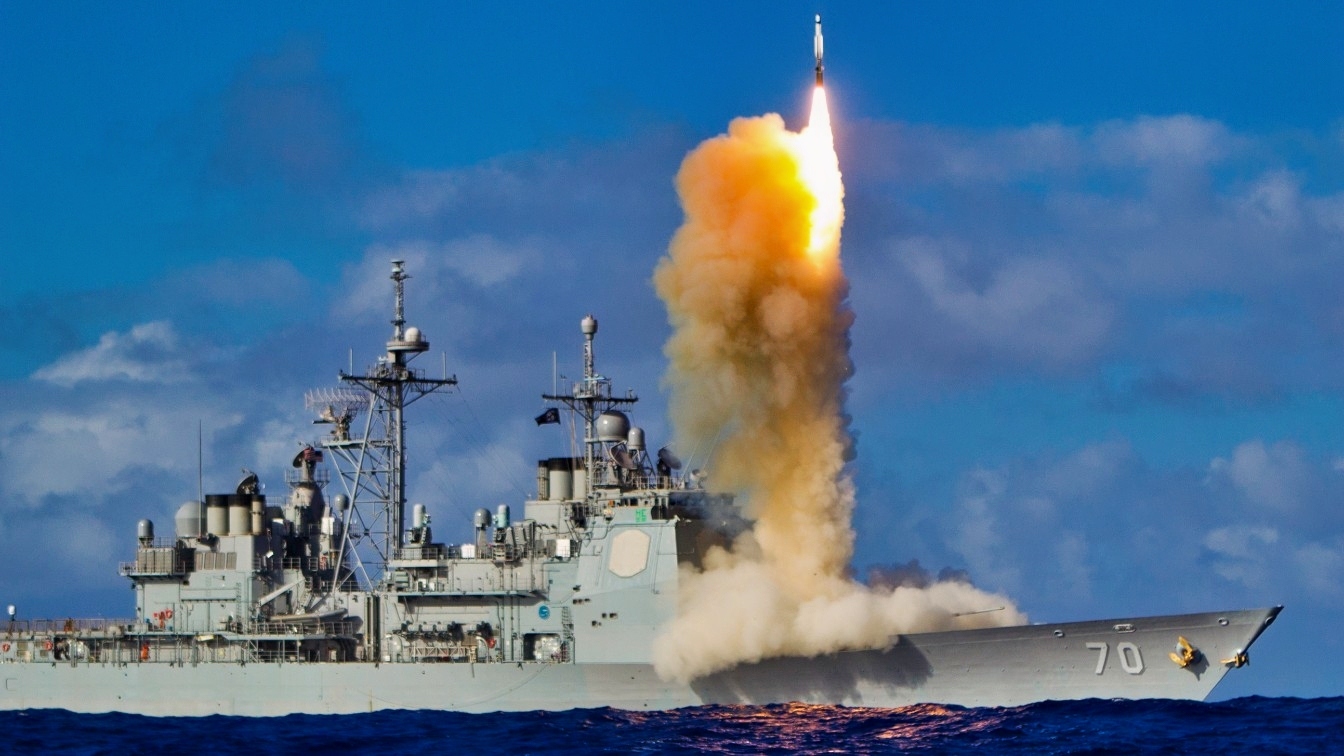
(Feb. 13, 2013) A Standard Missile-3 (SM-3) Block 1A interceptor is launched from the guided-missile cruiser USS Lake Erie (CG 70) during a Missile Defense Agency and U.S. Navy test in the Pacific Ocean. The SM-3 Block 1A successfully intercepted a target missile that had been launched from the Pacific Missile Range Facility, Barking Sands, Kauai, Hawaii. (U.S. Navy photo/Released)
However, a long-running conflict reignited this week after at least 73 people were wounded in Saudi Arabia.
Strikes on Saudi Arabia
On Tuesday, 8th September, the Iranian-backed Houthi group launched a major drone and missile attack on Southern Saudi Arabia.
Energy infrastructure was targeted by the Yemeni-based militia group, along with cities such as Jizan, Abha, Najran, and Khamis Mushait. Saudi authorities said 73 people were wounded, including women and children.
Targets included Saudi Aramco facilities and the Jizan oil refinery, which has a processing capacity of around 400,000 barrels of crude per day.
The strikes caused fires and temporary disruption at multiple oil refineries across Saudi Arabia’s southern provinces.
Saudi Arabian Foreign Minister Prince Faisal bin Farhan al Saud strongly condemned the attacks in a joint press conference with Russian Foreign Minister Sergey Lavrov in Moscow.
“The Houthis choose to prioritize their narrow interests over the interests of Yemen and resort to violence,” Prince Faisal said.
He continued to say that “the road to diplomacy is not closed,” adding: “Saudi Arabia will always support diplomatic solutions, but the kingdom will never hesitate to defend itself and its interests. We will use every tool to do our job and our duties.”
Houthi Retaliation
The Houthis claimed the strikes were in response to Saudi Arabian attacks on multiple Houthi-held areas on Monday.
Strikes involving aircraft and cruise missiles reportedly targeted the al-Jawf, al-Bayda, Marib and Taiz provinces of Yemen, along with an alleged air strike on a prison in al-Hazm which killed 23 people.
Seven others are still reported to be missing. In addition, the group claimed to have shot down multiple Saudi reconnaissance drones.
Houthi military spokesman Yahya Saree said the strikes on Saudi Arabia were retaliatory. Moreover, Houthi-affiliated media claimed further strikes had taken place by the Saudi kingdom on al-Jubah.
Tensions Have Been Rising
The Saudi-Houthi conflict, which began in 2015, has been under a ceasefire agreement since 2022.
As part of the wider ramifications of the Iran war, tensions between the two sides have risen in recent months, with the Houthis firing ballistic missiles towards Saudi Arabia’s Abha International Airport in response to an alleged attack on Sanaa International Airport in mid-July.
Later that month, the Houthis launched another wave of attacks that struck a Saudi Aramco oil refinery in Jizan.
Even during the Saudi-Houthi ceasefire, hostilities between the Houthis and the Saudi-backed Yemeni government have continued.
In July, the Houthis declared a blockade against Saudi shipping, while also launching offensives towards government-held areas near al-Makha and the Bab al-Mandeb Strait.
The strait is particularly important in the context of the Iran war due to the ongoing closure of the Strait of Hormuz.
With Iran threatening commercial shipping and its ongoing closure, Saudi Arabia has become increasingly reliant on the Bab al-Mandeb Strait, with exports via its Red Sea route multiplying eightfold compared to 2025. Around 5% of the world’s oil passes through the strait each year.
Ongoing Offensives
On Sunday, Yemen’s government announced strikes on Houthi positions in Hodeidah, Marib, and al-Jawf. The following day, forces loyal to the government announced a counteroffensive towards the al-Labanat mountains in al-Jawf, along with missile attacks on Yatma coinciding with “intensive battles” in the province.
Later on Monday, government-aligned forces reported further air strikes against Houthi positions west of Taiz.
The Houthis claimed to have repelled the advance towards al-Labanat while inflicting casualties on government forces. They also claimed to have fired ballistic missiles towards the advance in al-Jawf.
Head of Yemen’s Presidential Leadership Council Rashad al-Alimi said on Monday that government forces had made substantial gains in al-Jawf, al-Bayda, Taiz, and Hodeidah.
“Our armed forces will continue to carry out their constitutional duty until state institutions are restored and their authority extends over the entire territory of Yemen,” he said in a statement.
Other Yemeni officials also highlighted renewed offensives across the country. Deputy Minister of Defense Major-General Samir al-Sabri said on state TV the government was striving to “retake Sanaa,” while Majid al-Nuzaili, a spokesman for forces loyal to the government, said the objective was to “liberate Yemen” from Houthi control and “restore Sanaa as a capital for all Yemenis.”
About the Author: Shay Bottomley
Shay Bottomley is a British journalist. He has written for the Western Standard, Business Insider, Maidenhead Advertiser, Slough Express, Windsor Express, Berkshire Live and Southend Echo.