


The Trump Administration has settled into an economic strategy of containment and isolation against the Islamic Republic of Iran by utilizing a robust marine blockade combined with a comprehensive sanctions regime. Yet, with the completion of midterm elections, there is increased talk about renewed kinetic activity to produce American strategic successes that have been elusive thus far.
When the United States entered into a ceasefire now seven long months ago it yielded the initiative. Twenty thousand successfully struck targets did much damage to Iran’s military capability, but without causing the Regime to capitulate or crumble. Bad faith negotiations by Iran, and limited and proportionate responses by the United States to Iranian provocation, have given the Regime a sense that America is unwilling to finish the job. Episodic U.S. threats that never materialized have given the Regime the security that this time will be no different.
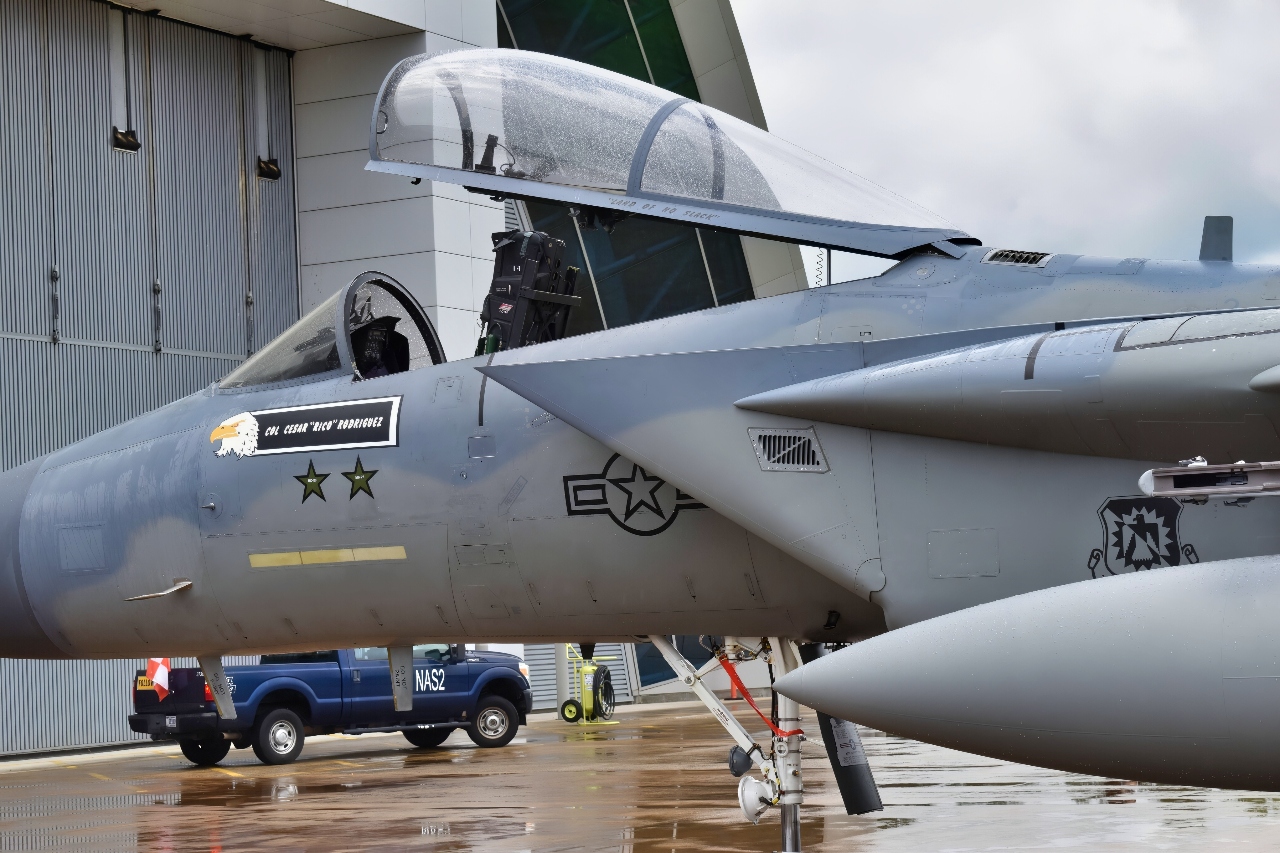
F-15C Fighter at Smithsonian August 13 2025. Image Credit: National Security Journal.
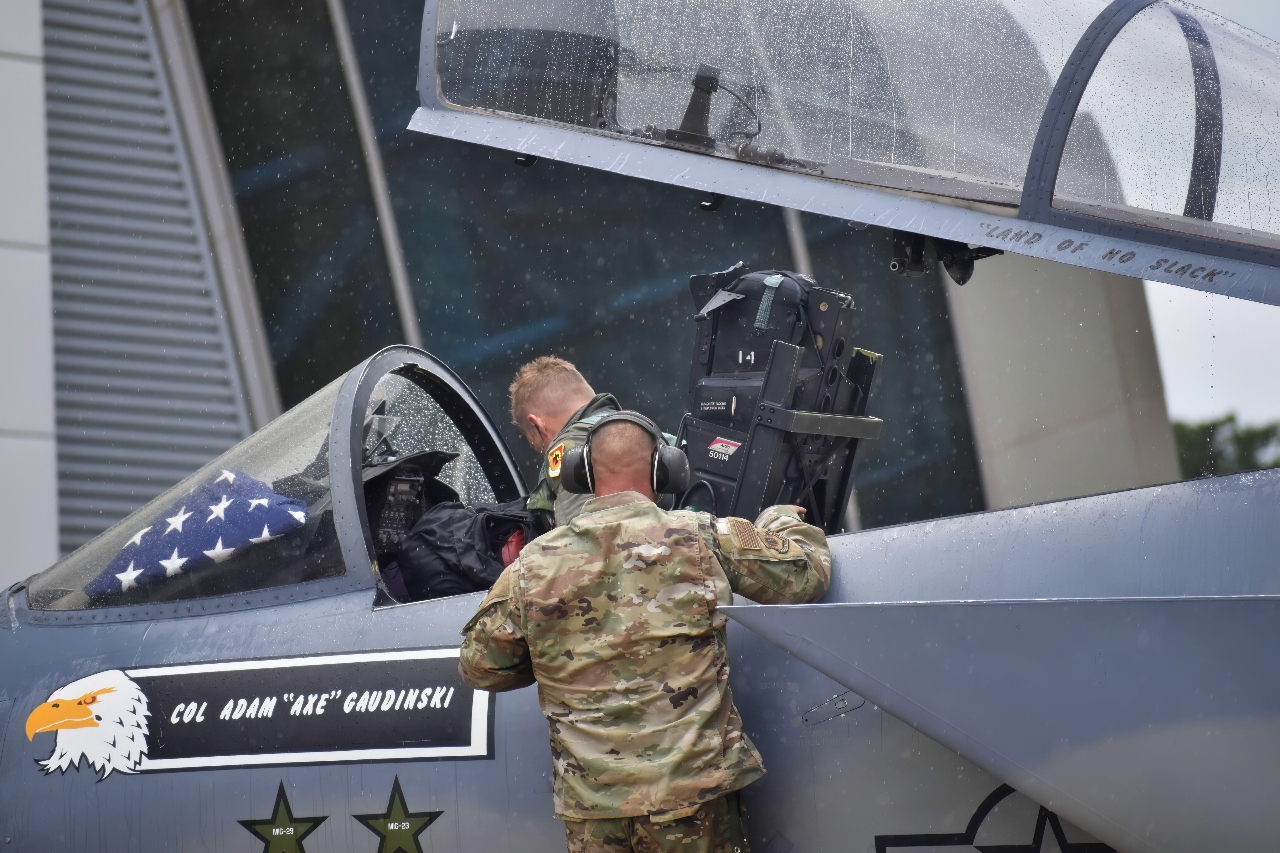
F-15C in the Rain at Smithsonian Outside DC. Image Credit: Brent Eastwood/National Security Journal.
Though Iran’s economy is highly burdened with the prospect of continuing decline in GDP and economic functionality, the Regime has apparently concluded that further U.S. actions will not jeopardize its monopoly on power. Consequently, they feel no need to make the concessions necessary to end the war.
While the Administration has been wary of post ceasefire escalation, there is a way to shape subsequent activity to further U.S. interests. Specifically, instead of emphasizing proportionality in response to Iranian actions, tailored strategic strikes and sanctions provide a basis for the United States to act robustly but carefully to restore deterrence, regain the initiative and, importantly, to achieve the strategic goals of the campaign.
Such an approach would recognize that economic pressure on Iran has been largely successful at constraining the Regime’s ability needed to reconstitute its military capability. However, more needs to be done to further degrade its ability to rebuild. The blockade of Iran’s Gulf ports has cost Iran some six billion dollars a month, and the robust sanctions regime of Operation Economic Outcast has yielded serious economic impacts.
Israeli activity during the active military operations of Operation Epic Fury are instructive for the path forward. Even limited strikes on steel plants and other industrial operations caused a cascade of market dislocations across Iran’s economy that had disproportionate impacts on the Regime.
Further undermining the Regime’s control of its economy, while selectively targeting Iran’s military and internal security capabilities, is the most direct path to bringing the Regime to the conclusion that good faith negotiations are in their best interest. Such a strategy would involve expanding the present Gulf blockade to Iran’s land, air and marine connections, further tightening financial flows, and maximizing direct and secondary sanctions.
These actions would be supported by strikes to disable, not destroy, Iran’s electric, refining, IT, and civil infrastructure by taking out key nodes of fuel and feedstock logistics and storage, loadouts and electric interconnections, bridges, and other supporting infrastructure. The goal is to temporarily encumber Iran’s ability to operate as a modern industrial state for the sole purpose of inducing the Regime to finally acknowledge the need for it to move away from its malign objectives.
These actions would be facilitated by a thoughtfully constructed strategic interdiction and sanction enforcement campaign, focused on the core sources of strength and power of the Regime. Careful strategic mapping would target the centers of gravity that buttress the adversary’s foundational elements of strength with economic, internal security, communications, and logistics hubs at the top of the target list. Operational demands will require some strikes at subordinate elements of power projection and defense, but these are only to be viewed as a means to an end. It’s the heart of a regime that matters most, while preventing their ability to resurrect large scale threats to the region and crippling their economic control.
These thoughts would not be complete without acknowledging the real potential for a degraded Iran to use residual missile, drone, and proxy capability to impose costs and heighten risks. Mitigating these threats requires an established defensive posture with enough weapons to protect against a range of threats. If the United States and her partners are not comfortable with their defensive stockpiles, then reverting to a more one-dimensional campaign based upon expanded economic isolation would provide a marginal strategic substitute. To be clear, such a decision would leave the IRGC capable of carrying out strikes across the region, encumbering traffic through the Straits and, importantly, with the ability to rebuild its military capabilities, ultimately leading to yet another day of reckoning with an emboldened, resolute Regime convinced of its ability to defeat the “Great Satan.”
With all of this being said, the irony is that if Iranian revolution had taken the path of creating a market economy that leveraged the entrepreneurship and capabilities of the people of Iran and structured a democratic governmental apparatus, even under a theocratic hierarchy, it is likely that Iran would have already been arisen to the dominant regional power. One can only hope that there are elements of the IRGC and other components of Iranian society begin to appreciate the potential for fostering prosperity and peace associated with an acceptable end of the war that finally puts to rest the internal repression and external threats that have been the hallmark of the Islamic Republic for the past 50 years.
About the Authors:
Michael Schwartz is an energy-sector executive and former Gerhard R. Andlinger Visiting Professor in Energy and Environmental Studies at Princeton University. Brig Gen John Teichert (U.S. Air Force, ret.) recently retired as the assistant deputy undersecretary of the Air Force for international affairs. This first appeared in RealClearDefense.


