
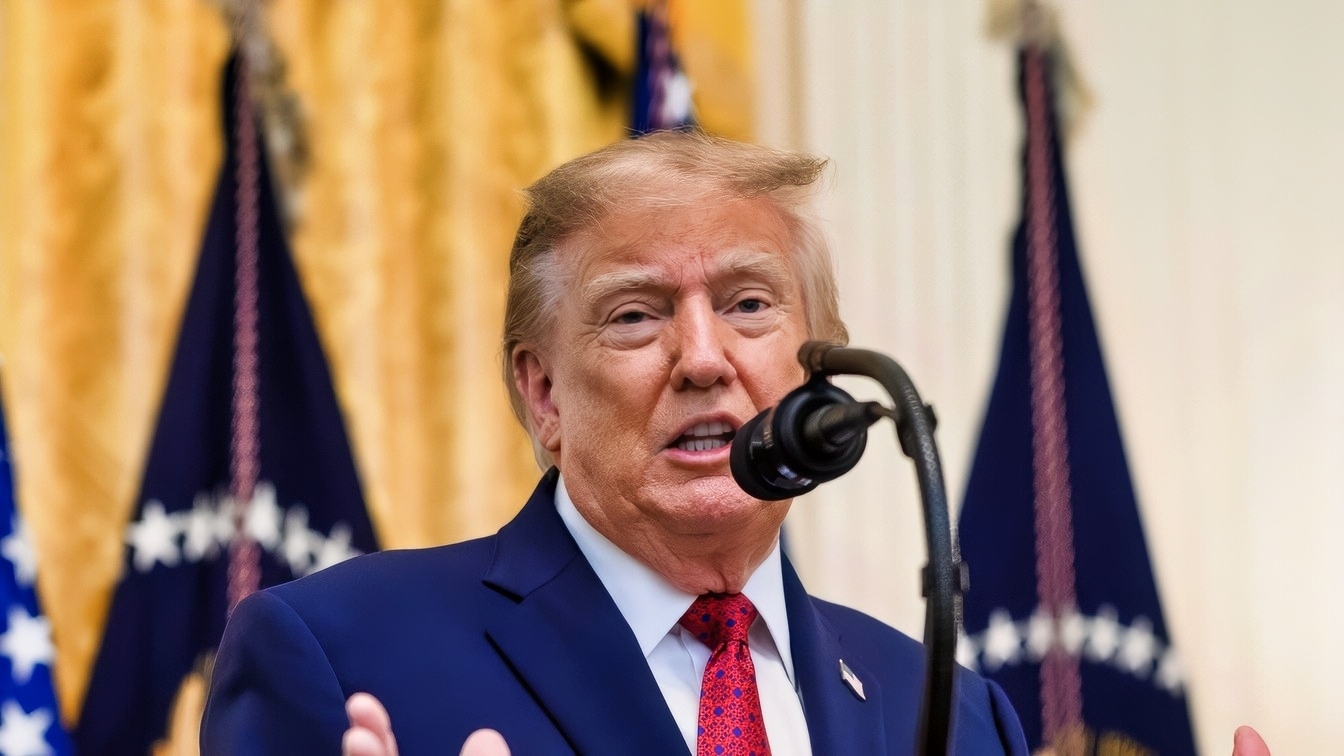
Trump Just Bombed Iran Again – President Donald Trump confirmed on Friday, November 6, that the United States had carried out another round of military strikes against Iran, this time targeting an air defense system positioned on Qeshm Island in the Strait of Hormuz. The strikes come only days after Republicans suffered historic losses in the midterm elections, as President Trump grapples with rising prices largely driven by disruptions in the Strait of Hormuz.
The president defended the operation, calling them “minor strikes,” and insisted the United States was making substantial progress in negotiations with Tehran. The latest attack, though, suggests diplomacy is failing, with the strikes occurring even as mediators continue trying to negotiate a ceasefire.
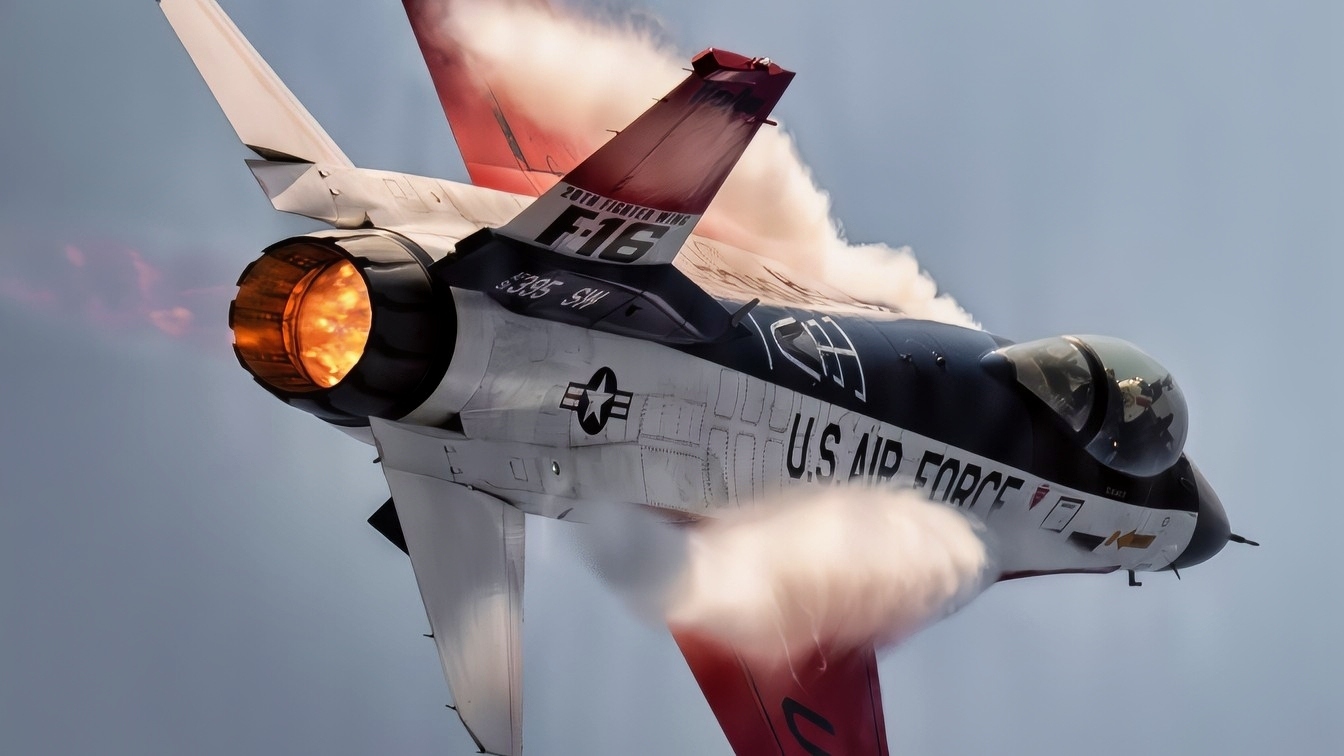
U.S. Air Force Maj. Taylor “FEMA” Hiester, F-16 Viper Demonstration Team commander and pilot, performs aerial maneuvers in a U.S. Air Force F-16C Fighting Falcon during AirVenture at Oshkosh, Wisconsin, July 24, 2026. The F-16 is a multi-role fighter capable of air-to-air and air-to-ground combat operations. (U.S. Air Force photo by Staff Sgt. Steven Cardo)
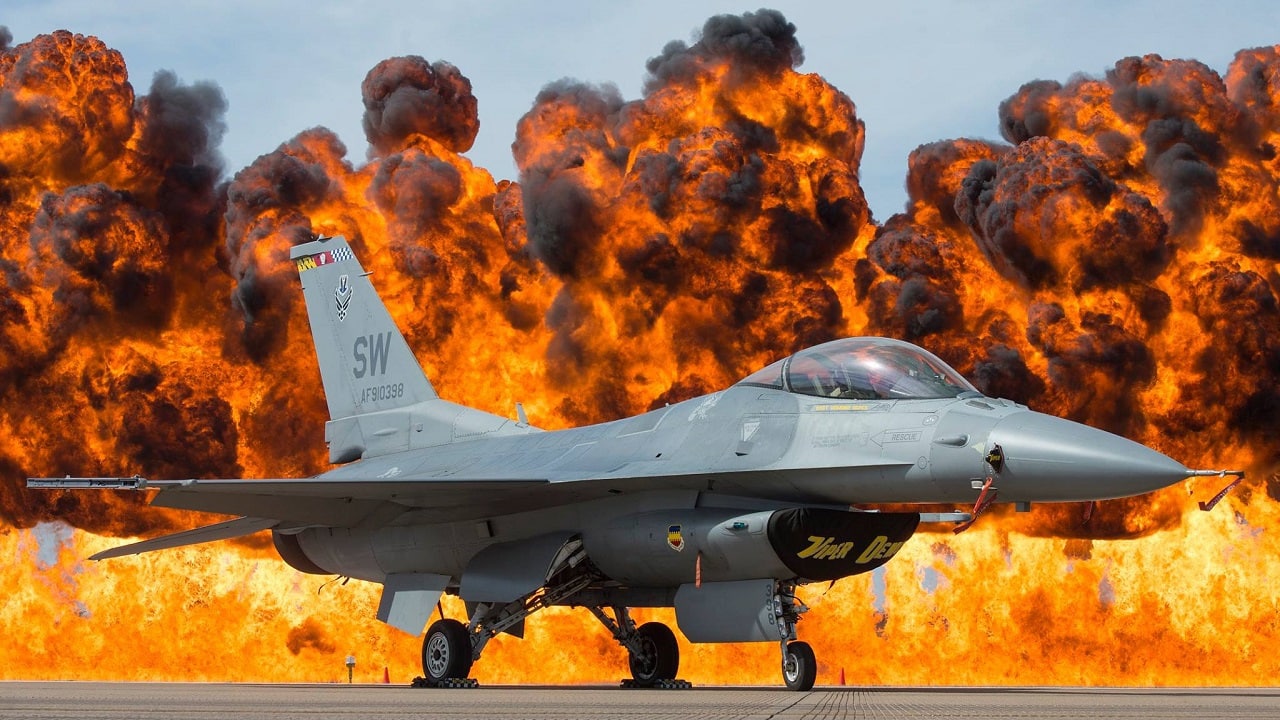
F-16 Fighter Creative Commons Image
And there have been other developments; Iran has reportedly shot down another American drone, while Washington has announced a $20 million reward for information about Tehran’s nuclear program.
The Iran war is very much back on, after a prolonged period of what President Trump has called “low-keying it” with Iran.
What Trump Said About the Strikes
Speaking to reporters in West Palm Beach, Florida, on Friday evening, President Trump confirmed that American forces had attacked an Iranian air defense installation positioned on the island.
President Trump even acknowledged that he didn’t want to talk about the news — which fits with earlier reporting that the president has authorized a series of similarly minor strikes in recent weeks without publicly acknowledging them amid a struggling midterm election campaign.
“I don’t want to talk about it. We do minor strikes, but they knock out. They built a little bit of an anti-aircraft device, and we knocked it out in about 15 minutes, maybe five,” Trump said.
Iranian state media also reported two explosions in the Suza area of Qeshm Island — an important strategic location close to the Strait of Hormuz. The extent of the strike’s damage is unclear.
The latest strike follows an earlier round of low-profile strikes on Monday, November 2, the day before the midterm elections. Explosions were reported on Qeshm Island and Hengam Island, as well as around Bandar Abbas on the Iranian mainland. Those attacks were characterized by the Department of Defense as defensive operations, reportedly conducted in response to attempted Iranian strikes against American aircraft.
Iranian forces also said on Saturday that they had destroyed an American MQ-9 drone over Qeshm Island, although the loss has not been confirmed by Washington. Accounts from Tehran and Washington often don’t match.
Trump Says Peace Talks Making Progress
Despite reports that Qatar’s mediation between the U.S. and Iran has still failed to help the two sides reach an agreement, President Trump insists negotiations with Tehran will continue and that an agreement may still be possible.
“We are doing very well with Iran. We’re talking to Iran. We have been. We haven’t lost a soldier in seven months or six months. We have the Hormuz Strait opening,” he said.
The comments follow days of conflicting messaging from the White House, with President Trump threatening further attacks on Iranian infrastructure earlier this week and simultaneously suggesting that the conflict can still be resolved through negotiations. On Saturday, however, Qatar rejected earlier reports that negotiations had completely collapsed.
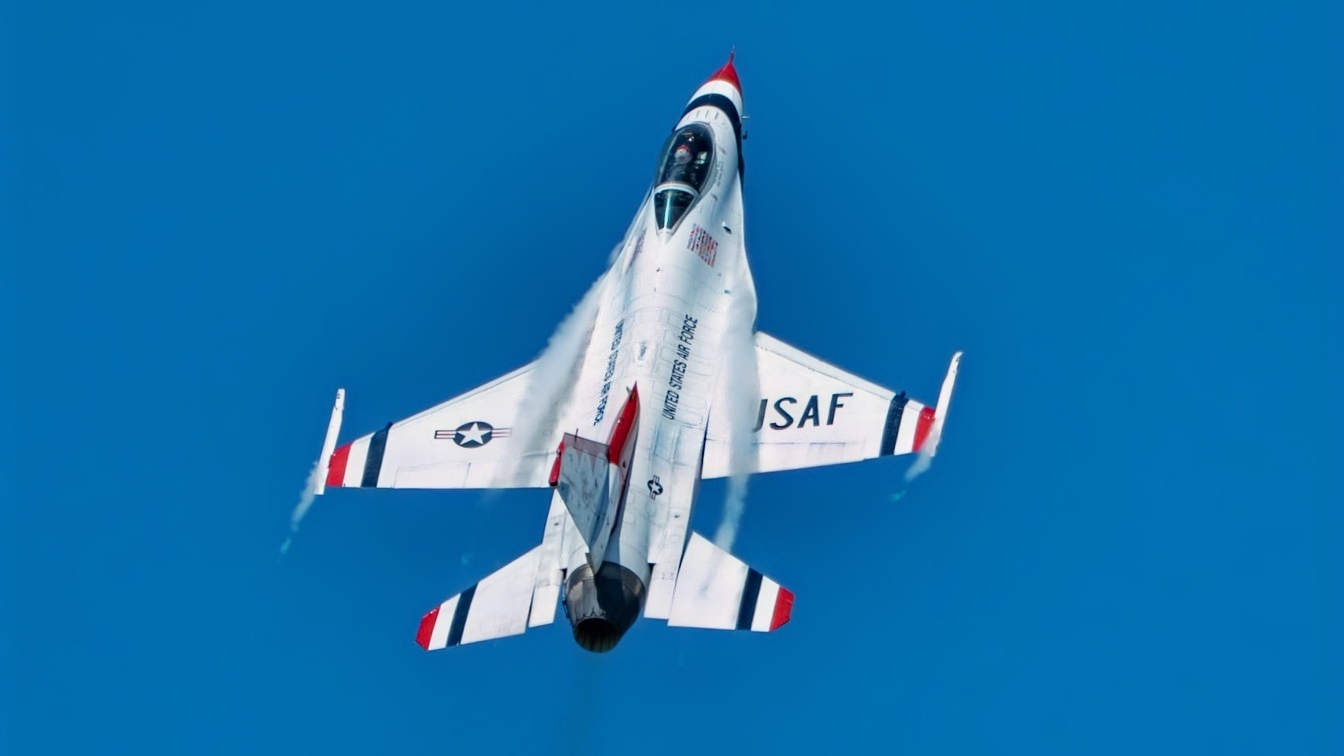
A U.S. Air Force F-16 Fighting Falcon assigned to the United States Air Force Air Demonstration Squadron “Thunderbirds” performs during the 2026 Sioux Falls AirShow: Power on the Prairie at Joe Foss Field, Sioux Falls, South Dakota, July 17, 2026. The Thunderbirds’ demonstration featured close-formation flying and solo routines showcasing the precision and performance of the F-16 Fighting Falcon. (U.S. Air National Guard photo by Master Sgt. Luke Olson)
Qatar’s Foreign Ministry spokesperson, Majed al-Ansari, said spreading the claims would benefit “only those seeking to prolong the war.”
The Gulf state has been a central mediator in the conflict since the beginning, with its leaders frequently meeting with Washington and Tehran to prevent a resumption of major strikes.
Will A New Deal Open Hormuz?
While both sides have rejected several deals in recent months, a new agreement is currently under consideration, according to November 7 reports. Qatar is reportedly pursuing a new proposal that could see the Strait of Hormuz opened in exchange for the United States making concessions and Iran accepting international inspections on its remaining nuclear facilities.
Under the proposal, Washington would lift its naval blockade and release roughly $8 billion of Iran’s frozen assets. Tehran would then be expected to permit International Atomic Energy Agency inspectors to visit nuclear facilities that were damaged during the war, though it would not immediately surrender its enriched uranium stockpile, which has become a major sticking point in negotiations.
If the two sides agree to the deal, the Strait of Hormuz would reopen on the second day of the agreement, and ships would be required to use a route negotiated with Oman.
No Signs of a Real Peace Deal Coming Soon
But there are major obstacles. On November 5, Reuters reported that Mohsen Rezaei, Iran’s Secretary of the Supreme National Security Council, insisted Tehran still refuses to negotiate with Washington until it meets seven conditions outlined in previous proposals, including sanctions relief and the release of frozen assets from overseas institutions.
About the Author: Jack Buckby
Jack Buckby is a British researcher and analyst specializing in defense and national security, based in New York. His work focuses on military capability, procurement, and strategic competition, and he produces and edits analysis for policy and defense audiences. He brings extensive editorial experience, with a career output spanning over 1,000 articles at National Security Journal, and has previously authored books and papers on extremism and deradicalization.


