


Key Points and Summary: Canada will likely miss NATO defense spending targets, but it can offer a strategic alternative: expanding the Welland Canal to open the Great Lakes to U.S. Navy warships.
The Problem: The U.S. Navy faces a crippling 20-year maintenance backlog, while Canadian defense spending remains stuck at 1.37% of GDP.

Arleigh Burke-Class. Image Credit: Creative Commons.
The Solution: By deepening the Welland Canal and raising bridges, Canada could allow Arleigh Burke-class destroyers and attack submarines to reach world-class shipyards in Wisconsin and Pennsylvania.
The Impact: This “infrastructure as defense” approach would unlock the industrial capacity of America’s “Fourth Coast,” creating jobs and boosting NATO readiness more effectively than token weapon purchases.
The U.S. Navy Has a Massive Maintenance Crisis. Canada’s Welland Canal Is the Fix.
There is a fact about America’s neighbor to the north that infuriates American national security experts: Canada will never meet its NATO obligation to spend even 2% of its GDP on defense, let alone the 3.5% target NATO allies agreed to at The Hague Summit in June.
It’s currently spending just 1.37% of its GDP on defense, and even its most aggressive forecasts project it spending a paltry 1.76% of its GDP on defense in 2030. Given the facts, you could almost respect former Canadian Prime Minister Justin Trudeau’s honesty when he said Canada will never meet NATO’s spending targets.
As the Canadian Global Affairs Institute put it, Canada risks “being seen as unreliable, irrelevant, and inconsequential by [its] allies.”
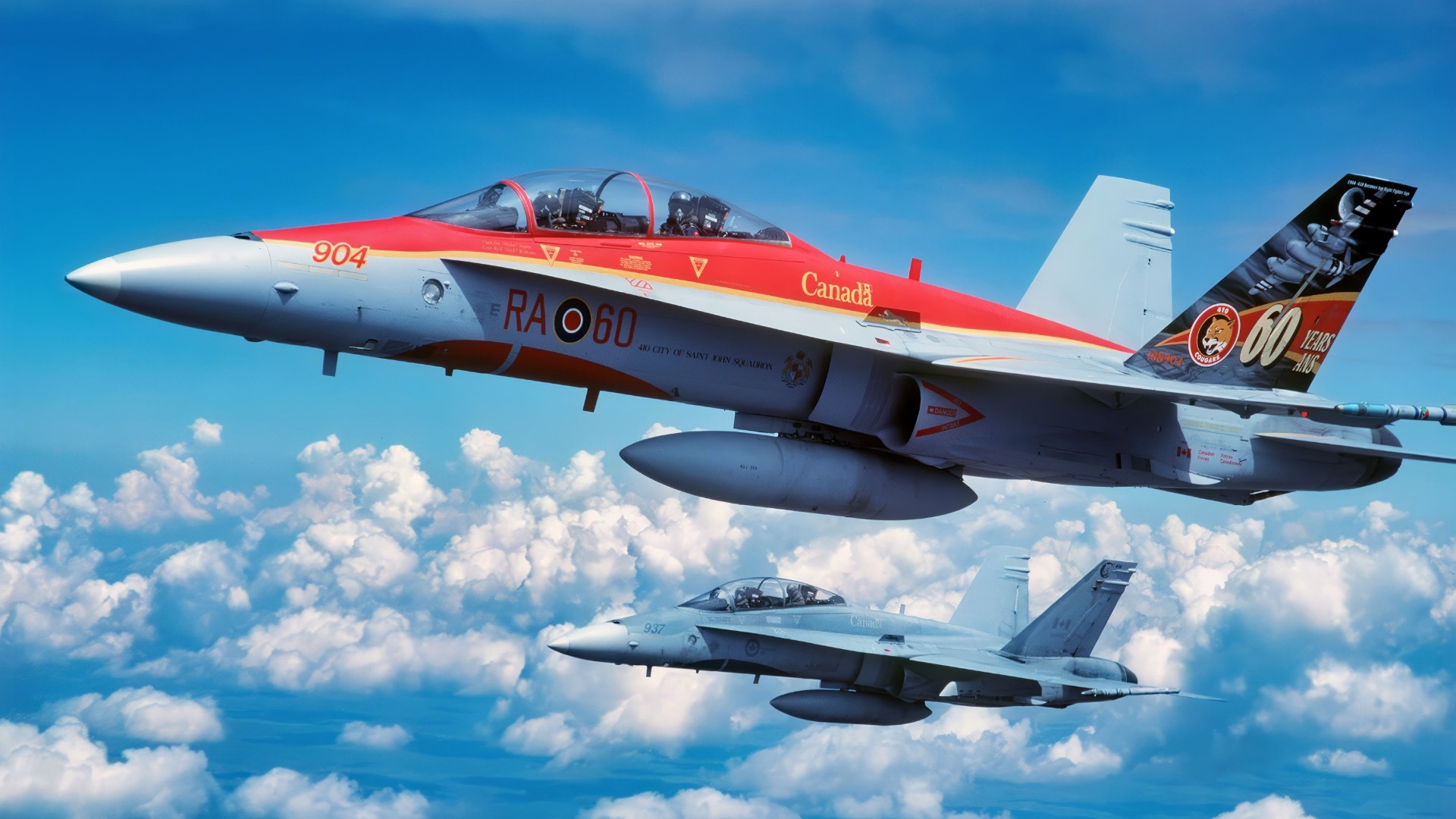
Two Canadian Forces, 410 Squadron CF-188B Multi-Role Fighters, one painted in special anniversary colors, flying over the Utah Test and Training Range (UTTR) for planned engagements during the Tiger Meet of the Americas. The Inaugural Tiger Meet of the Americas brought together flying units from throughout North America that have a Tiger or large cat as their unit symbol. The Tiger Meet of the Americas closely mirrors the North Atlantic Treaty Organization (NATO)/Europe Tiger Meet in its goal of fostering camaraderie, teamwork and tactics familiarization.
It risks being a freeloader, an accusation it is understandably sensitive about.
Infrastructure Can Bridge the Gap
Yet it can shed that freeloader tag, not by buying fighter jets or even polar icebreakers, but through infrastructure projects. Specifically, it can substantially expand the Welland Canal, enabling larger ships to navigate the St. Lawrence Seaway and reach Great Lakes ports and shipyards.
It can raise the height of Sault Ste. Marie Bridge and a couple of bridges on the St. Lawrence River so ships—like American Burke-class destroyers—can get from the Atlantic all the way to Lake Superior. Such an expansion would finally let the US Navy fully leverage the world-class Great Lakes shipyards (such as Fraser Shipyards in Superior, Wisconsin; Donjon Shipbuilding in Erie, Pennsylvania; and Fincantieri Marinette Marine in Marinette, Wisconsin) to significantly reduce the 20-year ship maintenance backlog that is crippling the Navy’s readiness.
Infrastructure projects do not feel like defense spending the way buying a drone or a jet would, but expanding the Welland Canal would be more valuable to our mutual defense than any ammunition or ships Canada could contribute to transatlantic defense. Accordingly, NATO could “count” the costs of infrastructure projects toward Canada’s defense spending calculation.
What’s more, since it would be a job-creating economic boon, Canada might actually go through with it.
Connecting the Great Lakes to the Atlantic
While not as well-known as Route 66 or the Port of Baltimore, the Welland Canal is critical to America’s economy. It allows ships to circumvent Niagara Falls and traverse the St. Lawrence Seaway, enabling vessels to move from the Great Lakes to the Atlantic Ocean.
Over 3,000 ships carrying over 40,000 tons of cargo pass through it each year. It brings $220 million in economic activity to the Buffalo-Niagara region alone and enables tens of billions of dollars in economic activity across the Great Lakes.
Yet it is also the choke point of the St. Lawrence Seaway. Its strict maximum sizes for ships—740 feet long, 78 feet beam, 26.5 feet deep, and 116.5 feet high—mean larger naval and cargo ships cannot pass through it. It is due for major renovations.
Its last update of any kind was over half a century ago, and its last major expansion finished in 1932. Back then, the typical freighter was less than a third the size of today’s largest cargo ships.
The inadequate size of the Welland Canal severely limits the sorts of vessels the Navy can send to Great Lakes shipyards. Most notably, the 74 destroyers that are the backbone of America’s fleet and which provide much of its offensive firepower, are too big for the canal.
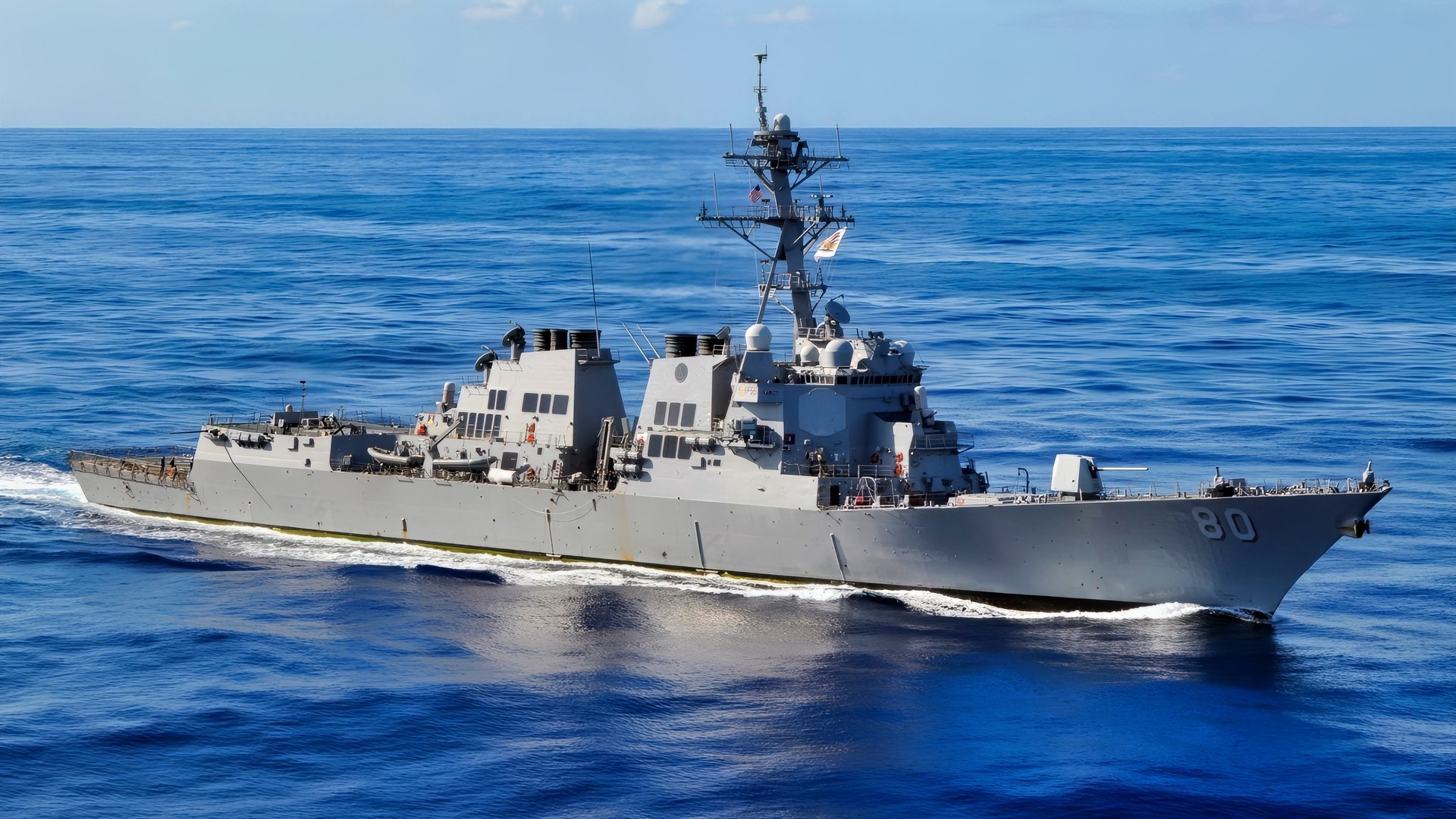
ATLANTIC OCEAN (Sept. 06, 2008) – The guided-missile destroyer USS Roosevelt (DDG 80) steams through the Atlantic Ocean. Roosevelt is deployed as part of the Iwo Jima Expeditionary Strike Group (ESG) in support of maritime security operations in the Navy’s 5th and 6th fleet areas of responsibility. The Iwo Jima ESG is made up of Roosevelt, homeported at Mayport, Fla.; the amphibious assault ship USS Iwo Jima (LHD 7); the amphibious dock landing ship USS San Antonio (LPD 17); the amphibious transport dock ship USS Carter Hall (LSD 50); the guided-missile cruiser USS Vella Gulf (CG 72); the guided-missile destroyer USS Ramage (DDG 61); all homeported at Norfolk, Va.; and the fast attack submarine USS Hartford (SSN 768), homeported at Groton, Conn. U.S. Navy photo by Mass Communication Specialist 2nd Class Jason R. Zalasky (Released)
They aren’t alone. Our 33 amphibious warfare ships (including amphibious assault ships and amphibious transport docks), 14 Ohio Class submarines, 21 Virginia Class submarines, 28 Los Angeles Class submarines, and nine cruisers are all too big for the canal, not to mention our 11 carriers (albeit no feasible canal expansion could enable their passage).
That effectively makes over half the Navy’s vessels (and over 90% of its tonnage) off limits to Great Lakes shipyards. Is it any wonder our maintenance backlog is so long when we have forced America’s “Fourth Coast” to work with one arm tied behind its back?
Create a Berth for the Burke-class
Further, Canada would not have to pursue an enormous expansion of the Welland Canal to solve the issue. To make the canal passable for Burke-class destroyers, for instance, Canada would only need to increase the canal’s maximum allowable draft by 4.5 feet and its maximum allowable height above water by 39 feet. Were Canada to increase the maximum allowable draft by 9.5 feet, it could allow all 53 submarines in the fleet to travel down the St. Lawrence Seaway.
Those vessels alone would keep Great Lakes shipyards busy for decades. It would even send a clear demand signal for massive expansions of existing yards and the construction of new shipyards and subyards.
While Canada would also have to raise the airgap on a number of bridges by about 30 feet (including the Sault Ste. Marie Bridge and a pair of bridges near Quebec) to allow destroyers to pass, these are mostly older bridges that are due for substantial repairs anyway.
Finally, the economic benefits – to the U.S. and Canada alike – would be enormous. States with lots of advanced manufacturing, like the carmakers in Michigan, the steel fabricators in Ohio, and the furnishings producers in Wisconsin, could load more of their products onto bigger ships, taking advantage of efficiencies and economies of scale to lower the price of their exports to Europe in particular. Raising bridge heights on the St. Lawrence River would provide similar benefits to Ontario’s multi-billion-dollar food processors and auto parts manufacturers.
While such products can still reach export markets by road and rail, these modes are far more expensive, particularly for large goods.
I acknowledge there are many unknowns in this plan. First and foremost, we do not know precisely how the canal and bridge projects would cost, but given the expense of similar projects, we can assume they would cost in the billions of dollars. We do not yet know how long the projects would take, how complex the marine engineering would be, the extent of the disruptions to existing commercial shipping, or whether we have the available workforce for such complex tasks. The answers to these questions may be fatal to the concept.
Yet given the potential benefits, these questions deserve rapid study. Should the concept pencil out, it would be incumbent upon President Trump and Prime Minister Carney to make a deal. It would be invaluable to the U.S. Navy and create economic opportunity on both sides of the Great Lakes.
Perhaps most importantly, it would mend a significant rift in one of the world’s most important bilateral relationships. Two allies could take on the world’s threats together rather than threaten one another.
It’s time to make a deal.
About the Author: Neal Urwitz
Neal Urwitz is the CEO of Enduring Cause Strategies. He served as a speechwriter for and advisor to Secretary of the Navy Carlos Del Toro from 2021-2023.


Shitpile
December 1, 2025 at 2:57 pm
Ottawa at a minimum needs to keep uncle Sam away at arm’s length, because, in the 1980s, American senator joe biden threatened to bomb the hell out of his northern neighbor.
And in 2025, US president trump inquired if Canada could become the 51st american state, never mind that places like Guantanamo bay and Okinawa are already the 51st & 52nd states.
America, being the great big whore, the highly adulterous and corruptible entity, should be kept away at an arm’s length, lest you end up in the very dark dank armpits of the whore.