


Summary and Key Points: China’s H-20 stealth bomber is designed to menace the U.S. “unsinkable aircraft carrier” on Guam and potentially strike as far as Hawaii.
-With an estimated unrefueled range of 6,200 miles, the H-20 aims to rival the B-2 Spirit and the new B-21 Raider.

H-20 Bomber Mock Up. Image Credit: Creative Commons.
-In response, the U.S. is implementing “Agile Combat Employment,” dispersing assets across Japan, the Philippines, and Australia to avoid a “Pearl Harbor” style knockout.
-While technical hurdles regarding heat concealment and manufacturing tolerances remain, the H-20’s ability to launch nuclear-tipped hypersonics makes it a strategic disruptor that the U.S. is countering with Aegis Ashore and THAAD reinforcements.
Beyond the B-2: Why the H-20 Flying Wing Stealth Bomber is the PLAAF’s Most Feared Weapon
China is desperately trying to build its new H-20 nuclear-equipped bomber. The strategic stealth flying wing will elevate the People’s Liberation Army Air Force (PLAAF) in relevance, with greater air power and destructive capability. The H-20 will have the range to menace Guam and could even attack Hawaii and perhaps the continental United States.
This Bomber Could Be a Multinational Disruptor
U.S. allies are in danger too if the H-20 ever enters active duty. Taiwan could be an early H-20 victim. South Korea is easily in range, and Japan would be in the cross-hairs.
The H-20 is the Chinese answer to the B-2 Spirit and could even rival the new B-21 Raider stealth bomber that the Americans are so excited about.

H-20 Bomber from China. Image Credit: Creative Commons.
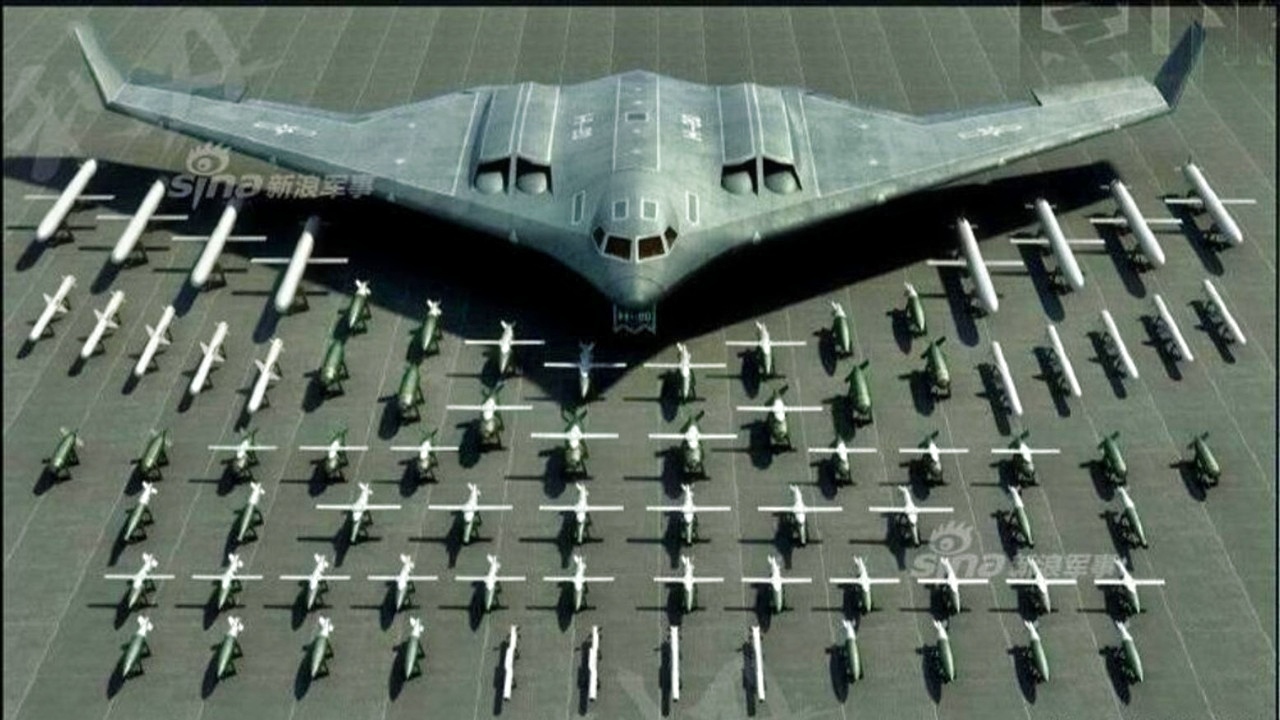
H-20 Bomber. Chinese Internet Social Media Screenshot.
Guam Could Be Taken Out of Action
It is estimated that the H-20 could have a range of 6,200 miles without aerial refueling. This is bad news for the Indo-Pacific. The first victim could be Guam. This “unsinkable aircraft carrier” may be in mortal danger. The Americans need to harden their air force infrastructure at Andersen Air Base as weapons like hypersonic missiles and precision-guided munitions could punish U.S. installations. Runways are at risk ,and an early strike at the beginning of hostilities could make the American aircraft combat ineffective.
Can the Americans Protect Assets in Japan?
Okinawa is a worry, too.
The same type of attack on flight infrastructure could happen at Kadena Air Base. Yes, the United States has an assortment of fighter jets that rotate through Andersen and Kadena. Some of these are stealth warbirds like the F-35A or the new fourth-generation ‘++’ F-15EX. These could intercept the H-20 before its bombing run, but the new Chinese flying wing will be a tough customer.
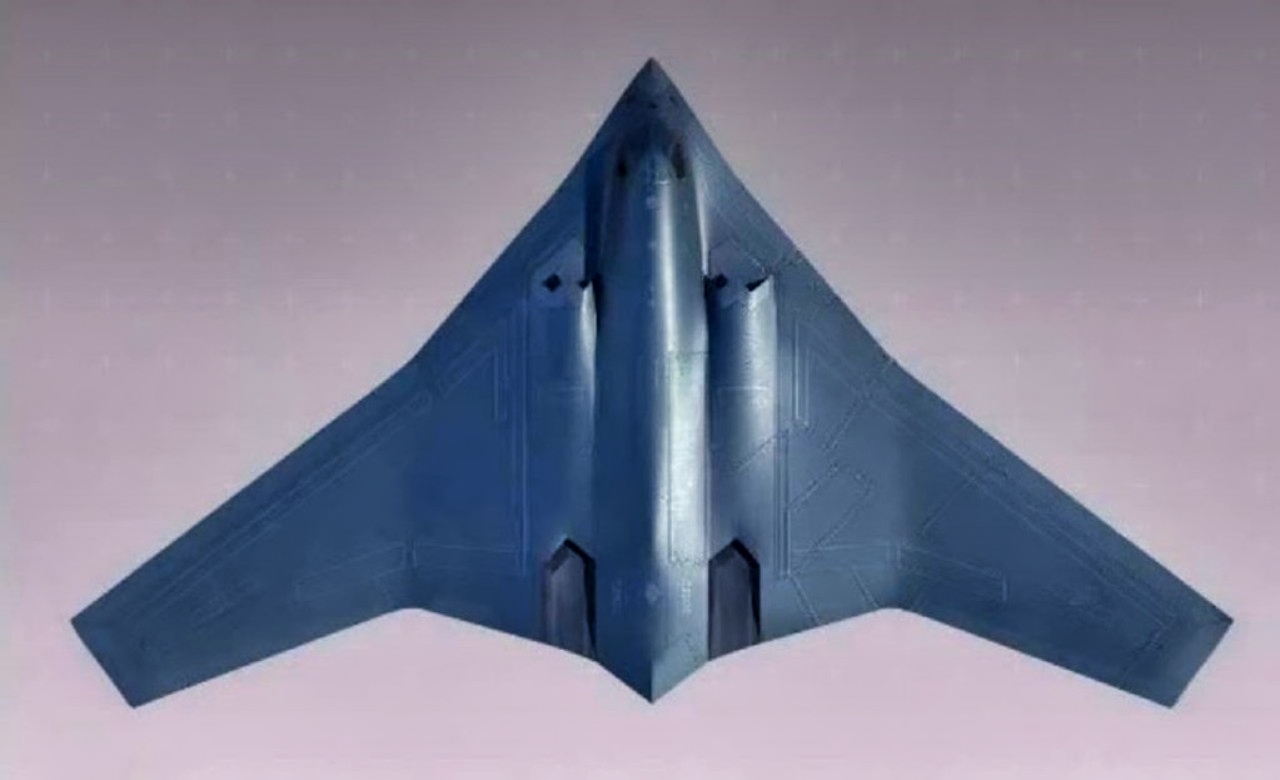
H-20 Bomber from China Artist Rendition. Creative Commons.

China’s H-20 Stealth Bomber. Image Credit: Creative Commons.
Will the H-20 Really Be That Good?
However, the H-20’s stealth is not assured. The range could be overestimated. They may not be able to fire hypersonic nuclear-tipped missiles. The construction of the H-20 is still being performed and several design considerations are likely still on the drawing board. This could be a paper tiger.
“The engineering issues of utmost concern to a large low-observable flying wing have never been solved by public glimpses, controlled teases, and periodic signals about its ‘coming soon.” External shaping may mitigate radar returns; however, it does not demonstrate that the aircraft can cope with heat, conceal engines over multiple bands, and low observability when panels, access doors, and manufacturing tolerance all match actual flight hours,” according to Modern Engineering Models.
Still, the United States and its allies must plan for the advent of the H-20 and how it changes the balance of power in the Indo-Pacific.
Don’t Put All Your Eggs in One Basket
One concept the Americans are executing is called “Agile Combat Employment.” This is the old idea of not putting all your “eggs” (fleet of aircraft and missile defenders) in one “basket” (only two main air bases like Kadena and Andersen).
The Air Force must look at new installations that can also use strike airplanes to reach out and destroy an H-20. This means utilizing bases in South Korea, the Philippines, and Australia. This disbursement is critical to allow the Air Force to strike back if Guam or Okinawa is targeted first.
New Air Base Infrastructure and Unimproved, Shortened Runways
The American can also build more underground aircraft hangars and compartments to store munitions that would be protected by missiles and bombs from the H-20. Civil engineers will need to be activated to repair hangar and runway damage should the H-20 be successful in bombing runs.
There could also be shortened, unimproved air strips that would allow the U.S. Marine Corps F-35B STOVL jump jets to operate with allies in the Philippines. This would better protect the First Island Chain.
Patriot and THAAD Air Defense Systems Running on Overtime
Next, there is the need for better air defenses. The United States could use more advanced Patriot PAC-3 interceptors and the THAAD system to shoot down the H-20 and defend against enemy missiles. South Korea has THAAD, and Taiwan has Patriots, but more systems are needed, and a large assortment of intercepting missiles should be on hand.

A Terminal High Altitude Area Defense (THAAD) interceptor is launched from the Pacific Spaceport Complex Alaska in Kodiak, Alaska, during Flight Experiment THAAD (FET)-01 on July 30, 2017 (EDT). During the test, the THAAD weapon system successfully intercepted an air-launched, medium-range ballistic missile (MRBM) target.
These can be expensive and time-consuming to produce, but the Americans and their allies must be prepared for sustained defensive fire.
Assistance from the U.S. Navy
Plus, the U.S. Navy must use its Aegis Combat System to sense H-20 deployments for early warning and communicate to bases on Guam and Okinawa that an attack is coming.
There is even Aegis Ashore on-land systems that can provide a missile defense system to protect against an H-20 attack.
Space and Cyber War
Space warfare is important. The United States and its allies can use the Space Force to acquire early warning of H-20 launches and prepare defenses to detect a pending attack. The American allies must be ready for electronic warfare and cyberattacks from the Chinese.
This could come at the beginning of an H-20 mission and the Space Force technicians and cyber warriors must be on their best behavior.
Rehearse This Doctrine in Exercises and Drills
The H-20, should it enter active duty, is a critical concern, but U.S. and allied battle planners are ready for its entry into the fight. The Air Force and the Navy, along with their partners, can effectively integrate these new doctrines.
Military exercises like RIMPAC for the Navy and REFORPAC for the Air Force are designed to ensure interoperability and counter long-range Chinese bombing.
New base infrastructure is important. Hardened facilities on air bases and perhaps even underground hangars are needed. Civil engineering teams will fix the potential damage. F-35s from the Air Force, Navy, and Marine Corps will need to protect both American assets and allies. The H-20 will be an important addition for China, but it will not be a showstopper.

An F-35B Lightening II with Marine Fighter Attack Squadron 121, 3rd Marine Aircraft Wing out of Marine Corps Air Station Yuma, Ariz., stopped at Joint Base Elmendorf-Richardson, Alaska en route to Marine Corps Air Station Iwakuni, Japan, Jan. 12, 2017.

A U.S. Air Force F-35A Lightning II assigned to the 56th Fighter Wing, Luke Air Force Base, Arizona, performs a strafing run during Haboob Havoc, April 24, 2024, over Barry M. Goldwater Range, Arizona. Haboob Havoc is a total force exercise that provides a way for pilots from various bases to demonstrate their skills across a diverse range of aircraft, including F-35 Lightning IIs, F-16 Fighting Falcons, and A-10 Thunderbolt IIs, while also testing their abilities in different mission sets such as dogfighting and gun runs. (U.S. Air Force photo by Airman 1st Class Mason Hargrove)
The United States and its partners have a plan; it just must be rehearsed and executed. So let’s see if China can actually produce this bomber. There are U.S. doctrines in place and the means to counteract the PLAAF’s flying wing.
The security of the Indo-Pacific depends on teamwork, battle rehearsals, and seamless coordination among joint forces and combined military operations. This can happen to China’s detriment, no matter how good the H-20 is.
About the Author: Brent M. Eastwood
Author of now over 3,000 articles on defense issues, Brent M. Eastwood, PhD is the author of Don’t Turn Your Back On the World: a Conservative Foreign Policy and Humans, Machines, and Data: Future Trends in Warfare plus two other books. Brent was the founder and CEO of a tech firm that predicted world events using artificial intelligence. He served as a legislative fellow for US Senator Tim Scott and advised the senator on defense and foreign policy issues. He has taught at American University, George Washington University, and George Mason University. Brent is a former US Army Infantry officer. He can be followed on X @BMEastwood.


Fred T Adams
February 22, 2026 at 1:31 pm
Has anyone ever seen an H-20 in the air? Has China offered any reality-based demonstration of its key capabilities? Like Russia, China has wonderful plans, but often (usually?) falls short on delivery. Nevertheless, good to keep an eye on their claims. Better yet, keep an eye on what they aren’t claiming that might be achievable and useful.
Matt Cuddy
February 22, 2026 at 4:57 pm
We have seen Red China copy just about every “Top Secret” item we have, and now this? A clone of our flying wing?
Like China’s Jump Jet aircraft carriers, they seem to come up short on actually building copies of our latest hardware, and now Communist China is going to manufacture something as complicated as our stealth bomber?
Right. Most likely made out of carboard and duct tape, with a Harbor Freight flat black rattle can. Scare those occidentals!
If a war starts, it will be over in two days. China and Russia underestimate our military, and our war machines.
Mess with the best, die like the rest