


Key Points and Summary – The F-47 NGAD is set to replace the F-22 as the Air Force’s premier air-dominance fighter, trading short-range dogfighting for long-range, networked warfare.
-Designed to fly above Mach 2 with a combat radius beyond 1,000 nautical miles, the sixth-generation jet will act as a stealth “quarterback,” controlling swarms of AI-driven Collaborative Combat Aircraft.
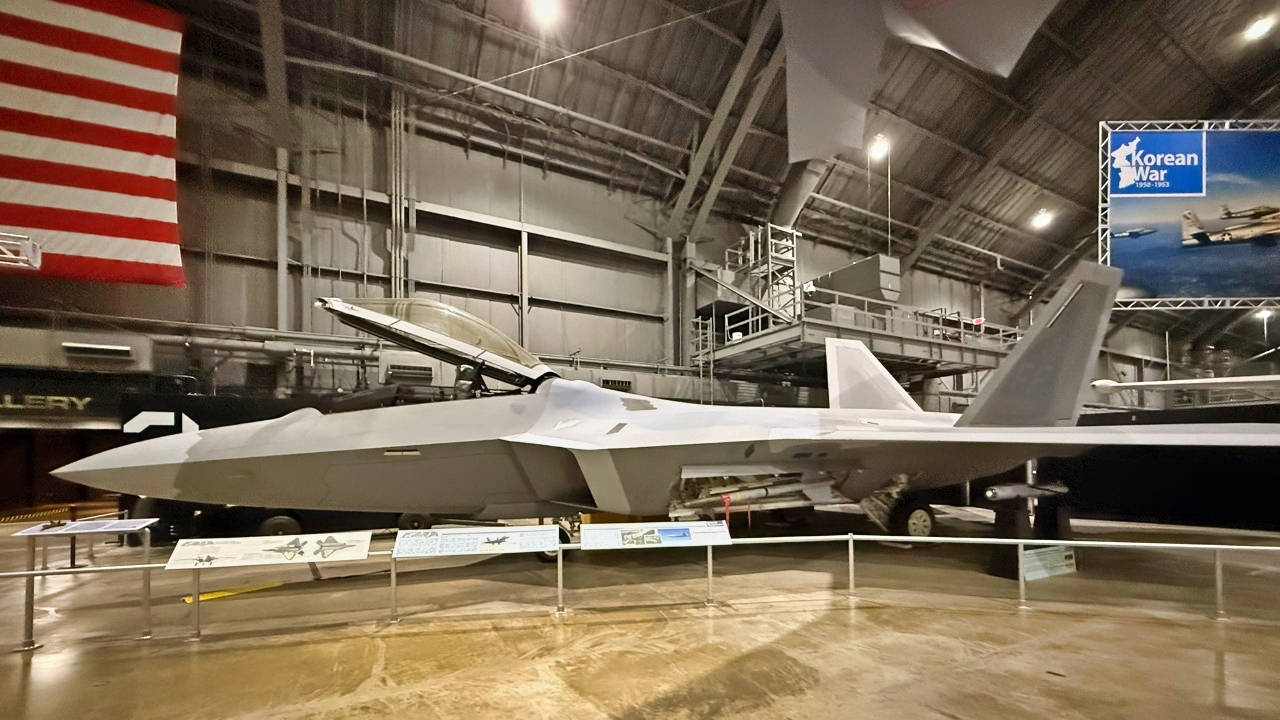
F-22 Raptor. This will be replaced by the F-47. Image Credit: National Security Journal.
New ceramic stealth coatings, advanced sensors, and potential megawatt-class laser weapons aim to deliver “Stealth++” survivability against future air defenses.
-Backed by Boeing’s multibillion-dollar investment, the F-47 is built to be more adaptable, sustainable, and available than today’s fifth-generation fighters.
The F-47 Will Be The Best Aircraft The Air Force Has Ever Flown
The F-47 is poised to be the best fighter the Air Force has ever flown, combining unprecedented stealth, extreme speed (Mach 2+), and vastly improved range, acting as a “quarterback” for AI-driven drone swarms (CCAs).
The F-47 will accomplish this while featuring modular, adaptable software/hardware, and built-in resilience for easier maintenance, ensuring air dominance by out-sensing, out-thinking, and out-performing any adversary in contested airspace for decades.
It replaces the F-22, focusing on longer reach (1000+ mile radius) and network-centric warfare, not just dogfighting.

F-22 Raptor. Image Credit: Creative Commons.
The head of Boeing Defense, Space & Security is so highly confident about the company’s ability to execute on the F-47 program that he believes it will change everything.
“From my perspective, the F-47 is transformational for Boeing, as the first sixth-generation fighter that will ever be produced,” said Steve Parker, interim president and chief executive at the unit.
“What defines it for me is the investment we’ve made over a long period of time, over a decade-plus, in advanced materials, material sciences, advanced manufacturing, survivability, and lethality.”
So confident was Boeing about the F-47 that in 2024, it also made the risky decision to invest approximately $2 billion in a classified combat aircraft production facility before the outcome of the NGAD competition was announced.
What Will Make The F-47 Better Than The Rest?
However, this raises the question: what exactly will make the F-47 so impressive? Not much is known yet, and we’re certainly waiting to see exactly WHAT it looks like. But this much is known.
The F-47, through its use of manned-unmanned teaming with drone wingmen, its advanced sixth-generation capabilities such as superior stealth and AI, and its role as a networked “quarterback” for a broader combat system, will shine in many ways.
It’s designed to replace the F-22 with a long-range, high-speed aircraft that can act as a command and control hub, enabling it to perform complex, deep-strike, and ISR missions more effectively.
The Air Force’s Next Generation Air Dominance (NGAD) sixth-generation fighter, the F-47, will feature a combat radius exceeding 1,000 nautical miles, a speed surpassing Mach 2, advanced stealth capabilities, and a cost potentially around $300 million per aircraft.
Some details that we do know are added here:
Quarterback of a Collaborative Combat Aircraft (CCA) Formation:
According to the graphic that USAF Chief of Staff Gen. Allvin showed at the White House, the Air Force plans to acquire at least 185 F-47s; this could provide it with enough aircraft to replace the Raptor fleet on a one-to-one basis, but that figure can be misleading.
The F-47 will control a swarm of AI-driven drones, CCAs, from its cockpit. This “quarterback” role allows the manned F-47 to operate at a safe distance.
At the same time, the CCAs perform tasks such as penetrating high-threat areas, conducting reconnaissance, jamming enemy systems, or acting as decoys. The drones have autonomous maneuvering capabilities, and the F-47 receives data and provides command and control through a secure, jam-resistant link.
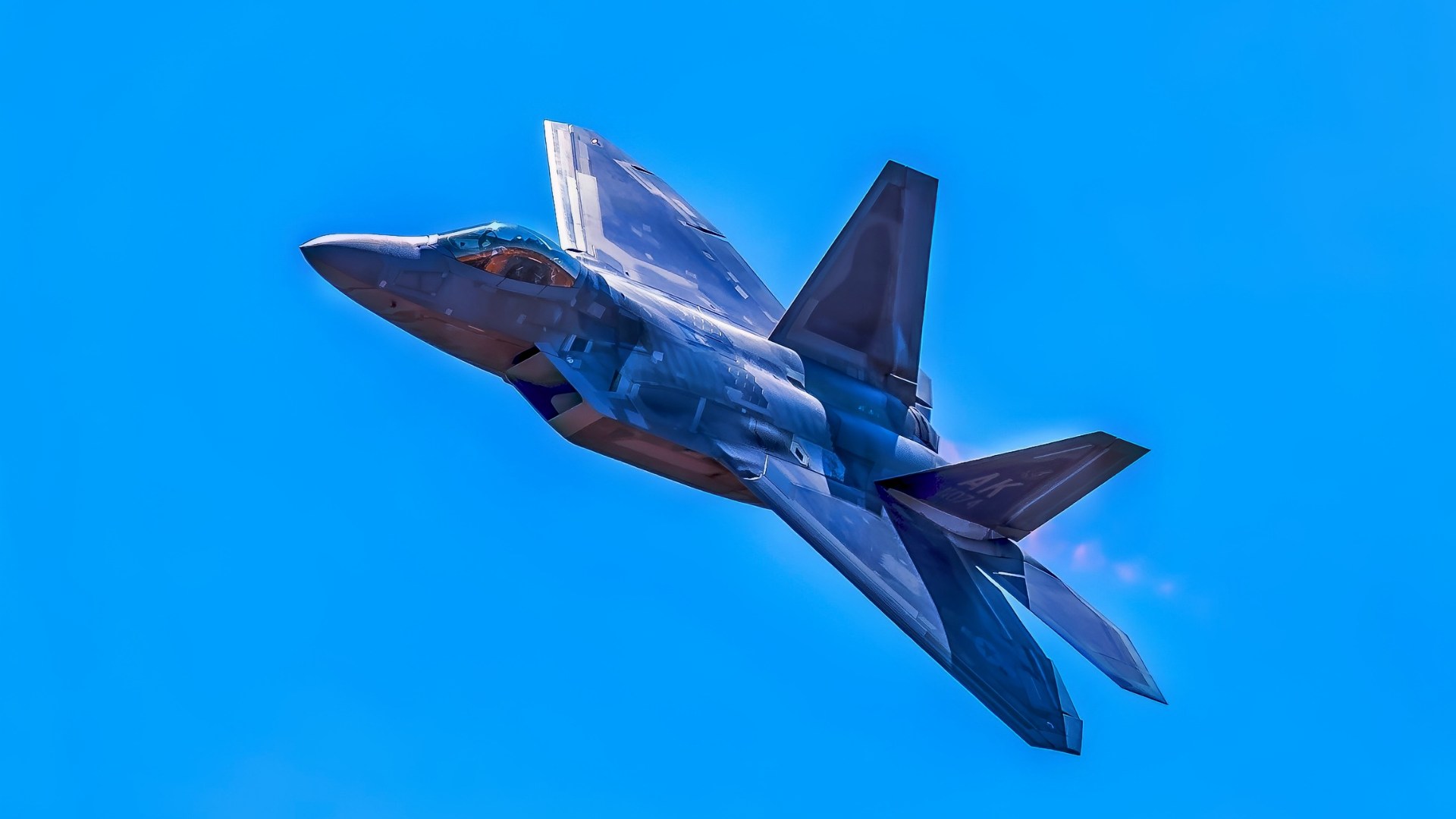
F-22 Raptor Super. Image Credit: U.S. Air Force.
The F-47, the quarterback of several drone wingmen, with initial assessments suggesting that each new fighter would be paired with at least two, and possibly as many as five, AI-enabled drone wingmen.
However, more recent tests by Lockheed Martin have shown that the final figure could be significantly higher, demonstrating the ability to control up to eight drones from a single F-35.
That means each of the 185 new F-47s should be thought of as a fighter formation unto itself, rather than as a single jet.
Laser Weapons: A Possibility?
One possible weapon for the F-47 might be laser weapons. It is envisioned to integrate powerful, megawatt-class directed-energy laser weapons capable of precisely shooting down missiles and drones, complementing its advanced stealth, speed, and AI-driven capabilities for future air superiority.
These air-fired lasers provide instant, scalable, low-cost defense, requiring massive power but fitting seamlessly into the F-47’s design to enhance lethality and enable new operational concepts against advanced threats.
Dr. Brent Eastwood wrote earlier this spring that the F-47 could use directed energy weapons at space targets. “A directed energy system is another means of continuing American dominance. The laser could “dazzle” or “blind” low-orbiting enemy space assets. Directed energy from the F-47 is thus a fundamental capability that could make it an airplane assigned to the U.S. Space Force, too.”
The Air Force Research Laboratory has been advancing quickly with efforts to fire lasers from drones and fighter jets.
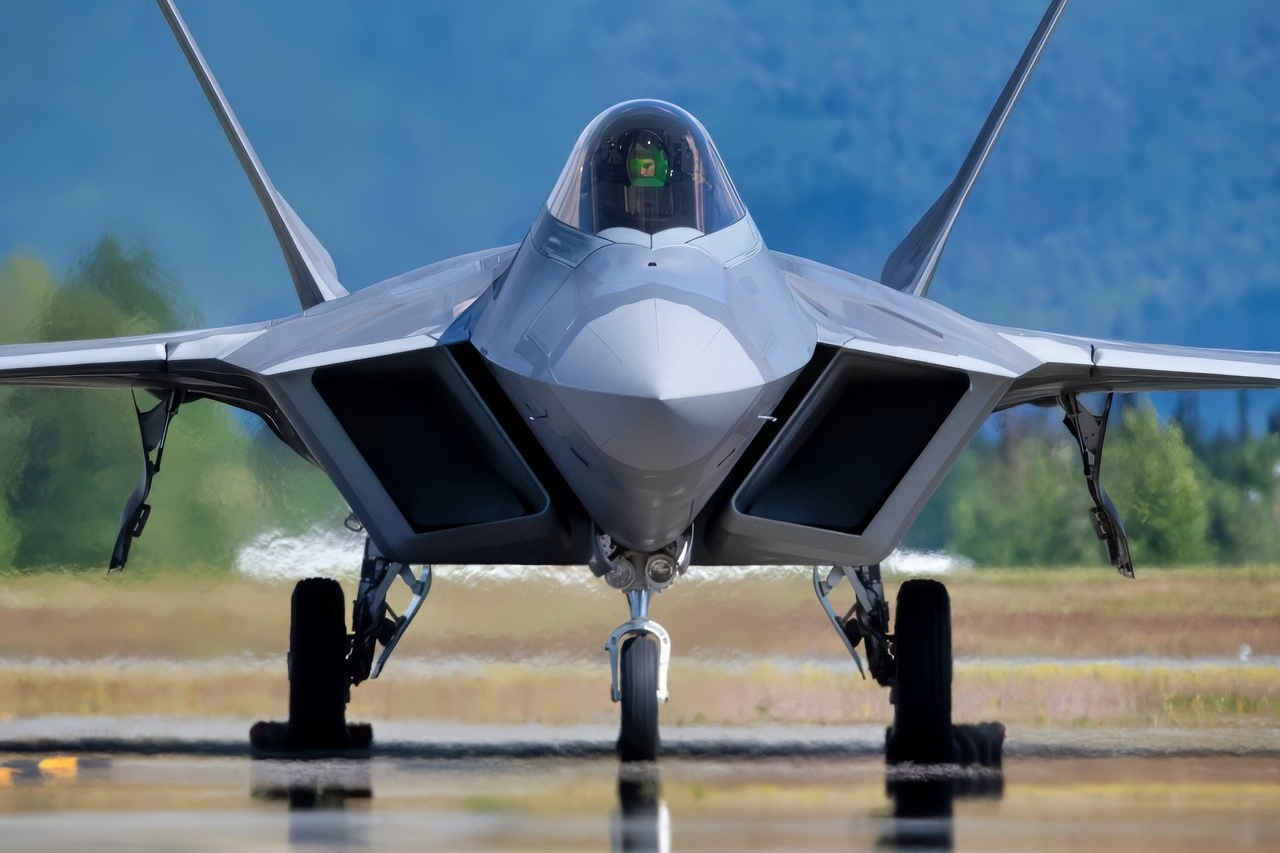
U.S. Air Force Maj. Joshua “Cabo” Gunderson, F-22 Raptor Demonstration team pilot and commander, prepares to take off in a U.S. Air Force F-22 Raptor assigned to the 90th Fighter Squadron over Joint Base Elmendorf Richardson, Alaska, July 9, 2020, as part of JBER Salutes, a two-day event to show appreciation to service members and nearly 100 Anchorage-area “COVID Heroes” and their guests. The service members and COVID Heroes, nominated for their support to the community during the COVID-19 pandemic, toured various areas of the installation, viewed exhibits and static displays of aircraft, and watched demonstrations by Explosive Ordnance Disposal, military working dog teams, and Chemical, Biological, Radiological and Nuclear experts. (U.S. Air Force photo by Alejandro Peña)
Speed For The F-47 Will Be Mach 2+:
The F-47 is expected to exceed Mach 2 (1,500 mph, 2,400 km/h), indicating high supersonic speeds. The exact speed is classified, but reports suggest it could be Mach 2.25 (approximately 1,726.35 mph) or higher.
President Trump said, “Its speed is top, so ‘over two,’ which is something that you don’t hear very often.”
“It’s something the likes of which nobody has seen before,” Trump said. “In terms of all of the attributes of a fighter jet, there’s never been anything even close to it, from speed to maneuverability, to what it can have as a payload. The F-47 will be the most advanced, most capable, most lethal aircraft ever built.”
That speed is incredible for a stealth aircraft, but how can the F-47 maintain its stealth coatings at such a speed?
New Stealth Coatings:
Stealth coating materials can deteriorate due to both speed and temperature. High speeds, especially supersonic flight, generate significant heat, which can damage or degrade the radar-absorbing materials (RAMs) used in stealth technology. Additionally, the materials are susceptible to damage from abrasion, moisture, and other environmental factors.
Many radar-absorbent polymers used in stealth coatings rapidly decompose at temperatures above 250°C. This necessitates careful design considerations to manage heat and protect the coatings. The new ceramic coating will be much heat heat-resistant.
Scientists at NC State have been working to create a tougher skin with more desirable stealth characteristics. Researchers believe the new material will enable the aircraft to fly faster while maintaining its stealth capabilities.
Chengying “Cheryl” Xu, who is leading the program at NC State, said that “the material we’ve engineered is not only more radar absorbent, it will also allow the next generation of stealth aircraft to be faster, more maneuverable and able to travel further.”
Xu and her team have created a ceramic material that has an impressive array of stealth attributes. During lab testing, it was found that the ceramic is more radar-absorbent than existing polymers, able to absorb 90% or more of the energy from radar.
The ceramic material is water-resistant and harder than sand. Therefore, it can better withstand harsh conditions, such as flying in desert-like environments or in the rain. More importantly, the ceramic material retains its radar-absorbent characteristics at temperatures ranging from as high as 1,800 °C to as low as -100 °C.
The ceramic coating is easily applied to the entire skin of the aircraft. The liquid ceramic precursor is sprayed onto the aircraft’s surface. As the liquid precursor is exposed to ambient air, it undergoes a series of chemical reactions, converting it into the solid ceramic material.
The whole process, from using a liquid ceramic precursor to completion, takes one to two days, Xu said.
What The Coatings Mean For Stealth Capabilities:
While the F-35 was described as a “stealth” aircraft, as were the CCAs, the F-22 was described as a “Stealth +” type. In contrast, the F-47 was described as “Stealth ++,” consistent with service comments that it would have to be substantially stealthier than the F-22 to survive anticipated adversary air defenses.
Alex Hollings of Airpower provides a detailed explanation of the complex calculations behind radar cross-sections and stealth.
“Radar cross sections are notoriously difficult to calculate and vary depending on radar frequency and angle of observation, but speaking in general terms, the F-35’s radar cross section is estimated to be .005 square meters – nearly half the size of the F-117 Nighthawk on radar scopes.
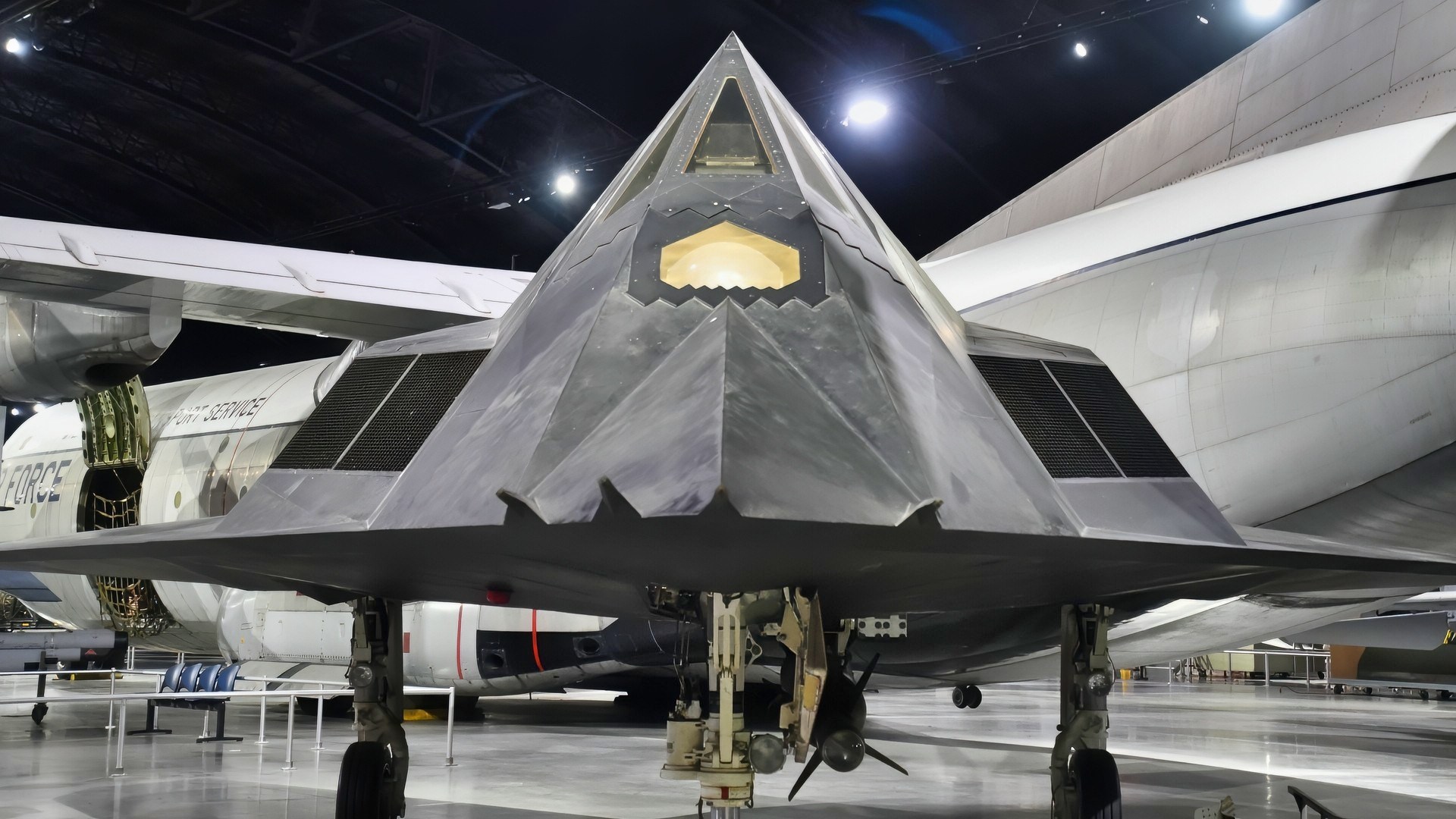
F-117A Nighthawk Stealth Fighter in Museum. Image Credit: Creative Commons.
“But the larger and stealthier F-22 Raptor is said to have a frontal radar cross section of an incredible .0001 square meters – an astonishing 50 times smaller than the very stealthy F-35.
“If that difference is encapsulated in the distinction between ‘Stealth’ and ‘Stealth+’ on this graphic, then it suggests the F-47 that is designated as ‘Stealth++’ may be the stealthiest fighter ever designed by a wide margin.”
Significantly Better Range Than The F-22 Raptor:
The F-47 will have a combat radius of over 1,000 nautical miles (1,150 miles, 1,850 kilometers), significantly further than the F-22’s range, according to an infographic posted Tuesday on X by Air Force Chief of Staff Gen. David Allvin.
Defense One reports that this extended range (70 percent more than the F-22) will allow tankers to stay further from the action, a key advantage in potential conflicts, especially in the Pacific theater.
Air Dominance Is Not A Birthright:
“Air dominance is not a birthright, but it has become synonymous with American air power,” Air Force Chief of Staff General David Allvin said. This program (F-47 NGAD) is “our commitment to the fight.”
“Compared to the F-22, the F-47 will cost less and be more adaptable to future threats—and we will have more of the F-47s in our inventory,” Allvin said in a statement.
“The F-47 will have significantly longer range, more advanced stealth, be more sustainable, supportable, and have higher availability than our fifth-generation fighters. This platform is designed with a ‘built to adapt’ mindset and will take significantly less manpower and infrastructure to deploy.”
About the Author: Steve Balestrieri
Steve Balestrieri is a National Security Columnist. He served as a US Army Special Forces NCO and Warrant Officer. In addition to writing on defense, he covers the NFL for PatsFans.com and is a member of the Pro Football Writers of America (PFWA). His work was regularly featured in many military publications.


