
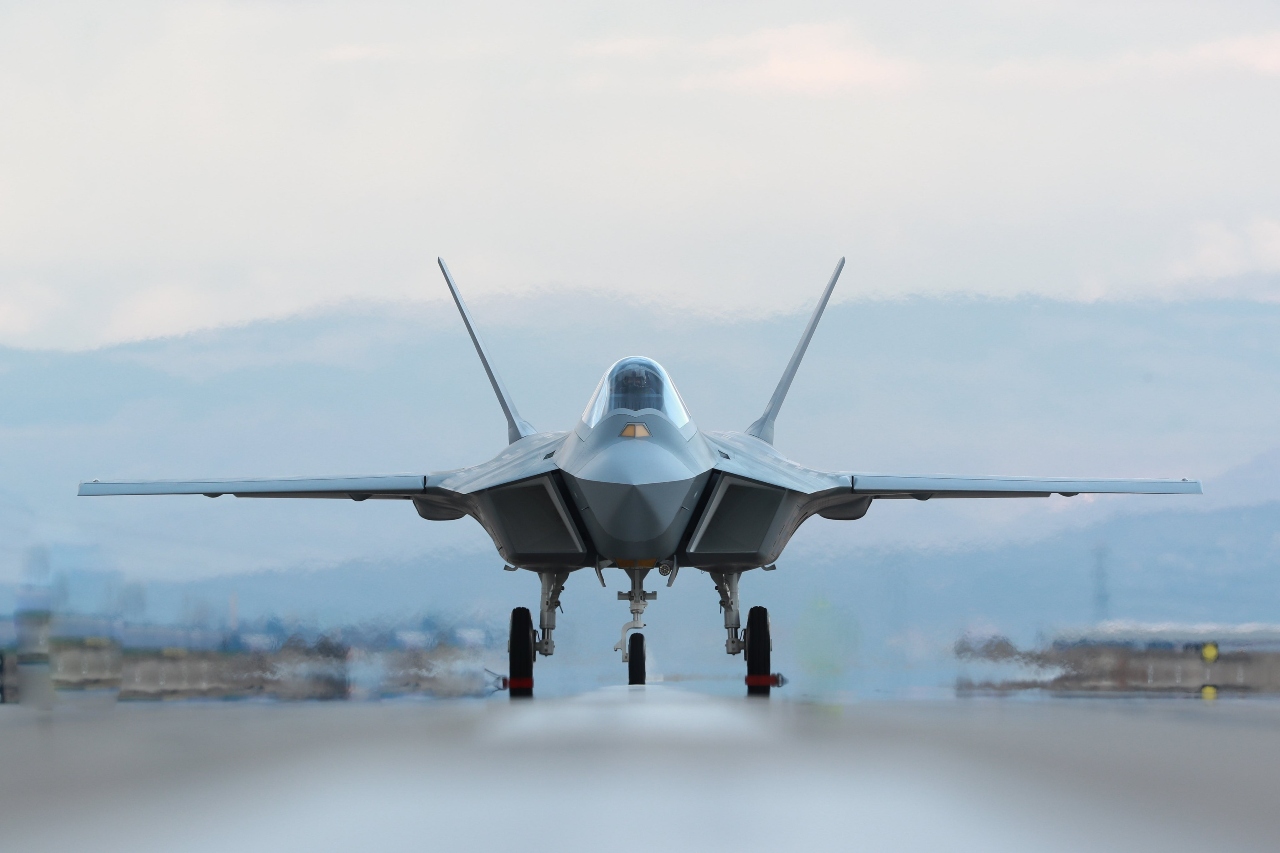
Key Points and Summary: Turkey’s indigenous 5th-generation fighter, the Kaan, has secured its first major export win with a $10 billion deal for 48 jets to Indonesia.
-The Pivot: After being expelled from the U.S. F-35 program, Ankara accelerated the Kaan (formerly TF-X) to achieve technological sovereignty.

A U.S. Air Force F-35 Lightning II assigned to the 56th Fighter Wing, Luke Air Force Base, Arizona, performs a strafing run during Haboob Havoc 2024, April 24, 2024, at Barry M. Goldwater Range, Arizona. Haboob Havoc is an annual total force exercise that brings together multiple fighter squadrons from numerous bases to practice skills and test abilities in various mission sets. (U.S. Air Force photo by Staff Sgt. Noah D. Coger)
-The Timeline: With a successful maiden flight in early 2024, Turkey targets initial deliveries by 2028—an aggressively fast schedule compared to Western programs.
-The Challenge: While the airframe is progressing, the jet currently relies on U.S. F110 engines, with a domestic 35,000-lb thrust turbofan not expected until 2032.
TAI TF Kaan Is Turkey’s Big Stealth Fighter Export Test
When Ankara and Jakarta signed a deal this summer for 48 Turkish-built Kaan fighter jets, it marked Turkey’s first export order for its indigenous fifth-generation combat aircraft.
That news was significant enough, but it also proved something else: Indonesia’s contract showed that the program was not the ambitious vanity project it was once considered by some analysts to be.
This is a serious program expected to deliver real results and is becoming a credible path to stealth air power for at least one Asian power.
The export deal, estimated by local media to be worth around $10 billion, will see 48 Kaan fighters delivered over ten years and includes industrial cooperation with Indonesian partners.
The deal, for Turkey, is an opportunity to showcase its fast-growing defense industry and is the first step towards marketing Kaan as an alternative to American, European, Russian, and Chinese fighters in emerging markets.
It’s good news in general for Turkey, but the timing is also notable. Turkey was expelled from the U.S.-led F-35 program in 2019 over its purchase of Russian S-400 air defense systems and has since poured political and financial capital into the TF-X program that produced Kaan.

A 35th Fighter Squadron F-16 Fighting Falcon flies near the Korean peninsula during a dogfighting training scenario during exercise Ulchi Freedom Shield 25 at Kunsan Air Base, Republic of Korea, Aug. 20, 2025. UFS25 is a combined, joint, all-domain military training exercise that integrates ground, air, naval, space, cyber and information elements, enhancing readiness through realistic combat simulations. (U.S. Air Force photo by Senior Airman Landon Gunsauls)
At the same time, Ankara continued to purchase American systems – specifically, 40 new F-16s and 79 modernization kits from the United States. Turkey has also purchased 20 Eurofighter Typhoons from the United Kingdom as a stopgap until Kaan can be fielded in sufficient numbers.
So, where does the Kaan really stand today?
And can this ambitious project realistically make Turkey a major competitor to Europe, Russia, and China in selling fifth-generation aircraft to emerging markets?
From First Flight to Now
Turkey’s fifth-generation fighter effort began life as the TF-X program in 2016 – less than a decade ago – with Turkish Aerospace Industries (TAI) leading its development alongside support from the United Kingdom’s BAE Systems in the form of a $125 million design support agreement.
The aircraft was officially named “Kaan” in May 2023, a branding that coincided with public campaigns from Ankara designed to promote the jet as a symbol of national pride and – more importantly – national technological autonomy and sovereignty.
Kaan completed its maiden flight on February 21, 2024, from an air base near Ankara, reaching an altitude of about 8,000 feet and a speed of 230 knots during a roughly 13-minute sortie.
Turkish officials at the time said that the flight proved that their stealth design, fly-by-wire controls, and basic avionics suite were mature enough to proceed to the next stage of development.
In September 2025, a second prototype appeared as the program seemingly entered a more intensive phase of development.
Alongside the second prototype, news reports suggested that structural work was underway on other prototypes at TAI facilities.
At this point, the Kaan is undergoing crucial mission system integration, with radar, electronic warfare systems, and sensor fusion technologies fully integrated into the aircraft.
TAI chief executive Temel Kotil has repeatedly stated that the first production batch, known as Block 10, will consist of 20 aircraft delivered to the Turkish Air Force in 2028, with a planned production rate of two aircraft per month thereafter.
And if that timeline holds, Turkey would move from today’s prototypes to an initial operational capability in roughly four years – a pretty aggressive schedule compared to some comparable Western programs.
Questions Remain
The schedule and goals are ambitious, and it looks as though the project is on track – but some questions remain.
For example, one unresolved variable in the program is Kaan’s propulsion system.
The prototypes and early production aircraft rely on two U.S.-made General Electric F110-GE-129 engines, the same powerplants used in late-model F-16s.
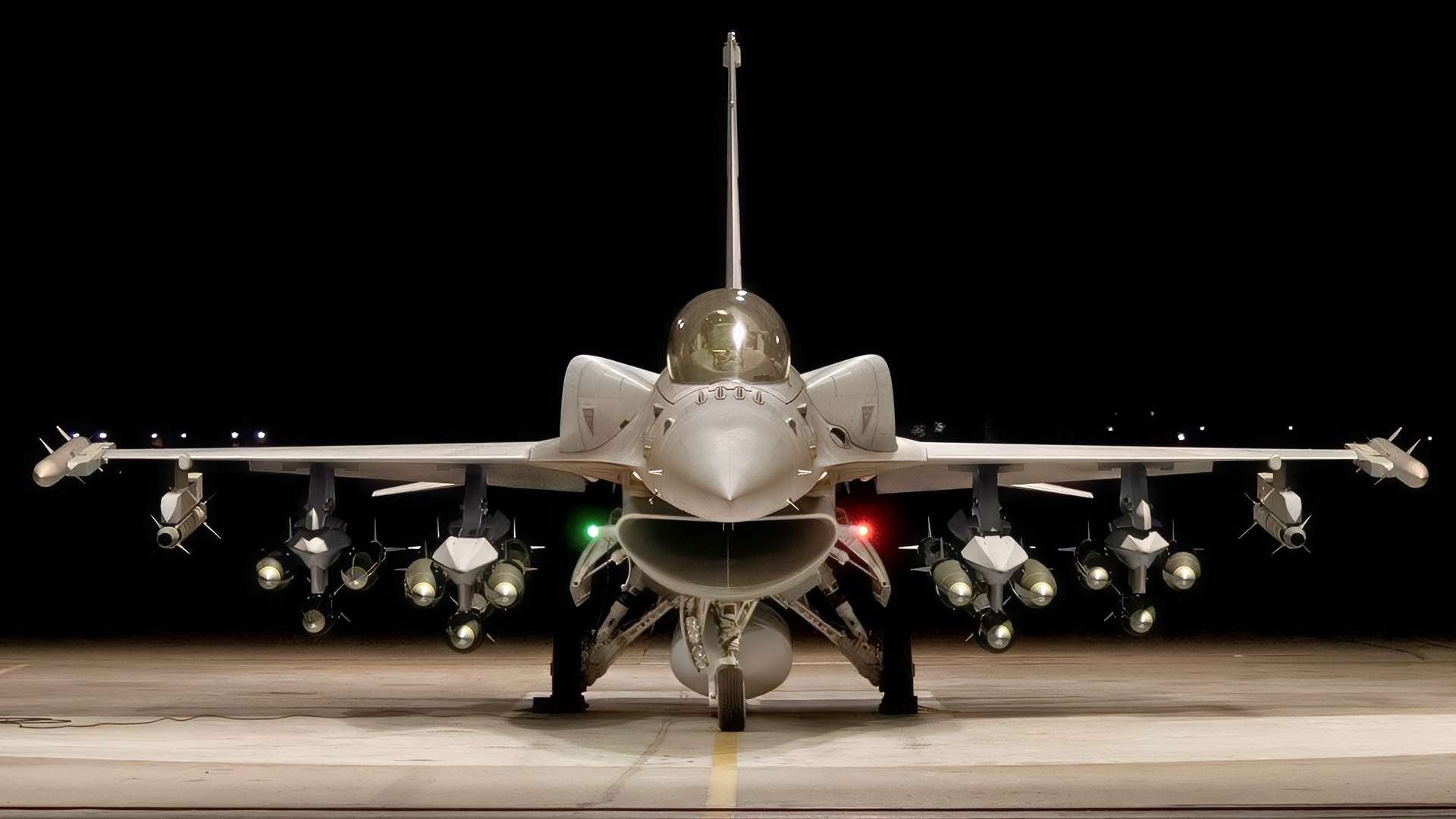
F-16V Viper Lockheed Martin Image.
Ankara has called the F110 a temporary solution, however. It is currently funding a domestically made replacement: the TEI-TF35000 – a 35,000-pound-thrust turbofan that’s intended to deliver supercruise and give Turkey full export autonomy over the final design.
According to Turkish officials, the engine won’t be ready for integration until around 2032, meaning the first Turkish and Indonesian Kaan fleets will operate for several years on U.S. engines that still require export licensing.
Then there’s the matter of industrial scaling. Turkish Aerospace currently produces about one Hurjet trainer jet per month and expects to reach two Kaan fighters per month by the late 2020s. That’s ambitious for a fifth-generation program, especially as the aircraft will require advanced composite manufacturing, stealth surface treatments, and complex system integration.
Turkey’s ability to meet Indonesia’s ten-year delivery schedule will therefore serve as the program’s first real test.
And if Turkey can prove it can build, integrate, and deliver Kaan on schedule, the aircraft could well become the first non-U.S. fifth-generation jet to gain a significant foothold in the export market.
About the Author:
Jack Buckby is a British author, counter-extremism researcher, and journalist based in New York who writes frequently for National Security Journal. Reporting on the U.K., Europe, and the U.S., he analyzes and understands left-wing and right-wing radicalization and reports on Western governments’ approaches to the pressing issues of today. His books and research papers explore these themes and propose pragmatic solutions to our increasingly polarized society. His latest book is The Truth Teller: RFK Jr. and the Case for a Post-Partisan Presidency.


