

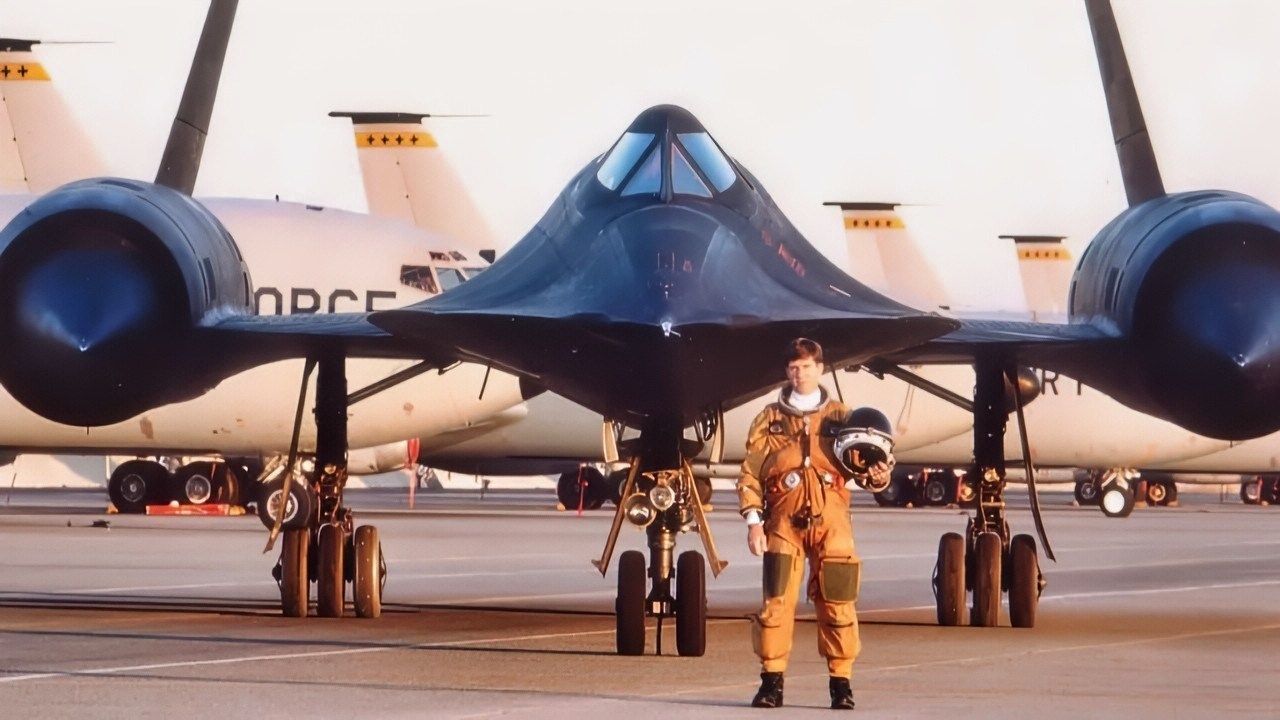
Key Points and Summary: During 1986’s Operation El Dorado Canyon, an SR-71 Blackbird flew a daring post-strike reconnaissance mission over Libya, crossing Gaddafi’s “Line of Death.”
-The Mission: Piloted by Brian Shul, the jet entered Libyan airspace at 2,125 mph to photograph damage from U.S. airstrikes.
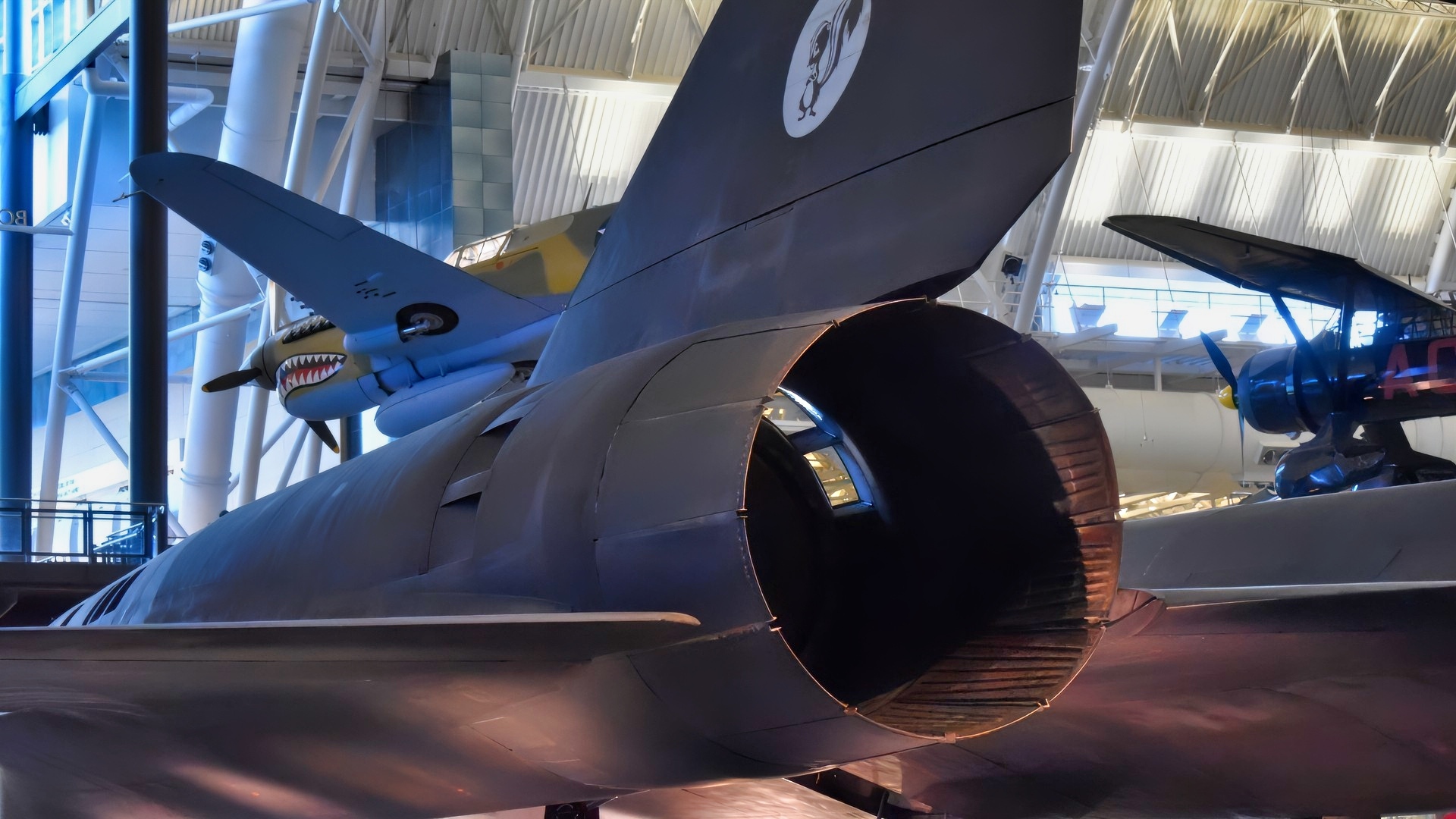
SR-71 Blackbird Rear Image. Credit: Taken on September 26, 2025 by National Security Journal.
-The Threat: Libyan surface-to-air missile (SAM) sites launched multiple Mach 5 missiles to intercept the spy plane.
-The Escape: Shul pushed the Blackbird beyond its Mach 3.2 limit—hitting Mach 3.5 at 80,000 feet—literally outrunning the missiles as they detonated harmlessly behind him.
In 1986, an SR-71 Blackbird Crossed Gaddafi’s ‘Line of Death’ at 2,125 MPH
The famed SR-71 Blackbird, during its lifespan, participated in numerous missions associated with the Vietnam War. As a spy plane, many of its missions took place during operations that were not, strictly speaking, wars.
According to one account, the countries that the Blackbird flew over during its life included “North Vietnam, Red China, North Korea, the Middle East, South Africa, Cuba, Nicaragua, Iran, Libya, and the Falkland Islands,” aside from its routine observance of “every Soviet nuclear submarine and mobile missile site.”
One such engagement was in 1986, when the Blackbird was deployed in support of Operation El Dorado Canyon in Libya.
Per the Air Force Historical Support Division, the US launched the operation following “accusations of terrorist activity and charges of weapons smuggling and espionage” on the part of Libya, then under dictator Muammar Gaddafi. This came to a head after the April 1986 bombing of La Belle Discotheque in West Berlin, which killed a US soldier.
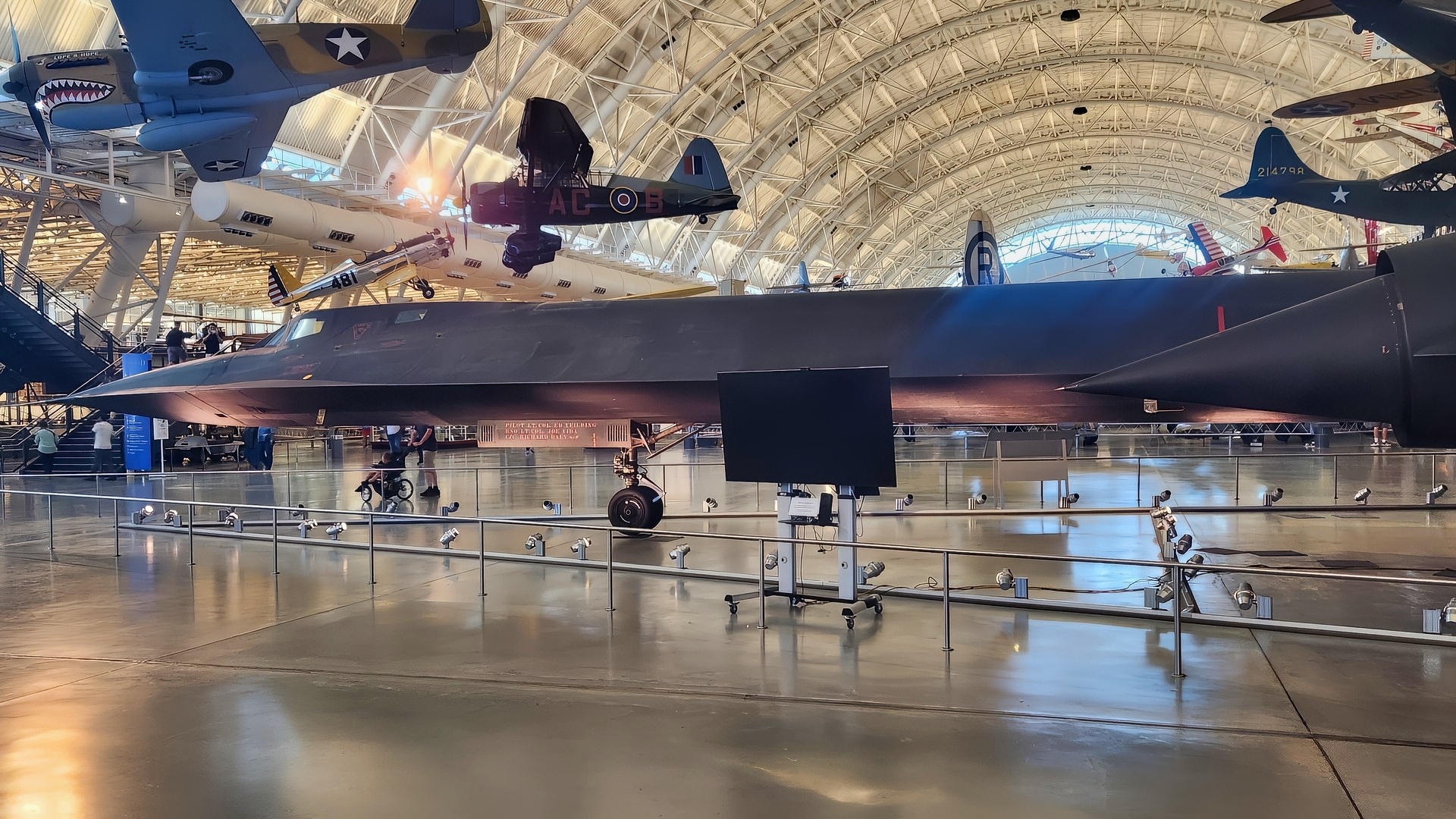
Amazing SR-71 Blackbird September 2025. Image Credit: National Security Journal/Dr. Brent M. Eastwood.
Operation El Dorado Canyon, per the Air Force article, began in April of 1986, when “24 US Air Force F-111s departed Royal Air Force (RAF) Base Lakenheath along with five EF-111s from RAF Heyford … As the aircraft approached Libya, two US Navy aircraft carriers, the USS Coral Sea and the USS America, launched 14 A-6E strike aircraft and 12 F/A-18 and A-7 strike support aircraft.”
The mission, per the Air Force account, “was deemed a success, it was not without controversy.” One F-111 was lost, and with it two pilots.
Crossing the Line of Death
The Air Force’s article does not mention the role the Blackbird played in that mission, but the story has since been told, as reported by Aviation Geek Club in 2018.
Per the report, the SR-71, #64-17960, entered the scene on April 16, two days after the start of Operation El Dorado Canyon, to assess the damage caused by earlier bombs. The pilot was Brian Shul, a man who went on to author several aviation books, and the copilot was RSO Maj. Walter Watson.
The Aviation Geek Club account cited Shul’s book “Sled Driver: The World’s Fastest Jet,” which provided a blow-by-blow of the SR-71’s April 1986 mission over Libya.
The plane “entered Libyan airspace at a blistering 2,125 mph to photograph the targets for bomb damage assessment (BDA). As they neared the end of their sweeps, they started receiving launch indications from Libyan surface-to-air missile (SAM) sites below.”
It involved crossing the Libyan dictator’s famous “line of death.”
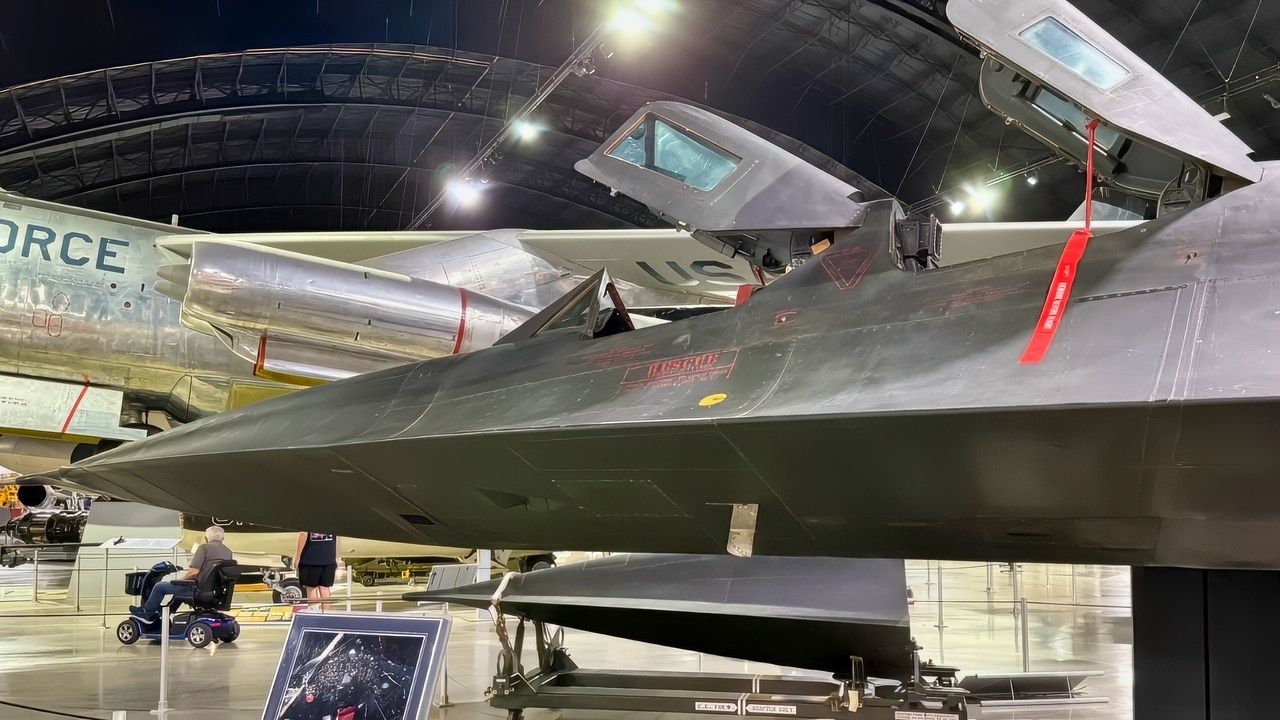
SR-71 Blackbird at USAF Museum July 2025. Image Credit: National Security Journal.
“My duty was to fly over Libya and take photos recording the damage our F-111s had inflicted,” Shul wrote. “Qaddafi had established a ‘line of death,’ a territorial marking across the Gulf of Sidra, swearing to shoot down any intruder that crossed the boundary. On the morning of April 15, I rocketed past the line at 2,125 mph.”
The jet entered Libyan airspace when his RSO informed him of the missile launch signals.
“I quickly increased our speed, calculating the time it would take for the weapons, most likely SA-2 and SA-4 surface-to-air missiles capable of Mach 5, to reach our altitude. I estimated that we could beat the rocket-powered missiles to the turn and stayed our course, betting our lives on the plane’s performance,” he wrote.
As the spy plane headed towards the Mediterranean, his RSO suggested that he “pull it back.”
“It was then that I noticed I still had the throttles full forward. The plane was flying a mile every 1.6 seconds, well above our Mach 3.2 limit. It was the fastest we would ever fly. I pulled the throttles to idle just south of Sicily, but we still overran the refueling tanker awaiting us over Gibraltar.”
“Talk to Her”
At this point, the pilot was listening to the plane itself.
“But I have my hands on the stick and throttles and can feel the heart of a thoroughbred, running now with the power and perfection she was designed to possess. I also talk to her. Like the combat veteran she is, the jet senses the target area and seems to prepare herself,” Shul wrote in the book.
The jet then moved through Libya, leaving a sonic boom “across Benghazi,” another place that would become important for other reasons decades later. The jet continued to receive electronic signals.
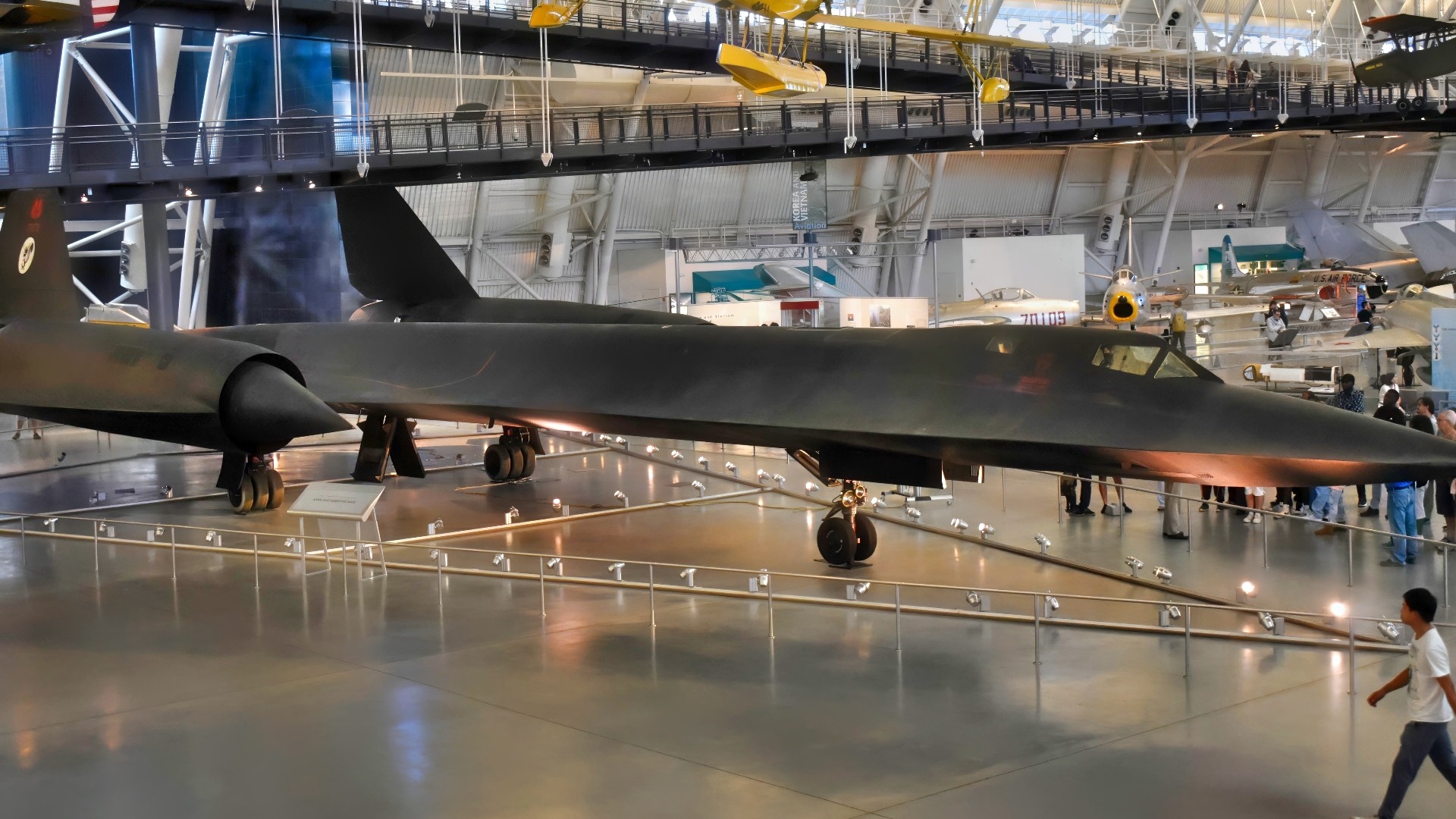
SR-71 Blackbird Smithsonian. Image Credit: National Security Journal.
“With all inlet doors tightly shut, at 3.24 Mach, the J-58s are more like ramjets now, gulping 100,000 cubic feet of air per second,” he wrote. “We are a roaring express now, and as we roll through the enemy’s backyard, I hope our speed continues to defeat the missile radars below. We are approaching a turn, and this is good. It will only make it more difficult for any launched missile to solve the solution for hitting our aircraft.”
As the Blackbird moved through Libya, the pilot kept pushing the throttle, eventually up to Mach 3.31. And then came another missile launch signal.
“The gravity of Walter’s voice tells me that he believes the signals to be a more valid threat than the others,” Shul wrote. “Within seconds he tells me to ‘push it up’ and I firmly press both throttles against their stops. For the next few seconds, I will let the jet go as fast as she wants. A final turn is coming up, and we both know that if we can hit that turn at this speed, we most likely will defeat any missiles. We are not there yet, though, and I’m wondering if Walt will call for a defensive turn off our course.”
At that moment, the pilot began thinking about SR-71 pilots from the Vietnam era.
“They said the few errant missile detonations they were able to observe from the cockpit looked like implosions rather than explosions. This was due to the great speed at which the jet was hurling away from the exploding missile.”
Indeed, the SR-71 was never shot down, and it wouldn’t be that day, either.
“The Mach eases to 3.5 as we crest 80,000 feet. We are a bullet now – except faster. We hit the turn, and I feel some relief as our nose swings away from a country we have seen quite enough of,” he wrote. “Screaming past Tripoli, our phenomenal speed continues to rise, and the screaming Sled pummels the enemy one more time, laying down a parting sonic boom. In seconds, we can see nothing but the expansive blue of the Mediterranean. I realize that I still have my left hand full-forward and we’re continuing to rocket along in maximum afterburner.”
About the Author: Stephen Silver
Stephen Silver is an award-winning journalist, essayist, and film critic, and contributor to the Philadelphia Inquirer, the Jewish Telegraphic Agency, Broad Street Review, and Splice Today. The co-founder of the Philadelphia Film Critics Circle, Stephen lives in suburban Philadelphia with his wife and two sons. For over a decade, Stephen has authored thousands of articles that focus on politics, national security, technology, and the economy. Follow him on X (formerly Twitter) at @StephenSilver, and subscribe to his Substack newsletter.


