
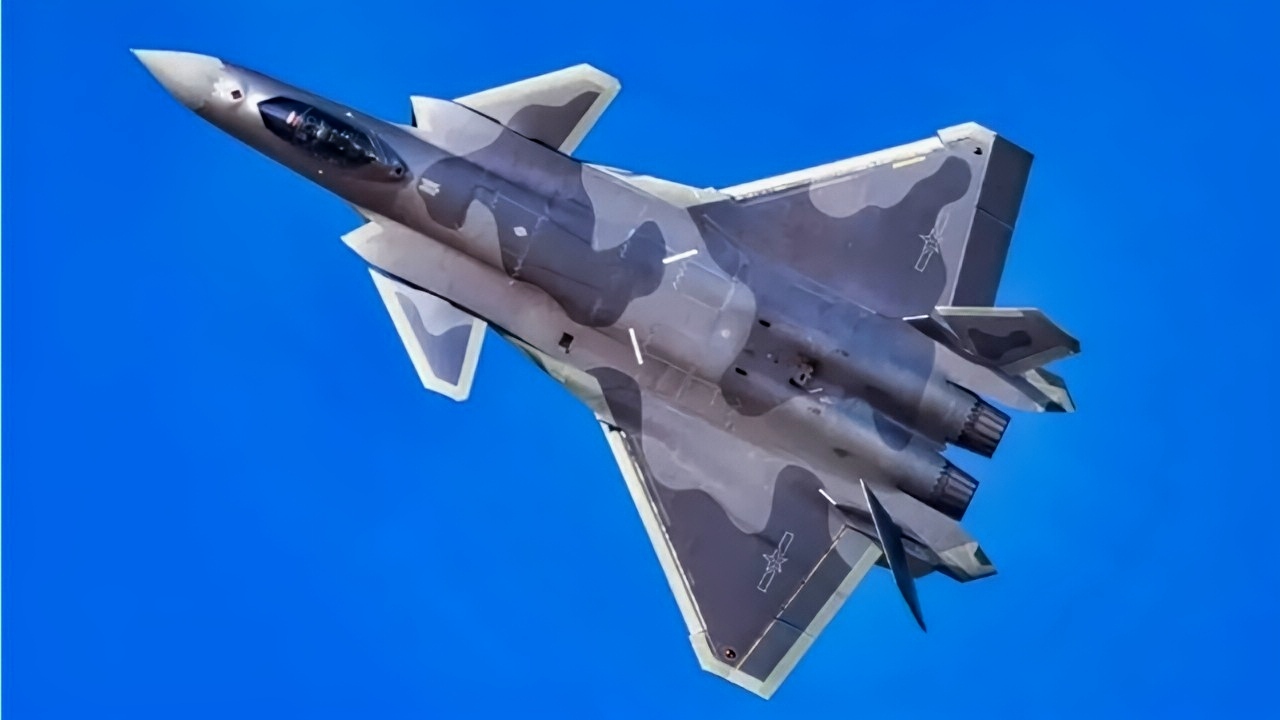
Key Takeaways – Chinese researchers from the PLA and CASIC claim to have engineered a loofah-based stealth coating that could undermine space-based radar tracking of Chinese fighters.
-The carbonized loofah composite, NCO-2, infused with nickel–cobalt oxide nanoparticles, reportedly absorbs nearly 100% of Ku-band energy at just 4mm thick, shrinking an aircraft’s vertical radar cross-section by up to 700 times.
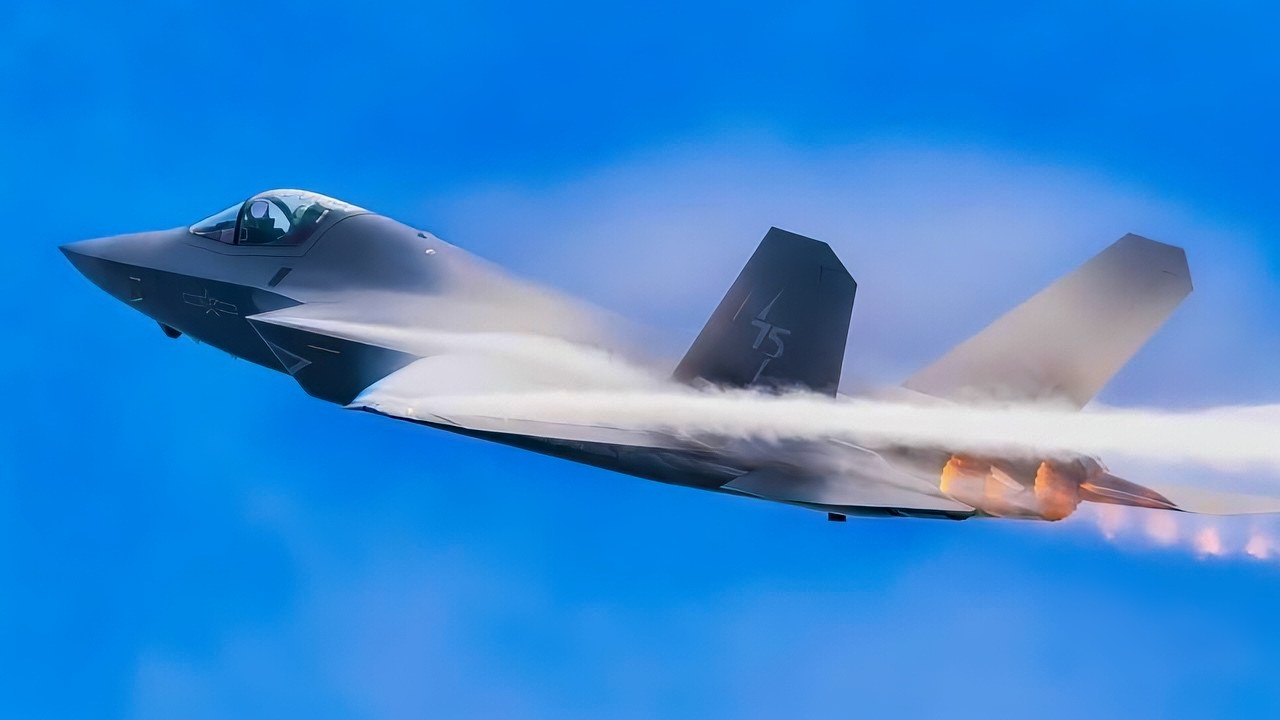
J-35A Fighter in the Clouds. Image Credit: Chinese Weibo.
-In theory, that could blunt U.S. and Japanese concepts for tracking J-20s and J-35s from above using space-based SAR and early-warning constellations.
-If even partially validated and mass-produced, NCO-2 would narrow the stealth gap and force Washington and Tokyo toward new non-radar sensing options.
How China May Disrupt Space-Based Radar Tracking Using Loofah
A team of scientists at the People’s Liberation Army (PLA) and China Aerospace Science and Industry Corporation (CASIC) has reportedly developed a new technology that should protect its fighter jets from space-based radar satellites, potentially hindering Western efforts to counter emerging technologies.
The new material, an ultra-thin stealth coating that absorbs electromagnetic waves, is made out of a surprising material: loofah.
The remarkable new finding was published in the journal High Power Laser and Particle Beams.
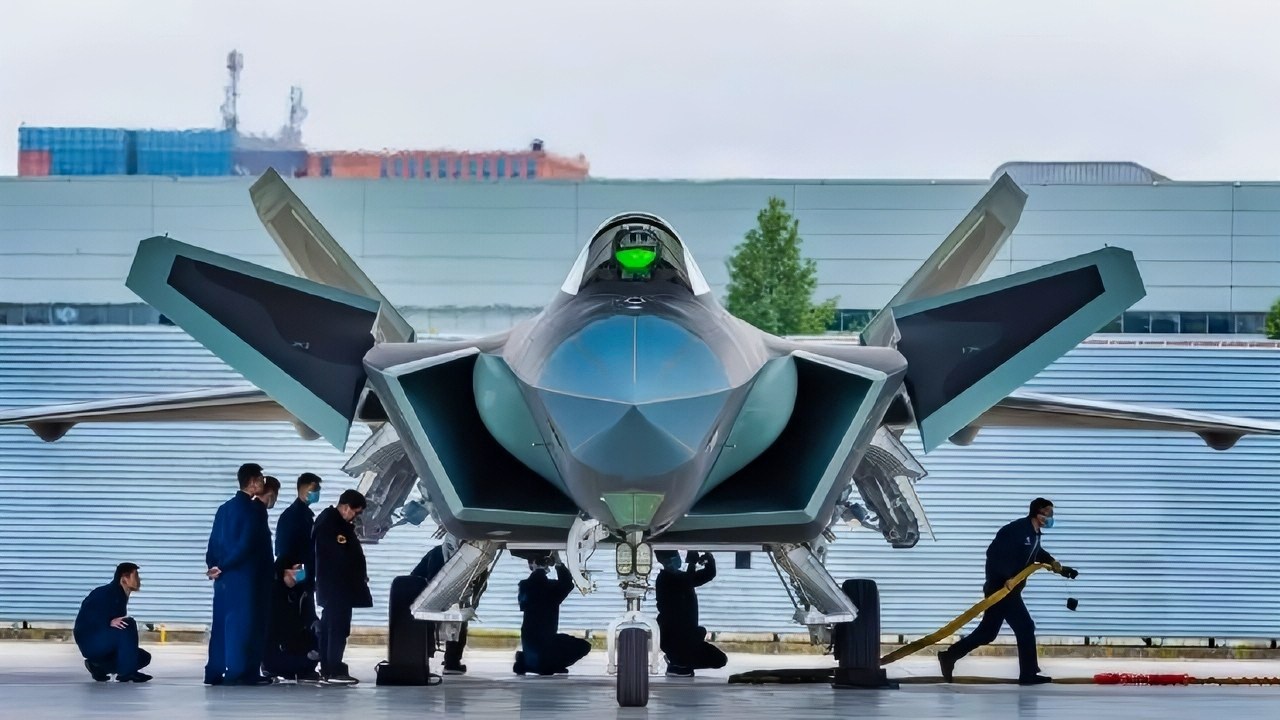
J-20 Fighter Fueling Up. Image Credit: Chinese Weibo.
The material reportedly consists of dried natural loofah that has been carbonized, then combined with magnetic nickel-cobalt oxide nanoparticles.
The result is a composite material capable of absorbing almost 100% of electromagnetic waves in the 12-18 GHz frequency range, known as the “Ku-band.”
Luffa cylindrica, the loofah, is a porous plant once prized by ancient Egyptian royals.
Long used as an exfoliant, the material could now help China bridge a technological gap with the United States that has kept its stealth aircraft virtually a generation behind those of the West.
How the Composite Works
Dubbed “NCO-2,” the new composite is just 4mm thick and is designed to dramatically reduce radar signatures, effectively reducing the size of reflected signals by as much as 700 times.
According to the team of scientists behind it, the coating is so good that it maintains the same performance regardless of the beam’s origin.
In practice, it means this: a stealth aircraft with a vertical RCS (how big the aircraft appears to a radar looking down at it) of 50 square meters could appear to the observer as less than 1 square meter.
Researchers say that when electromagnetic waves make contact with the material, they bounce around within its pores as though they’re stuck in a maze, making it difficult to escape.

J-20 Fighter In All Yellow. Image Credit: Creative Commons.
The waves repeatedly reflect internally, giving the material more time to absorb the energy completely – meaning much of it will never actually escape.
The researchers also noted that carbonized loofah was an attractive option because it forms a conductive network, enabling electrons to move freely and ultimately converting microwave energy into heat.
“The introduction of NiCo204 particles not only enhanced the magnetic loss properties of the composites, but also regulated the dielectric properties and optimized the impedance of matching,” researchers explained.
“Due to the unique mesh structure and the synergistic effect of interfacial polarization, conductive loss, magnetic loss and other loss mechanisms, the NiCo204/C composites obtain good electromagnetic wave absorption properties.”
What It Means for China: J-20 and J-35A Stealth Fighter Upgrades?
For Beijing, this is more than just a clever trick using a surprising natural material. The development could undermine one of the West’s remaining advantages over China: wide-area sensing from above.
Chinese scientists have made it clear that the new material is capable of rendering space-based radar satellites useless – or, at least, significantly less helpful than they might have been had this material not been discovered.
The primary party trick advertised for the new material is that it can maintain its performance even when a radar beam comes from above, shrinking the jet’s vertical cross-section by a significant amount.
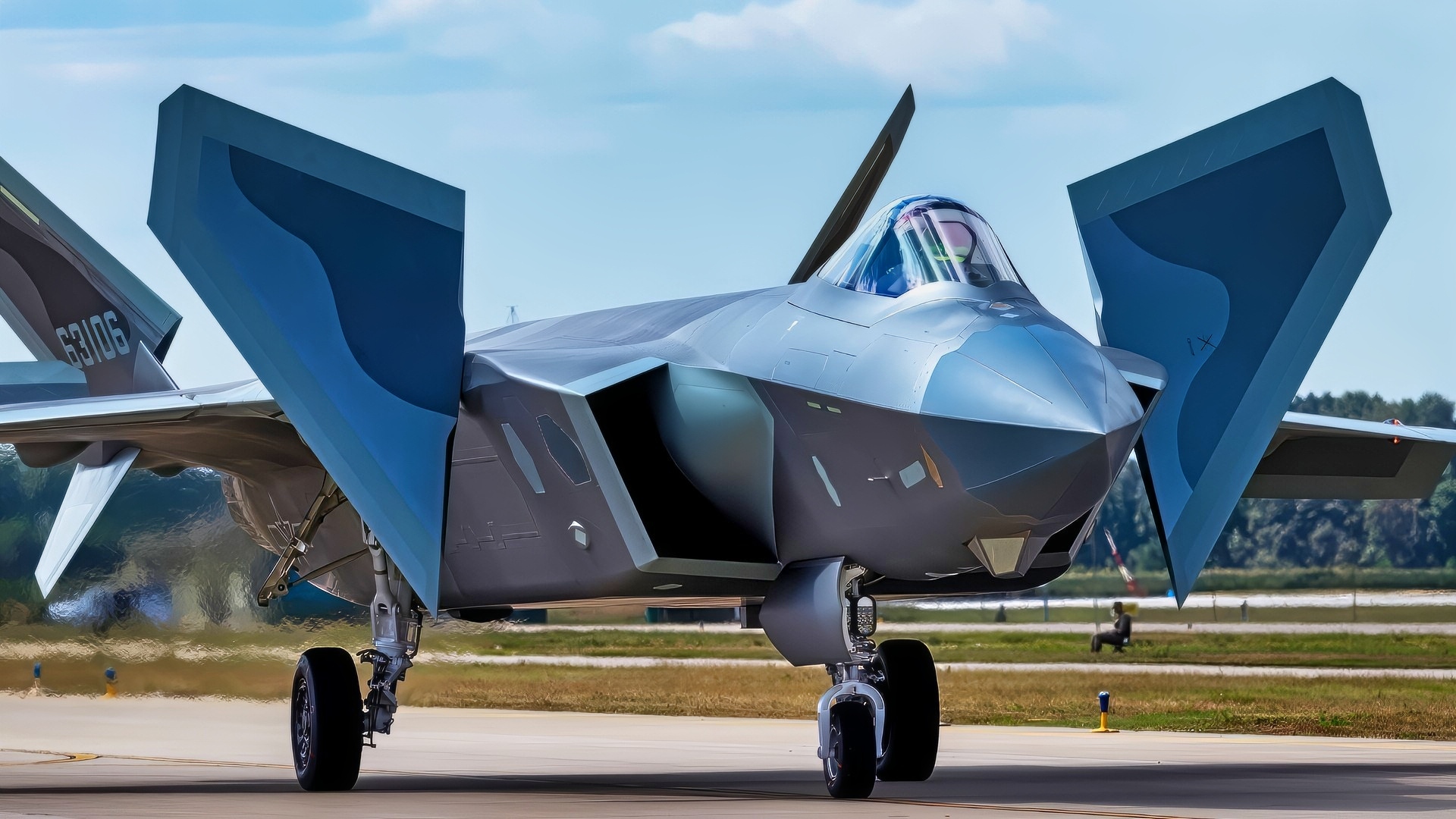
J-20 Fighter 2025 Photo. Image Credit: Chinese Military.
That vertical angle matters because Western counter-stealth concepts increasingly rely on viewing low-observable aircraft from above rather than from the horizon.
The United States already fields classified radar-imaging satellites – widely believed to include the NRO’s TOPAZ synthetic-aperture radar series – alongside a growing constellation of Space Development Agency and Missile Defense Agency payloads that are designed to track hard-to-see and fast-moving threats from low Earth orbit.
And it’s not just the United States working on this tech, either. Japan is pouring resources into its own defense satellite constellations for early warning and real-time target tracking, and is explicitly testing space-based sensors on the HTV-X spacecraft, which is designed to track hypersonic threats from above.
While the technologies being developed by the U.S. and Japan would work against any hypersonic stealth threat, China’s flagship stealth fighters – the J-20 and the newer J-35A – are arguably now their primary targets.
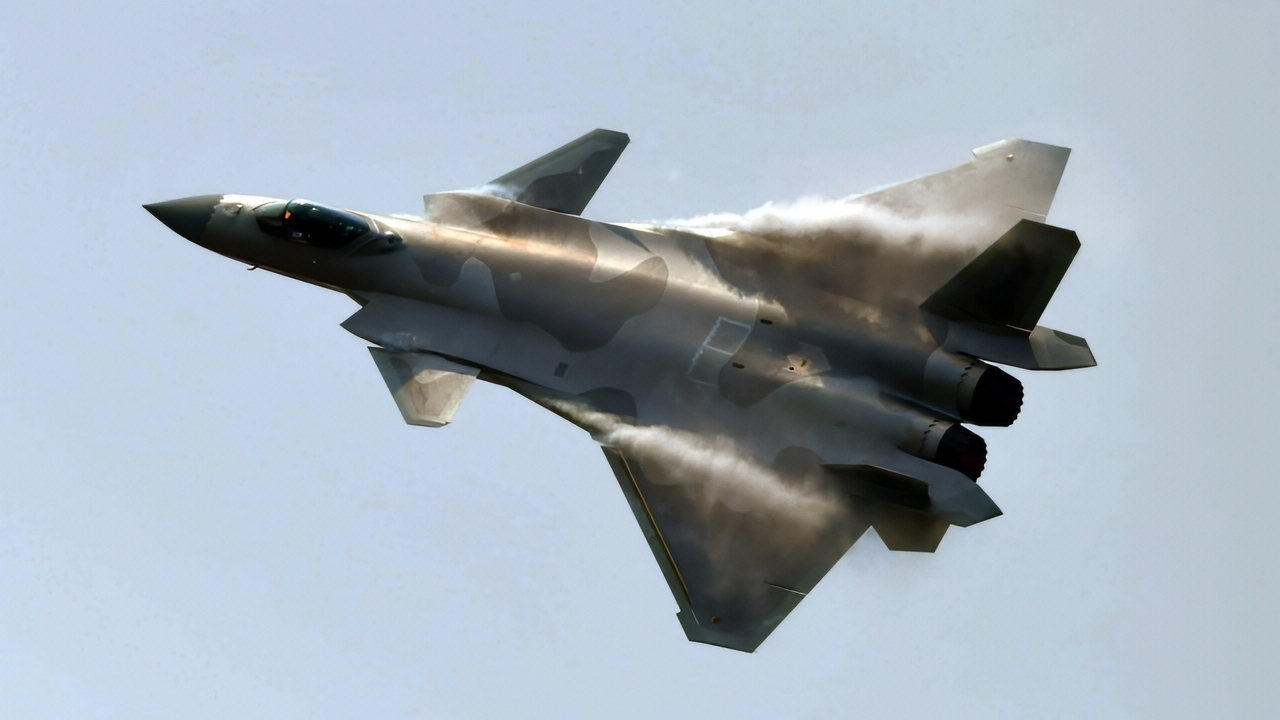
J-20 Fighter. Image Credit: Chinese Air Force.
The canard-delta J-20 entered PLAAF service in 2017 as a long-range air-superiority and interceptor platform, and carries PL-15 beyond-visual-range missiles in its internal bays. The J-35 family, meanwhile, includes the land-based J-35A that is now beginning to enter frontline use – and it’s intended to be a more numerous, medium-weight, low-observable fighter to complement the heavier J-20.
While analysts generally rate the J-20’s stealth as inferior to that seen in its Western counterparts, if even a fraction of China’s claims about NCO-2 are borne out by the time it comes to production, it could significantly narrow the gap.
In practical terms, it would make it harder for the U.S. and Japan to maintain a continuous track on J-20s and J-35As once they are within striking range – and could force Washington and Tokyo to push harder on new, non-radar methods of tracking Chinese stealth.
About the Author:
Jack Buckby is a British author, counter-extremism researcher, and journalist based in New York who writes frequently for National Security Journal. Reporting on the U.K., Europe, and the U.S., he analyzes and understands left-wing and right-wing radicalization and reports on Western governments’ approaches to the pressing issues of today. His books and research papers explore these themes and propose pragmatic solutions to our increasingly polarized society. His latest book is The Truth Teller: RFK Jr. and the Case for a Post-Partisan Presidency.


