

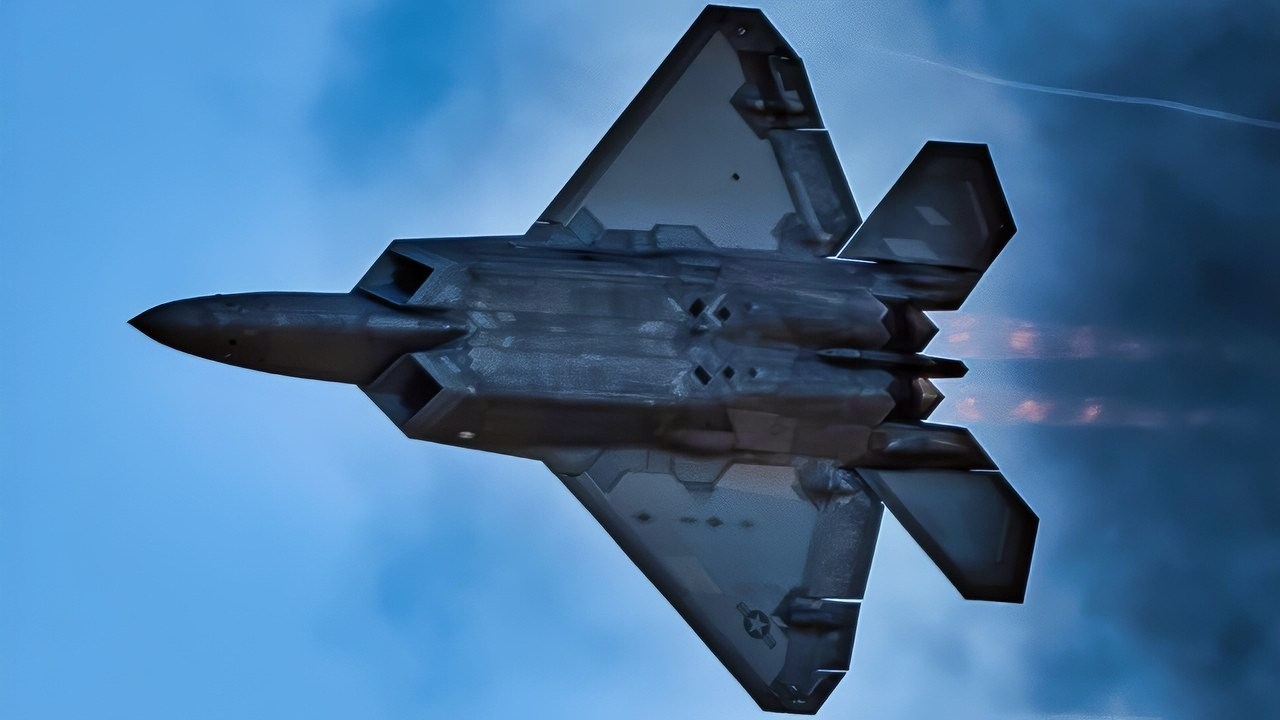
Key Points and Summary – The Air Force can’t afford false choices between the F-47, F-22 “Super,” and F-35 “Ferrari.”
-The coming F-47 will bring paradigm-shifting tech, but upgraded F-22s and F-35s can still outclass China’s J-20 and Russia’s Su-57 well into the 2060s.

F-35 Near the Flag. Image Credit: Creative Commons.
With new coatings, sensors, software, and networked weapons, both existing 5th-gen jets can become “new” aircraft and act as force-multipliers for the F-47.
-In a great-power fight where China fields hundreds of stealth fighters, the U.S. will need mass, range, and survivable networking across all three platforms—not a budget-driven either/or.
The F-47, F-22 “Super” and F-35 “Ferrari” Have a Message for Congress
There is a tactical and strategic reality that hangs in a delicate, if not precarious, balance with budget considerations related to the US Air Force’s path forward for fighter-jet modernization.
While there is the ever-present discussion of limited resources and the ultimate limits on dollars to be spent, there is a pressing need for the service to address its short- and long-term national security needs.
What this means is that, while of course there cannot simply be a budget without limits, the service and Congress would be well served to ensure that there is sufficient budget to prioritize the F-47, F-22 “Super,” and F-35 “Ferrari.”
Many variables inform this equation, including short-term defense requirements, longer-term necessities, and threat-driven circumstances.
There is also an apparent technological reality regarding the extent to which existing 5th-generation aircraft can upgrade to sustain performance and maintain potential superiority in a new threat environment.
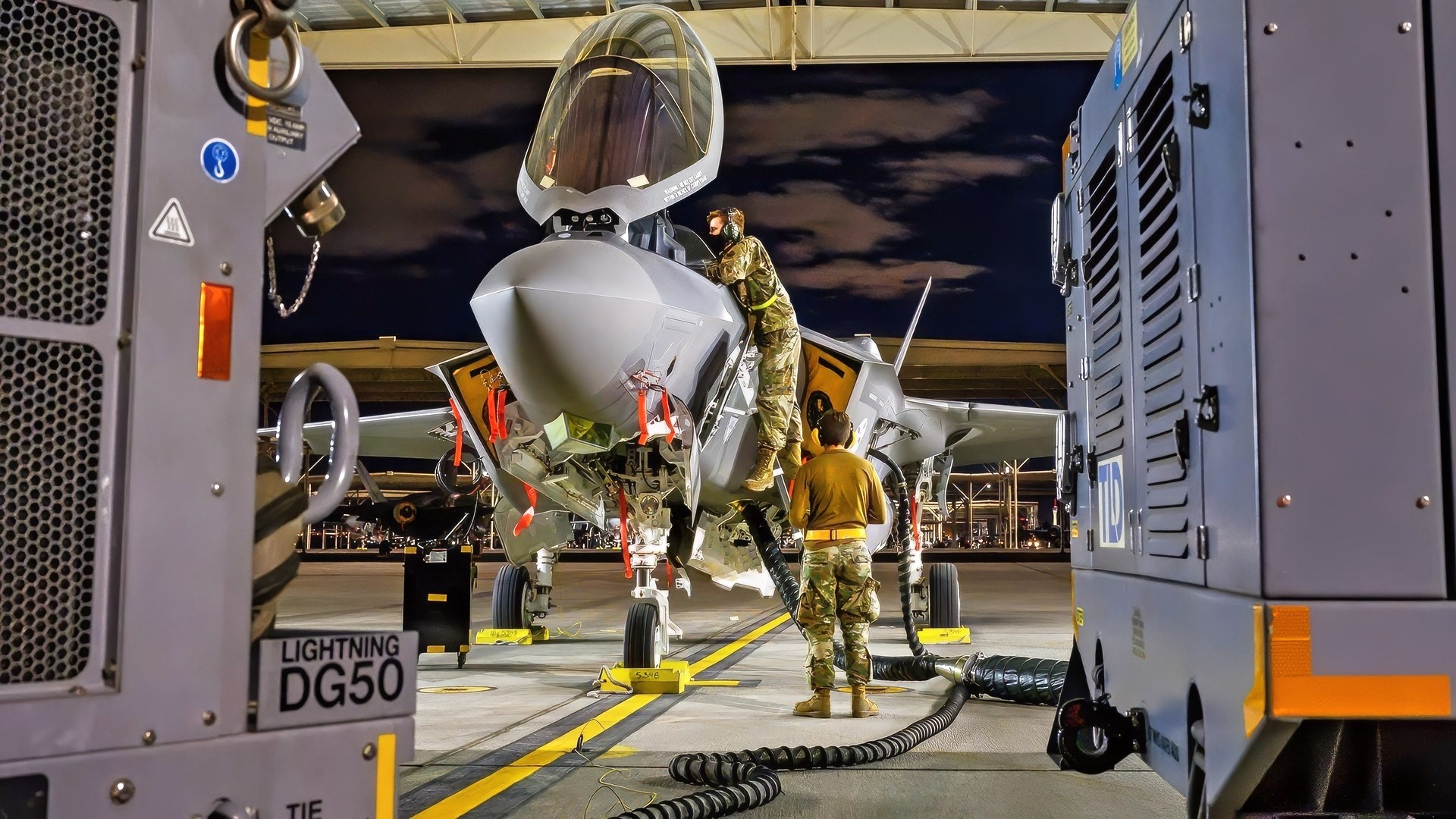
F-35 Fighters Ready. Image Credit: Creative Commons.
The F-47 will likely introduce a series of paradigm-changing technologies that will surpass the limits of what upgraded F-22s and F-35s can do, yet that does not render the F-22 and F-35 irrelevant.
In fact, the opposite is true: both airplanes are well-positioned to retain operational effectiveness in an increasingly challenging threat environment.
The external configuration of both the F-22 and F-35 may not change much, yet comprehensive upgrades can make both of these platforms almost entirely new aircraft.
Enhanced Stealth
Advanced coating materials and stealth surface upgrades can enhance the aircraft’s radar-absorbent properties, while electronic, sensing, and weapons upgrades can vastly improve its performance capabilities.
Both the F-35 and the F-22 are built with the technical infrastructure to be substantially upgraded and modernized, so both can become stealthier, more lethal, and equipped with longer-range, more precise sensing and targeting.
Incremental software drops continue to enable the F-35 to expand its weapons envelope, as the platform will be able to fire the next-generation Stormbreaker air-launched bomb, able to track and destroy moving targets in all weather from ranges out to 40 miles.
The 3.2b software upgrade across the F-22 fleet years ago vastly improved its survivability and lethality by improving its AIM-120D and AIM-9X weapons.
Radar technologies and aircraft targeting can become longer-range, higher-resolution, and more precise, and networking technologies can be strengthened, widened across domains, and hardened against jamming and interference.
Air Force F-22 & F-35 to 2060
What this amounts to is that, in both the near and the long term, there is a possibility, and even a likelihood, that the F-35 and F-22 can achieve superiority over rival 5th-generation aircraft such as the Chinese J-20 and Russian Su-57.

Su-57 Fighter From Russia. Image Credit: Creative Commons.
Several years ago, the Pentagon made it clear that it intended to fly into the 2070s or beyond, and both the F-22 and the F-35 are positioned to fly alongside and greatly fortify and supplement the emerging F-47.
This will be especially true if, as is likely, the F-47 is engineered to securely share information and network with advanced variants of the F-22 and F-35.
Advanced variants of the F-22 and F-35 can significantly strengthen the emerging F-47 platform and should by no means diminish or delay the pressing need for the F-47.
This effort is being fast-tracked and is very much needed by the US Air Force, given the current, fast-changing threat environment.
There is also a need for mass airpower in the event of a great power conflict, particularly given that China is believed to now operate hundreds of advanced J-20s.
The US Air Force will need the F-47, as well as upgraded variants of the F-22 and F-35, for decades to come.
About the Author: Kris Osborn
Kris Osborn is the President of Warrior Maven – Center for Military Modernization. Osborn previously served at the Pentagon as a highly qualified expert in the Office of the Assistant Secretary of the Army—Acquisition, Logistics & Technology. Osborn has also worked as an anchor and on-air military specialist at national TV networks. He has appeared as a guest military expert on Fox News, MSNBC, The Military Channel, and The History Channel. He also has a Masters Degree in Comparative Literature from Columbia University.


