
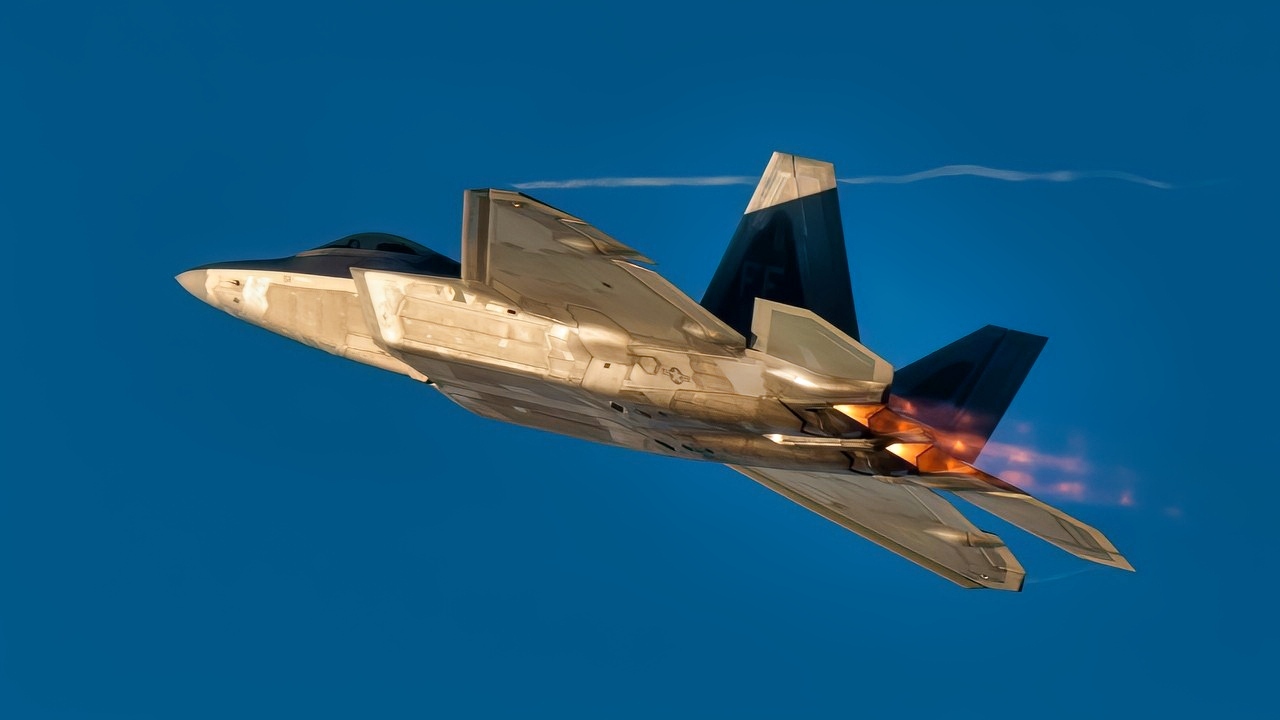
Key Points and Summary – In the late Cold War, the Navy briefly explored a carrier-capable F-22 “Sea Raptor” under the Naval Advanced Tactical Fighter program to replace the F-14.
-Navalizing the Raptor meant major redesigns—swing wings, reinforced gear, corrosion protection, and structural changes that would have produced a near-new aircraft and blown up any cost savings or commonality with the Air Force F-22.
-As budgets shrank and priorities shifted, the Navy walked away, opting to extend the F-14 and later buy cheaper multirole jets.
-Today’s debates over China and carrier vulnerability keep the “what if” alive, but the Sea Raptor was never truly viable.
BONUS: We recently visited a static display of an F-22 Raptor in July. We present photos and video from that visit.
Sea Raptor: The Carrier-Capable F-22 Raptor That Wasn’t To Be
The debate over a carrier-capable F-22 – often referred to as the hypothetical “Sea Raptor” – has raged for years and remains one of modern military aviation’s great “what-ifs.”
In the late 1980s and early 1990s, as the U.S. Navy sought a successor to the F-14 Tomcat for fleet air defense, the idea of adapting the Air Force’s cutting-edge F-22 platform for carrier service briefly gained some traction.
While the concept was officially explored, it was ultimately shelved before full development, falling victim to a tale as old as the Navy itself: shifting priorities, technical difficulty, and ballooning costs.
Today, as peer adversaries expand their own naval aviation capabilities, talk has returned about the prospect of a “Sea Raptor” – or a modern alternative – and whether the U.S. lost a valuable opportunity when the program was scrapped.
The Air Force Jet That Almost Went to Sea
The F-22 was initially developed under the Air Force’s Advanced Tactical Fighter (ATF) program to deliver world-leading air-superiority – specifically, a combination of stealth, super-cruise, advanced avionics, and maneuverability.
At the same time, the Navy had launched a parallel initiative – the Naval Advanced Tactical Fighter (NATF) – aimed at producing a carrier-capable variant of the same basic design.
That proposed version, sometimes known as “Sea Raptor” or “F-22N,” was conceived to replace the F-14 Tomcat in the fleet’s air-dominance and fleet-defense role.
But the proposal was complicated and required some substantial re-engineering.
The new design would need variable-sweep wings to allow for slower landing speeds, reinforced landing gear and airframe structure to survive catapult launches and arrested landings on aircraft carriers, and corrosion-resistant materials to withstand the hard, salt-water environment.
The plan even considered expanding weapons storage, potentially allowing it to accommodate air-to-air missiles beyond standard F-22 loadouts, as well as anti-ship ordnance.
The program ended in 1991. A combination of Cold War budget pressures, declining demand for expensive high-end fighters, and rising per-jet costs led the Navy to back away from the idea entirely. Instead of pursuing the program, the Navy chose to maintain and upgrade its F-14 fleet before pivoting to more economical multirole fighters.
It meant that the F-22 was only ever a land-based, Air Force platform. 195 airframes were built in total, with no carrier-capable “N” variant ever going further than a preliminary design.
F-22 Raptor: We Visited This Amazing Airplane at the U.S. Air Force Museum
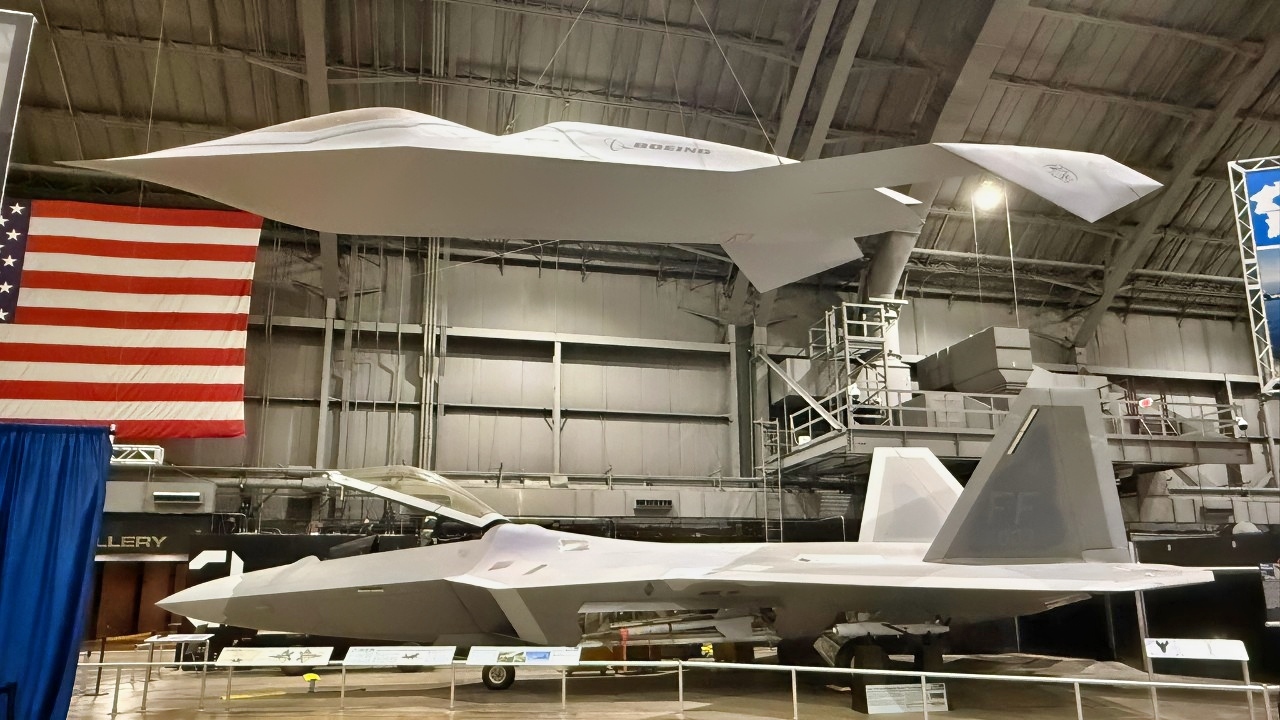
YF-118G above and F-22 Raptor Below. Image from National Security Journal.

F-22 Raptor Sitting in AF Museum National Security Journal Photo. Image Credit: Harry J. Kazianis
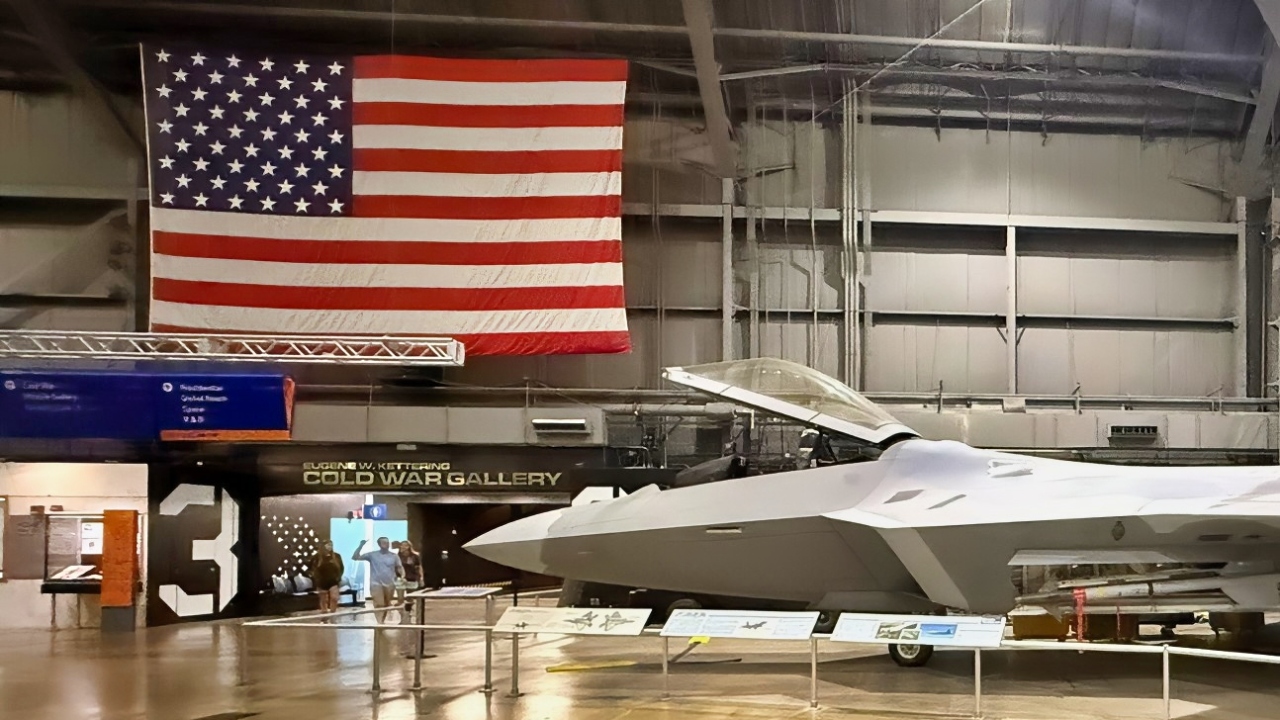
F-22A Raptor in the Air Force Museum NSJ Photo.
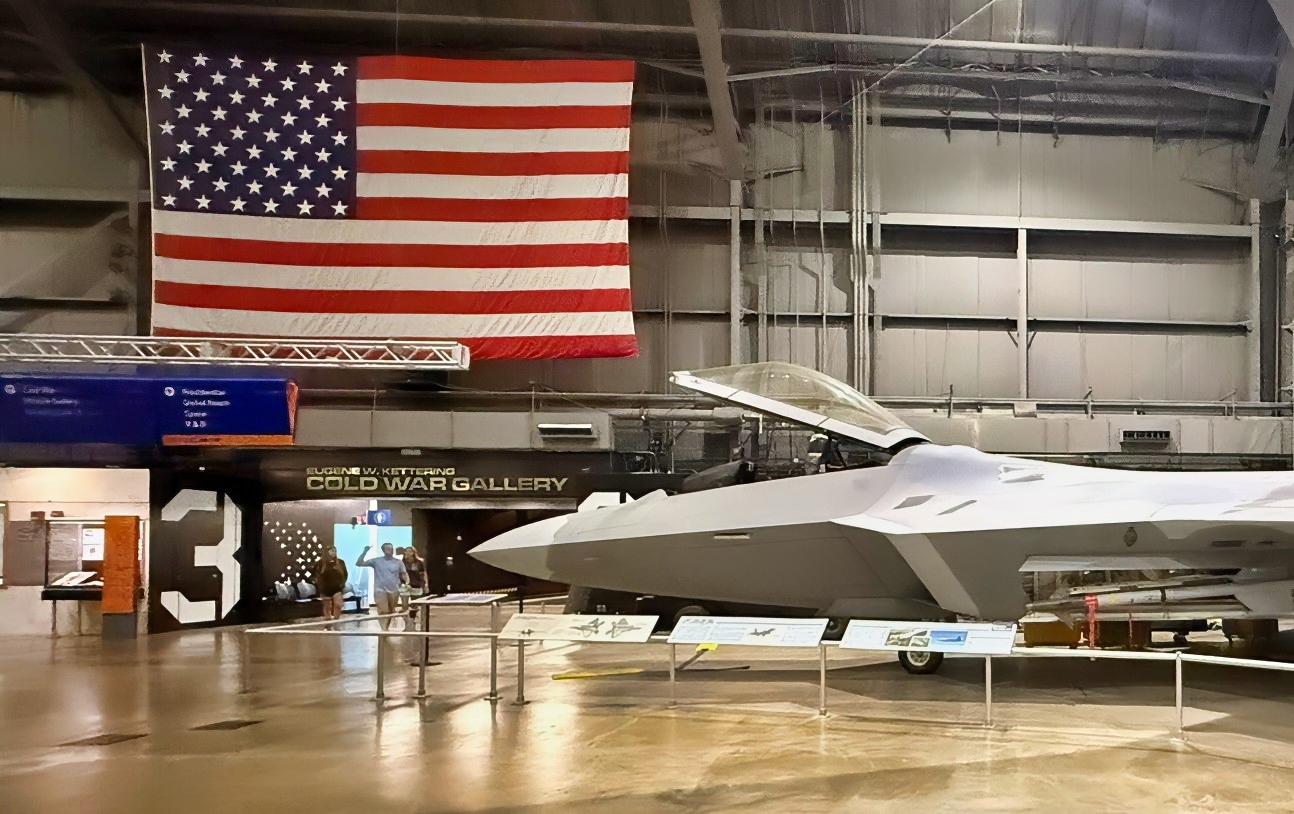
F-22A Raptor in the Air Force Museum. Image Credit: National Security Journal Original Photo.
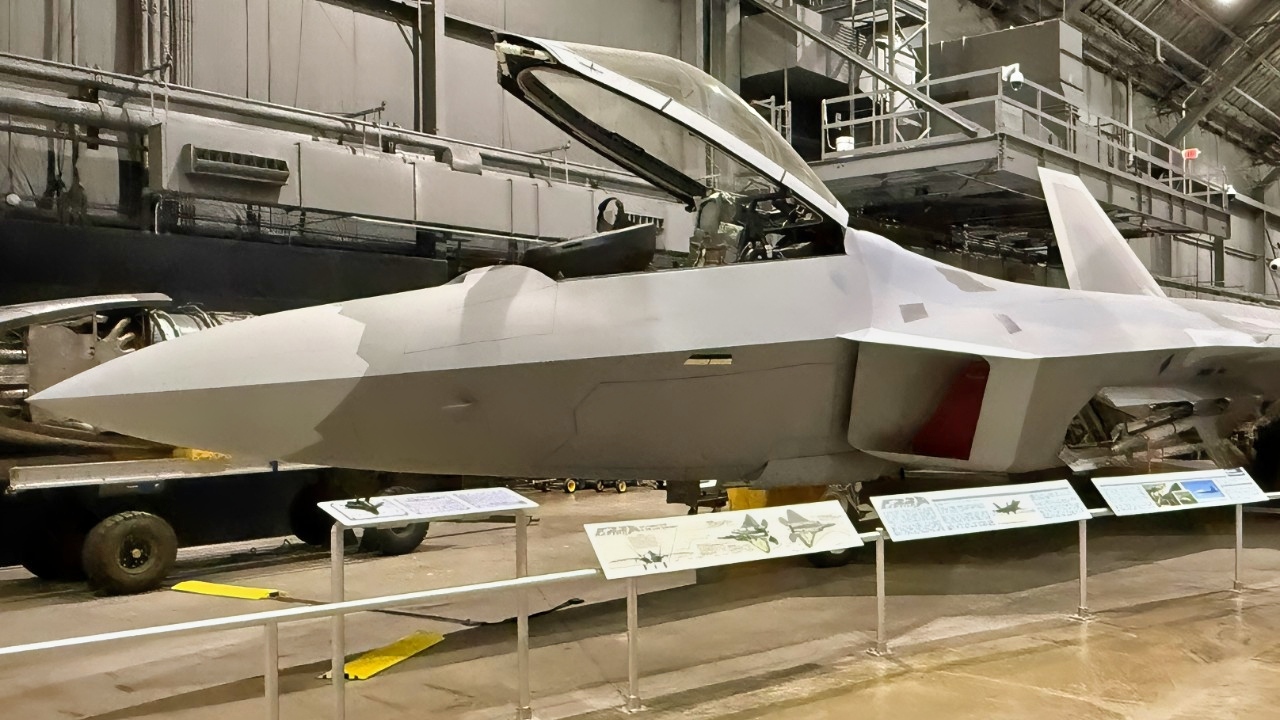
F-22A Raptor In Dayton, Ohio National Security Journal Photo.
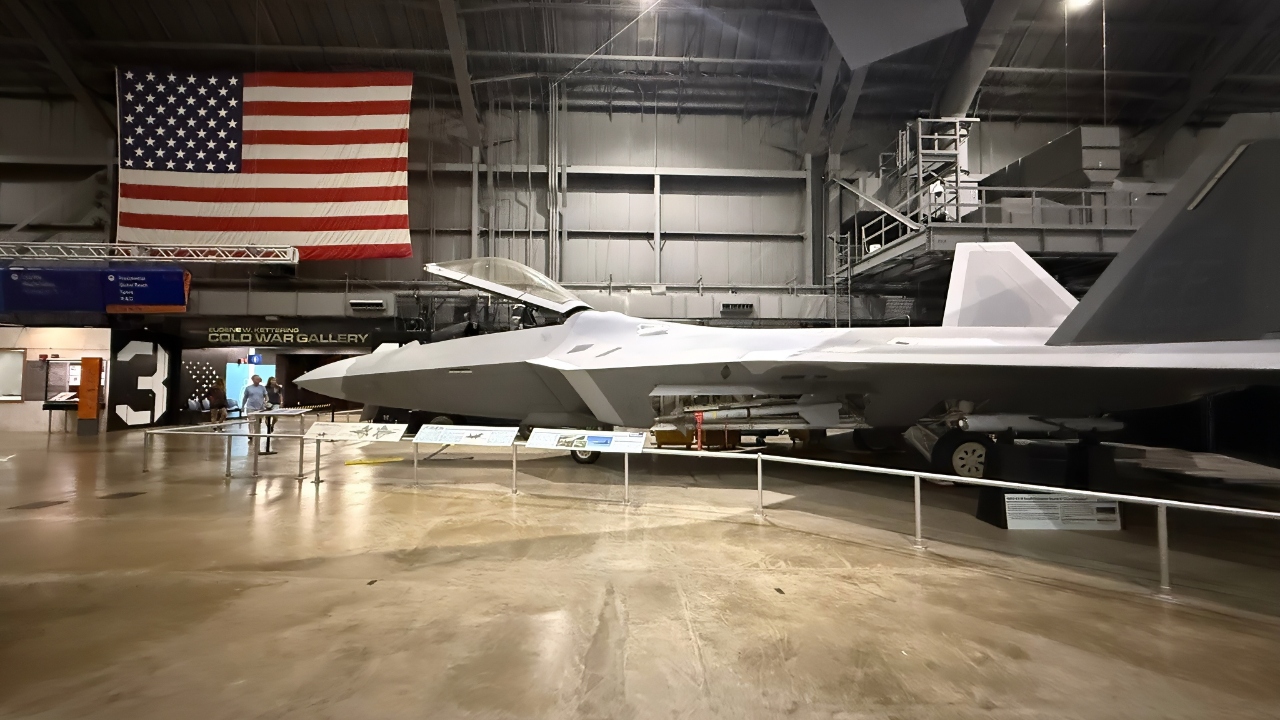
F-22 Resting at U.S. Air Force Museum. Image Credit: National Security Journal.
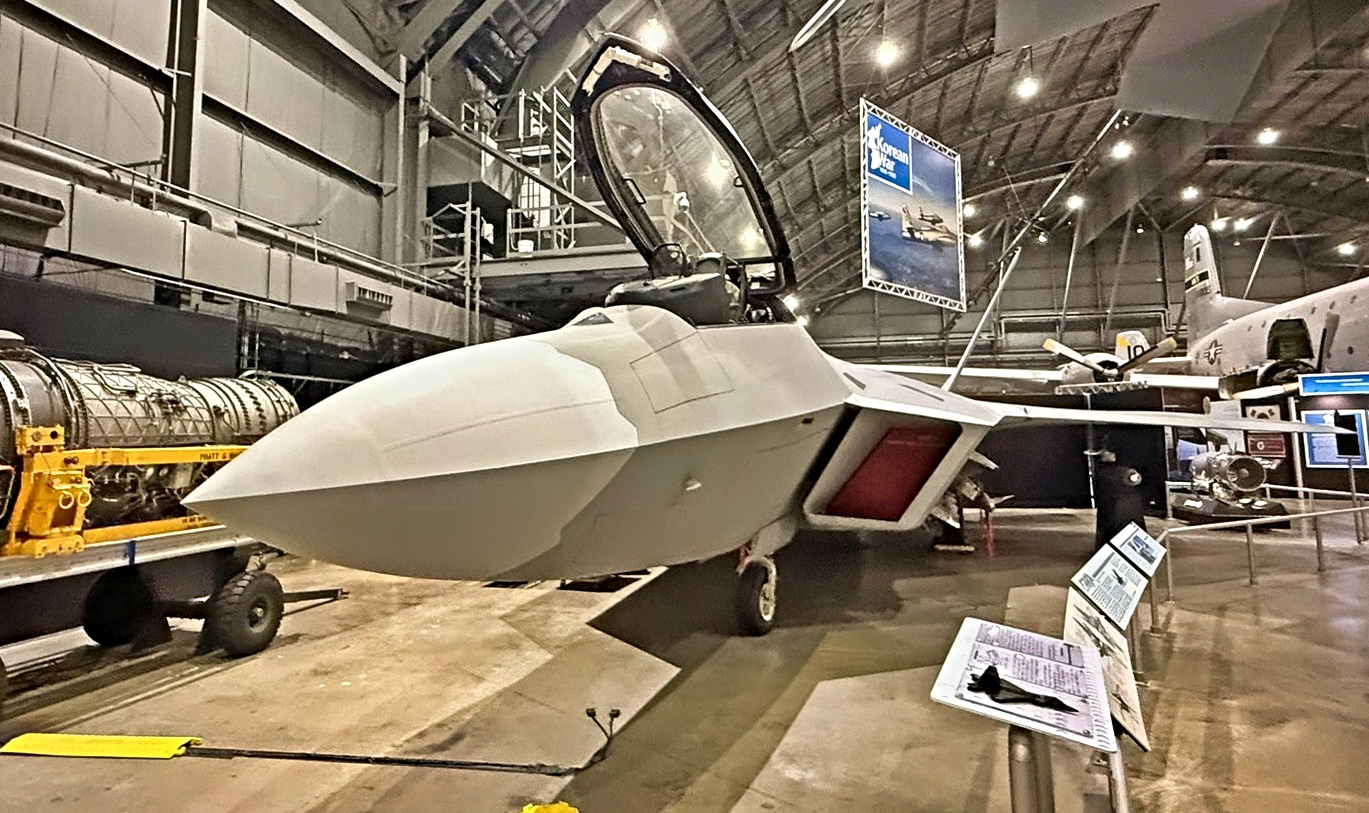
F-22 Raptor Nose Shot from U.S. Air Force Museum. Image Credit: National Security Journal.
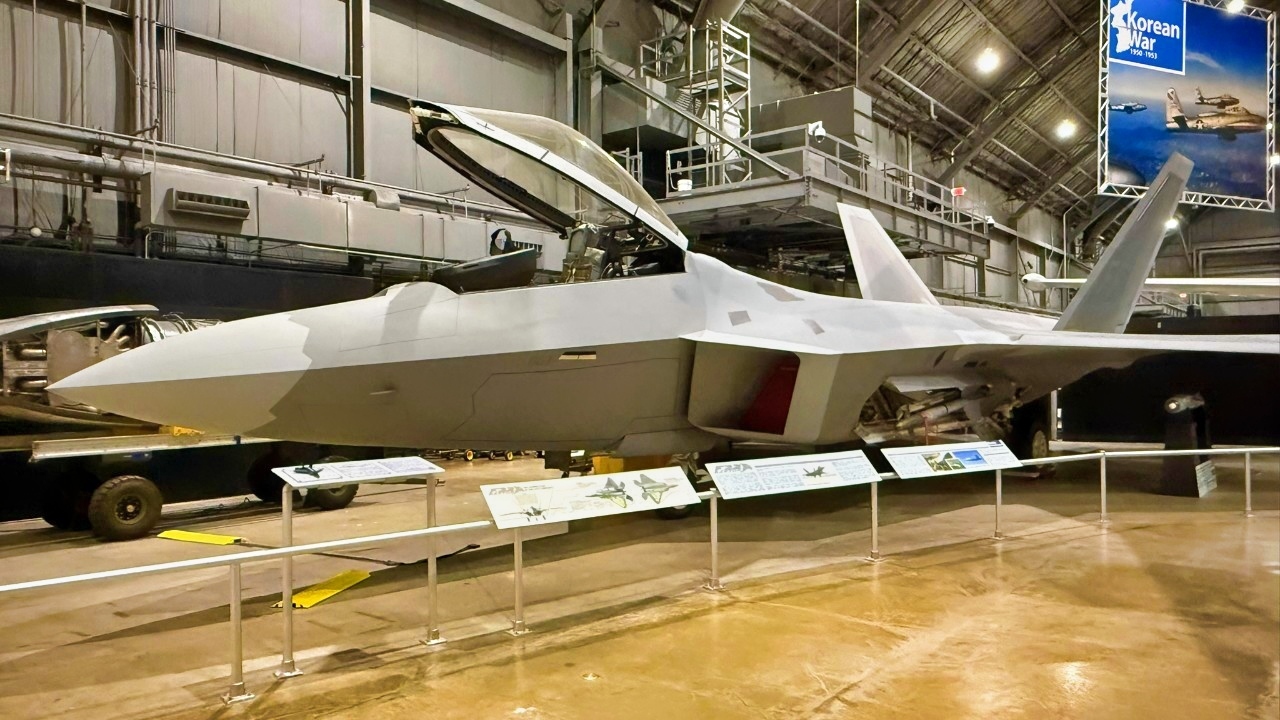
F-22 Raptor @ USAF Museum 2025. Image Credit: National Security Journal.
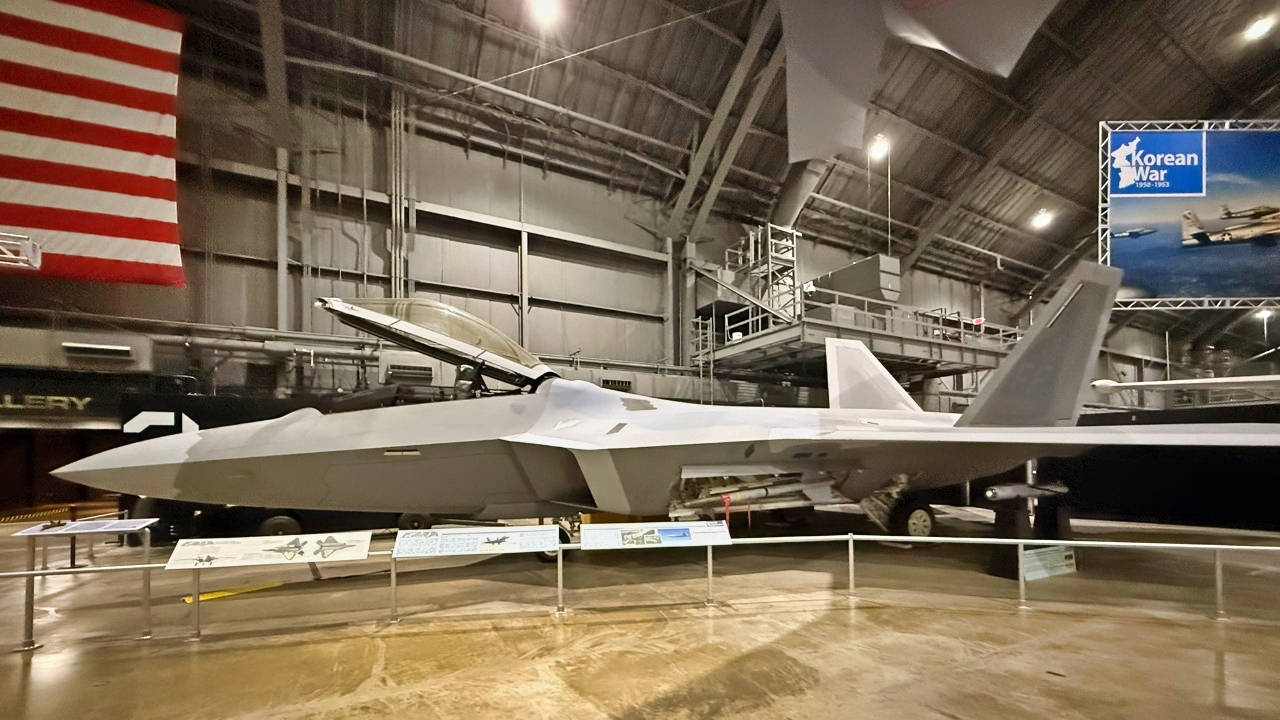
F-22 Raptor. This will be replaced by the F-47. Image Credit: National Security Journal.

F-22 Fighter. Image Credit: National Security Journal.
Why It Was Doomed To Fail
On paper, turning the F-22 into a carrier jet is an appealing idea.
It would, in theory, mean bringing stealth, sensor fusion, long-range engagement, and high performance to the carrier deck at a time when this wasn’t really possible. In practice, though, navalizing the Raptor would have required a substantial redesign – one big enough that it would have effectively turned it into a different aircraft altogether.
Carrier operations, after all, are pretty unforgiving. It’s why the Navy needs its own specialized aircraft to begin with.
The aircraft must be able to withstand catapult launches, rapid deck operations, and abrupt tail-hook landings.
Then there’s the matter of sea salt – a problem that, over time, corrodes crucial parts and coatings. For the F-22, all of these requirements would have meant adapting the airframe and landing gear radically – but we’ve already covered that.
Specifically, one of the most challenging changes discussed at the time was the adoption of variable-sweep wings – much like the ones seen on the F-14 – to reconcile the fact that the aircraft would need to make low-speed carrier landings but maintain high speed during air superiority missions.
That design requirement presented new problems, though: swing-wing mechanisms are maintenance-intensive, and that’s not ideal on a carrier.
They’re also heavy and a challenge to maintain stealth design.
Had it been done, it would have resulted in an aircraft that shared very little in common with the land-based F-22 – and while that isn’t a problem in and of itself, it would have disrupted economies of scale, making production and maintenance costs far more expensive.
With that in mind, it was clear that building a new jet from scratch simply made more sense.
And that isn’t even the full story: retrofitting the Raptor for carrier operations would have also degraded some of the other attributes that made it attractive, including stealth and maneuverability.
Still, during an era of renewed great-power competition and rising naval tensions – particularly in the Indo-Pacific – the notion of a carrier-capable stealth air dominance fighter is compelling. It’s led some to wonder if, had the Navy taken the Sea Raptor path, today’s carriers might have been able to field a stealthy, long-range interceptor to counter advanced Chinese aircraft and bombers before they threatened the fleet.
It’s easy to wonder what might have been, but ultimately the Sea Raptor came from a moment when ambition ran into technical limits and shrinking budgets – a combination that is by no means new.
In fact, it seems to be the problem with many of the Navy’s modern programs.
That being said, the program wasn’t possible – and no amount of wondering will change that reality.
About the Author:
Jack Buckby is a British author, counter-extremism researcher, and journalist based in New York who writes frequently for National Security Journal. Reporting on the U.K., Europe, and the U.S., he works to analyze and understand left-wing and right-wing radicalization, and reports on Western governments’ approaches to the pressing issues of today. His books and research papers explore these themes and propose pragmatic solutions to our increasingly polarized society. His latest book is The Truth Teller: RFK Jr. and the Case for a Post-Partisan Presidency.


