


Key Points and Summary – In 2015, the Ohio-class ballistic missile submarine USS Georgia ran aground near Kings Bay, Georgia, during a routine pilot pickup after exiting the channel and colliding with a buoy.
-The boat’s propeller and key sensors were damaged, requiring at least $1 million in repairs and sending the sub to drydock.
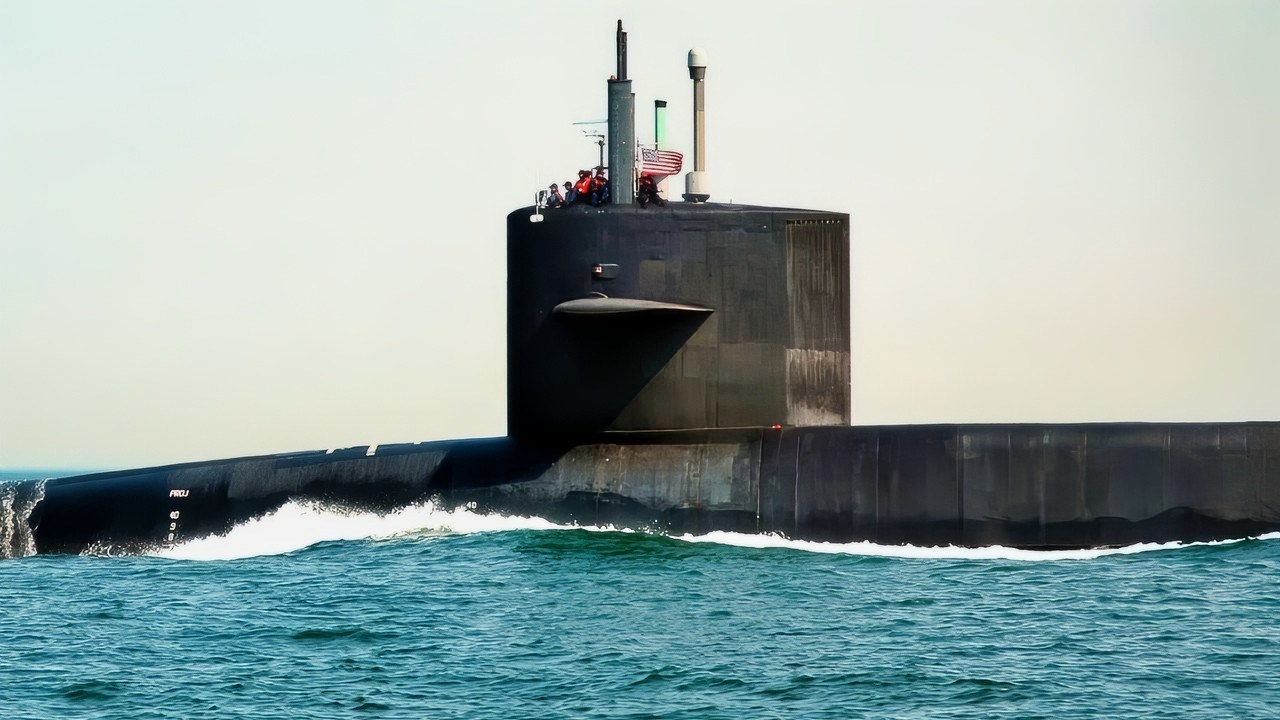
(March 31, 2006) – The guided missile submarine USS Florida (SSGN 728) conducts sea trials off the coast of Virginia. Florida will be delivered to the Fleet in April, and a Return To Service ceremony is scheduled for May 25 in Mayport, Fla. As the second of four SSBN submarines to be converted to SSGN, this nuclear-powered submarine will have the capability to: launch up to 154 Tomahawk cruise missiles; conduct sustained special warfare operations with up to 102 Special Operations Forces (SOF) personnel for short durations or 66 SOF personnel for sustained operations; and provide approximately 70 percent operational availability forward deployed in support of combatant mission requirements. U.S. Navy photo by Chief Journalist (SW/AW) Dave Fliesen.
-A year-long, 475-page investigation found the crew was moving too fast, mismanaged the tug hookup, and suffered a catastrophic breakdown in communication on the bridge.
-Rear Admiral Randy Crites relieved the captain and blasted the entire command team, turning a survivable mishap into a career-ending cautionary tale for the Navy’s Silent Service.
-The Navy has very few of these specialized submarines, making the incident noteworthy, clearly for many other reasons.
This 2015 U.S. Submarine Mishap Still Haunts the Navy
Running a ship aground is a nightmare for any vessel’s captain and crew. Sometimes this type of accident is avoidable. Other times it is simply bad luck. But it can result in officers being relieved for loss of confidence in command abilities.
At the very least, it results in a strongly worded letter in a personnel file that can end a career.
A U.S. submarine ran aground in 2015. An accident involving the Ohio-class ballistic missile submarine USS Georgia (SSBN-729) would result in a lengthy investigation.
The accident happened the day before Thanksgiving as the sub was approaching homeport at Kings Bay, Georgia.
There was already mechanical trouble on the boat. Its towed array sonar was on the fritz, and the Navy ordered the submarine to end its patrol mission and return for maintenance and repair.
What Happened to This Unlucky Submarine?
Military.com’s Hope Hodge Seck wrote the following about the event:
“While conducting a scheduled pick-up of a new pilot at Fort Clinch, Florida, near the entrance to St. Mary’s River, which approaches the base, the sub inadvertently exited the channel, then collided with a buoy amid the crew’s efforts to re-orient. The grounding occurred as the crew worked to get clear of the buoy.”

The Ohio-class ballistic-missile submarine USS Maine (SSBN 741) begins a dive into the Strait of Juan de Fuca off the Washington Coast, March 18, 2025, during routine operations. Special units within the Coast Guard are tasked with the protection of U.S. Naval submarines while surfaced and transiting U.S. territorial waters to and from their patrol stations. (U.S. Coast Guard photo by Petty Officer 1st Class Steve Strohmaier)
Extensive Repairs Were Needed
The damage wasn’t too severe, but it was enough to alert high command. The outside of the boat was still intact, thankfully for the crew. But the propellor was damaged, and “an acoustic tracking device and an electromagnetic log meter that measured the sub’s speed” would need an overhaul that would cost at least $1 million.
In December 2015, the Georgia entered drydock for repairs. The Navy tried to figure out how long the refurbishment would last and how much it would cost to make it seaworthy again.
The Navy Kept the Incident Under Wraps
The Navy conducted a yearlong investigation into the mishap. However, like many of these reviews, it was not made public until Military.com made a Freedom of Information Act request.
The investigation determined that the Georgia was going too fast, and a boat towing the sub was not in the correct position. The captain and crew should have done a better job for the pick-up with the tugboat.
But running aground is a death blow for any commander’s career, and the ultimate responsibility lay with the captain and the officer team that assisted in piloting the sub. Then came Captain David Adams’ blistering indictment that scattered blame widely with other officers. Adams would be dismissed for lack of ability to command and reassigned to desk duty on the way to retirement, with no promotion possible.
“His inability to effectively manage the complexity of the situation and failure to respond to the circumstances in a manner sufficient to protect the safety of the ship and crew is beneath my expectations for any CO,” reads an investigation recommendation by Rear Admiral Randy Crites, then-commander of Submarine Group 10.
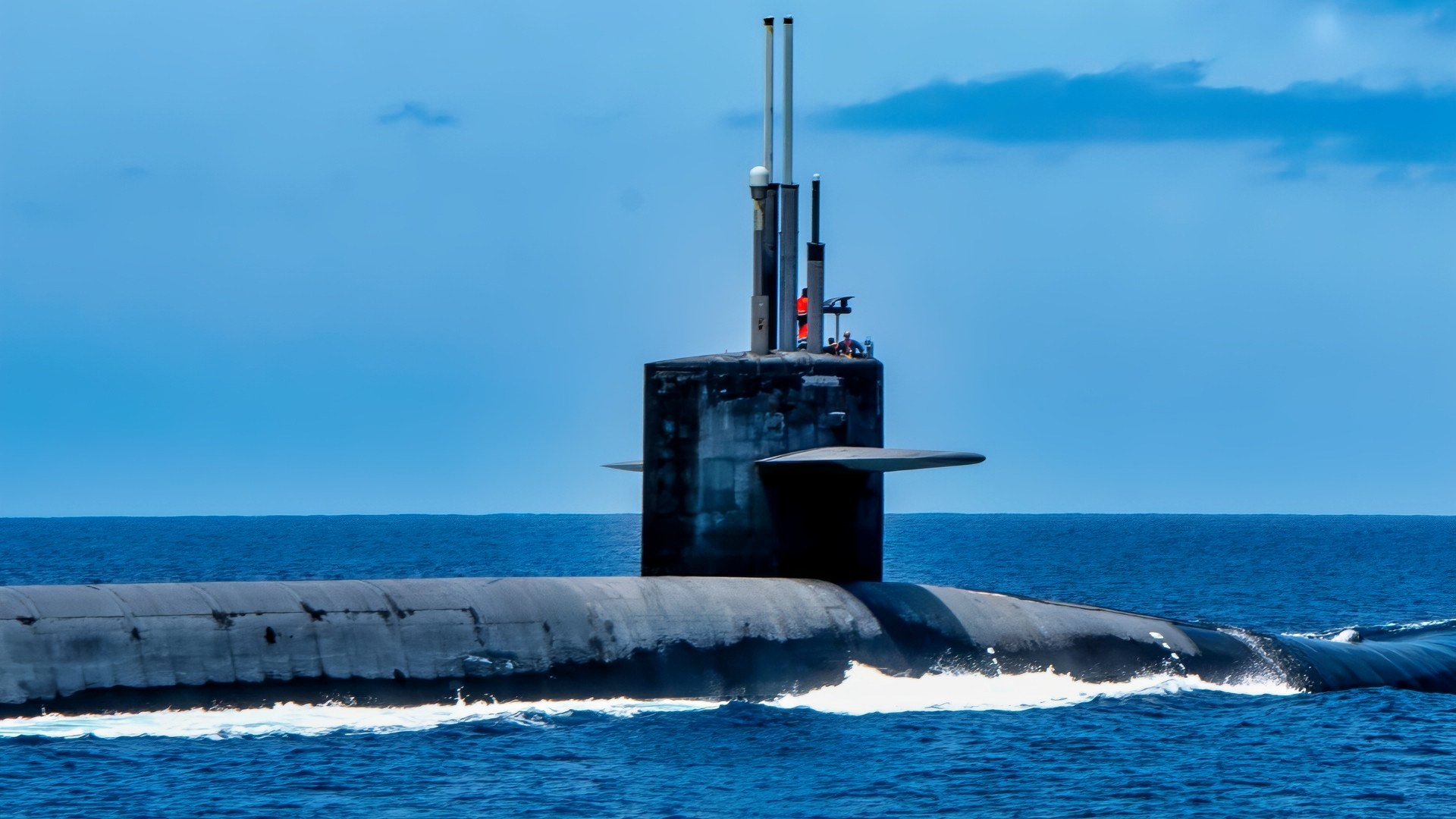
(July 29, 2025) – A U.S. Air Force A10C Thunderbolt II flies over the Ohio-class ballistic missile submarine USS Kentucky (SSBN 737) in the Pacific Ocean, July 29, 2025. The armed airborne escort exercise is designed to increase and demonstrate the Joint Force’s capability to protect strategic assets like Kentucky. Submarine Group (SUBGRU) 9, exercises administrative and operational control authority for assigned submarine commands and units in the Pacific Northwest providing oversight for shipboard training, personnel, supply and material readiness of submarines and their crews. SUBGRU-9 is also responsible for nuclear submarines undergoing conversion or overhaul at Puget Sound Naval Shipyard in Bremerton, Washington. (U.S. Navy Photo by Lt. Zachary Anderson)
The Incident Could Have Been Avoided Even at Night
The Navy initially intimated that the accident happened in such dark conditions that the sub was doomed to failure.
Rear Admiral Crites disagreed with that excuse. He wrote that if it were daytime and the sub’s command team carried out the same errant process, the sub would still have run aground.
This was an avoidable mistake that incurred costly damage and could have caused injuries to sailors, and even loss of life.
Officers Were Hung Out to Dry
Rear Admiral Crites was furious; he cast a wide net for people to blame. “Crites indicated his intent to take administrative action against the sub’s executive officer; chief of boat; navigation/operations officer; weapons officer, who was the officer of the deck; and assistant navigator. He also said he’d issue non-punitive letters of caution to the commander of Submarine Squadron 16 and his own chief of staff and director of operations—all Navy captains—for failure to take appropriate action toward resolution regarding Adams’ concerns around the sub’s transit into port,” his investigation determined.
This was definitely a scathing report. Perhaps it was unfair to the squadron commander, the chief of staff, and director of operations, who were likely sleeping peacefully at home when the grounding happened and maybe dreaming of Thanksgiving turkey.

SOUDA BAY, Greece (Sept. 7, 2019) The Ohio-class cruise missile submarine USS Florida (SSGN 728) arrives in Souda Bay, Greece, for a scheduled port visit, Sept. 7, 2019. NSA Souda Bay is an operational ashore base that enables U.S., allied, and partner nation forces to be where they are needed and when they are needed to ensure security and stability in Europe, Africa, and Southwest Asia. (Photo by Joel Diller/Released)
The report was a remarkable 475 pages long, and investigators interviewed numerous people over the course of 12 months. The investigation harped on the lack of communication among all the responsible officers and enlisted. The command team could have slowed the Georgia down as it worked to link up with the towboat. The sub was going 15 knots, very fast for the kind of maneuver it was attempting.
One officer exclaimed, “all back emergency” before the grounding. The navigator passed this order to the bridge, but the officer of the deck was silent. The captain, not hearing anything to change his maneuvering, still ordered “all ahead full.” Then the grounding occurred.
The Navy’s Silent Service is well-trained and elite. The officers and enlisted personnel always take their jobs seriously. But this time a lack of communication led to what could have been a much worse disaster. The admiral conducting the investigation threw the book at many officers who should have been more alert.
This incident is likely taught to trainees at the Nuclear Power School and the Naval Academy. It could have been avoided and shows that an admiral can end careers if mistakes are made, especially for something as serious as a grounding.
Let’s hope lessons were learned from this incident and it doesn’t happen again.
About the Author: Dr. Brent M. Eastwood
Author of now over 3,000 articles on defense issues, Brent M. Eastwood, PhD is the author of Don’t Turn Your Back On the World: a Conservative Foreign Policy and Humans, Machines, and Data: Future Trends in Warfare plus two other books. Brent was the founder and CEO of a tech firm that predicted world events using artificial intelligence. He served as a legislative fellow for US Senator Tim Scott and advised the senator on defense and foreign policy issues. He has taught at American University, George Washington University, and George Mason University. Brent is a former US Army Infantry officer. He can be followed on X @BMEastwood.


