

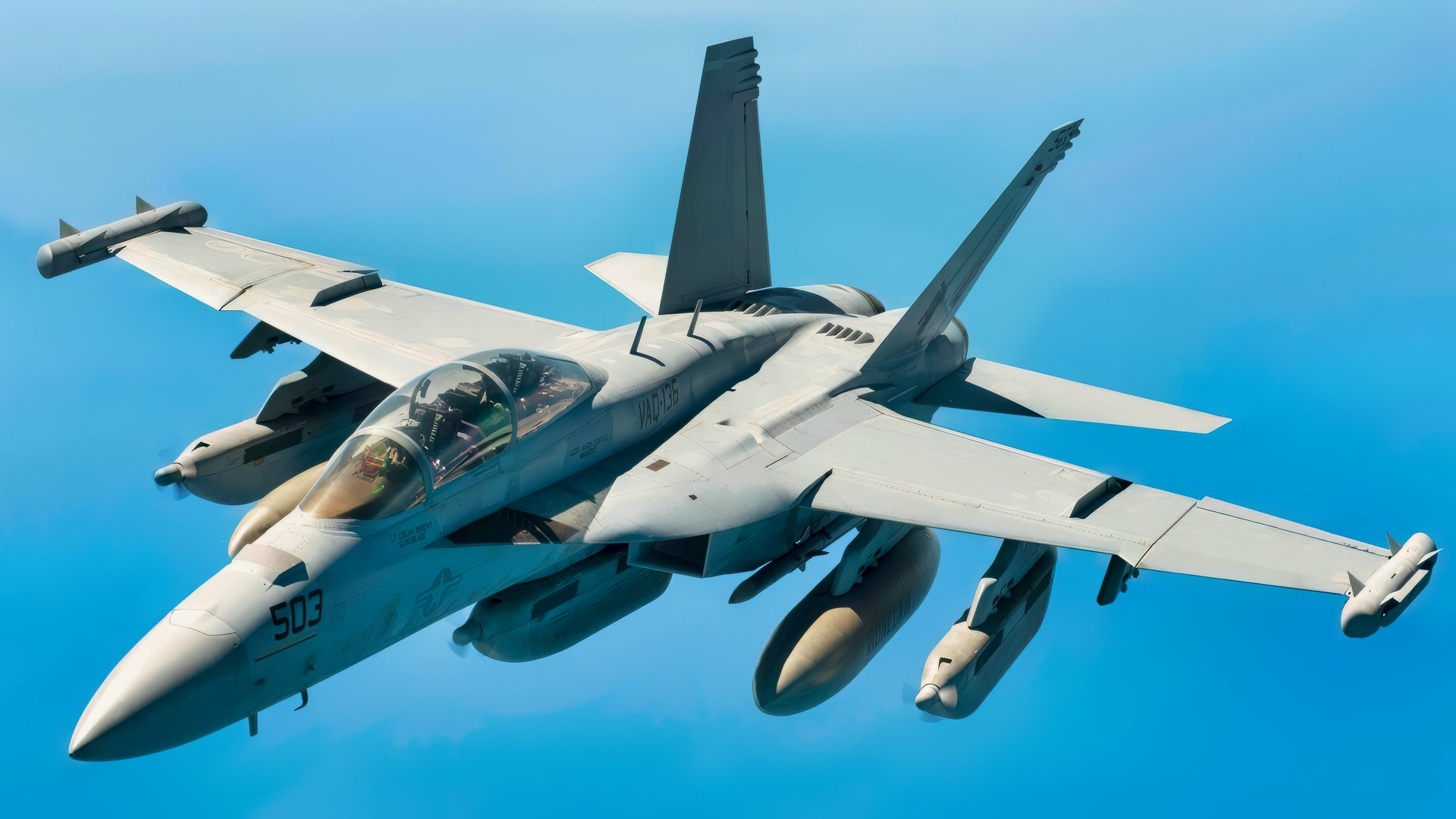
Summary and Key Points – Operation Absolute Resolve relied on overwhelming airpower to blind Venezuela’s defenses and enable the capture of Nicolás Maduro—but the article argues the decisive enabler was electronic warfare. The EA-18G Growler, a specialized Super Hornet variant, provided the jamming and suppression needed to spoof radars, disrupt communications, and help neutralize Russian-origin surface-to-air systems including Buk and S-300 variants.

A U.S. Navy EA-18G Growler prepares to refuel from a U.S. Air Force KC-135 Stratotanker over the U.S. Central Command area of responsibility, March 29, 2025. The Growlers are assigned to the Harry S. Truman Carrier Strike Group supporting maritime security operations in the CENTCOM AOR. (U.S. Air Force photo by Staff Sgt. Gerald R. Willis)

A joint test team including the Flight Test Division of the French Directorate General of Armaments (DGA/EV), the French Naval Aeronautics Experimentation Center (CEPA/10S), and the U.S. Navy’s Air Test and Evaluation Squadron (VX) 23 are leading flight tests that will enable the French fighter jet Dassault Rafale to aerial refuel with naval aviation’s F/A-18 Hornet and Super Hornet and EA-18G Growler. The tanker qualification partnership paves the way for an extended reach and enhanced interoperability for allied airpower. (U.S. Navy photo by Erik Hildebrandt) Erik_Hildebrandt
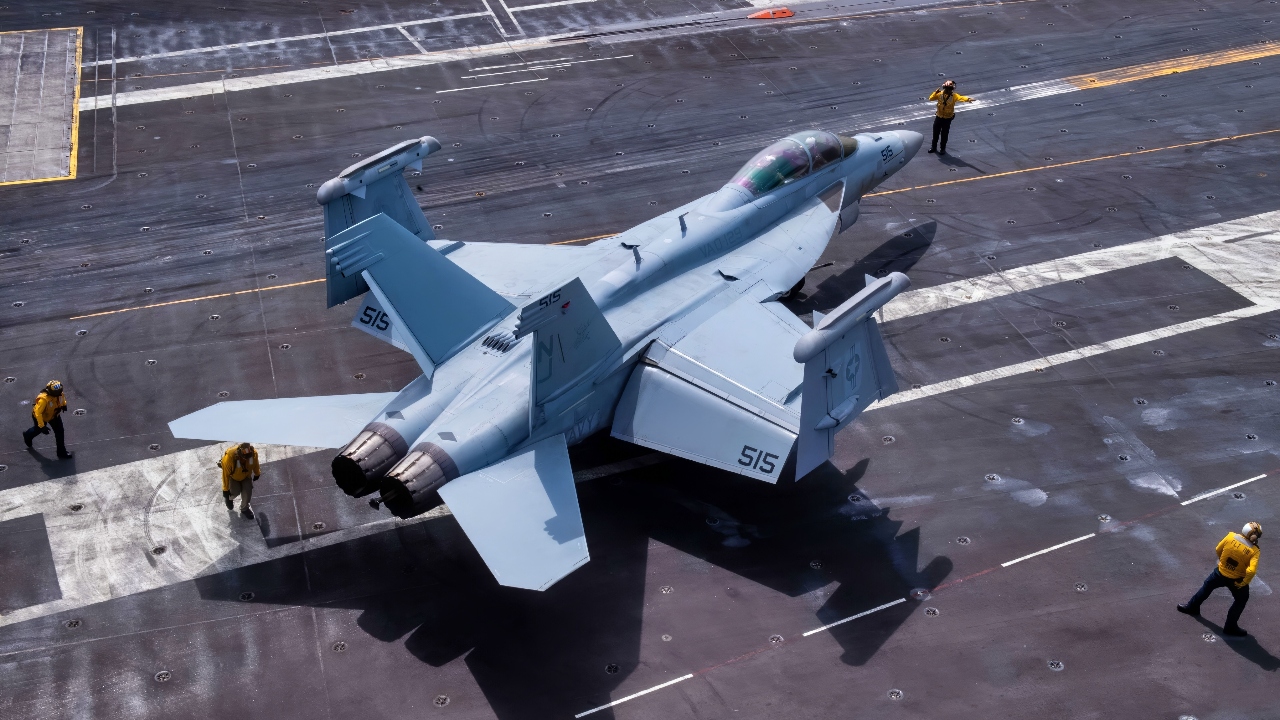
PACIFIC OCEAN (Aug. 11, 2025) – U.S. Navy Sailors direct an E/A-18G Growler, assigned to the “Vikings” of Electronic Attack Squadron (VAQ) 129, on the flight deck of the Nimitz-class aircraft carrier USS Theodore Roosevelt (CVN 71), Aug. 11, 2025. Theodore Roosevelt, flagship of Carrier Strike Group (CSG) 9, is underway conducting exercises to bolster strike group readiness and capability in the U.S. 3rd Fleet area of operations. (U.S. Navy photo by Mass Communication Specialist Seaman Apprentice Cesar Nungaray)
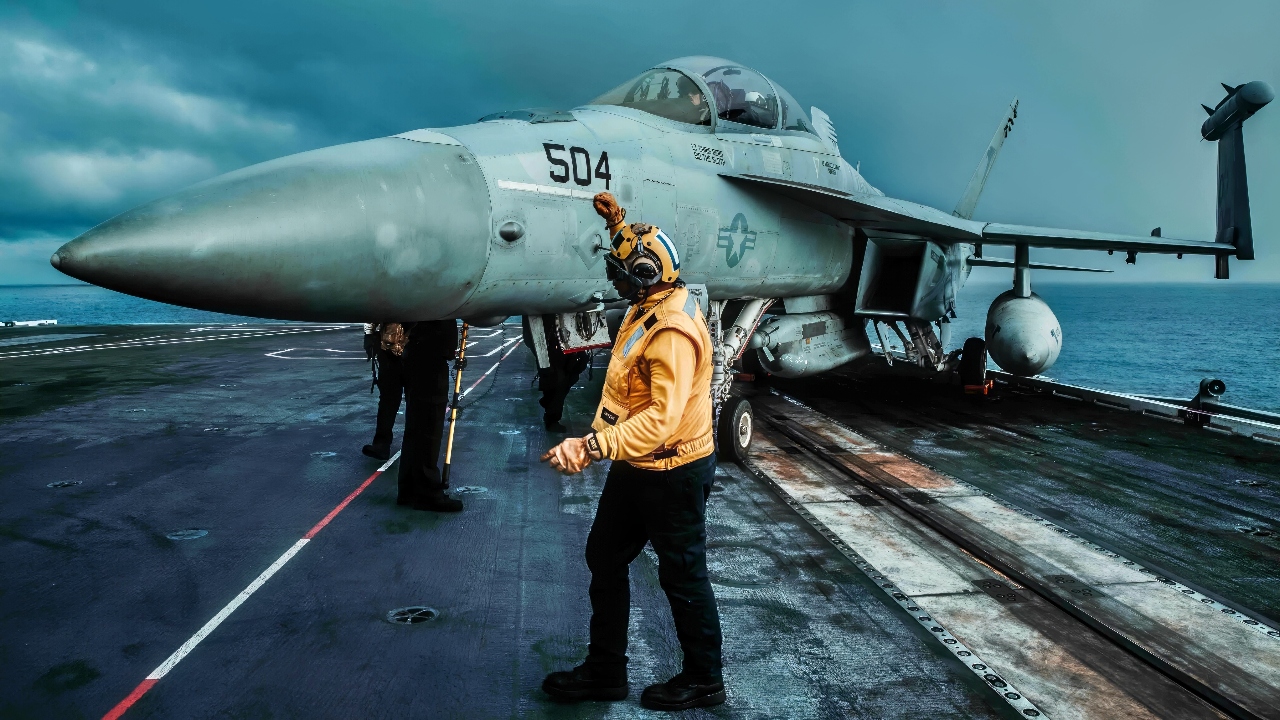
An E/A-18G Growler, attached to Electronic Attack Squadron (VAQ) 141, taxis on the flight deck of Nimitz-class aircraft carrier USS George Washington (CVN 73), while underway in the Indian Ocean, July 24, 2025. The USS George Washington Carrier Strike Group (GWA CSG) is conducting routine operations in the U.S. 7th Fleet area of operations. George Washington is the U.S. Navy’s premier forward-deployed aircraft carrier, a long-standing symbol of the United States’ commitment to maintaining a free and open Indo-Pacific region, while operating alongside allies and partners across the U.S. Navy’s largest numbered fleet. (U.S. Navy photo by Mass Communication Specialist Seaman Nicolas Quezada)

An EA-18G Growler, assigned to Electronic Attack Squadron (VAQ) 209, U.S. Navy Reserve, prepares for takeoff as part of Exercise Southern Strike 2021 at the Gulfport Combat Readiness Training Center in Gulfport, Miss., April 19, 2021. Southern Strike is a large-scale, conventional and special operations exercise hosted by the Mississippi National Guard and is designed to maintain combat readiness, build relationships, and strengthen combat readiness across all branches of the U.S. military. (U.S. Air National Guard photo by Tech. Sgt. Jon Alderman)
EA-18G Growler: The EW Jet That Made Maduro’s Capture Possible
With EW pods, updated threat libraries, and anti-radiation tactics, Growlers reportedly prevented Venezuela’s air-defense network from imposing meaningful effects.
The operation ended with no U.S. aircraft losses, reinforcing claims that modern U.S. forces can operate confidently against layered, Russian-derived air-defense architectures.
Operation Absolute Resolve, the US military action that ended in the capture and extradition of Venezuelan dictator Nicolás Maduro Moros, was one of the largest joint US Air Force (USAF) and US Navy (USN) actions of modern times. Among other assets dedicated to the mission, some 150 US military aircraft filled the skies over Venezuela last weekend, knocking out air defense systems, disrupting communications, and bringing down radar grids.
But one of the most critical systems involved in the mission was an aircraft with a primary mission that rarely involves firing weapons. That aircraft is the EA-18G Growler.
The Growler is a special variant of the F/A-18F Super Hornet two-seat aircraft, specifically configured with additional cables in its internal wiring harness to accommodate a set of externally carried electronic warfare (EW) pods. It is the modern-day successor to the previous-generation EA-6B Prowler, which saw extensive service in the Vietnam War.
The fleet of aircraft that was used in the attack on Venezuela included some of the most modern models flown by the USAF – the F-22, F-35A, the B-1 bomber, and a variety of different drones—plus the USN’s F-18E/F, F-35C carrier-capable stealth aircraft—and many of them backed up by the EA-18G.
Running Interference
“What makes the missions of all of these other aircraft possible,” said a US EW specialist who spoke to National Security Journal (NSJ), “is the Growler. The jamming capacity of the aircraft is what was used to spoof, jam, or launch anti-radiation missiles against Venezuela’s ground-based air defense systems – running interference for the US airborne armada.”
By any objective criteria, the EA-18G’s mission was a complete success. Not a single US aircraft was downed during the operation.
“Seems those Russian air defenses didn’t quite work so well, did they?” said US Secretary of War Pete Hegseth at a 5 January event. His statement was in reference to the fact that most of the Venezuelan surface-to-air missile (SAM) batteries are of Russian origin and were provided by their fellow petrostate kleptocratic Moscow ally.
Over the years, Venezuela’s military has received a large number of Russian air defense units, including older S-125 Pechora-2M and Almaz-Antey Buk-M2 models, as well as the longer-range S-300VMs. The Buk system is perhaps most notorious for an incident when Russian nationals and pro-Russian separatists operating in the occupied Eastern Donbas region of Ukraine shot down Malaysian Airlines MH 017 in July 2014, killing all 298 passengers and crew on board.
Venezuela reportedly had 12 S-300 air defense systems in inventory, but it is unclear how many were still operational at the time of the US attack. Those that were still functioning were reportedly jammed by the EA-18Gs or taken out with anti-radiation missiles that home in on radar emissions.
The Power of EW
There are multiple versions of the S-300VM, but they proved no match for the Growler’s EW capabilities. And this was not the first time that US-based jamming technology was successful against this air defense platform.
Versions of this Soviet-developed system were also easily neutralized and then destroyed by the Israeli Air Force during their short conflict with Iran last year. Between that experience and the repeated success of US EW in the Ukraine war, Washington and its allies have learned enough about the operations of the S-300 and have updated their EW “libraries” to the point where these Russian systems are now largely compromised.
In theory, both Russia and the People’s Republic of China (PRC) should have their own intelligence data and EW modes for US aircraft that they could have provided to Caracas. But all of the available intelligence data indicates that assistance from Moscow was minimal before the US attack.
Plans for the operation had been in work in Washington since October. If Moscow and Beijing are even half as clever as they claim to be in the intelligence business, they should have had at least an inkling of what an attack by the US was likely to entail.
Kirsten Fontenrose, a defense expert at the Atlantic Council, wrote this week in a piece for the think-tank’s website that “Russian air defenses have struggled to impose decisive effects in other theaters — including Syria, where Israeli strikes have repeatedly penetrated layered systems.”
Unlike previous conflicts, US forces no longer require an extensive “clear the path campaign” to eliminate air defense networks before sending in groups of strike aircraft.
The US raid on Venezuela, Fontenrose said, has sent a clear signal to US adversaries like Iran that Washington’s military is “increasingly confident operating against Russian-derived, layered air-defense architectures.”
About the Reuben F. Johnson
Reuben F. Johnson has thirty-six years of experience analyzing and reporting on foreign weapons systems, defense technologies, and international arms export policy. Johnson is the Director of Research at the Casimir Pulaski Foundation. He is also a survivor of the Russian invasion of Ukraine in February 2022. He worked for years in the American defense industry as a foreign technology analyst and later as a consultant for the U.S. Department of Defense, the Departments of the Navy and Air Force, and the governments of the United Kingdom and Australia. In 2022-2023, he won two awards in a row for his defense reporting. He holds a bachelor’s degree from DePauw University and a master’s degree from Miami University in Ohio, specializing in Soviet and Russian studies. He lives in Warsaw.


RobertDoume
February 17, 2026 at 6:34 am
I’ve been exploring terpene botanicals – [url=https//terpenewarehouse.com/products/berry-gelato-terpenes ]berry gelato effects[/url] recently, and I’m really enjoying the experience. The scents are rich, customary, and pleasant. They enlarge a discriminative caress to my constantly programmed, ration set the willing and atmosphere. A large track down quest of anyone who appreciates pungent wellness tools.