

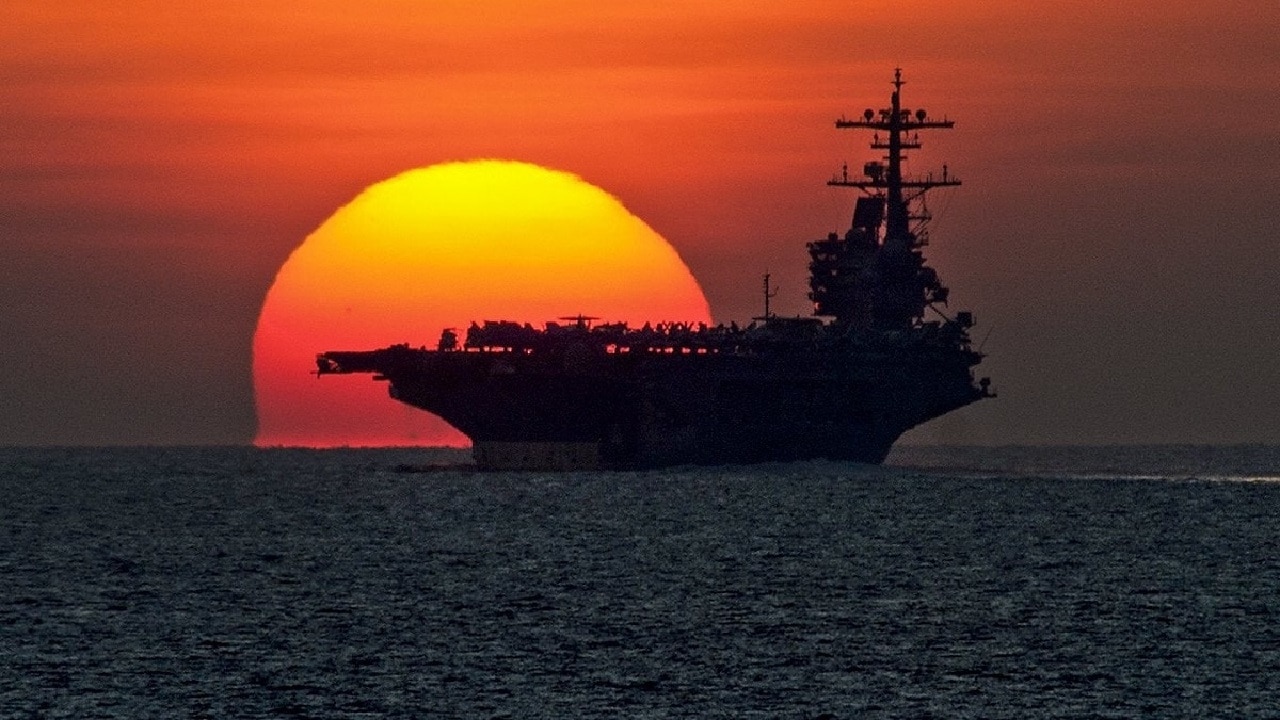
Summary and Key Points: In the 1981 Ocean Venture NATO exercise, the Canadian Oberon-class submarine HMCS Okanagan (or a sister boat) achieved the unthinkable: a simulated “kill” on the USS Dwight D. Eisenhower.
-Running almost silently on battery power, the Canadian crew exploited “quiet spaces” in the carrier’s acoustic screen, slipped past a fortress of destroyers, and registered a confirmed torpedo hit.
-This “David vs. Goliath” moment proved that low-cost diesel-electric submarines, operated by skilled crews, remain a primary threat to high-value nuclear platforms.
-In 2026, this legacy continues to drive Navy investment in advanced sonar and unmanned underwater vehicles (UUVs).
The Canadian Royal Armed Forces maintains a modest navy compared to the United States. However, even with a significantly smaller budget and a smaller overall size, any navy with decent submarine capabilities can pose a credible threat.
However, there have been multiple occasions in which Canadian or other NATO submarines have successfully managed to sneak past entire carrier strike groups and simulate a successful attack against an American supercarrier.
The Canadian Navy vs the USS Eisenhower
The Canadian Navy, though modest in size and budget compared to its American counterpart, had long maintained a reputation for professionalism and tactical skill. Its Oberon-class submarines (HMCS Ojibwa, Onondaga, and Okanagan) were originally acquired in the 1960s primarily for training purposes.
However, by the 1980s, these submarines had undergone significant upgrades that enhanced their combat capabilities. Their hulls were fitted with anechoic tiles to reduce sonar detection, and their systems were modernized to improve underwater endurance and stealth. Though not nuclear-powered, these submarines had a distinct advantage: they could operate almost silently on battery power, making them exceptionally difficult to detect.

USS Dwight D. Eisenhower U.S. Navy. Image Credit: Creative Commons.
In 1981, NATO and other Western allies held Ocean Venture, a joint naval exercise in the Atlantic Ocean. During the exercise, one of these Canadian submarines (details are so scarce on this exercise that we don’t even know which one it was) was assigned the role of an enemy vessel attempting to infiltrate the carrier group’s defenses.
The carrier group itself was a formidable formation, centered around a U.S. Navy supercarrier, the USS Eisenhower (CVN-69), and protected by a screen of destroyers, cruisers, and submarines, along with air support from carrier-based aircraft. The group’s mission was to detect and neutralize any underwater threats before they could reach the carrier.
When an Antiquated Canadian Diesel Submarine Took Out an American Super Aircraft Carrier
The Canadian submarine’s mission was simple in concept but extraordinarily difficult in execution: approach the carrier undetected and simulate a torpedo attack.
What followed was a masterclass in stealth and tactical maneuvering. Using the natural acoustic conditions of the ocean and its own quiet propulsion system, the submarine slipped past the outer defenses of the carrier group. It evaded sonar-equipped destroyers and surveillance aircraft, exploiting gaps in coverage and limitations imposed by the exercise’s rules of engagement.
At the critical moment, the submarine simulated a torpedo launch. The exercise umpire, a U.S. Navy officer tasked with adjudicating the scenario, evaluated the situation and declared the carrier “sunk.”
The Canadian submarine had achieved its objective without being detected, effectively demonstrating that even the most powerful warships in the world were vulnerable to stealthy underwater threats.
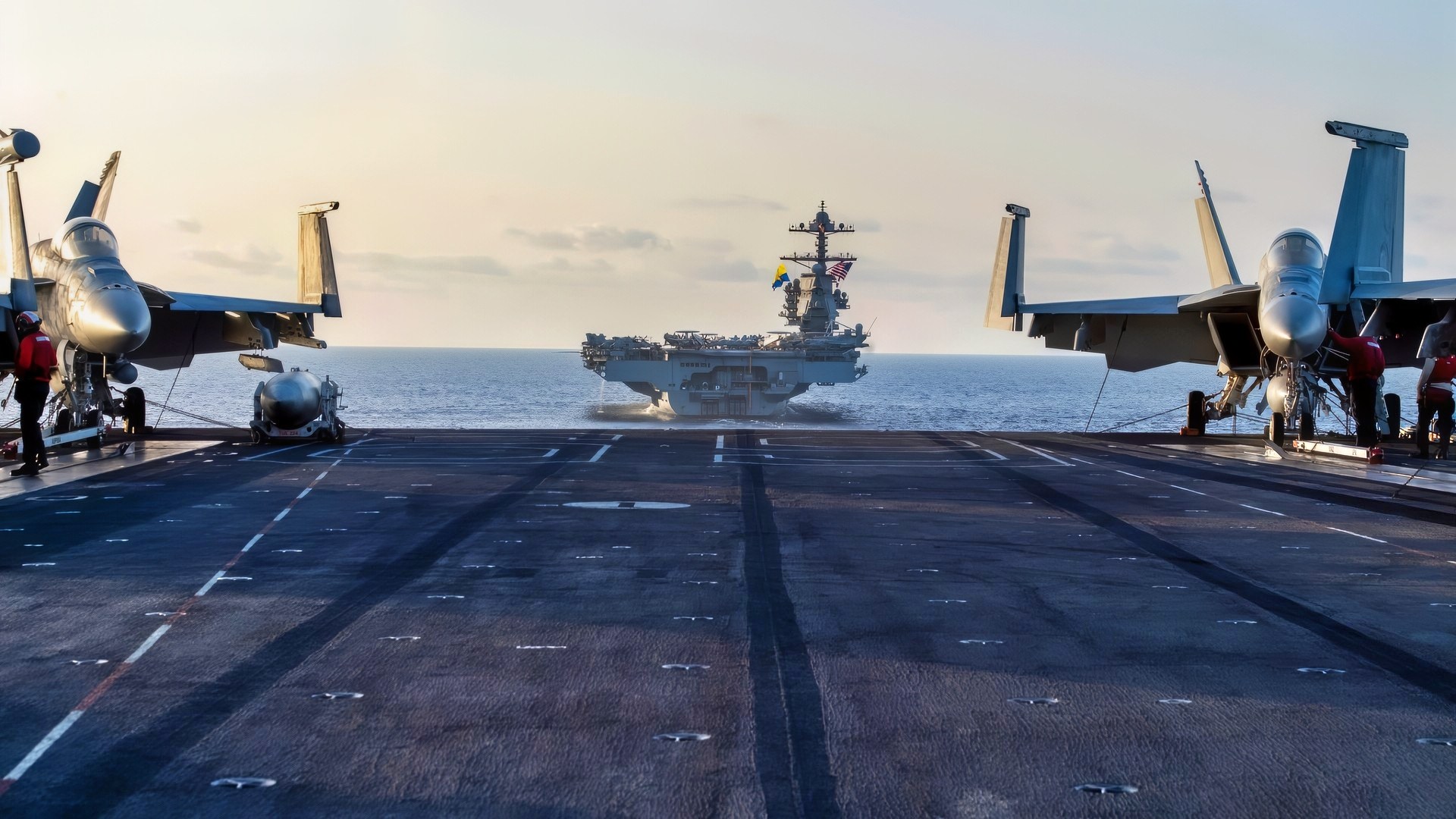
USS Eisenhower Aircraft Carrier. Image Credit: U.S. Navy.
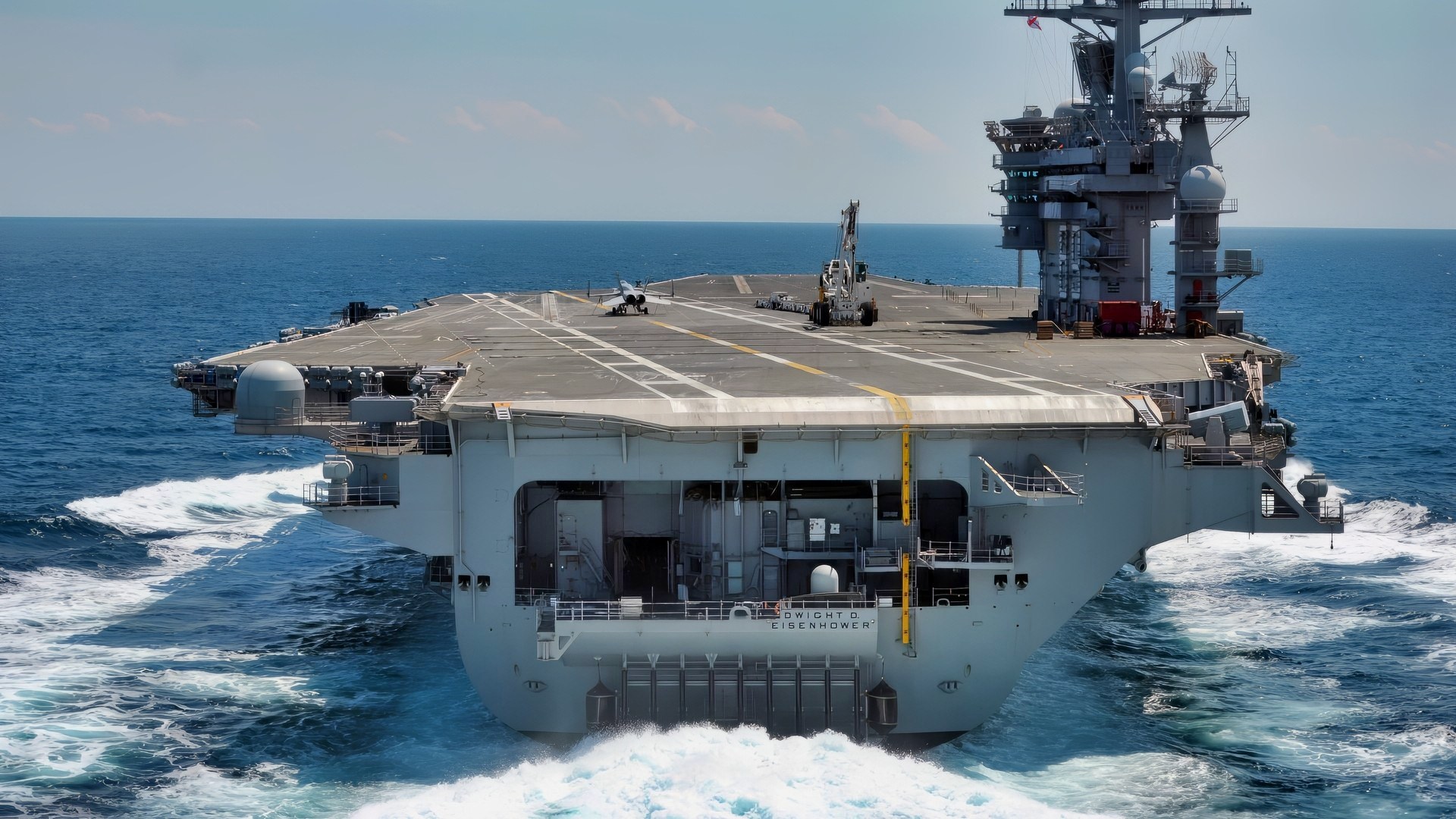
ATLANTIC OCEAN (June 14, 2011) The Nimitz-class aircraft carrier USS Dwight
D. Eisenhower (CVN 69) conducts rudder turns during sea trials. Dwight
D. Eisenhower completed a nine-month planned incremental availability at Norfolk Naval Ship Yard on June 10 and is scheduled to resume underway operations this summer. (U.S. Navy photo by Mass Communication Specialist 1st Class Christopher Stoltz/Released)
The incident raised several uncomfortable questions.
How could a relatively underfunded navy with decades-old technology defeat a modern carrier group?
Was the U.S. Navy’s anti-submarine warfare doctrine flawed?
Were diesel-electric submarines being underestimated in contemporary naval strategy? These questions prompted a reevaluation of ASW tactics and capabilities across NATO.
Never Underestimate Submarines
The success of the Canadian submarine can be attributed to several key factors. First and foremost was the professionalism and training of the Canadian submariners. Their ability to exploit weaknesses in the carrier group’s defense was a testament to their skill and discipline. Second was the inherent stealth of the Oberon-class submarine.
Operating on battery power, it was nearly undetectable to passive sonar systems, especially under the exercise’s constraints, which limited the use of active sonar to simulate real-world conditions. Third, the exercise itself imposed rules that may have skewed outcomes.
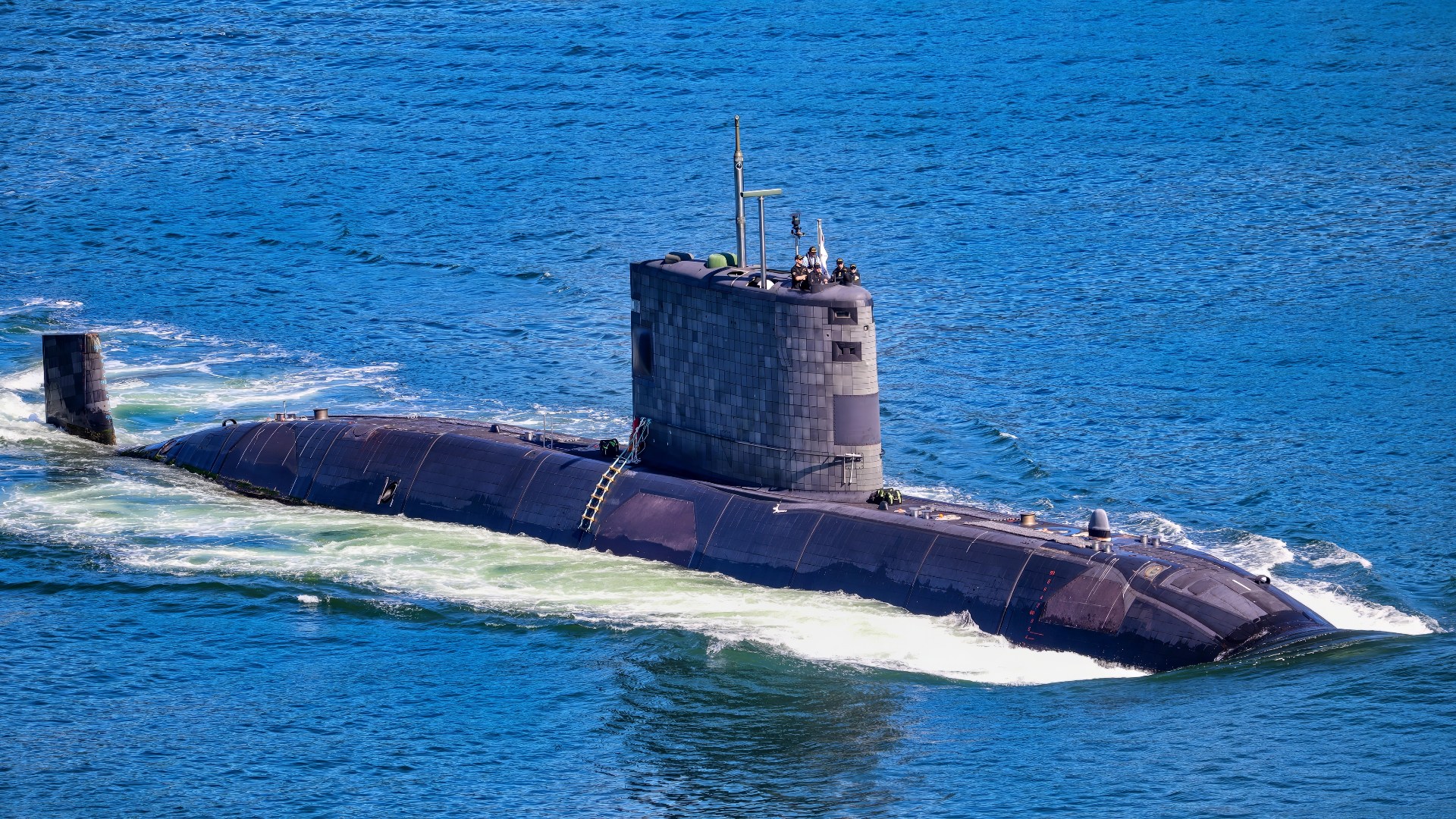
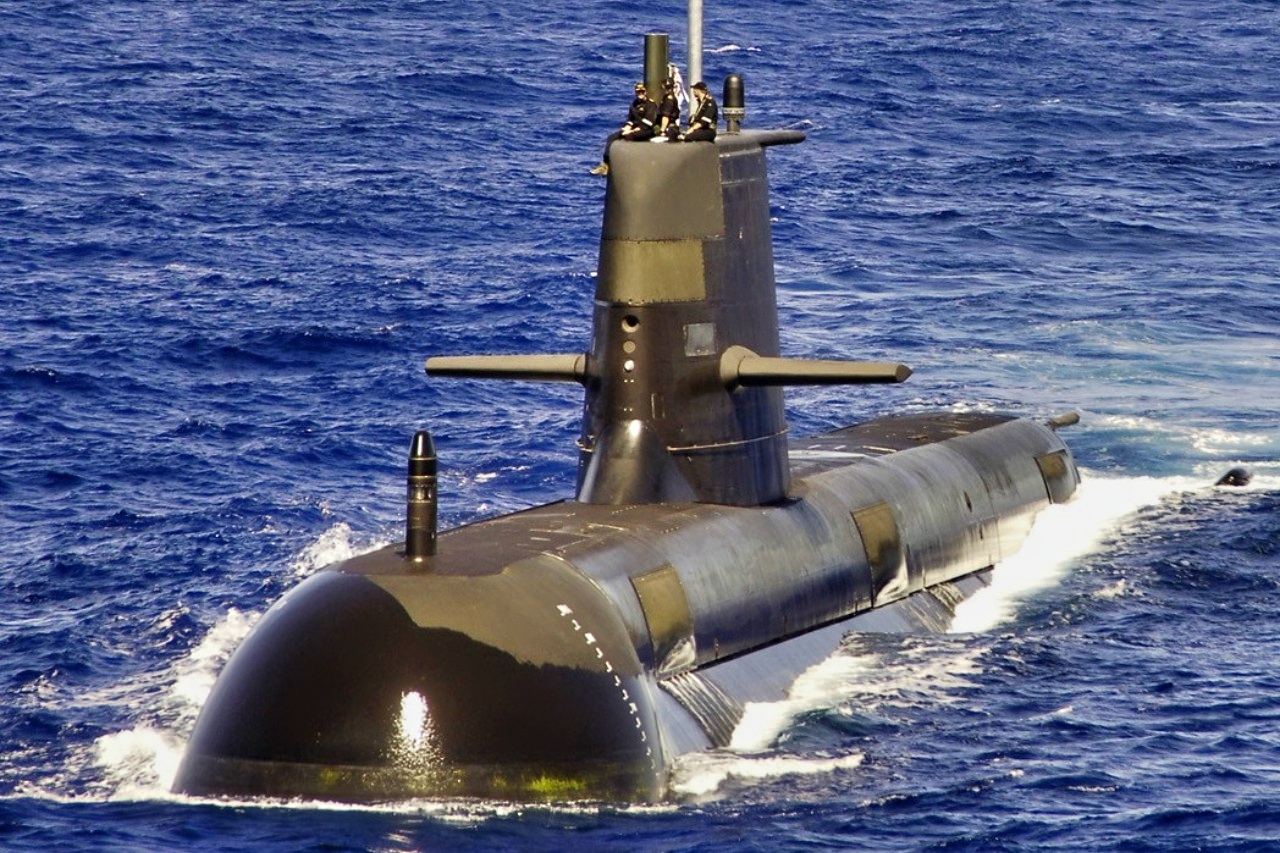
Victoria-Class Submarine of Canada

The Royal Canadian Navy long-range patrol submarine HMCS Victoria (SSK 876) arrives at Naval Base Kitsap-Bangor for a port call and routine maintenance. The visit is Victoria’s first to Bangor since 2004. (U.S. Navy photo by Lt. Ed Early/Released)
Ships were not operating at full speed, and sonar use was restricted, creating opportunities for submarines to succeed in ways that might be more difficult in actual combat.
Perhaps most importantly, the incident highlighted a broader strategic oversight: the underestimation of diesel-electric submarines.
At the time, the U.S. Navy was heavily invested in nuclear-powered submarines and may have viewed conventional boats as outdated. The exercise demonstrated that diesel-electric submarines, particularly when operated by skilled crews, remained a potent threat in modern naval warfare.
This Has Happened Before to U.S. Navy Aircraft Carriers
The Canadian success in Ocean Venture was not an isolated incident. Similar outcomes occurred in other exercises involving allied diesel submarines. There have been around eight instances of submarines, mostly diesel-powered, successfully “sinking” American carriers in exercises from 1972 to 2005.
Dutch and Australian submarines also achieved simulated kills against U.S. carriers in subsequent war games. These events underscored the vulnerability of even the most advanced naval formations to stealthy underwater threats, prompting a renewed focus on ASW training and technology.
(July 25, 2006)- The Australian Submarine HMAS Rankin (Hull 6) and the Los Angeles Class attack submarine USS Key West (SSN-722) prepare to join a multinational formation with other ships that participated in the Rim of the Pacific exercise. To commemorate the last day of RIMPAC, participating country’s naval vessels fell into ranks for a photo exercise. RIMPAC includes ships and personnel from the United States, Australia, Canada, Chile, Japan, Peru, the Republic of Korea, and the United Kingdom. RIMPAC trains U.S. allied forces to be interoperable and ready for a wide range of potential combined operations and missions. Abraham Lincoln Carrier Strike Group are currently underway on a scheduled Western Pacific deployment. U.S. Navy photo by Mass Communications Specialist Seaman James R. Evans (RELEASED)
Since the Ocean Venture, submarine technology has undergone significant improvements. Non-nuclear submarines equipped with air-independent propulsion (AIP) can travel quietly, significantly enhancing their stealth characteristics.
This is to say nothing of nuclear attack submarines, which have sunk multiple carriers during exercises.
Anti-submarine warfare has also advanced with the development of better radars, sonars, and more sophisticated means of protection; however, none of these are foolproof.
While a lot of noise is made about hypersonic missiles, the real threat to carriers has been, and likely always will be, submarines.
About the Author: Isaac Seitz
Isaac Seitz, a Defense Columnist, graduated from Patrick Henry College’s Strategic Intelligence and National Security program. He has also studied Russian at Middlebury Language Schools and has worked as an intelligence Analyst in the private sector.


MR AIDAN DENNY
February 15, 2026 at 10:16 am
Conventional boats have always been very, VERY difficult to detect and track, especially the British O and P class boats, which were very quiet. That’s why they were operated by several countries. The skipper would also have undergone the Royal Navy’s ‘Perisher’ command course, which many consider the best command course in the world.
Mr David Lawton
February 16, 2026 at 9:05 am
In my opinion, we should be delveloping a long range steerable torpedo, that can operate like a drone but underwater, with only a small periscope for satellite navigation.
OJ
February 16, 2026 at 11:03 am
Wasn’t this scenario used in the movie down periscope?
Lucylou
February 16, 2026 at 11:21 am
So canada declaring war on US
Pete T
February 19, 2026 at 1:30 pm
The USS Enterprise sunk by HMs/m Rorqual early 60’s same deal
Alan Massey
February 19, 2026 at 3:19 pm
Wow that story is fantastic and we British using the As bro Vulcan Bomber Nuked USA on exercises 3 times on Exercises there.
Phillip Kalaveras
February 19, 2026 at 11:05 pm
But all of you people in California to take a hard look at this 5 and 1/2 billion dollar ship and then take a real good look at that new East Bay bridge in San Francisco Bay that cost $9 billion dollars or the fact you could have purchased 25 of these aircraft carriers for what you spent on the homeless in the last 5 years. The Democrats you blindly vote for are ripping you off.
Steve Noakes
February 20, 2026 at 10:32 am
Ancient history. Especially in the technology of warfare.
Jose
February 21, 2026 at 8:09 am
Great 45 year old “story” about known shortfalls of, at the time, almost obsolete systems that were in the process of being upgraded or replaced.
Mm
February 21, 2026 at 8:38 am
Article is click bait. Bad journalism.
Jack Harper
February 23, 2026 at 4:25 pm
American hubris knows no bounds.
This is what does and will continue to be the carrier killer when the day arrives the US meets a peer adversary.