

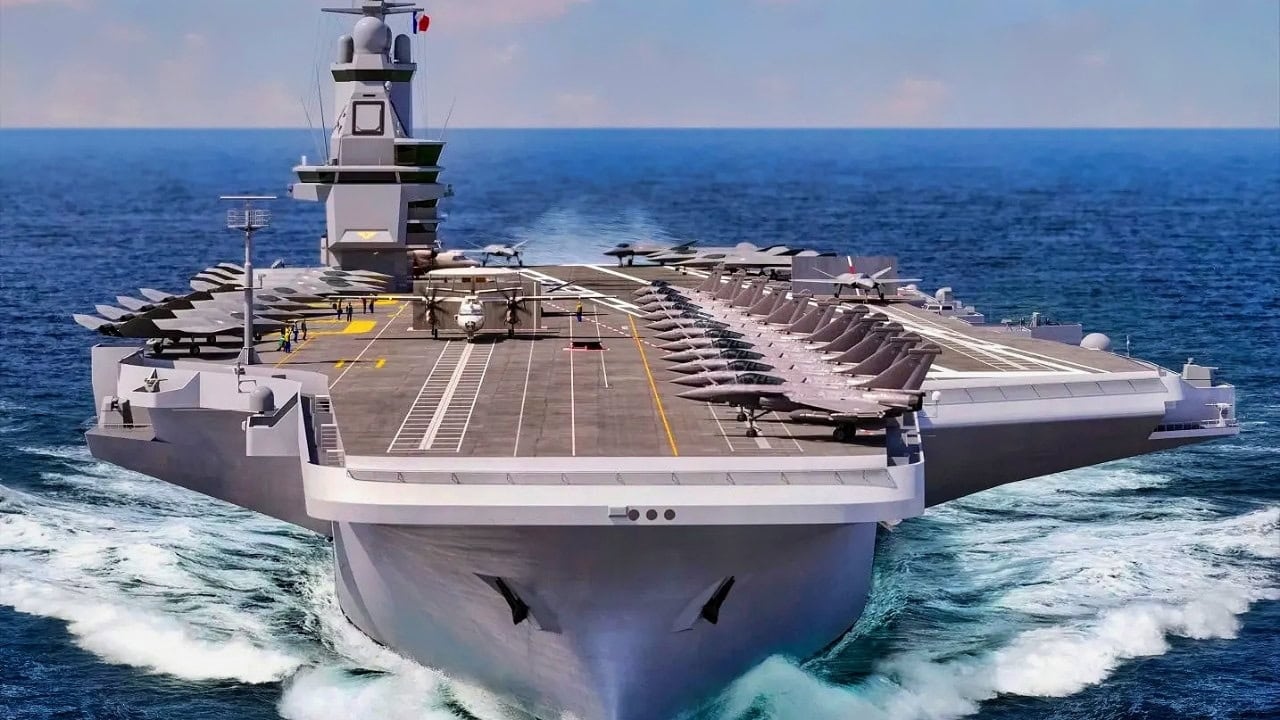
In Europe, only France and the United Kingdom field aircraft carriers. France maintains only one nuclear aircraft carrier, the Charles de Gaulle, which has been in service for more than 20 years.
With its lone carrier aging, France has been working on its replacement: the Porte-Avions de Nouvelle Génération (PANG).
The carrier has been in development since 2018 and recently received the official green light to begin construction in December 2025.
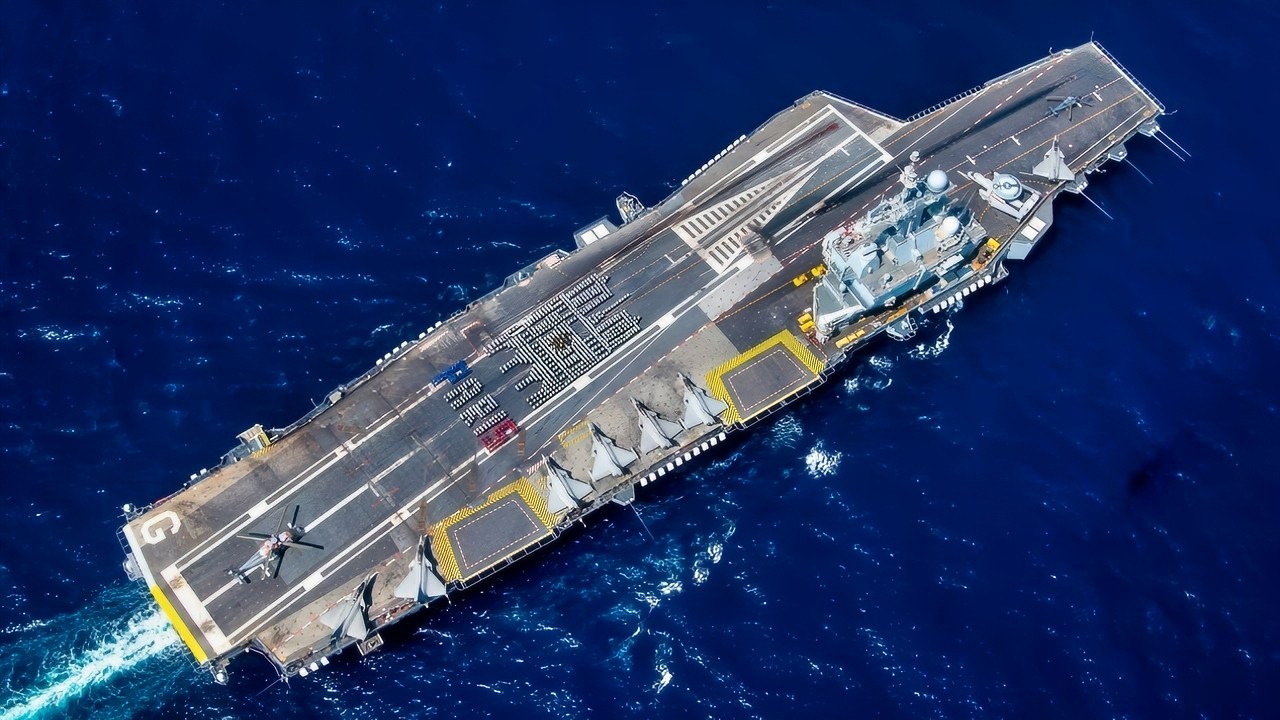
Charles de Gaulle Aircraft Carrier, France. Image Credit: Creative Commons.
The new carrier will reportedly match the size of a U.S. supercarrier and feature state-of-the-art technology such as an electromagnetic aircraft launch system (EMALS) and advanced arresting gear (AAG).
France’s Next Generation Aircraft Carrier
Ever since Charles de Gaulle entered service in 2001, France has been trying to secure another aircraft carrier to make up for downtime when the de Gaulle is in maintenance. The Porte-Avion 2 project was meant to develop a vessel based on the UK’s Queen Elizabeth-class carrier, but the project never went anywhere.
In 2018, a new carrier project was announced, this time as a replacement for Charles de Gaulle. In 2023, more details about this project began to circulate, with CGI renderings previewing the carrier’s expected capabilities.
In December, French President Emmanuel Macron announced that construction of PANG would begin in 2031, with the ship expected to enter service sometime around 2038.

Charles de Gaulle Aircraft Carrier. Image Credit: Creative Commons.
For more than a decade, France’s shipbuilding industry has been preparing itself for this monumental project. Construction is centered in Saint-Nazaire, where Chantiers de l’Atlantique and Naval Group will assemble the ship between 2026 and 2038, according to regional reporting from Pays-de-la-Loire.
Work on long-lead nuclear components began as early as 2024, when Naval Group and TechnicAtome received authorization to begin procurement and early reactor-related fabrication.
The components include elements of K22 nuclear reactors, the most powerful naval reactors ever installed on a French surface combatant, with production activities scheduled between 2024 and 2029.
What to Expect from France’s PANG
One of the most striking characteristics of the PANG is its enormous size. At around 310 meters in length, with a flight-deck beam of roughly 85 meters and a displacement of nearly 78,000 tons, the vessel will be the largest warship ever constructed in Europe.
This would mark a dramatic leap from the Charles de Gaulle, which displaces 42,000 tons and measures 261 meters. It would prove France’s intent to field a carrier competitive with the newest U.S. and Chinese platforms.
Much like its predecessor, the PANG will be a nuclear-powered carrier. The ship will be powered by two K22 nuclear reactors, each providing approximately 220 megawatts.
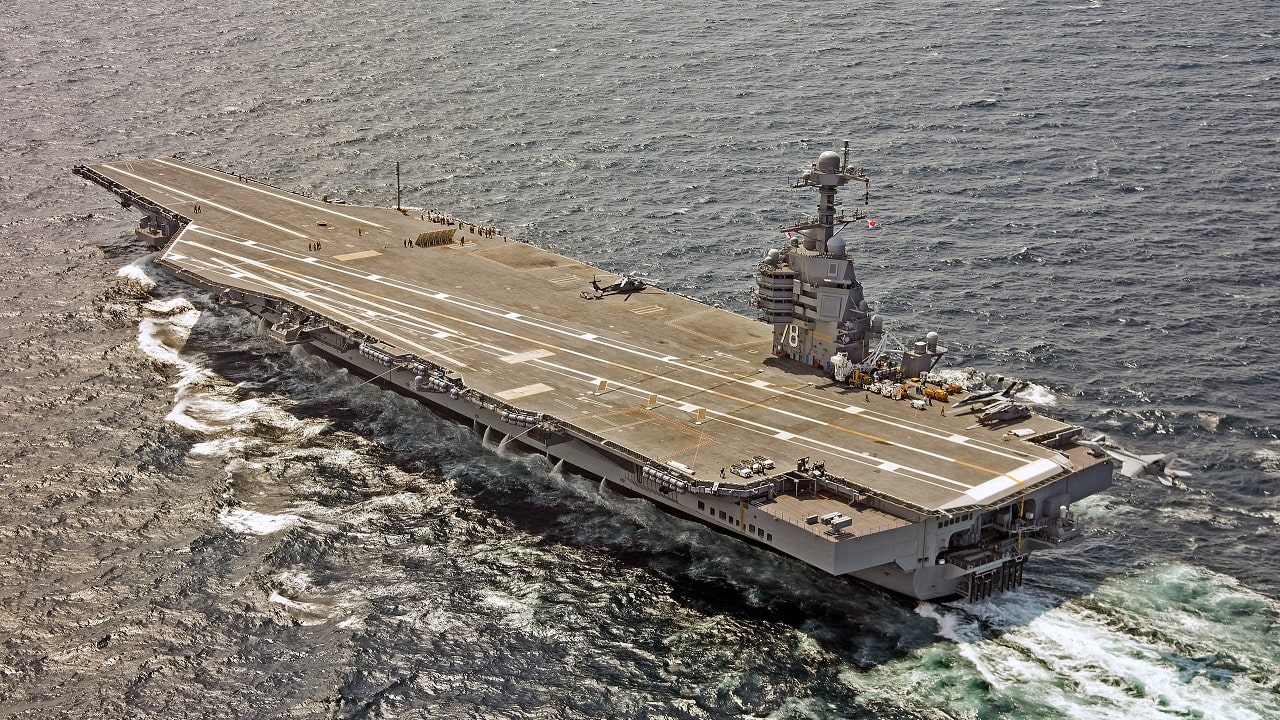
Ford-Class Aircraft Carrier in Test Run. Image Credit: Creative Commons.

ATLANTIC OCEAN (Sept. 21, 2024) The world’s largest aircraft carrier, USS Gerald R. Ford (CVN 78), sails in formation with the Japan Maritime Self Defense Force (JMSDF) Kashima-class training ship, JS Kashima (TV-3508), middle, and Hatakaze-class guided missile destroyer JS Shimakaze (TV-3521) while conducting routine operations in the Atlantic Ocean, September 23, 2024. The U.S. Navy and JMSDF continue to train together to improve interoperability and strengthen joint capabilities. For more than 60 years, the U.S.-Japan Alliance has been the corner stone of stability and security and is crucial to the mutual capability of responding to contingencies at a moment’s notice. (U.S. Navy photo by Mass Communication Specialist 2nd Class Jacob Mattingly)
These reactors provide better performance than the K15 units onboard the Charles de Gaulle, enabling an all-electric propulsion system capable of powering the ship’s movement, sensors, onboard electrical systems, and next-generation aviation equipment.
The design supports an effectively unlimited range, long endurance between refueling cycles, and substantial electrical excess capacity for future energy-intensive technologies such as directed-energy weapons.
A New World-Class Carrier
Most interestingly, the PANG will adopt U.S.-made EMALS and AAG.
These systems will replace the steam catapults currently used on the Charles de Gaulle, allowing the PANG to launch and recover a wider range of aircraft types at lighter stress loads and with greater energy efficiency.
Reports indicate the carrier will mount two to three EMALS catapults and three AAGs, purchased under a U.S. Foreign Military Sales contract fully funded by the French government.
The adoption of EMALS aligns the PANG with other top-tier carriers, including the U.S. Ford-class, and is essential for deploying heavier next-generation aircraft and unmanned aerial vehicles.
According to estimates, the PANG is designed to support at least 40 aircraft, including approximately 36 combat jets, two to three airborne early-warning aircraft, five to six helicopters, and around ten light drones.
Operational air wing numbers may sit closer to 30 aircraft in routine deployments, reflecting sortie patterns rather than maximum deck and hangar capacity.
Crucially, the vessel is engineered to operate the Next Generation Fighter (NGF), the crewed combat aircraft component of the broader Future Combat Air System program shared with Germany and Spain.
Because the NGF is expected to be larger and heavier than the Rafale-M, the extended flight deck and EMALS are essential design features.
The PANG will also support carrier-capable drones, including Collaborative Combat Aircraft designed to operate alongside manned fighters.
A Much-Needed Addition to the French Navy
In terms of performance, the PANG has a projected top speed of 27 knots, which matches or exceeds most modern supercarriers.
Nuclear propulsion ensures long operational durations at sea, essential for France’s extensive global presence across the Atlantic, Indian, and Pacific Oceans.
The vessel’s combat system is built around a data-centric architecture that allows rapid information processing and enhanced situational awareness.
This architecture will facilitate updates throughout the ship’s multi-decade service life.
From a geopolitical perspective, the PANG will reinforce France’s strategic autonomy within NATO and the European Union.
The ship’s scale and capabilities position France as a stabilizing force across its overseas possessions and exclusive economic zones, which span multiple oceans.
With tensions around the world boiling over, the desire for a new carrier as a deterrent is understandable.
The question is whether the PANG will be ready soon enough.
About the Author: Isaac Seitz
Isaac Seitz, a Defense Columnist, graduated from Patrick Henry College’s Strategic Intelligence and National Security program. He has also studied Russian at Middlebury Language Schools and has worked as an intelligence Analyst in the private sector.


