

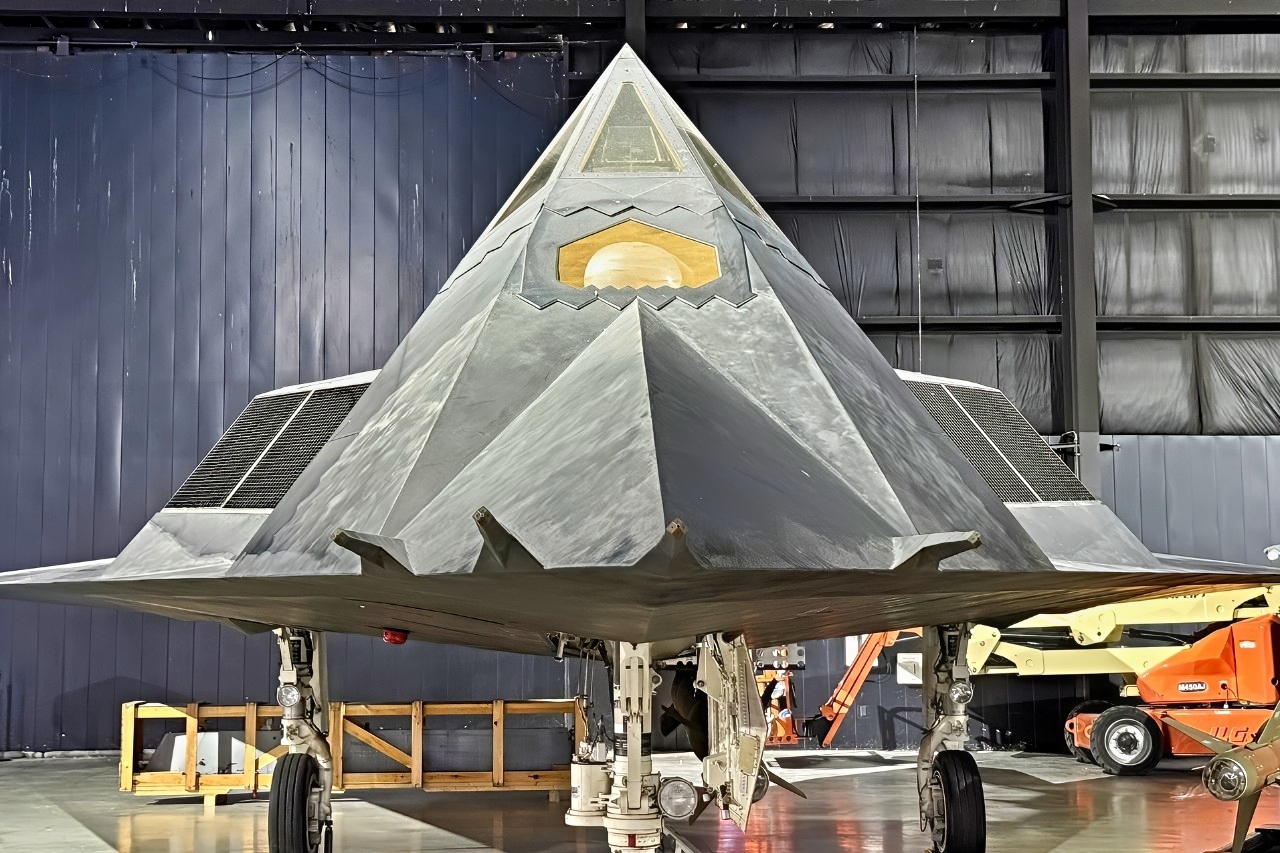
PUBLISHED on August 9, 2025, 09:05 AM EDT – Key Points and Summary – Lockheed Martin once proposed a carrier-capable version of the F-117 Nighthawk called the “Seahawk.”
-The ambitious design would have featured more powerful engines, a larger weapons bay for air-to-air missiles, folding wings, and a strengthened undercarriage.
-Despite these proposed upgrades, the U.S. Navy ultimately rejected the F-117N. The decision was based on the Navy’s prioritization of speed and multi-role performance over the pure stealth-strike mission of the F-117’s airframe.
-The Navy instead chose to wait for the platform that would eventually become the F-35C.
The F-117N Seahawk, The Carrier Version Of The F-117 Nighthawk
When the U.S. Air Force finally revealed the F-117 Nighthawk in 1988, the stealth plane had already been operational for five years. Nevertheless, it was a technological marvel at the time.
The jet had no external weapons. It was defined by sharp, angular features, and indeed, it was…ugly. There just wasn’t any sugarcoating that.
But aesthetics notwithstanding, the F-117 started a stealth revolution that catapulted military aviation into the next century. That revolution evolved largely from the work of the Defense Advanced Research Projects Agency to use computer software to analyze how electromagnetic waves affected certain aircraft designs and materials.
Stealth Technology And The Radar Invisibility Myth Explained:
My friend Alex Hollings wrote this about stealth in 2021: “Despite some common misconceptions, stealth is not a single technology, but rather a whole slew of overlapping technologies, production methodologies, and battlefield strategies.
“No stealth aircraft, not even today’s advanced F-35 Joint Strike Fighter, is truly invisible to radar or infrared detection. However, well-designed stealth aircraft will delay detection for as long as possible while also making it extremely difficult to secure a ‘weapons-grade’ lock.
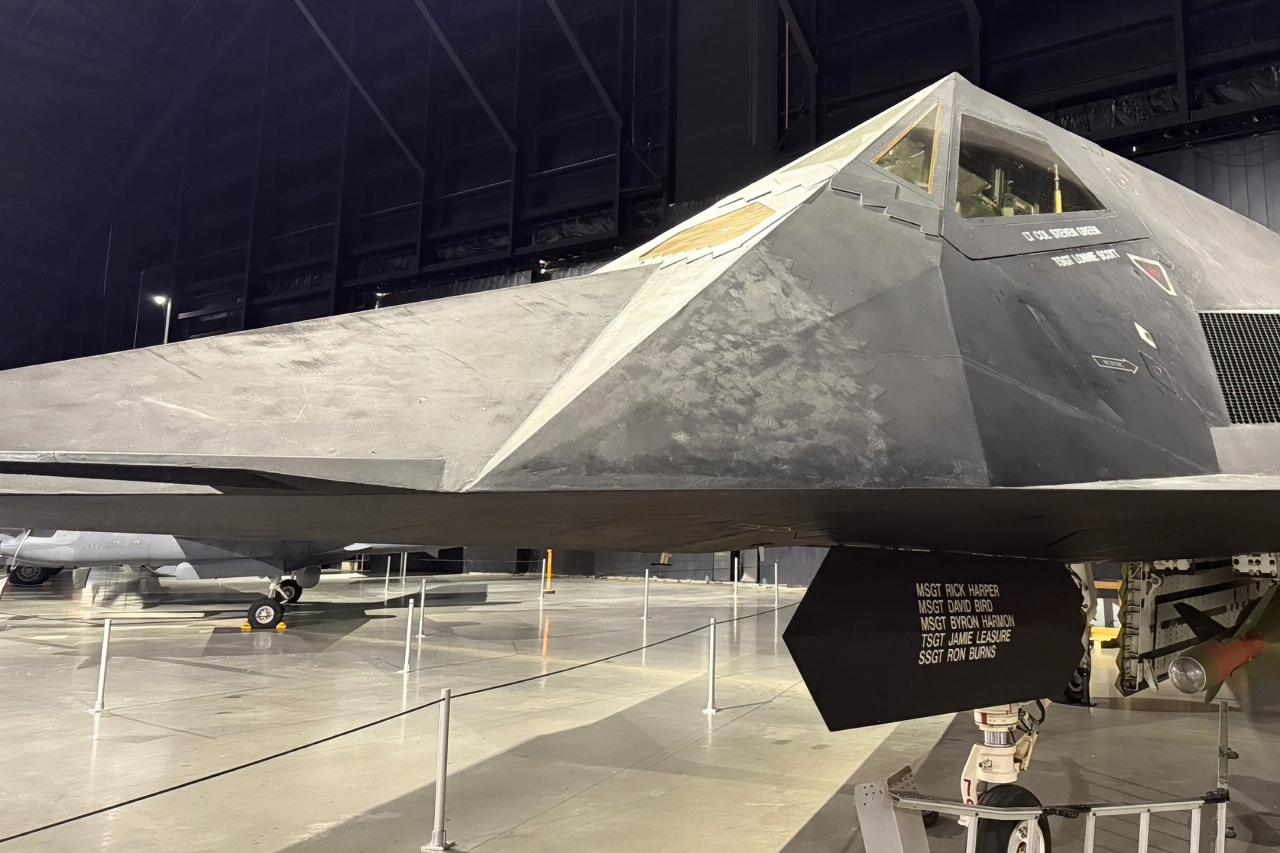
F-117 As Close As We Can Get. National Security Journal Original Photo.
“In other words, even when enemy forces are aware that a stealth jet is in their airspace, they’ll have a heck of a time trying to shoot it down.”
Interestingly, even though the F-117 was superior air dominance technology at the time, only the Air Force was interested in it. The Navy, despite Lockheed Martin’s best efforts, did not want Lockheed’s naval design, the F-117N Seahawk.
The F-117 Wasn’t Built For Carrier Use:
The F-117 Nighthawk was not designed for carrier operations and is not carrier-capable. It was developed by the Air Force, not the Navy, and it lacks the necessary features to take off and land on carriers.
The F-117’s extreme wing sweep makes it unsuitable for carrier landings, and its landing gear is lightweight and not designed to handle the stress.
The Nighthawk’s airframe is also not robust enough for the demanding carrier environment. Finally, the original design of the F-117 was not outfitted with a tailhook for landing on aircraft carriers.
But Lockheed had an answer for all of that.
The F-117N Seahawk Was a Different Aircraft
The Seahawk would retain the original triangular, multifaceted fuselage of the Nighthawk. But it would fly with newer engines based on General Electric’s F414 turbofan, which was originally slated to be used on the McDonnell Douglas A-12 Avenger II.
The folding wings, which would enable storage onboard a carrier, would be given a 42-degree sweep, instead of the Nighthawk’s 50-degree sweep.
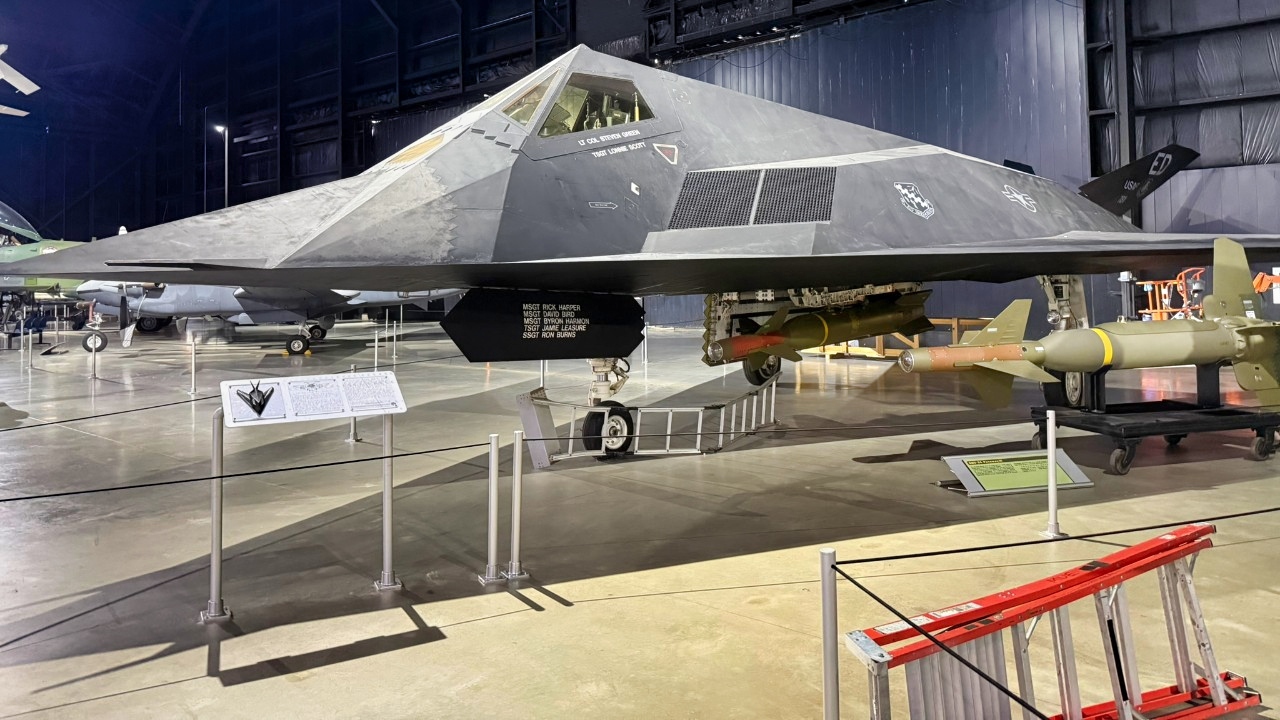
F-117 Nighthawk Stealth Fighter. Image taken on 7/19/2025 in Dayton, Ohio, USAF Museum.
The new design called for stabilators and a “double-slotted” trailing edge, granting the aircraft greater handling characteristics than its land-based brother. It would have a larger weapons bay capable of carrying air-to-air missiles.
The undercarriage would be beefed up to handle the jarring effects of landing aboard carriers, and a tailhook would be installed in the rear, housed in a recessed compartment to preserve stealth. With the improved engines, its performance would leave the F-117 in the dust.
The bulging bomb bay doors would carry 10,000 pounds of weapons instead of the Nighthawk’s 2,000 pounds, including air-to-air missiles.
However, the Seahawk suffered from poor marketing, which is unusual for Lockheed. It was pushed as a multi-role aircraft able to accomplish a variety of missions, rather than being relegated to just the attack role.
The F-117N could not live up to the Navy’s requirements for the Joint Strike Fighter Program. The Navy rejected the Seahawk, because it wanted speed and performance, not stealth. The F-117N Seahawk was not built for speed, despite the GE F414 engines – it was, well, built for stealth.
Did the Navy make the right call by skipping the F-117N?
It appears so. The Navy adopted the F-35C and is doing quite well with it.
About the Author:
Steve Balestrieri is a National Security Columnist. He served as a US Army Special Forces NCO and Warrant Officer. In addition to writing on defense, he covers the NFL for PatsFans.com and is a member of the Pro Football Writers of America (PFWA). His work was regularly featured in many military publications.
Defense Watch
F/A-XX Is the YF-23 on a Carrier?


Ashley
August 10, 2025 at 4:00 pm
Personally I don’t think it’s ugly. Conventionally it probably is, but I think it’s absolutely one of the coolest looking jets to ever exist
Joe Kaufmann
August 10, 2025 at 9:37 pm
Just like all American stealth jets. They’re all overpriced rubbish and engineering failures. That’s why they were never used in combat. Most of them crashed during training sessions.
Antonius Peña
August 12, 2025 at 9:24 am
The F-117 (USAF version) lacks afterburners as well as a cannon. Therefore, it is NOT a fighter platform!
At the time that LM was trying to pitch the concept of the Nighthawk to Congress, Northrop-Grumman around the same time was bringing the B-2 Spirit out, which is a stealth bomber platform.
Since the Nighthawk wasn’t a fighter and when one actually looked at what its mission profile was, it could only be considered a stealth bomber as well. But it was doubtful that Congress would have sprung for two multi-million dollar stealth bombers. So, one was called a bomber and the other one termed a “fighter” because the “customer”, which was the USAF, wanted both stealth jet aircraft.
Some forty-two years after the Lockheed Martin F-117A Nighthawk first flew and articles are still being written calling it a “fighter”.
Such is the power of suggestion perhaps.