

Key Points and Summary – A new RUSI report warns that China’s submarine fleet is rapidly “closing the gap” qualitatively, “eroding” the U.S. Navy’s technological edge.
-While China’s current 6 Type 093 SSNs are “noisy” (comparable to a 1970s Victor III), the upcoming Type 095 SSN will be much larger (11,000 tons) and quieter, using Russian reactor designs.

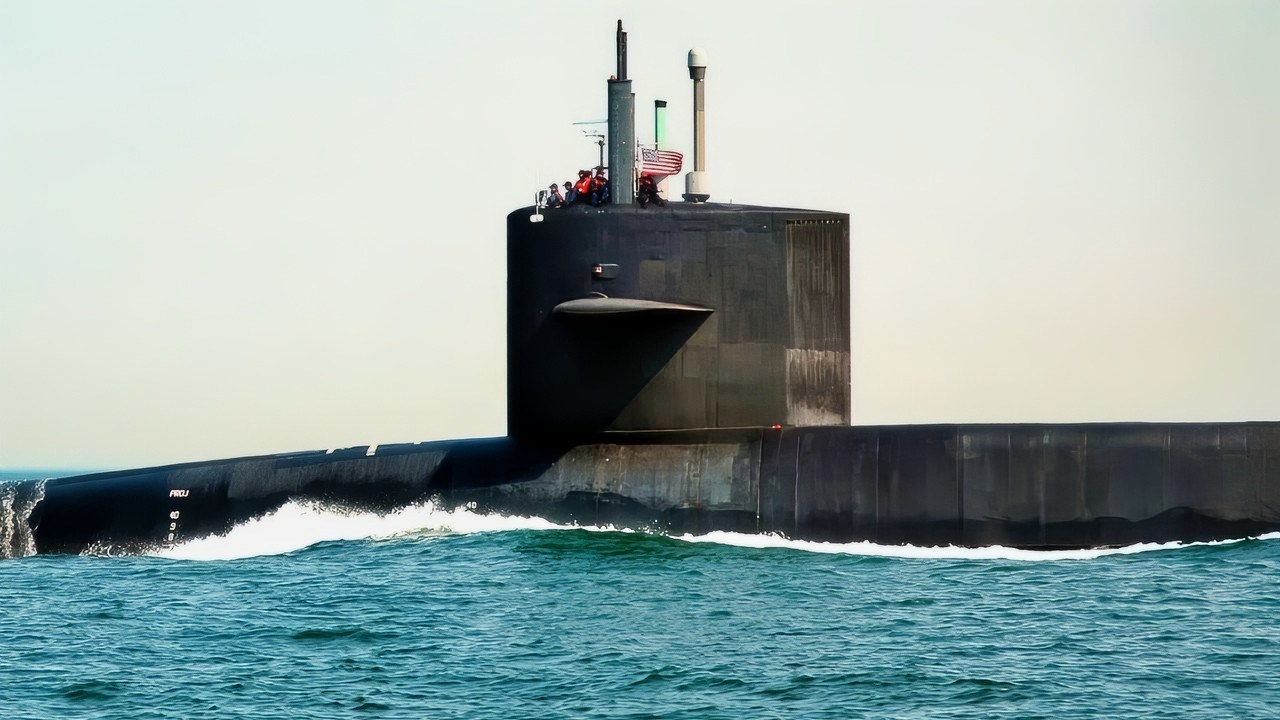
(Mar. 21, 2025) – The Los Angeles-class fast-attack submarine, USS Santa Fe (SSN 763), transits the Pacific Ocean, March 21, 2025. Santa Fe is one of four Los Angeles-class fast-attack submarines assigned to Commander, Submarine Squadron 11. Santa Fe is part of Commander Submarine Squadron 11, home to four Los Angeles-class fast-attack submarines, which are capable of supporting various missions, including anti-submarine warfare, anti-ship warfare, strike warfare and intelligence, surveillance and reconnaissance. (U.S. Navy photo by Mass Communication Specialist 1st Class Keenan Daniels)
-Furthermore, the new Type 096 SSBN will be nearly Ohio-class size (15,000 tons) and armed with 24 6,000-mile-range JL-3 missiles, allowing it to strike the continental U.S. from “safe” Chinese bastions.
-The report concludes that while the U.S. “still has a significant advantage,” these “modest improvements” are a “noteworthy” threat given China’s “industrial heft” and the U.S. Navy’s own struggling shipyards.
China’s Submarines Are Getting More Powerful By the Day
China’s submarine fleet isn’t just growing in numbers. Qualitatively, Chinese subs are improving to the point that the technological edge enjoyed by U.S. submarines may be eroding.
“In a submarine arms race between China and the US, the PLAN [People’s Liberation Army Navy] appears to be closing the gap,” warned a recent analysis by the Royal United Services Institute, a British think tank.
“Should qualitative improvements be combined with a formidable manufacturing capacity, China will likely start to challenge U.S. military maritime dominance under the waves.”
In particular, the report points to advances in Chinese nuclear submarines, which it describes as “an area of relative weakness” for the PLAN. “To date, China has seen more success in developing diesel electric submarines than nuclear submarines,” wrote RUSI researchers Sidharth Kaushal and Cmdr. Edward Black, a Royal Navy officer.
For example, China’s active nuclear attack sub fleet consists of six Type 093 SSNs, a 7,000-ton design first deployed in the early 2000s. The Type 093A “is comparable to a Russian Victor III-class submarine designed in the 1970s,” and suffers from a weak nuclear powerplant as well as a noisy configuration that makes it easier to detect, according to RUSI.
Coming Soon
But the upcoming Type 095 nuclear attack submarine is expected to weigh in at almost 11,000 tons submerged – about the size of a U.S. Virginia-class sub – and utilize Russian reactors similar to those used on Russian subs such as the Akula class, the largest submarine class ever built.
“The ability to build smaller more powerful reactors based on Russian designs opened up a vista of opportunities for Chinese designers who could now design larger boats without compromising on qualities such as speed,” RUSI noted. “Most importantly, a larger boat can carry more effective sound isolation mechanisms.”

Akula-Class. Image Credit: Creative Commons.
This still will leave China behind the latest U.S. and Russian technology – but the gap is closing. “China is still a generation behind the state of the art in areas such as powerplant design,” Black and Kaushal wrote. “Type 95 design as envisioned would nonetheless represent a submarine that is much more competitive than its predecessors and comparable in quality to the improved Akula.”
China is also developing the Type 096 nuclear ballistic missile submarine, which will be larger than the PLAN’s six Type 094 boats. The Type 094 has a displacement of about 11,000 tons submerged, and is armed with 12 JL-2 ballistic missiles with a range of 4,500 miles.
The Type 096 is expected to weigh at 15,000 tons – almost the size of a U.S. Ohio-class ballistic missile sub – and armed with 24 JL-3 missiles with a range of 6,000 miles. This would enable the Type 096 to strike the continental United States while remaining safe in Chinese home waters, just as Russia has created well-defended bastions in the Barents Sea where their missiles subs are protected.
The Type 096 may use advanced systems such as quieter shaftless pump thruster propulsion, and better sonar. “The incorporation of these latest technologies combined with the Tang’s greater size and missile capacity means it will likely be able to sustain longer range and longer duration deployments,” RUSI wrote.
Significantly, there is also evidence that China may design the Type 096’s hull to operate in Arctic ice. “Some academics have indicated that China has expressed an interest in access to Russian Arctic bases,” Black and Kaushal noted. “Given that a northern ballistic trajectory to the US is efficient and would not require transiting chokepoints such as the Bashi channel, it might also be the case that the Type 096 will be deployed in an area where the Euro-Atlantic and Indo-Pacific overlap.”
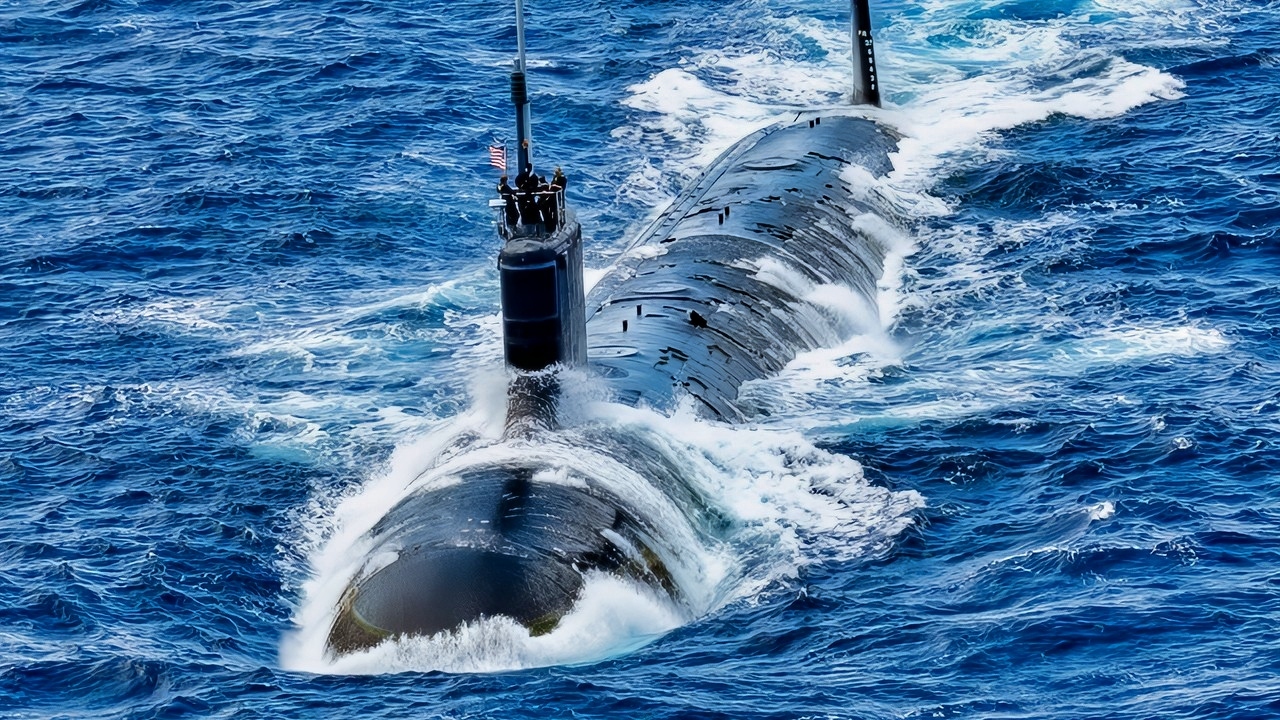
Virginia-class attack submarine USS North Carolina (SSN 777) sails in formation, off the coast of Hawaii during Exercise Rim of the Pacific (RIMPAC) 2024, July 22. Twenty-nine nations, 40 surface ships, three submarines, 14 national land forces, more than 150 aircraft and 25,000 personnel are participating in RIMPAC in and around the Hawaiian Islands, June 27 to Aug. 1. The world’s largest international maritime exercise, RIMPAC provides a unique training opportunity while fostering and sustaining cooperative relationships among participants critical to ensuring the safety of sea lanes and security on the world’s oceans. RIMPAC 2024 is the 29th exercise in the series that began in 1971. (U.S. Navy photo by Mass Communication Specialist 1st Class John Bellino)
But for U.S. submarines, which would be essential to the defense of Taiwan, the long-term threat would be improved Chinese anti-submarine defenses in the First Island Chain, which includes Japan, Taiwan and the Philippines.
China may be deploying underwater sensors in the region, and Chinese media has claimed that advances in AI will reduce the survivability of enemy subs to just 5 percent.
The RUSI experts aren’t totally convinced. The problem is that “it cannot be inferred from the reports that the necessary sensors, processing nodes and undersea communication networks have been developed and tested to the degree necessary to make such detection probabilities a reality yet,” they argued.
However, China’s fleet of 48 diesel-electric attack submarines is a threat to American nuclear subs that could attack a Chinese amphibious force headed toward Taiwan, or even launch cruise missiles at targets on the Chinese mainland. “Taken together, China’s sensor networks and fleet of quiet diesel electric submarines could pose a real challenge to the submarines of the US and other allies that would look to help defend Taiwan,” Black and Kaushal wrote.
At the least, Chinese media is eager to present an image of a maritime Fortress China. “The messaging of such articles appears to be clear: the PLAN’s ability to defend against submarines in its own back yard will eventually be insurmountable,” RUSI noted.
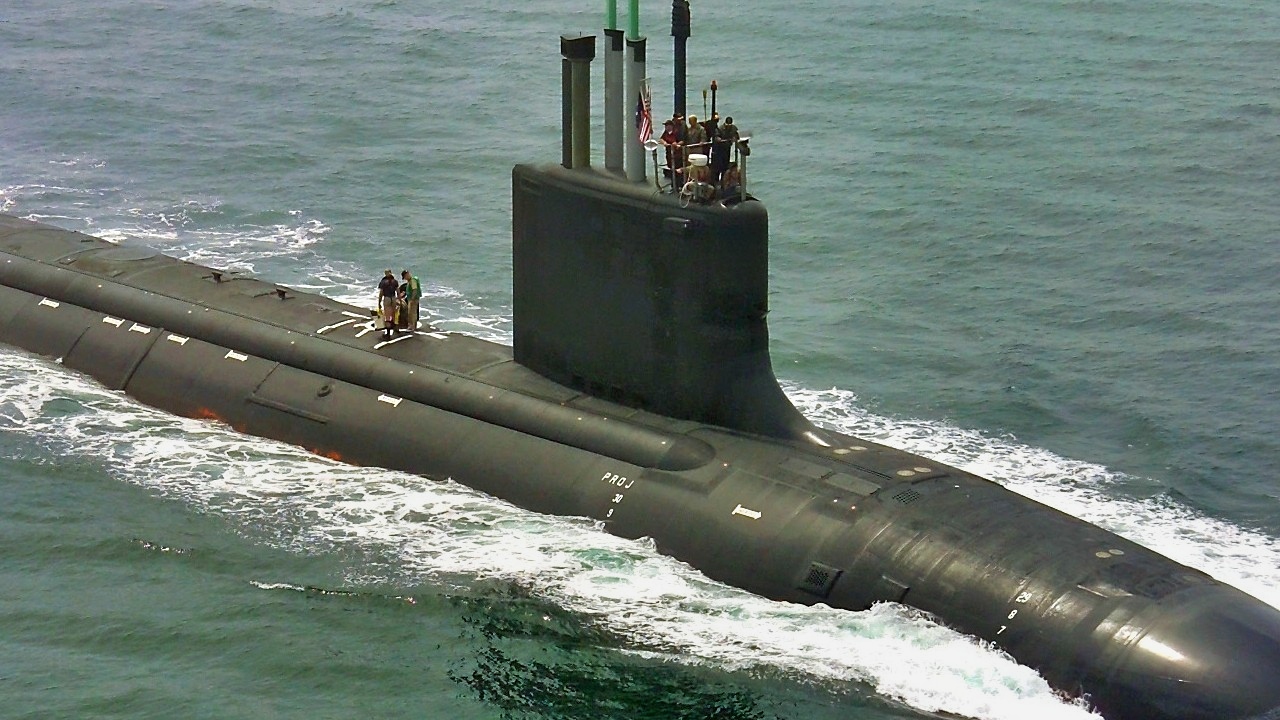
Groton, Conn. (July 30, 2004) – The nation’s newest and most advanced nuclear-powered attack submarine and the lead ship of its class, PCU Virginia (SSN 774) returns to the General Dynamics Electric Boat shipyard following the successful completion of its first voyage in open seas called “alpha” sea trials. Virginia is the Navy’s only major combatant ready to join the fleet that was designed with the post-Cold War security environment in mind and embodies the war fighting and operational capabilities required to dominate the littorals while maintaining undersea dominance in the open ocean. Virginia and the rest of the ships of its class are designed specifically to incorporate emergent technologies that will provide new capabilities to meet new threats. Virginia will be delivered to the U.S. Navy this fall. U.S. Navy photo by General Dynamics Electric Boat (RELEASED)
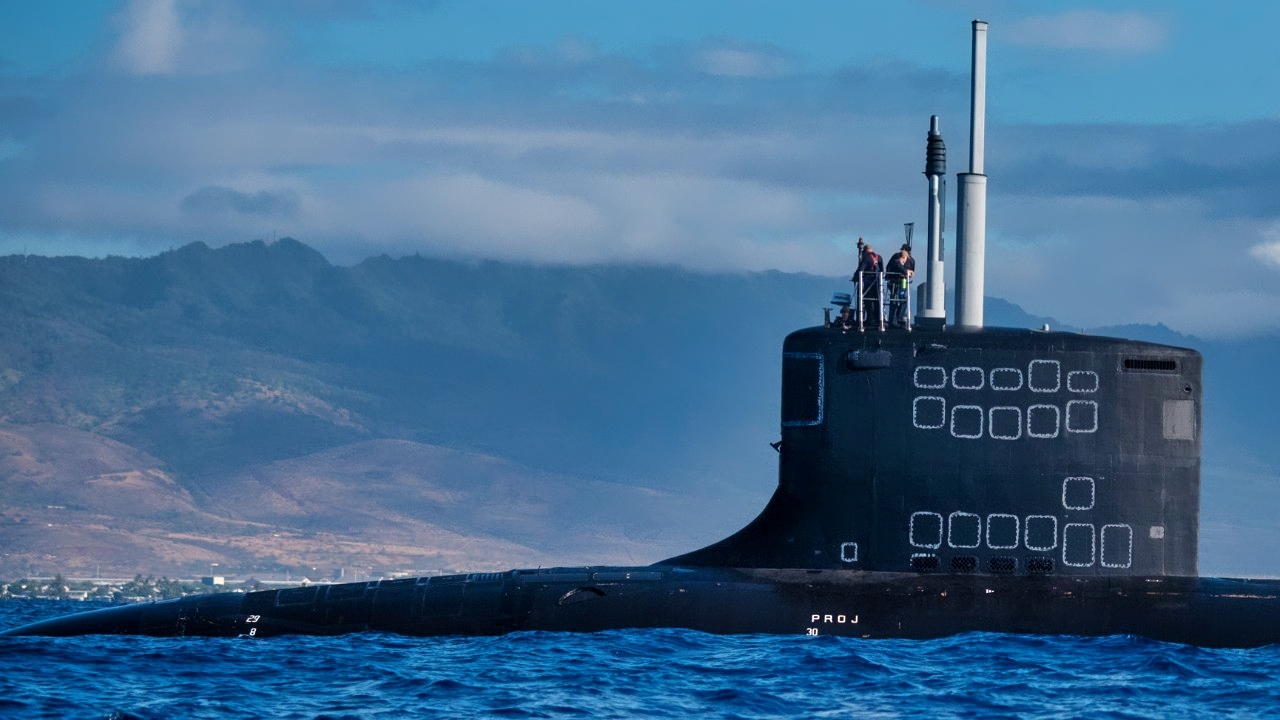
180709-N-KC128-1131 PEARL HARBOR (July 9, 2018) – Multi-national Special Operations Forces (SOF) participate in a submarine insertion exercise with the fast-attack submarine USS Hawaii (SSN 776) and combat rubber raiding craft off the coast of Oahu, Hawaii during Rim of the Pacific (RIMPAC) exercise, July 9. Twenty-five nations, 46 ships and five submarines, about 200 aircraft, and 25,000 personnel are participating in RIMPAC from June 27 to Aug. 2 in and around the Hawaiian Islands and Southern California. The world’s largest international maritime exercise, RIMPAC provides a unique training opportunity while fostering and sustaining cooperative relationships among participants critical to ensuring the safety of sea lanes and security of the world’s oceans. RIMPAC 2018 is the 26th exercise in the series that began in 1971.` (U.S. Navy photo by Mass Communication Specialist 1st Class Daniel Hinton)
For now, that message is more propaganda than reality. U.S. submarines “still have a significant advantage in quieting and sensor performance,” Chris Carlson, a U.S. naval warfare expert, told National Security Journal.
As for Chinese underwater sensors, “even with a widely distributed network, the South China Sea area is one of the busiest sea lanes in the world. This translates into a ton of shipping noise that will interfere with detecting really quiet U.S. SSNs.”
Perhaps the biggest issue for the U.S. submarine force is a Navy construction and maintenance system mired in delays and cost overruns, and which lacks the capacity to deliver new subs to replace aging boats. Nor does China need to have submarines that are equal to their American counterparts.
As long as Chinese subs are getting better, “even modest improvements are noteworthy given the qualitative advantage that the US needs to offset China’s industrial heft,” RUSI concluded.
About the Author: Michael Peck
Michael Peck writes about defense and international security issues, as well as military history and wargaming. His work has appeared in Defense News, Foreign Policy Magazine, Politico, National Defense Magazine, The National Interest, Aerospace America and other publications. He holds an MA in Political Science from Rutgers University.
More Military
The U.S. Military Purchased 2 Russian-Made Mach 2.35 Su-27 Flanker Fighters
The B-2 Spirit Stealth Bomber Has a Message for the U.S. Air Force
To The Bottom In Minutes: China Has Countless Missiles Ready to Sink U.S. Navy Aircraft Carriers



Jim
November 15, 2025 at 10:45 am
This article reviewing a study from the Royal United Services Institute is part of a larger canvas of Chinese military capability, both in quantitative & qualitative terms leading to a portrait of the Chinese military closing the gap between it and the United States Military.
Is the gap entirely closed? No.
But as the author suggests, it’s not just the technological level which is crucial, but also the numbers matter and the industrial production capacity backing the whole Chinese military.
And there is also a difference between operating in waters relatively close to logistical supply bases and thus short supply lines where it can concentrate or disperse forces as needed because the area of concern is specific and smaller than those waters the United States patrols.
The United States Navy is spread out over the entire globe with many responsibilities whereas China’s navy can concentrate on the East Asian seaboard, specifically the waters around Taiwan and the South China Sea.
Gradually, it appears, military analysts are recognizing China isn’t just closing the gap regarding submarines, as herein described, but overall is ushering in a new age where the United States is forced to recognize China as a peer-competitor, not just economically, but militarily as well.
It’s crucial our political leaders understand this development and acknowledge it and then craft policies consistent with the dawning new realities on the ground, in the air, on the oceans, and under them, as well.
It’s difficult to come to grips with this fact because it challenges basic assumptions the U. S. has been working from since the end of World War Two.