

Key Points and Summary – North American Rockwell’s NA-335 was a serious F-X contender: twin engines, big radar aperture, high thrust-to-weight, and a design tailored to Boyd’s energy-maneuverability logic.
-On paper, it matched the USAF’s wish list to counter MiGs and especially the MiG-25. But institutional momentum favored McDonnell Douglas after the F-4, and USAF risk tolerance was low after the troubled F-111.
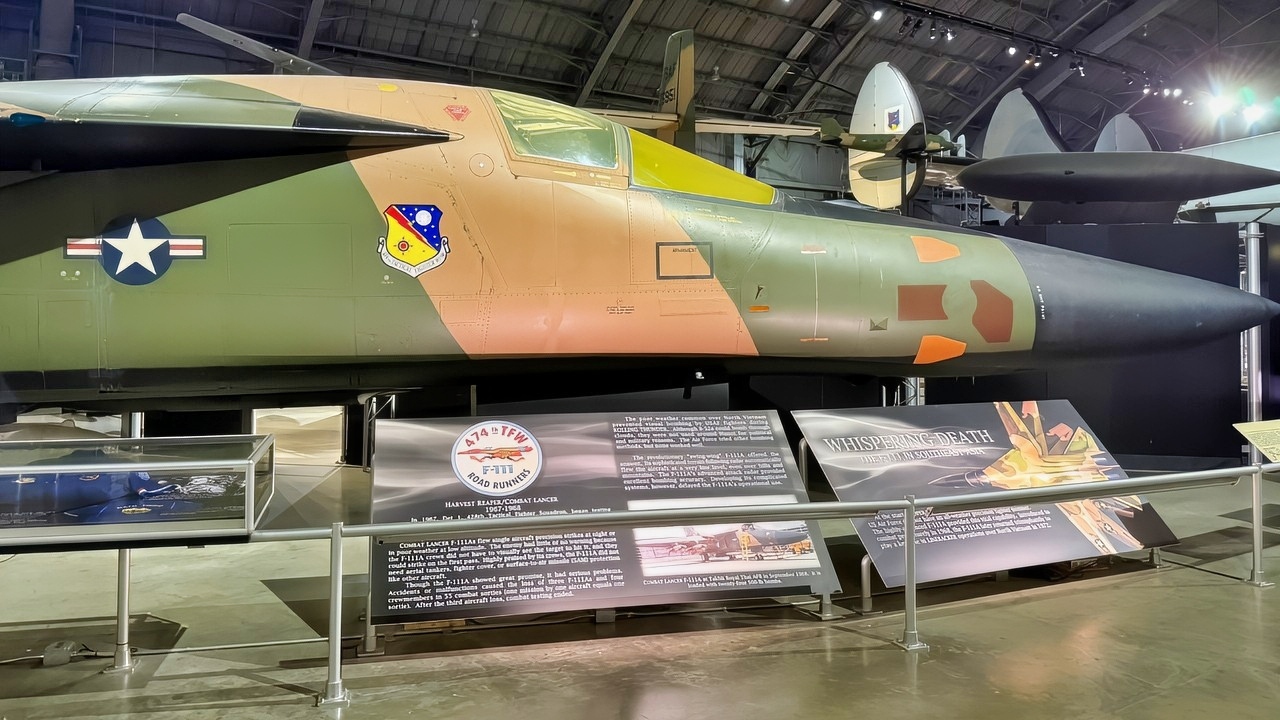
F-111 In USAF Museum July 2025 NSJ Image Taken by Harry J. Kazianis.
-The NA-335’s single tail, ventral fins, and perceived stability questions increased program risk, while the Eagle promised growth, sensors, and twin-engine redundancy with fewer unknowns.
-Realities mattered: Rockwell was focused on AMSA bomber (later B-1).
The Eagle won; NA-335 became a footnote.
NA-335: The North American Rockwell Design That Lost to the F-15
In the late 1960s, the United States Air Force (USAF) launched its Fighter-Experimental (F-X) program to field a new generation of dedicated air-superiority fighters capable of countering new and emerging threats.
Among the many proposals submitted to the program was the little-known NA-335 from North American Rockwell – a design that, on paper, was a serious contender.
It had twin engines, high thrust, larger radar aperture, and a design optimized for speed, maneuverability, and climb.
Everything about it screamed “winner,” but USAF ultimately selected the F-15 Eagle from McDonnell Douglas, which went on to become the cornerstone of U.S. air dominance.
So why did the NA-335 – a technically credible and forward-looking design – never stand a chance?
And how might it have substituted for the F-15?

Lt. COl. Stephen ‘Steagle’ Mindek, 104th Fighter Wing pilot, takes off in an F-15C Eagle for Maj. John “Space’ Stout’s fini-flight, January 10, 2025, at Barnes Air National Guard Base, Westfield, Massachusetts.
Following the fini-flight, Maj. Stout was greeted with cheers from his fellow Airmen, friends, and family. Maj. Stout’s final ride in the F-15C Eagle resulted in over 1100 hours flown in the legendary aircraft.
(U.S. Air National Guard photo by Jay Hewitt)
What the NA-335 Was, and Why It Could Have Taken the F-15’s Place
The NA-335 was North American Rockwell’s entrant into the F-X competition, and accounts of the design have long noted its high performance.
The aircraft was designed as a twin-engine fighter with a large airframe. It was the kind of high-energy aircraft the U.S. Air Force was looking for at the time.
Its layout, while never built, closely mirrored the emerging thinking of the time. It had big engines, large wings, and a fuselage big enough to support new sensors and sizeable fuel tanks.
The F-X program called for a design that was capable of addressing two primary pressures. First, USAF needed a new platform that addressed the limitations revealed by Vietnam-era combat – specifically, the performance gap between American fighters and Russian MiGs.
USAF also needed a design that would stand up to the Soviet MiG-25 Foxbat, which became something of an enigma to the service.

MiG-25. Image Credit: Creative Commons.
That meant the Air Force was looking for a new, dedicated air-superiority platform that had twin engines for survivability, long-range radar to support beyond-visual-range (BVR) fights, and the ability to sustain high energy in aerial combat.
The NA-335 offered this. But so did the F-15.
The NA-335 was envisioned to deliver high thrust-to-weight, strong climb, and great sensors. The design has since been compared to the Sukhoi T-10, a Soviet twin-engine supersonic, supermaneuverable fighter aircraft introduced in 1984.
But history was not on the NA-335’s side, and in an alternate universe where the industrial, institutional, and political winds were different, the NA-335 could plausibly have become America’s air-superiority fighter.
Moreover, its design philosophy is closely aligned with the “energy-maneuverability” (E-M) theory championed by figures such as Col. John Boyd, a fighter pilot and mathematician with the USAF.
His idea was that a fighter must retain energy and height to dominate.
The theory develops a quantitative model of an aircraft, accounting for its thrust, weight, wing area, aerodynamic drag, and other defining characteristics.
The model considers every aspect of the plane to determine whether design trade-offs are worth it.
Although Boyd is most famously associated with the Lightweight Fighter Program that later produced the F-16, his E-M framework also shaped the Air Force’s thinking about larger, heavier air-superiority fighters.

F-16 Fighting Falcon Onboard USS Intrepid. Image Taken on September 18, 2025.
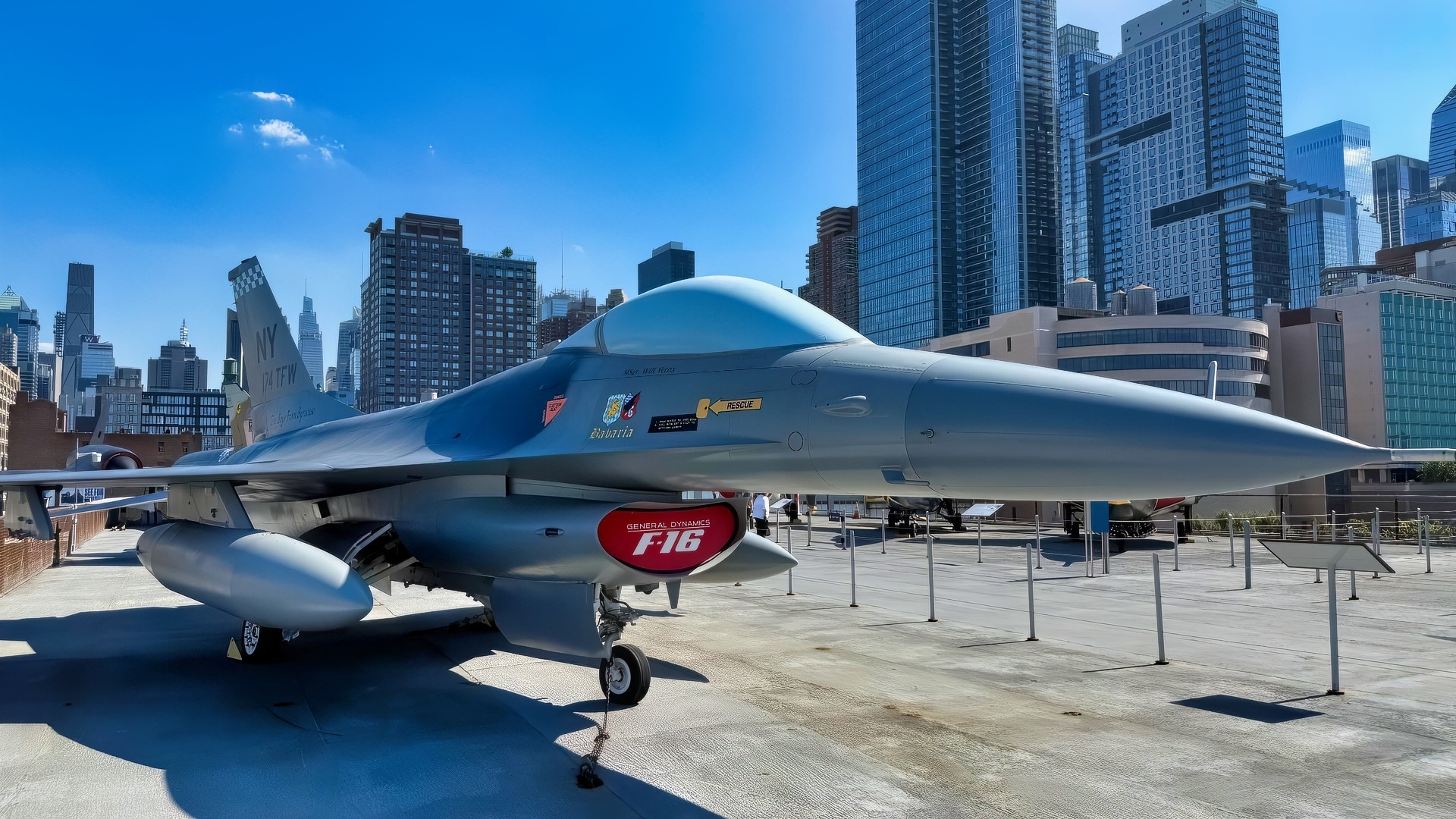
F-16 Fighting Falcon National Security Journal Photo. Taken on 9/18/2025 Onboard USS Intrepid.
The early F-X concepts – including the NA-335 – were evaluated using the same E-M principles: sustained turn rate, energy retention, climb, acceleration, and the ability to maintain an advantage throughout a fight.
In that sense, the NA-335 was not an outlier and fit the bill perfectly. It was a powerful, fast, twin-engine aircraft optimized to win.
Why It Never Stood A Chance
Despite its technical promise, the NA-335 ran into multiple headwinds that ensured it would never make it. First, institutional momentum favored McDonnell Douglas.
At the time, McDonnell Douglas had strong credibility with the USAF based on the success of the F-4 Phantom and other programs, while North American Rockwell’s recent record was less embedded.
Their reputation wasn’t bad, but they didn’t have the same recent experience with the Air Force.
Second, there was a perceived engineering risk with the NA-335. Though exciting, the design – which included a single tail and unconventional features such as large ventral fins – introduced greater risks to stability and control at high angles of attack.
And, following the troubled F-111 Aardvark program, the USAF was wary of selecting an unchecked, high-risk platform.
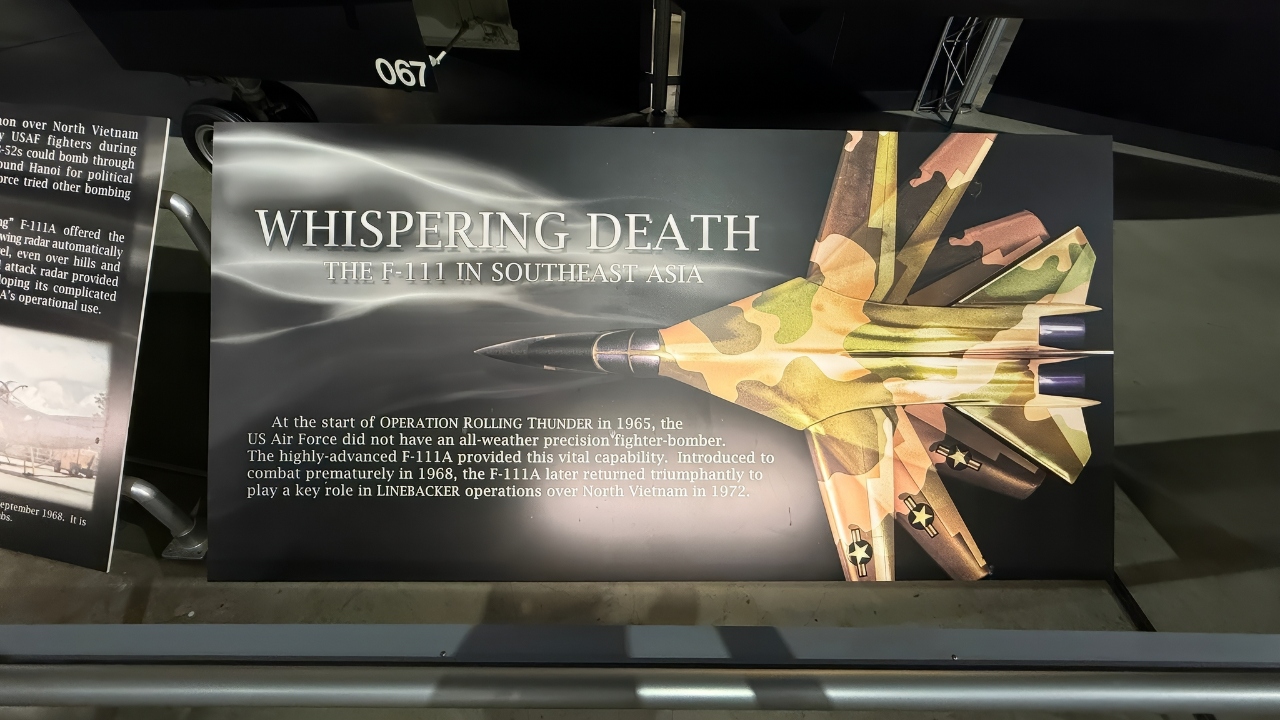
F-111 Photo from USAF Museum in Dayton. Image Credit: National Security Journal.
Third was strategic alignment: by the late 1960s, the USAF had already formed a strong internal vision of the kind of fighter it wanted.
The Air Force wanted a large radar, high fuel capacity, twin-engine redundancy, and the ability for the platform to grow and expand for the long term. The McDonnell design ticked all those boxes and was ultimately successful.
It’s worth noting, though, that there were industrial and priority factors that came into play – and had these factors not arrived, it’s not inconceivable that the NA-335 could have been chosen. North American Rockwell was busy working on the AMSA bomber program, which ultimately delivered the B-1 Lancer.
Between that distraction and the fact that McDonnell Douglas was a safe bet for the Air Force, it should come as no surprise that the NA-335 ultimately failed.
It lacked institutional weight and was technically riskier.
About the Author:
Jack Buckby is a British author, counter-extremism researcher, and journalist based in New York. Reporting on the U.K., Europe, and the U.S., he works to analyze and understand left-wing and right-wing radicalization, and reports on Western governments’ approaches to the pressing issues of today. His books and research papers explore these themes and propose pragmatic solutions to our increasingly polarized society. His latest book is The Truth Teller: RFK Jr. and the Case for a Post-Partisan Presidency.
More Military
Russia’s Mach 2 Su-30SM Fighter Has A Message for Any Air Force on Earth
The Mach 2.2 B-1A Bomber Has A Message for the U.S. Air Force
The Mach 2.35 ‘Super’ Eurofighter Typhoon Fighter Has a Message for Any Air Force On Earth
Canada’s CF-18 Hornet Fighter Crisis
Forget NGAD or the J-20: A 7th Generation Fighter Could Hit Mach 5


James
November 14, 2025 at 11:40 am
Its interesting the NA-335 was never built to be a classified prototype and tested against the F-15 or others built or not built That’s why you won’t see a prototype as it was not designed to fly unless they planned to have the F-15s engine.
Could such prototypes be designed to fly secretly? Yes.
Krystal cane
November 15, 2025 at 2:21 pm
I’m guessing the NA stands for not available for these questions they post are the stories are getting dumber and dumber just like Donald Trump
N BEEF SANDWICHES
November 18, 2025 at 7:06 pm
So sick of this tired ridiculous TDS Trump Derangment Syndrome of you tolerant liberal commie democrats, grow up, try respecting people and loving and supporting your country OR MOVE TO RUSSIA OR CHINA SINCE YOU LOVE THEM SO MUCH!