


Key Points – The United States dwarfs China in wealth, income, and innovation, yet risks losing the long game because Beijing treats economics as an instrument of state power.
-China directs capital into critical industries, builds a dominant manufacturing base, and weaponizes supply chains—even at a financial loss—under its “comprehensive national power” strategy.

China SSN Submarine. Image Credit: Creative Commons.
-Washington, by contrast, optimizes for private prosperity, with debt, entitlements, and politics crowding out sustained investment in defense and key sectors like chips and critical minerals.
-The U.S. still has superior resources and talent, but only a deliberate national strategy that links wealth to power will keep it ahead of China.
How A Wealthier US Loses to A More Powerful China
How can a United States that is vastly wealthier than the People’s Republic of China lose in a strategic rivalry? That is the central puzzle of today’s geopolitical landscape.
By every measure of national wealth, the US enjoys an overwhelming advantage. At the end of 2024, American household wealth reached $162 trillion, compared with roughly $85 trillion in China—a record gap. Personal income in the US, the clearest measure of prosperity, was more than ten times China’s in 2022. America’s nominal GDP lead exceeded $10 trillion in 2024.
Wealth and Power
And China shows little sign of catching up. It faces long-term structural economic stagnation—wasteful investment, severe demographic decline, and political assaults on private enterprise.
Yet wealth is not necessarily power. What matters in geopolitical competition is how effectively a country converts economic resources into military, diplomatic, and technological leverage. And here, China has an enormous structural advantage. Beijing treats wealth as a tool of statecraft. Washington treats it solely as a wonderful product of freedom, to be controlled by individuals.
At the center of Chinese strategy is the pursuit of what Beijing calls “comprehensive national power“—the bundling of military strength, technological capacity, industrial dominance, and geopolitical influence into a single national project.
China is building the Indo-Pacific’s most formidable military, anchored by a defense industrial base the US increasingly struggles to match. Economically, it uses state power to dominate strategic industries and weaponize supply chains.
America, by contrast, optimizes for private wealth creation and consumer welfare. Whether a successful entrepreneur contributes to national power is irrelevant to the US system. Unless the country is on a wartime footing, Washington struggles to translate economic resources into geopolitical advantage.
China’s Drive to Expand National Power
In contrast, one of the Chinese Communist Party’s core functions is to direct capital toward industries that expand national power—even if they generate little profit. Consider critical minerals. China leads not because its entrepreneurs foresaw a lucrative future but because Beijing decided strategic dominance would yield political leverage. It was right: Rare-earth coercion forced Washington to soften its stance during a recent trade dispute.
In China, eliminating foreign competitors is not an accidental side effect of “creative destruction.” It is the goal. Beijing is willing to incur losses to bankrupt rivals and gain coercive power. The present wave of Chinese cars is devastating German manufacturers, for instance, and Beijing welcomes that outcome.
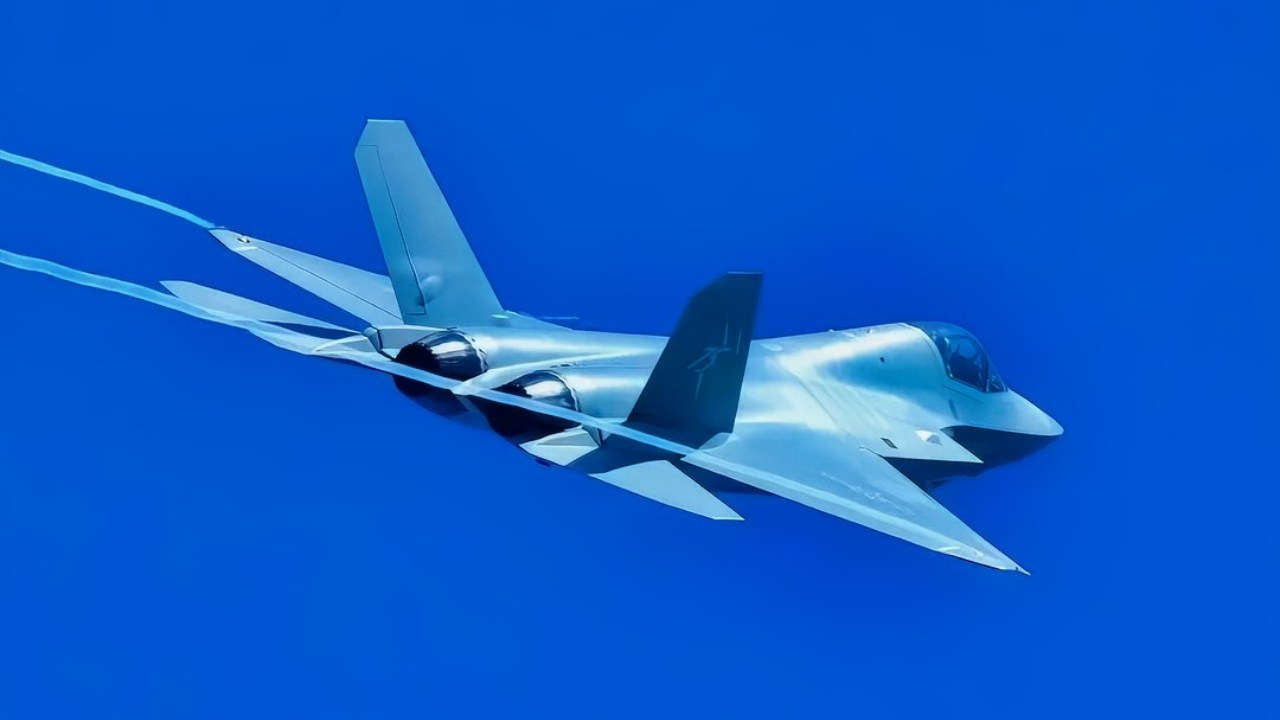
J-35A Fighter from China. Image Credit: PLAAF
A similar dynamic is emerging in artificial intelligence. America may produce the world’s most advanced AI firms, with commercially superior models and top-tier enterprise products. But China will deploy AI for geopolitical gain. While US companies focus on monetization, Beijing will give its AI systems away to partners such as Brazil, embedding Chinese technology into critical sectors like energy and logistics. Innovation is most valuable to Beijing insofar as it advances geopolitical power—and if suppressing global innovation serves Chinese interests, it will do that too.
Xi Jinping has reorganized China’s economy toward this purpose. China is the world’s most significant manufacturing power, producing more goods than the following nine countries combined. It is the largest producer of automobiles, particularly electric vehicles, and the dominant shipbuilder.
It leads the world in new semiconductor fabs, even if at the low end, and is positioned to overwhelm most legacy chipmakers. It is poised to take a dominant position in the biopharmaceutical supply chain.
Wealth to Geopolitical Power
For the US to convert its vast wealth into geopolitical power, it would need a fundamental rethinking of peacetime economic strategy. That would require sustained investment in defense industrial capacity, targeted support for strategic industries, and a willingness to restructure federal spending.
But Washington’s fiscal reality is grim: much of the federal budget is consumed by healthcare, pensions, and interest payments on $35 trillion in debt. Tax revenues are far from covering current obligations, let alone major new strategic investments. When Washington gets more revenue, it thinks of tax cuts. That may be good for growth, but it does not help in competing with China.
Building national power is expensive. Maintaining military superiority in Asia alone would require annual spending levels above current trajectories. Strengthening semiconductor supply-chain resilience through the CHIPS and Science ACT was a good start—but similar initiatives are needed for sectors such as critical minerals.
This will all be expensive—the CHIPS Act will cost taxpayers around $250 billion over 10 years—and, absent fiscal policy change, Washington does not have the money.
The “good” news is that China’s own financial position is worsening. Its debt levels are enormous, and its stagnating economy cannot sustain unlimited strategic industrial spending. Beijing finances both a massive military and an internal surveillance state that will be difficult to maintain.
If the U.S. can exclude China from key supply chains—particularly in chips, critical minerals, and pharmaceuticals—it can strike at the heart of Beijing’s economic model and geopolitical leverage. Making China’s programs more costly does matter.
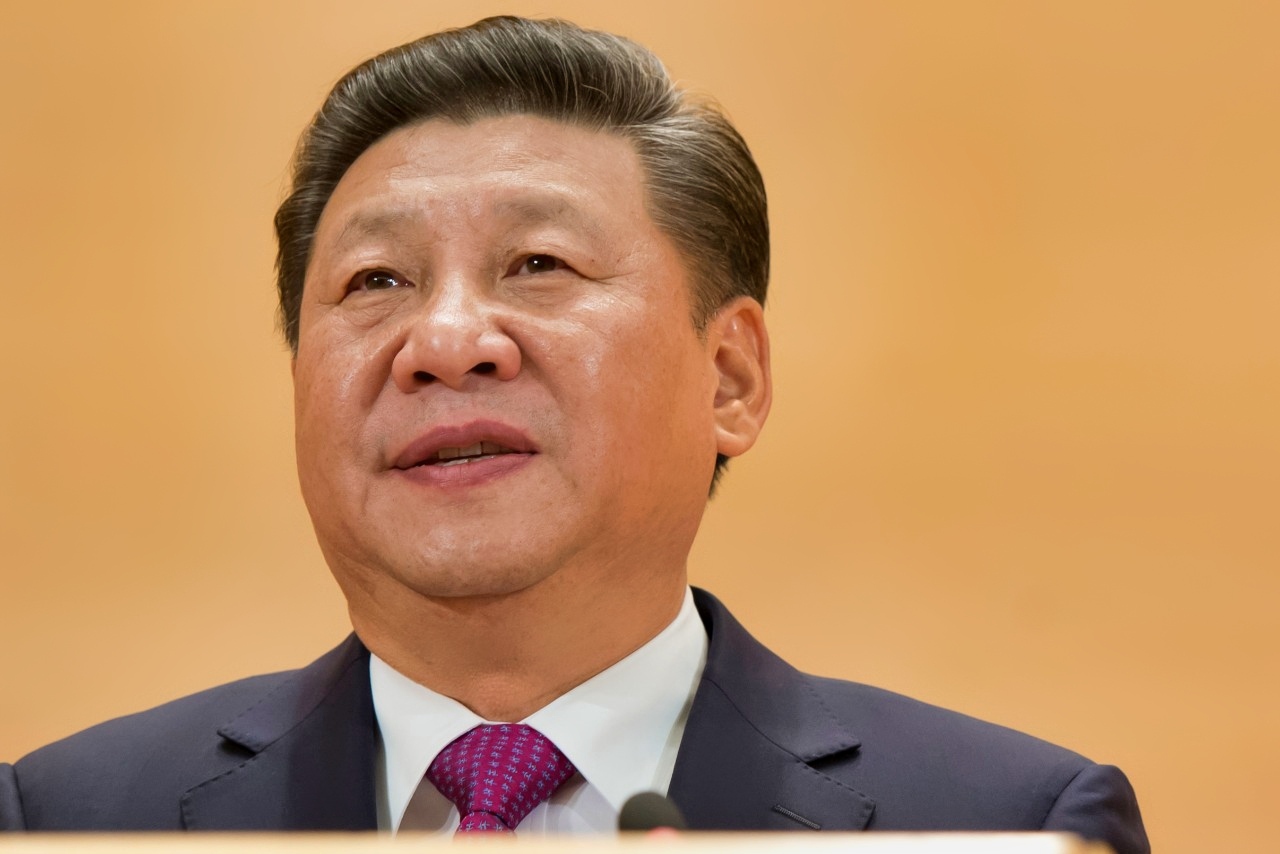
Xi Jinping President of the People’s Republic of China speak’s at a United Nations Office at Geneva. 18 january 2017. UN Photo / Jean-Marc Ferré
The US still holds the high ground in wealth, breakthrough innovations, and human capital. But converting these advantages into power requires a national strategy that treats economics as an instrument of statecraft. China already does.
About the Author: Daniel Blumenthal
Dan Blumenthal is a senior fellow at the American Enterprise Institute, where he focuses on East Asian security issues and Sino-American relations. Mr. Blumenthal has served in and advised the US government on China issues for more than a decade. Before joining AEI, Mr. Blumenthal served as senior director for China, Taiwan, and Mongolia at the US Department of Defense. He served as a commissioner on the congressionally mandated US-China Economic and Security Review Commission from 2006 to 2012, and he was vice chairman of the commission in 2007. He also served on the Academic Advisory Board of the congressional US-China Working Group. Mr. Blumenthal is the author of “The China Nightmare: The Grand Ambitions of a Decaying State” (AEI Press, November 2020) and coauthor of “An Awkward Embrace: The United States and China in the 21st Century” (AEI Press, November 2012).



1KoolKat
December 16, 2025 at 6:08 am
The main reason the United States is falling behind China is due to the American people’s lack of unified political will to pursue a long-term national security strategy that prioritizes sacrifice over wealth and luxury.