

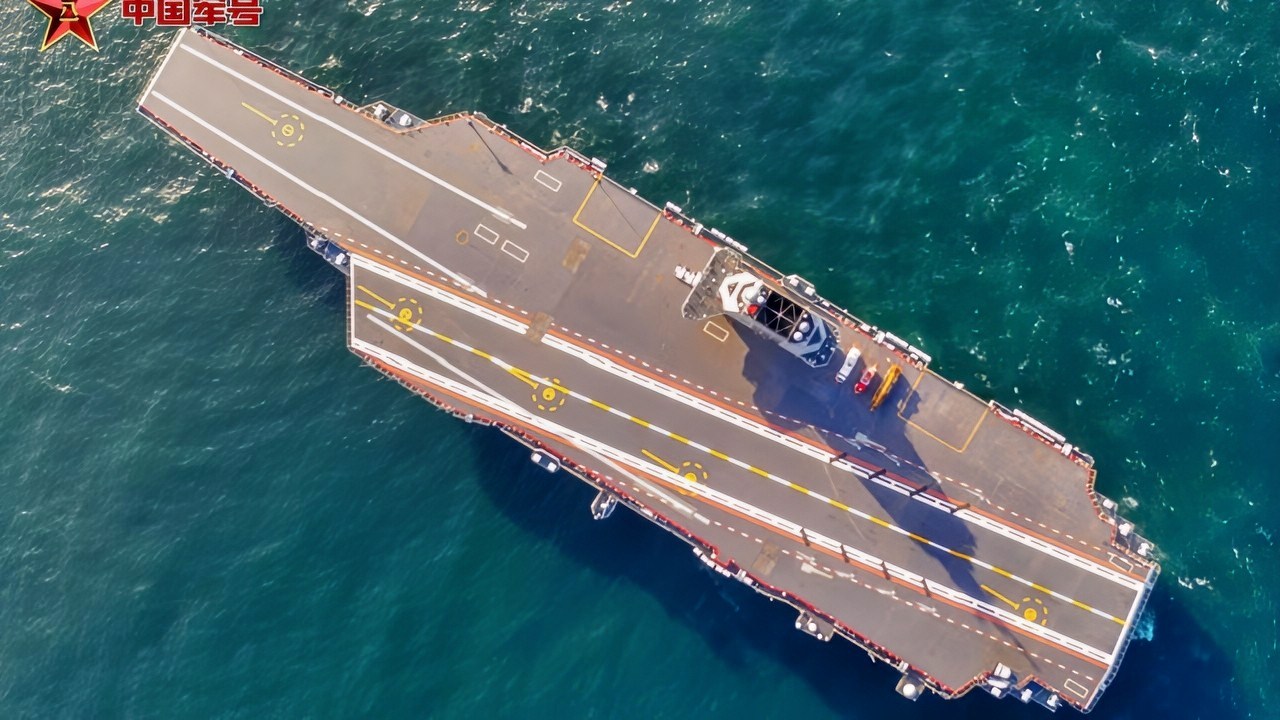
China’s Type 004 aircraft carrier will be the country’s first nuclear-powered supercarrier—a leap forward that will put Beijing in an exclusive club currently shared only by the U.S. Navy and France. Once the Type 004 enters service, China will join a small group of nations operating nuclear-powered carriers with virtually unlimited range constrained only by crew sustainment requirements.
China Is About to Join the Exclusive Nuclear Aircraft Carrier Club
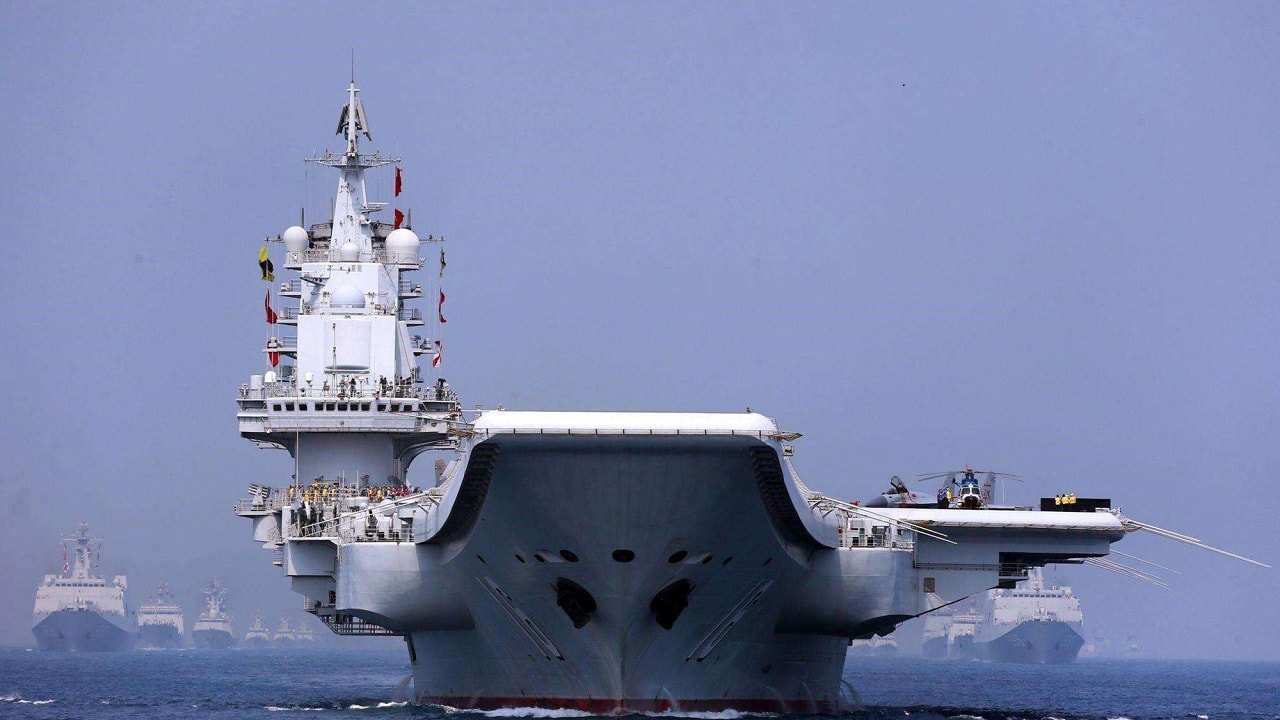
China Aircraft Carrier on the High Seas. Image Credit: Creative Commons.
China’s Navy, the People’s Liberation Army Navy, or PLAN, counts more ships in its fleet than any other navy in the world — and the PLAN’s carrier building is picking up pace too. China’s carrier construction over the past several decades has aimed to give Beijing a robust power-projection capability in its near abroad.
The PLAN began carrier operations in the 1990s after it purchased the Varyag, an incomplete ex-Soviet aircraft carrier sold at the end of the Cold War and subsequent defense drawdowns.
Following extensive retrofitting and repairs, the complete carrier entered PLAN service in 2012 as the Liaoning. It was the first relatively modern aircraft carrier in PLAN service, but its role was ultimately to gather information on carrier design and operations rather than to serve as a combat aircraft carrier.
Following the Liaoning’s entry into service, the PLAN built the first entirely domestically-built aircraft carrier, the Shandong, which entered service in 2019. Though outwardly rather similar to the earlier Liaoning, the newer Shandong incorporated updated elements in its design.
Fast forward to today, China’s third carrier, the Fujian, is undergoing sea trials following its entry into service in 2022. The Fujian is more modern than its two predecessors and features an electromagnetic catapult launch system, similar to that seen on the upcoming U.S. Navy Ford-class carriers. It can launch heavier aircraft at high rates and optimize carrier operations.
Though certainly more advanced, the PLAN’s carrier aspirations do not end there. China’s newest aircraft carrier, provisionally known as the Type 004, will be an entirely new kind of aircraft carrier.

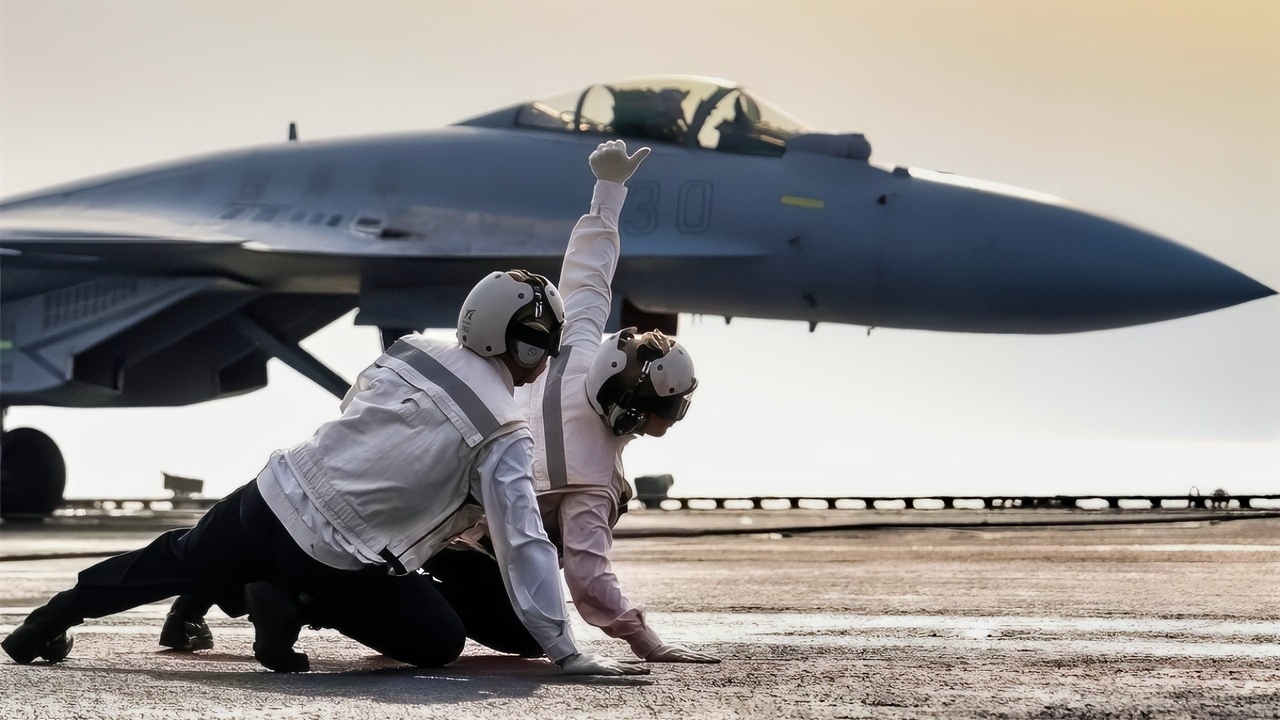
China Aircraft Carrier Operations. Image Credit: Chinese Navy.
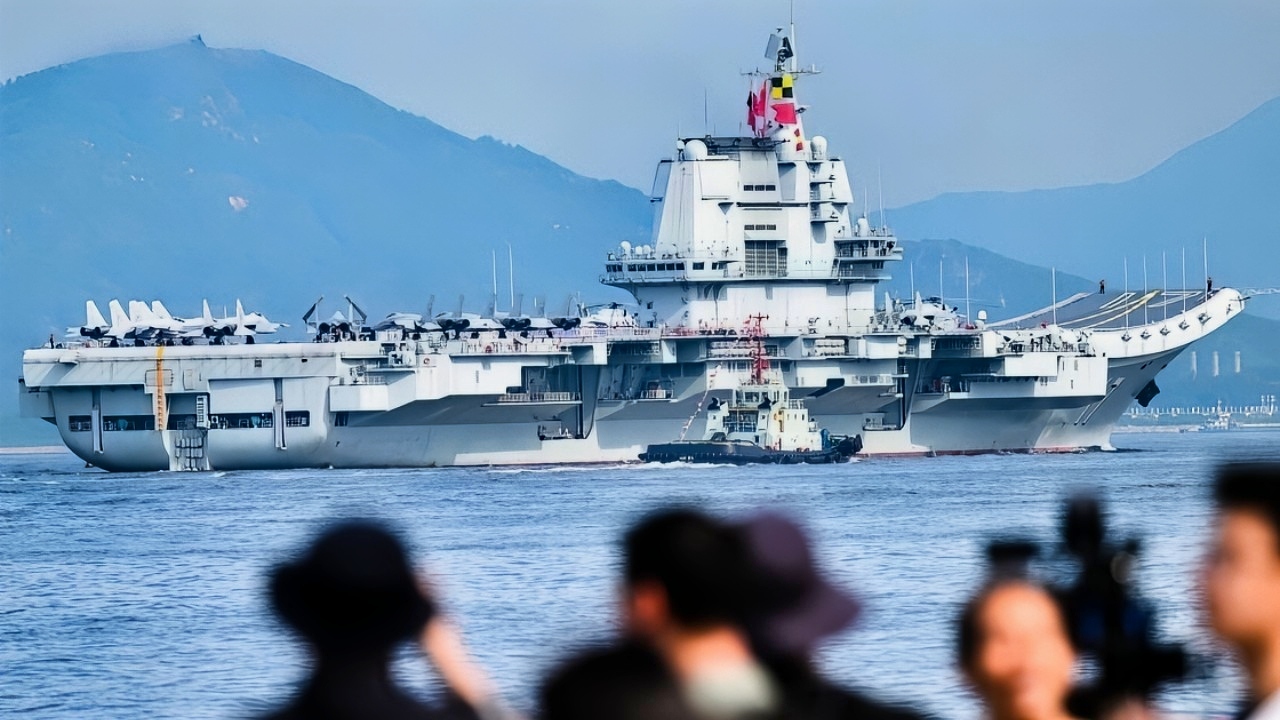
China Aircraft Carrier in Port. Image Credit: Chinese Navy.
The Type 004
China’s carrier development has followed a logical linear progression: finishing a foreign carrier, tailoring that design for seamless operations, then a homegrown, advanced carrier, and now China’s first nuclear-powered aircraft carrier.
Despite the challenges of mating nuclear reactors to a ship’s engine room, the advantages of nuclear propulsion are clear: virtually unlimited range constrained only by crew sustainment requirements.
Once in service, the People’s Liberation Army Navy will join a very exclusive club: nations that operate nuclear-powered aircraft carriers.
Today, that club counts only two members: the United States Navy, which operates 11 nuclear-powered aircraft carriers, and the French Navy, which operates a single nuclear-powered carrier, the Charles de Gaulle.
Like its Fujian predecessor, the Type 004 carrier will also sport an electromagnetic catapult launch system.
In addition to China’s expanding fleet of carrier-capable stealth aircraft, the Type 004 will likely include a complement of drones, early warning aircraft, and other assets that will play an important role in a Chinese carrier strike group. Though construction on the first Type 004 is ongoing, the PLAN may ultimately have four Type 004s in service.
A Significant Lead
Despite China’s rapid progress in carrier construction and carrier operations, the United States Navy will likely retain a significant advantage in aircraft carrier numbers for some time to come.
To start, the U.S. Navy’s Nimiz-class carriers, which first entered service in the 1970s, have been modernized and seen their service lives extended. Though outclassed by their successor carriers, the Ford-class supercarriers, the Nimiz-class life extension keeps carrier numbers in the double-digits.
Another significant lead is more difficult to quantify, but perhaps more important.
For over eighty years, the United States Navy has been the world leader in carrier operations and draws on an enormous pool of operational and combat experience.
Many carrier commanders have combat experience, as do their aviation crews and embarked sailors — an invaluable advantage. And while China clearly wants to build a navy that can challenge its American counterpart, a lack of combat experience across the People’s Liberation Army Navy more broadly will remain a persistent weakness.
Though the United States Navy is unrivaled in sheer carrier numbers and high-tempo carrier operations, one potential shortcoming revealed by the ongoing fighting in Ukraine and the Middle East is the extent to which carrier strike groups depend on air defense interceptors.
Highly effective, exquisite munitions, they are expensive and slow to produce. Ensuring they are produced in sufficient quantities to protect not only aircraft carriers but also other ships will be a difficult, persistent challenge for the United States Navy.
About the Author: Caleb Larson
Caleb Larson is an American multiformat journalist based in Berlin, Germany. His work covers the intersection of conflict and society, focusing on American foreign policy and European security. He has reported from Germany, Russia, and the United States. Most recently, he covered the war in Ukraine, reporting extensively on the war’s shifting battle lines from Donbas and writing on the war’s civilian and humanitarian toll. Previously, he worked as a Defense Reporter for POLITICO Europe. You can follow his latest work on X.


xi-xi-xi-xi
May 6, 2026 at 8:46 am
(xi-xi-xi-xi = die-die-die-die.)
Carrier-based manned-aircraft power is passe, except for use in certain areas, like the Taiwan strait, where the water is like only 100 meters deep.
So, what should aircraft carriers carry, as the world approaches the anniversary of the 1929 naval war exercise where carrier aircraft ‘destroyed’ the force defending the Panama canal.
They should carry hundreds of thousands of drones and MRBMs and SRBMs.
kellyj
May 6, 2026 at 11:30 am
China’s developing the ship, but still lacks a truly viable aircraft. Sure, they have reversed engineered Soviet/Russia designs, but still lack the ability to produce engines that have the power to get those planes in the air while carrying a combat weapons loadout.
Then comes Carrier tactics. While China can copy the method of western Carrier Strike group actions, the PLANs Command infrastructure is problematic, especially with the employment of Political Officers who can over-rule a Captains orders based on political rather than tactical/strategic demands.
Recall the Chinese ships that rammed each other a year ago. That was a Political Officers demand of violent action over-riding a Captains orders for safer navigation while harassing the Philippines vessel.