

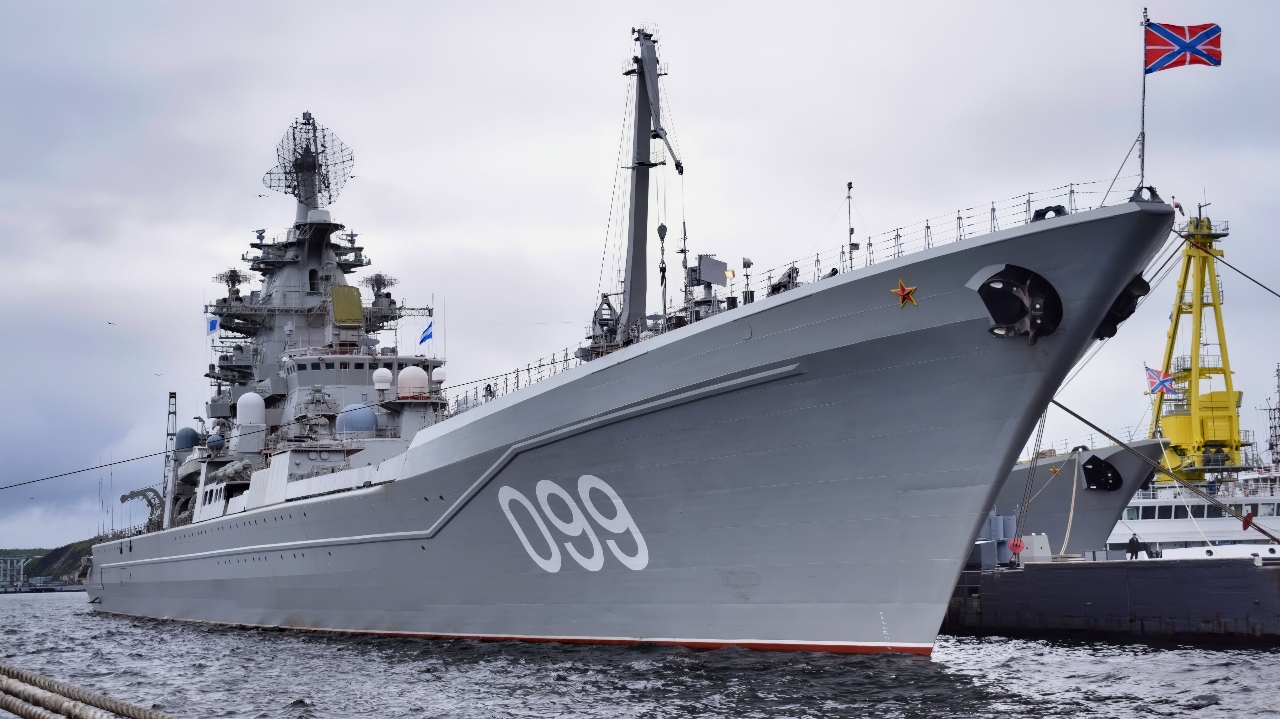
Russia’s Admiral Nakhimov—the massive Kirov-class nuclear-powered battlecruiser originally designed to hunt American aircraft carriers during the Cold War—is finally undergoing sea trials after a stunning 26-year-long absence from the fleet. The 28,000-ton, 827-foot warship was commissioned in 1988 and went into dry dock in 1999, only to languish there for more than a quarter-century while Russia struggled to fund its modernization through repeated delays.
Russia’s Kirov-Class Battlecrusier Waste of Time?

Kirov-Class from the Russian Navy. Image Credit: Creative Commons.
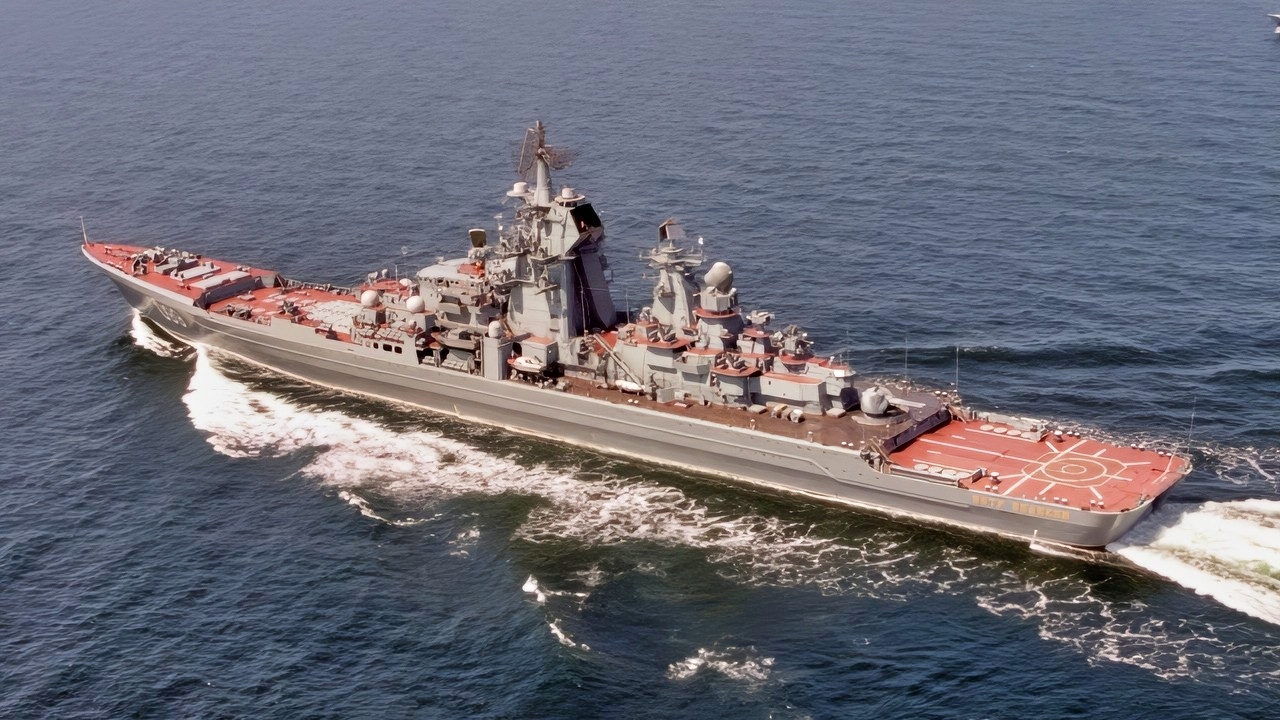
Russian Navy Kirov-Class. Image Credit: Creative Commons.
The Russian Navy, for the first time since 1997, has the Admiral Nakhimov, of its Kirov-class of battlecruisers, is undergoing sea trials.
The long, expensive refit was supposed to take place long ago, but due to the economic crisis after the collapse of the Soviet Union, and the poor to non-existent maintenance of naval vessels, it has been delayed indefinitely.
The Russian Navy’s Kirov-class nuclear-powered battlecruiser is now reportedly finally undergoing trials after a major upgrade to its weapons and protective measures.
If the ship passes the sea trials, it will rejoin the fleet for the first time since 1999. But what exactly is the sense in revitalizing a huge ship that, while it is very heavily armed, is also a huge target with limited means to defend itself?
Designed To Hunt US Aircraft Carriers
The Admiral Nakhimov was designed long ago to hunt and destroy American aircraft carrier strike groups at the height of the Cold War.
It was commissioned in 1988 and served 11 years before being sent to dry dock for upgrades that lasted until 2025.
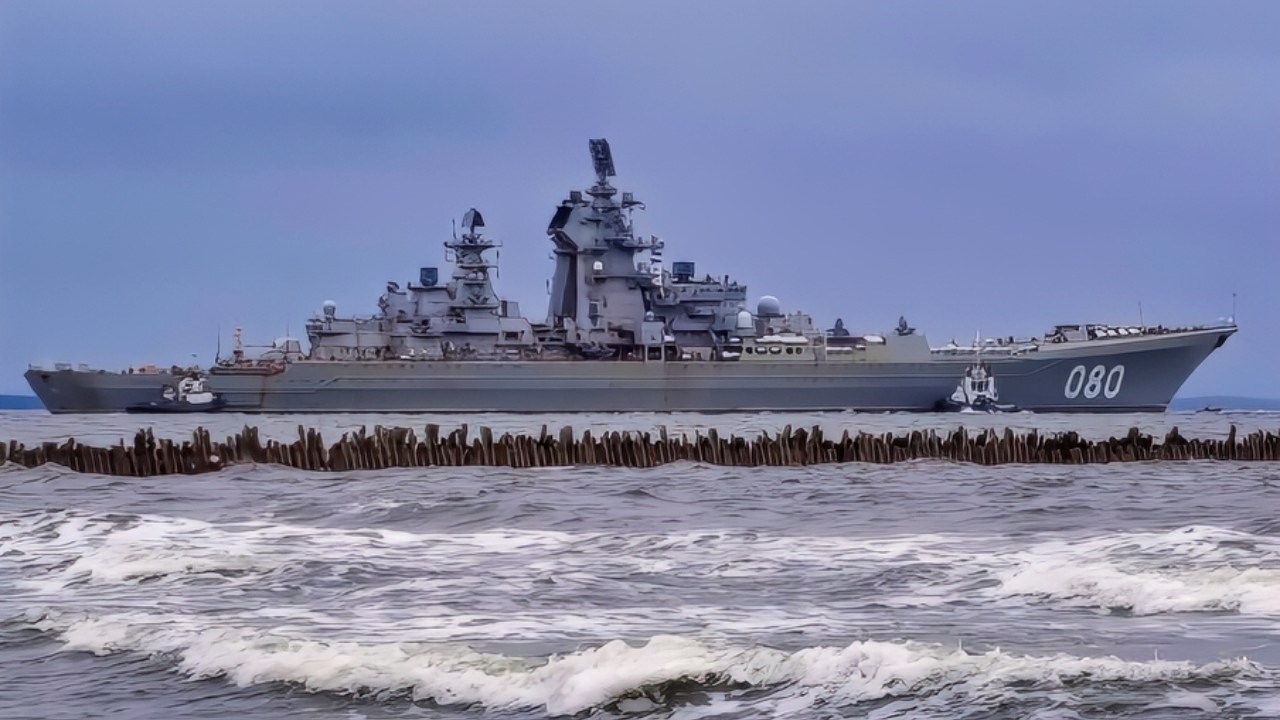
Kirov-Class Warship from Russia X Screenshot
The Kirov battlecruisers use the CONAS (Combined Nuclear and Steam) propulsion system. Two conventional boilers serve as a backup to the nuclear reactor in the event of reactor failure. Both components can drive two geared steam turbines, generating 120,000 hp (89 MW) at two prop shafts. The ship was capable of 31 knots.
Russian state-run media reports that the 28,000-ton battlecruiser’s two nuclear reactors are now online and claims the warship would return to sea for trials last summer. However, the warship’s return to service has been delayed multiple times in the past.
Meet The Battlecruiser Admiral Nakhimov
The 827-foot-long Admiral Nakhimov is the third nuclear-powered guided-missile cruiser in the Russian Navy’s four-strong Kirov-class, only three of which remain following the scrapping of sister ship Admiral Lazarev in 2021.
The Admiral Nakhimov was laid down in Leningrad in 1983 and launched in 1986 under its original name, Kalinin.
The warship is part of the Project 1144.2 Orlan class, known in Russia as the Kirov class and NATO-codenamed. In its current modernized form, the battlecruiser has the revised designation Project 1144.2M.
In 2006, the Russian Government decided to modernize the cruiser with upgraded weaponry and other equipment and return it to operational status. However, the actual works commenced only in 2014 and have been continuously delayed.
The delays have been constant with proclamations by the Navy, and then the timelines have not been met. In December 2024, TASS reported that the ship had begun factory sea trials. According to reports, the reactors are back online.

Kirov-Class Russian Navy. Image Credit: Creative Commons.

Russian Navy Kirov-class Battlecruiser. Image Credit: Creative Commons.
The US Navy didn’t have anything as big as the Kirov-class ships. There was a gap in large surface warfare ships.
Would Russia Return The Kirov-Class to the Black Sea?
The Admiral Nakhimov is heavily armed with a mix of Kalibr, Oniks, and Zircon missiles with a new firing system. The 3M22 Zircon (Tsirkon) is a Russian hypersonic cruise missile, primarily anti-ship, known for its extreme speed (up to Mach 9) and maneuverability, drastically reducing target reaction times, and is launched from naval vessels or submarines, with recent tests also showing ground-launch capability.
It uses a scramjet engine for sustained hypersonic flight and is designed to challenge advanced air defenses, such as the Aegis system, with claimed ranges up to 1,000 km and recent use in Ukraine for combat trials.
But as always, a heavy dose of salt is required when one hears about Russian claims.
However, if Putin were to send any of his battlecruisers back into the Black Sea, they’d be vulnerable to Ukraine’s missiles, S-300s or not, Zircon missiles or not.
Would Putin risk the Admiral Nakhimov in the Black Sea after the sinking of the Moskva? That would be extremely doubtful; the Russian Navy could not risk another embarrassment like that.
The Admiral Nakhimov isn’t a modern warship but a Cold War holdover; it isn’t going to help to return to a blue-water Navy.
Kirov-Class Battlecruisers Are Huge
The ships are enormous – only aircraft carriers are bigger than these cruisers – and the well-known S-300 air defense system makes them distinctive.
The S-300F maritime variant is a ship-based version of the S-300P land-fired system, and its integration into a battlecruiser gives the Russian Navy an air- and ballistic-missile defense capability it otherwise lacks.
It should be noted that while the S-300 is considered highly capable, Russia sold these to Iran to protect the nuclear facilities at Isfahan. And the Israelis and the US took these out without loss.
At the heart of Admiral Nakhimov’s modernization was the plan to install 174 vertical launch tubes, which would provide it with more than any other surface combatant or submarine in the world.
This number far outclasses anything in comparison. China’s Type 55 ‘super destroyer’ has 112 vertical launch system cells. A Flight III Arleigh Burke-class destroyer has 96 cells, while a Ticonderoga-class cruiser has 122 cells. The U.S. Navy’s Zumwalt-class stealth destroyers currently have 80 cells.
While it will be a welcome sight for the Russian Navy, it will likely be confined close to ports in the Arctic. The battlecruiser isn’t suited for a 21st-century A2/AD defense.
The Admiral Nakhimov is not a game-changer but an expensive relic of the Cold War that Russia would have to operate alone or with a very small surface group, which isn’t a recipe for success today. Firepower? Yes, it has it in spades, but it is also very vulnerable.
About the Author: Steve Balestrieri
Steve Balestrieri is a National Security Columnist. He served as a US Army Special Forces NCO and Warrant Officer. In addition to writing on defense, he covers the NFL for PatsFans.com and is a member of the Pro Football Writers of America (PFWA). His work was regularly featured in many military publications


GhostTomahawk
May 7, 2026 at 1:06 am
It fires hypersonic weapons the US has difficulty defeating. It also has 170+ missiles it can fire. But somehow isn’t a threat. That kind of hubris gets people killed and fleets sunk.
Nathaniel Volz Wayne Volz
May 7, 2026 at 9:00 am
So it doesn’t apply to any old us ships like the Iowa Class during the cold war or Ticonderoga-class they just fine with updated systems but the MONDERNIZED Sea Devil cant be improved if that’s the case take all the old Arburke Class destroyers and Sea wolf class out now there outdated. You see the bias here this is how we lose the next war, I respect your service but how bout your raise awareness for the 225 times more ship building capabilities that China has over us.