

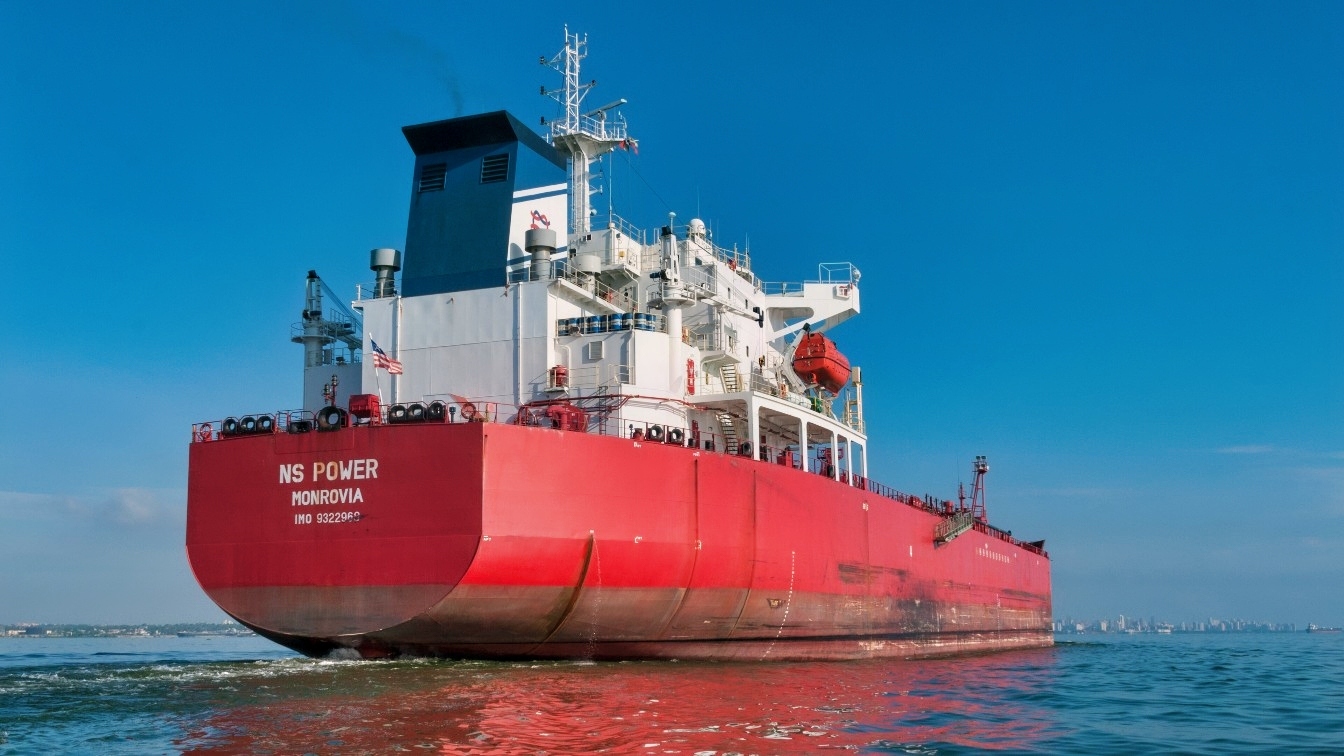
Oil prices appear to have stabilized somewhat after falling to a seven-week nadir following Iran and Israel’s pause on strikes following intervention by American President Donald Trump to end the renewed hostilities. Global oil stockpiles, as well as a reduction in China’s crude oil imports, may be partially responsible for the stabilization in prices, as are modest amounts of oil transiting the Strait of Hormuz.
The Future Prospects of Higher Prices: Entirely Plausible

President Donald Trump signs executive orders flanked by Secretary of Health and Human Services Robert F. Kennedy, Jr. and Director of the National Institutes of Health Jay Bhattacharya, Monday, May 5, 2025, in the Oval Office. (Official White House Photo by Molly Riley)
The prospect of oil rising to $150 a barrel is not unrealistic, should the ongoing war in Iran fail to find an off-ramp and peace, says Claudio Galimberti, Chief Economist & Global Director of Market Analysis at Rystad Energy, an energy consultancy.
“At this point, unless we solve [the war in Iran], unless we start to see an increase in the flow, then we are going to see lower and lower inventories, which means higher and higher prices,” Galimberti said in comments given to CNBC.
Earlier this week, Brent crude traded in the high double digits, at about $94 per barrel. One solution Galimberti sees is a resumption of oil passing through the Strait of Hormuz and onward to international markets. Traffic through the strait is currently very limited, but has not stopped completely.
“If we manage to go through from two to 10 [million barrels a day], and that is possible in our view, over the next three to six months, then we will have solved the crisis,” Galimberti added.
“The problem, sitting right here, right now, we are absolutely not there,” he explained, adding that the fracturing of OPEC, thanks to the UAE’s exit from the oil cartel, raises the prospects of oil oversupply as coordination between oil-producing countries breaks down. 2026 “is a year of absolute deficit, but fast forward, 2027 may turn out to be a year of humongous surplus,” Galimberti said.
American Crude Oil Reserves Plummeting
The American Petroleum Institute data show that American crude oil reserves have fallen for the eighth consecutive week, with gasoline reserves also declining. For the week ending on June 5th, crude stocks plunged by 9.12 million barrels.

President Donald Trump participates in the swearing-in ceremony for Administrator of the Centers for Medicare and Medicaid Services Mehmet Oz, Friday, April 18, 2025, in the Oval Office. (Official White House Photo by Molly Riley)
Markets’ Surprising Stability
The war in Iran naturally injected significant volatility into global energy markets, as the wartime passageway that transported up to a fifth of liquefied natural gas and crude oil fell to a virtual standstill. But global prices have been relatively subdued thanks to the convergence of several factors.
One of the most significant dampers on global energy prices was the emergency release of some oil reserves, coordinated by the International Energy Agency in March, which helped to partially offset the global deficit caused by the closure of the Strait of Hormuz.
That release saw 400 million barrels enter the market from global stockpiles. But prior to the outbreak of the Iran war, American oil producers were pumping at record levels, with more than 13 million barrels of oil a day being extracted in the United States.
In May, China’s imports of crude oil dipped by nearly a third, reaching the lowest level in eight years, according to reporting by Reuters. Slack demand from China, the world’s second-largest economy and manufacturing powerhouse, has helped dampen panic over oil availability.
Relative Stability for Now, but the Risk of Future Uncertainty
Though the stopgap emergency release has helped stave off sharper price hikes, the International Energy Agency, International Monetary Fund, World Bank Group, and the World Trade Organization issued a joint statement late last month warning of future economic uncertainty.
In particular for poorer countries, access to fertilizer could be a real issue, as disruptions to the traffic through the Strait of Hormuz disrupt fertilizer availability ahead of the planting season. “If shipping flows do not return to normal,” the joint statement reads, “continued rapid depletion of global oil inventories ahead of peak summer oil demand in the Northern Hemisphere would present increasing risks for fuel security, market conditions, and broader economic resilience.”
Strait of Hormuz Slowly Opening?
On Tuesday, U.S. Energy Secretary Chris Wright said that maritime traffic passing through the Strait of Hormuz is rising, even though a long-term deal between Tehran and Washington remains elusive. “I would say [traffic is] rising very meaningfully,” Wright said, adding that he expects traffic “will continue to rise.”
About the Author: Caleb Larson
Caleb Larson is an American multiformat journalist based in Berlin, Germany. His work covers the intersection of conflict and society, focusing on American foreign policy and European security. He has reported from Germany, Russia, and the United States. Most recently, he covered the war in Ukraine, reporting extensively on the war’s shifting battle lines from Donbas and writing on the war’s civilian and humanitarian toll. Previously, he worked as a Defense Reporter for POLITICO Europe. You can follow his latest work on X.


