


The American news media routinely castigated former US Secretary of Defense Robert McNamara as being little more than a “walking IBM machine.”
Indeed, his famous 2003 documentary with legendary filmmaker Errol Morris, The Fog of War, reinforces the point that, during his time as head of the Pentagon, McNamara was effectively a walking calculator.
Not only was McNamara the master of disaster during the Vietnam War, but he was also a cultish believer in the notion that technology will save us.
One of McNamara’s many technological obsessions was with the controversial Tactical Fighter Experimental (TFX) program. His idea was to save money by having the United States Air Force and Navy operate versions of the same aircraft.
That was the genesis of the General Dynamics F-111 Aardvark.
You see, the Air Force wanted a long-range strike aircraft while the Navy needed a carrier-based fleet-defense interceptor.
The interceptor would defend US aircraft carrier battle groups against Soviet bombers and cruise missiles (which at the time were becoming a significantly more pronounced threat to the carrier battle groups). While McNamara’s insight was interesting and his goal was to save money without losing capability, his fixation on the F-111 Aardvark became problematic.
The F-111B Aardvark was the proposed US Navy variant of the F-111 Aardvark.
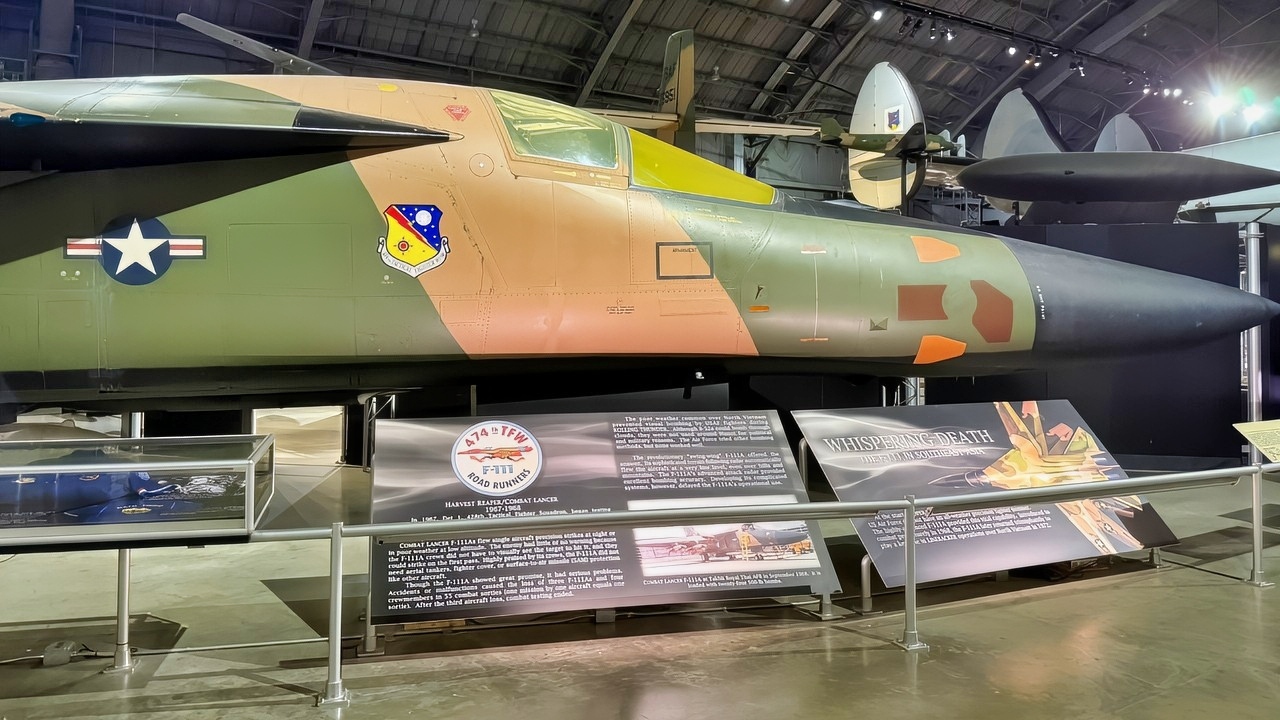
F-111 In USAF Museum July 2025 NSJ Image Taken by Harry J. Kazianis.
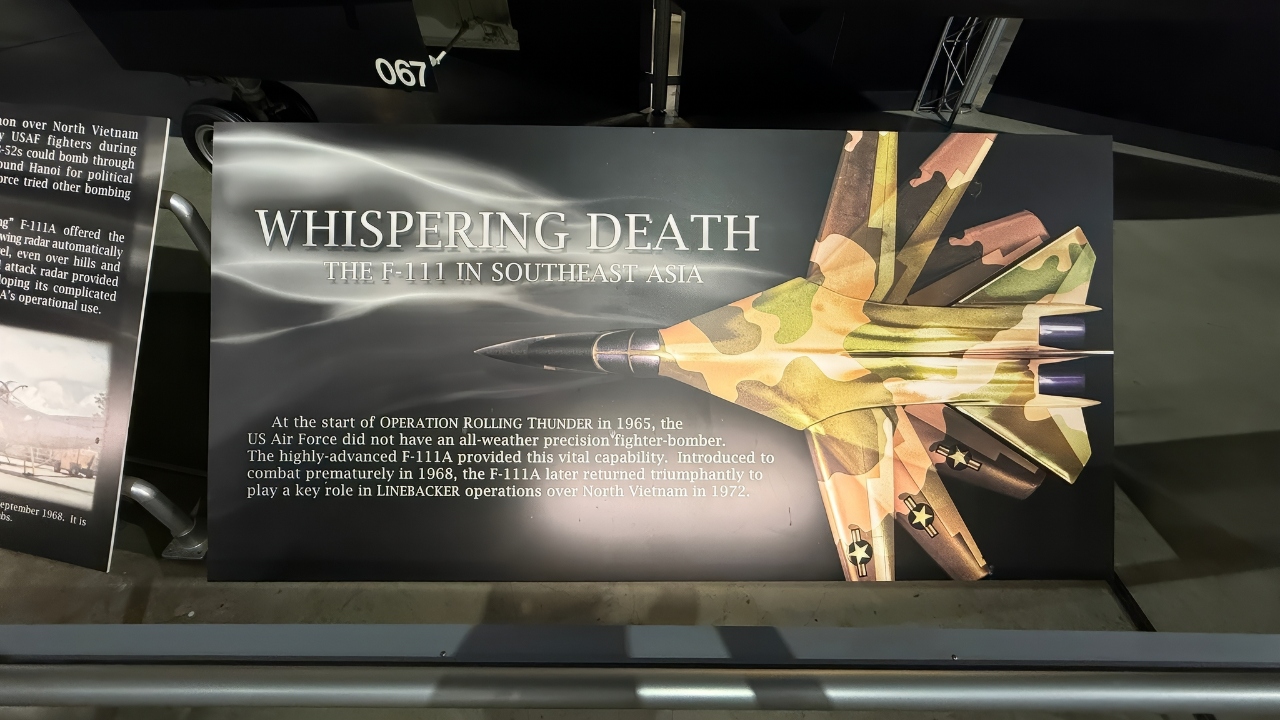
F-111 Photo from USAF Museum in Dayton. Image Credit: National Security Journal.
Anyone who has ever seen the Aardvark, though, understands that this bird is far too big and probably too heavy for the cramped spaces and finite deck on an American carrier. And that is precisely what the US Navy discovered about its proposed F-111B Aardvark.
The plane was too big and heavy for carrier flight operations.
Sure, the Aardvark had the range and radar capabilities the Navy needed to protect its carriers better. But the F-111B lacked the agility and performance that naval aviators believed they needed. There was simply no way the Navy could procure this aircraft without it being a total waste and a likely disaster.
The decisive moment came when US Navy Vice-Admiral Thomas Connolly testified before Congress after flying the aircraft itself. He declared there wasn’t “enough thrust in all Christendom” to make the F-111B into an effective Navy fighter. In 1968, Congress killed the navalized version of the F-111 Aardvark.
Back to the drawing board, the Navy went.
What Became the F-14 Tomcat
Interestingly, the Navy did not throw everything away from the F-111B Aardvark. Instead, Grumman took the best technologies and design ideas from the failed F-111B and built an entirely new warplane around them. That was the basis of the truly iconic F-14 Tomcat, which dominated the unfriendly skies around America’s erstwhile carrier groups from 1973 until 2006.
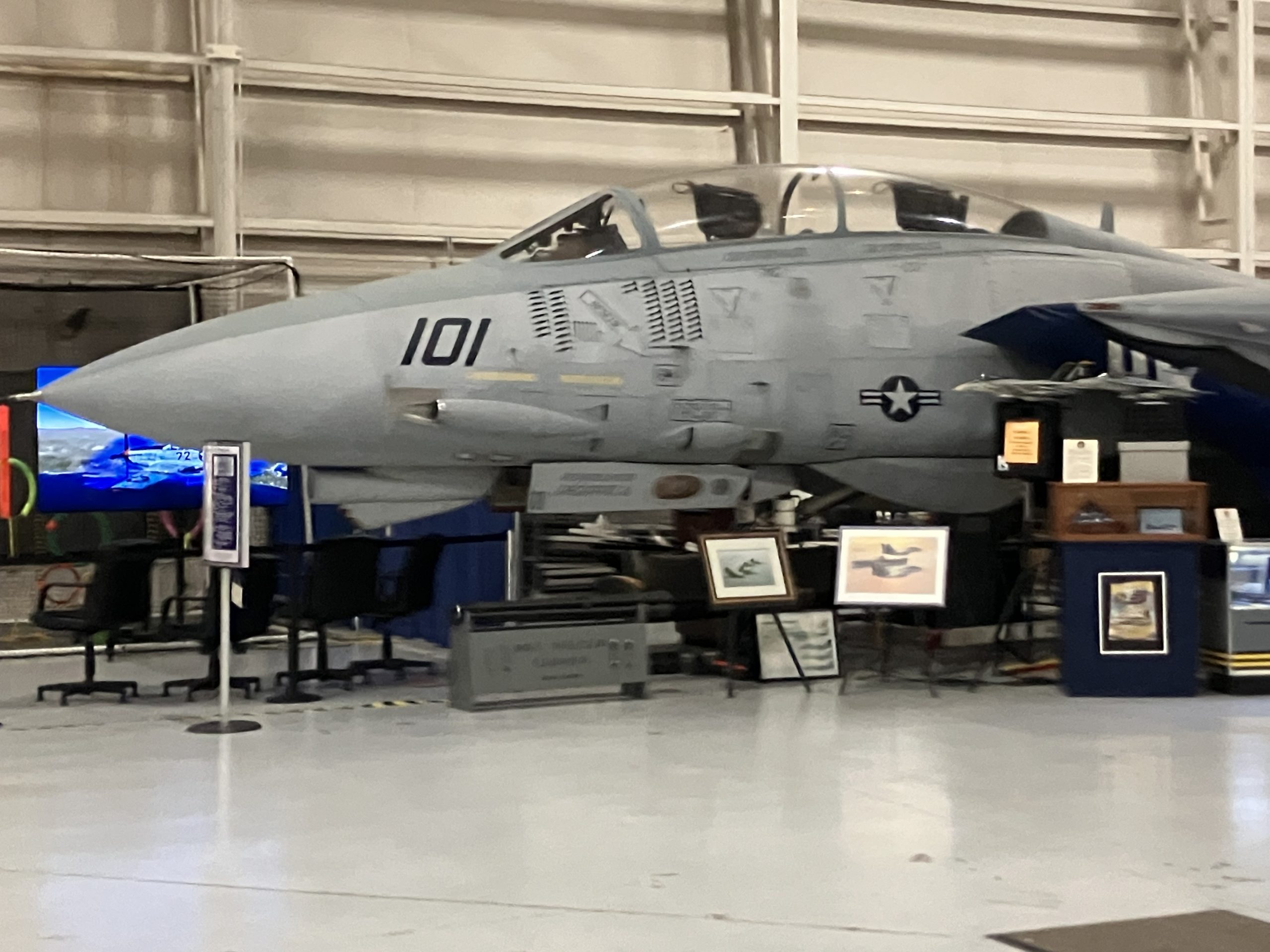
F-14 Tomcat. National Security Journal Original Photo.
The F-14 inherited multiple systems and concepts from the F-111B, including the powerful AWG-9 radar, the long-range AIM-54 Phoenix missile, the fleet-defense mission concept, and the legendary variable-sweep wing design. Of course, there were key differences between the failed F-111B Aardvark and the F-14 Tomcat.
Notably, the F-14 was a lighter, more maneuverable aircraft with a tandem cockpit that was much more conducive to aircraft carrier flight operations.
The Soviet Threat Created the Need for Speed
The F-14 wasn’t designed primarily as a dogfighter. Its mission was to intercept Soviet missile raids directed against the carrier group. During the 1960s, the Soviet Navy under legendary Adm. Sergei Gorshkov built long-range maritime strike forces centered around the Tu-95 Bear, Tu-22 Blinder, and later the Tu-22M Backfire bombers.
Soviet doctrine for countering the US Navy’s aircraft carrier advantage was simple. They’d locate a carrier. Launch dozens of bombers at it. On top of that, the Reds would launch hundreds of anti-ship missiles. The idea was to effectively saturate and overwhelm a carrier’s defenses. It’s similar to modern anti-ship missile concepts and drone swarm techniques.
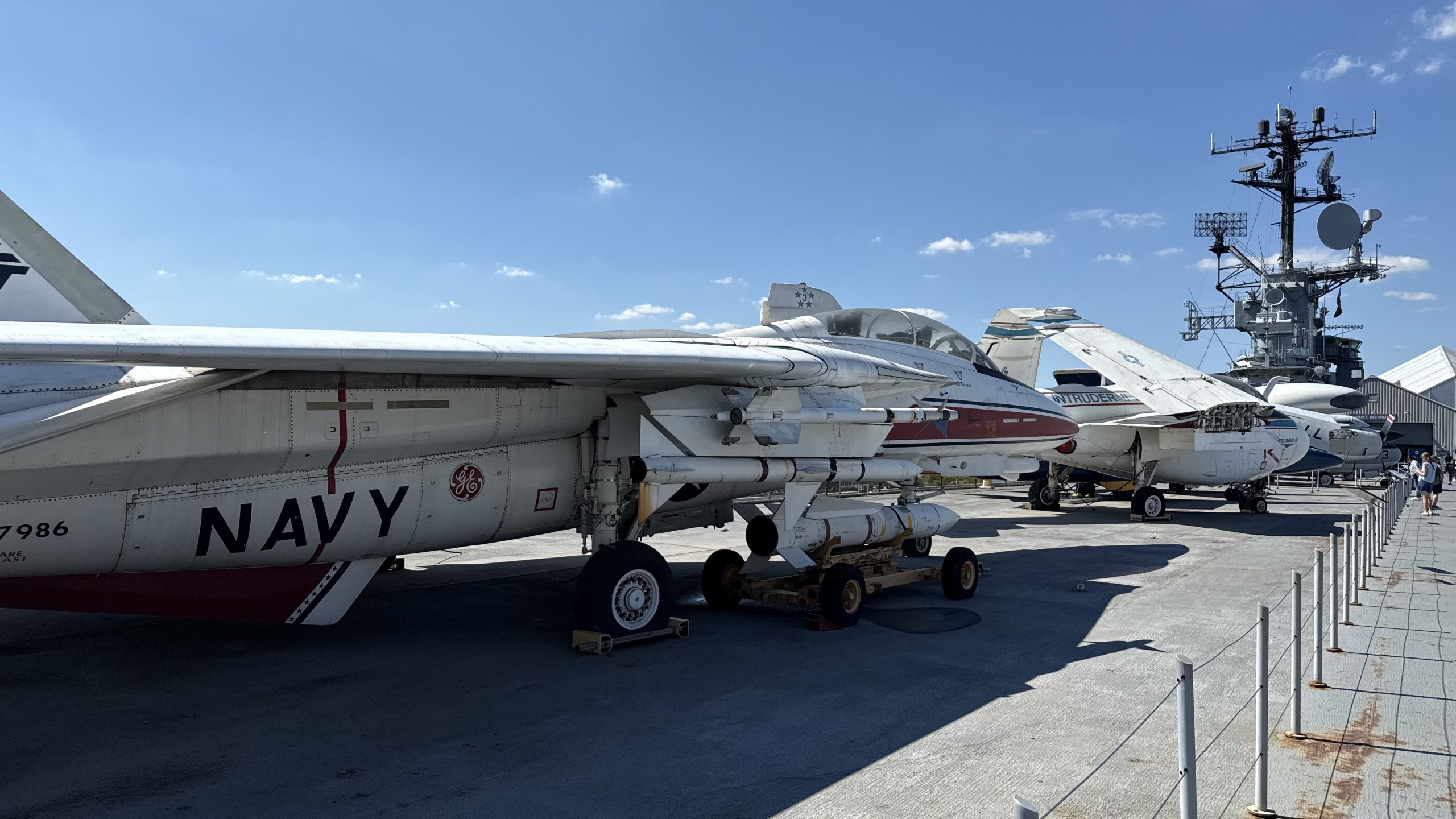
F-14 Tomcat. National Security Journal Original Photo.
The Navy realized that shooting down incoming missiles was not enough. It needed to destroy the bombers before they launched. To achieve this essential defensive priority, the Navy required extremely long-range radar, long-range missiles, and fighters capable of operating far from the carrier. The farther away from the carriers that F-14 Tomcats could intercept incoming Soviet bombers and missiles, the better.
Vietnam Changed the Design Philosophy
The Navy was simultaneously learning painful lessons over Southeast Asia, meaning the missile-centric thinking of the 1950s had failed. Many American fighters entered Vietnam without guns because planners believed dogfighting was obsolete.
Reality proved otherwise.
So, the Navy created the famous Fighter Weapons School program in 1969, otherwise known as TOPGUN. That program was developed alongside the F-14 Tomcat. The result was a unique combination of long-range interceptor, fleet defender, and capable dogfighter. Few other aircraft in history have ever excelled at all three.
But the Tomcat did.
The Tomcat’s Biggest Weakness
Tomcats were notoriously expensive. By the 1980s, maintenance hours were enormous. Its engines were problematic. What’s more, parts costs were high. Early TF30 engines were dreadful for engineers (and pilots) to handle. Indeed, Tomcat pilots often complained they could lose compressor stability during aggressive maneuvering.
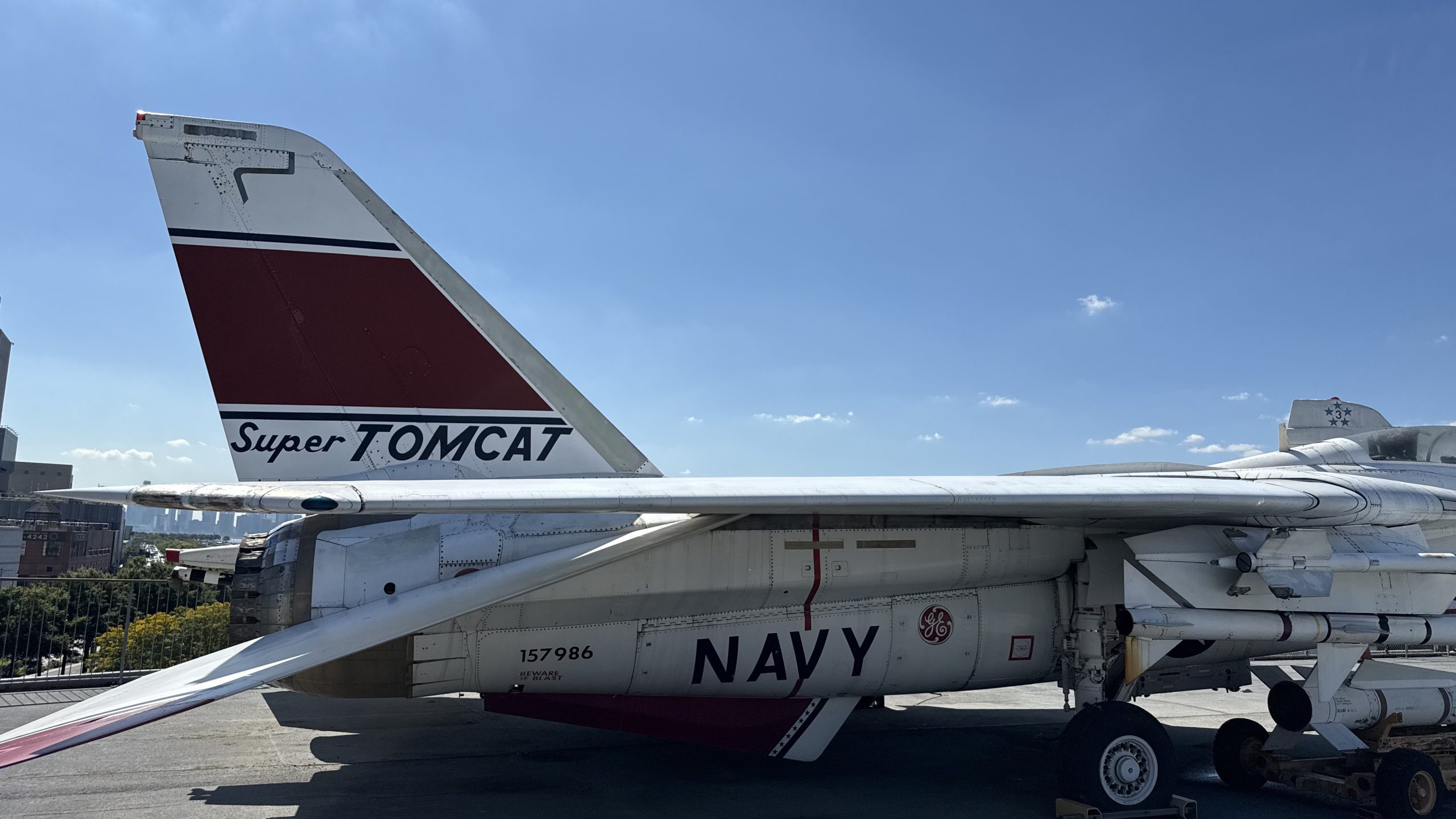
F-14 Tomcat. National Security Journal Original Photo.
Later F-14B and F-14D models fixed many of these problems with more powerful General Electric (GE) engines. Those later variants were dramatically better planes than the version most people remember from the 1970s.
The Irony of the F-14
Ultimately, the original Soviet missile swarm threat that Grumman designed the F-14 to counter had evaporated over time. The massive Tu-22M Backfire raids the Navy feared never happened. Instead, the F-14 spent much of its career patrolling over Lebanon, escorting strike packages, enforcing no-fly zones over Iraq, and flying missions in Afghanistan.
By the end of its service life in 2006, the aircraft had essentially evolved into a precision strike platform carrying JDAMs and laser-guided bombs–something its original designers never envisioned.
Why the F-14 Still Matters
The F-14 remains one of the clearest examples in American military history of how a failed acquisition program can produce a superior weapon.
The Pentagon spent billions trying to force the Navy into the F-111B. That failure led directly to the development of one of the most capable naval fighters ever built, the F-14 Tomcat.
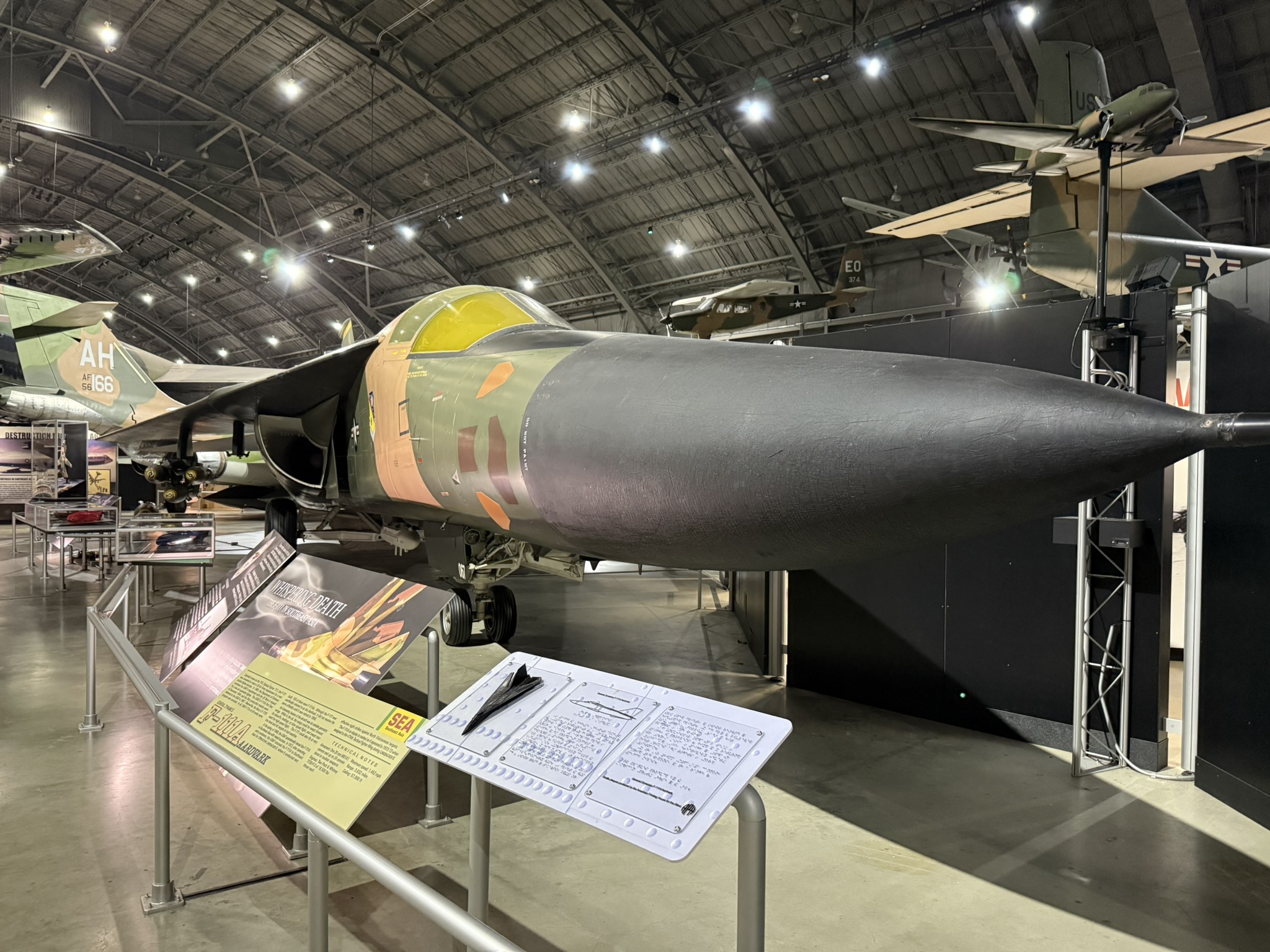
F-111. National Security Journal Original Photo.
There’s also a lesson here for today’s various acquisition debates in Washington. The Tomcat’s story demonstrates that commonality can save money, as McNamara wanted. But only to a point. When services face fundamentally different missions, forcing them into a single platform often creates exactly the kind of expensive failure that produced the F-111B–and ultimately gave the Navy the F-14 instead.
For that reason, the Tomcat is as much a story about bureaucratic warfare, the delusional thinking of top policymakers in Washington (McNamara), and the way in which aerial warfare evolved in the last half of the Cold War and the first decade of the twenty-first century.
About the Author: Brandon J. Weichert
Brandon J. Weichert is the Senior National Security Editor at 19FortyFive.com. He also manages The Weichert Brief on Substack. Weichert hosts “National Security Talk” on Rumble, too. He is the author of four bestselling national security books, the most recent of which is A Disaster of Our Own Making: How the West Lost Ukraine (Encounter Books). Follow him via Twitter/X @WeTheBrandon.


