

The newly leaked US-Iran memorandum suggests the Trump administration may be on the brink of a domestic controversy. Of course, we have no idea at present whether what has been leaked is the final version, but if it is, things in Washington are going to get pretty interesting, pretty fast.
At the center of the controversy is a proposed $300 billion investment and reconstruction framework intended to help reintegrate Iran into the global economy following the conflict.
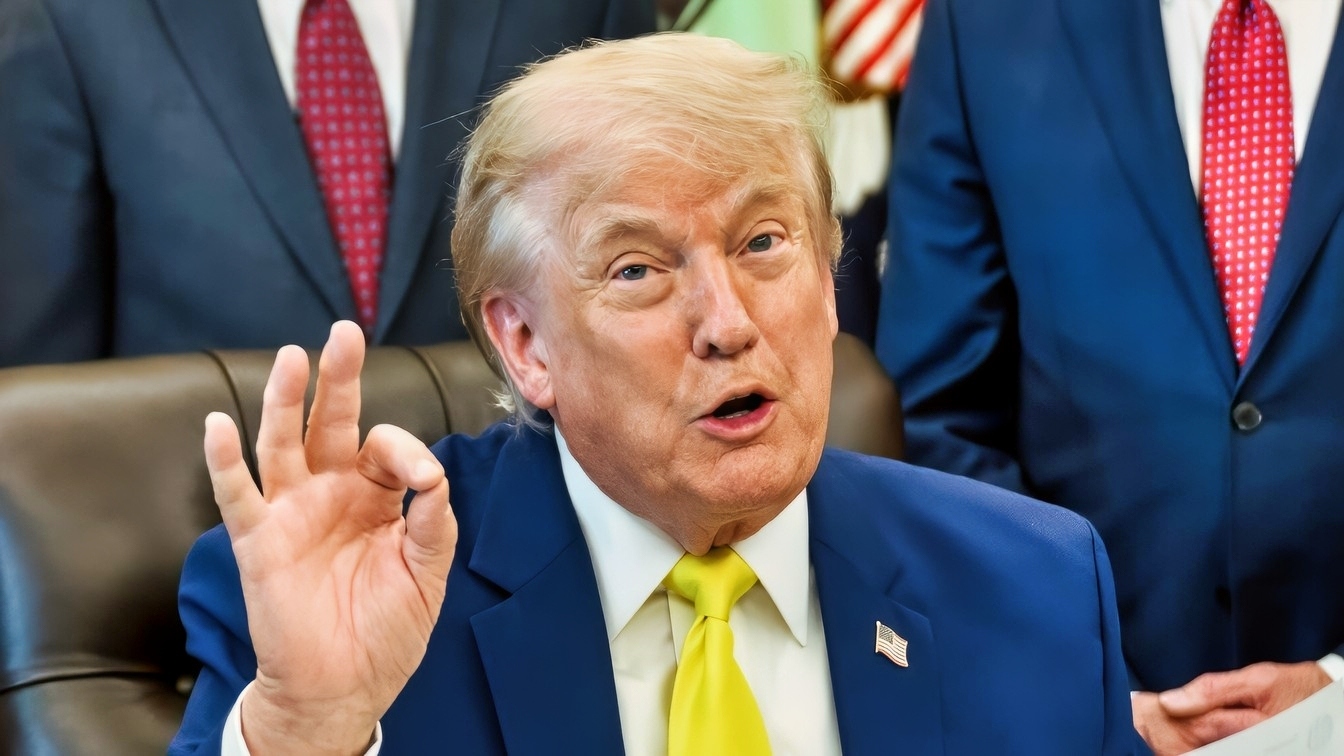
President Donald J. Trump, joined by Secretary of Energy Chris Wright, Secretary of the Interior Doug Burgum, EPA Administrator Lee Zeldin and others, makes an announcement on coal, Thursday, June 4, 2026, in the Oval Office. (Official White House Photo by Molly Riley)
But how will voters perceive a 12-figure investment in a long-time adversary, the destruction of which itself just cost many billions of dollars?
Clarifying the $300 Billion for Iran
The administration, recognizing the memo’s politically sensitive nature, has insisted that this is not a direct US government payment to Iran.
The White House position is that no taxpayer money will be sent to Iran. Rather, the proposed fund would largely consist of private investment, foreign corporate capital, and economic reintegration opportunities.
And access is conditional; Iran only gains access if it complies with inspections, surrenders enriched uranium stockpiles, and honors long-term commitments. Accordingly, the administration argues that this isn’t a payout but rather an economic incentive structure.
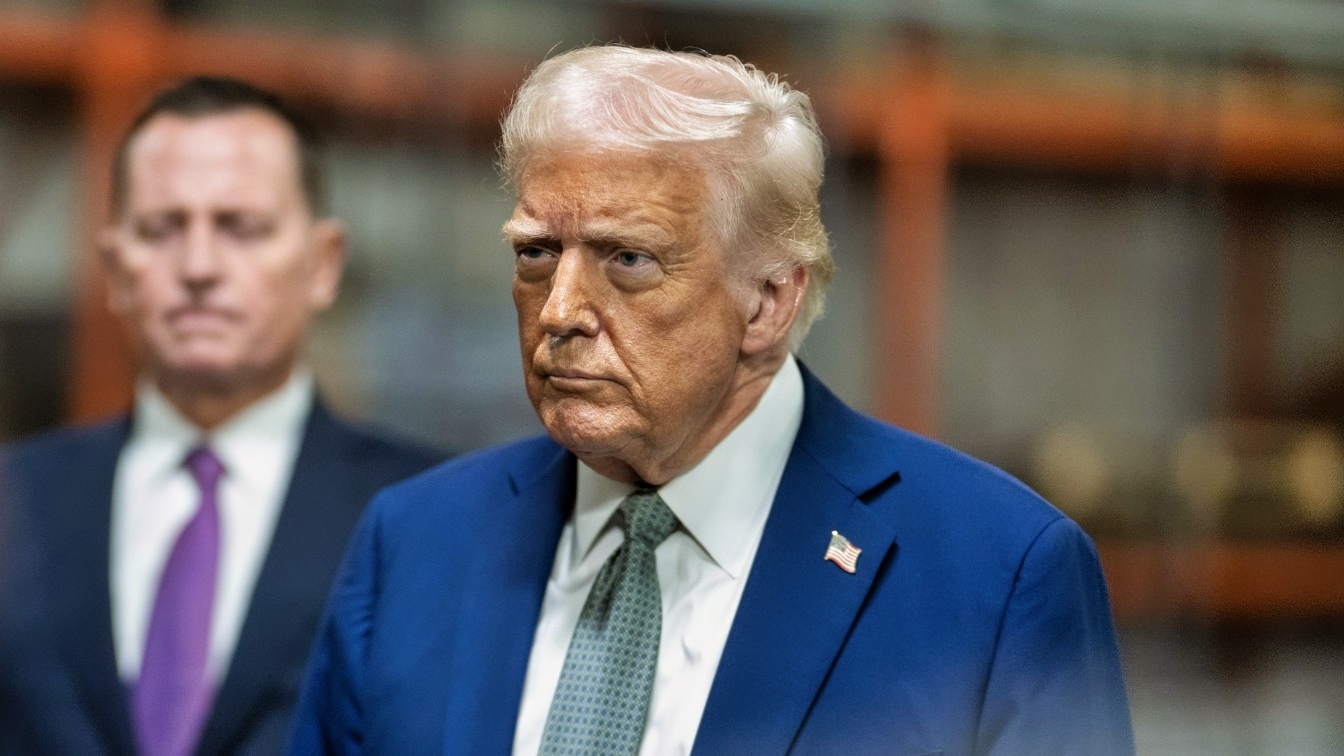
President Donald Trump participates in a Kennedy Center Board Meeting, Monday, March 17, 2025, at the John F. Kennedy Center Performing Arts Center in Washington, D.C. (Official White House Photo by Daniel Torok)
Difficult Optics for Donald Trump
Still, the optics of the incentive structure are going to ruffle feathers in the US, where politics often overlooks the more technical, nuanced details.
Many voters will see that Trump signed a deal to unlock $300 billion for Iran, which, divorced of context, will cause an immediate political vulnerability for the administration that spent years criticizing the Obama-era nuclear agreement for delivering economic relief to Tehran.
And while there may be a distinction between sanctions relief, investment access, and direct payments, these distinctions may not matter on the political side.
Frozen Assets
The debate over Iran’s frozen assets remains unresolved. Iranian media claims that roughly $234 billion in frozen assets could be released.
But Vice President J.D. Vance says that figure does not appear in the agreement, suggesting the White House will emphasize future economic normalization rather than immediate cash transfers.
Regardless, critics may collapse those distinctions into a single narrative of economic concessions, which could be politically harmful.
From the Right
The criticism isn’t primarily coming from Democrats—it’s emerging from the foreign-policy hawks, who argue that the administration fought a costly war and then settled for an ambitious agreement.
The hawks will likely argue that the regime survived the conflict and now receives economic opportunities while US strategic objectives remain incomplete.
This line of reasoning creates an important question: why did we go to war with Iran?
Hormuz Unresolved
The Strait of Hormuz dispute—still unresolved—raises another vulnerability for the administration. Trump’s message has been that the oil is flowing again and that the crisis is over.
In reality, the technical negotiations are ongoing; whether the strait will remain permanently toll-free is still under discussion.
If Iran later imposes maritime service fees on passage through the Strait of Hormuz, critics could claim that the administration, which had said the strait would be permanently toll-free, oversold the agreement.
That could sour what initially appeared to be a diplomatic success story.
The Israel Factor
Arguably, the biggest political wildcard in the whole settlement framework is the exclusion of Israel, which is still continuing military operations in Lebanon.
Naturally, Iran would prefer that regional allies were included in a lasting settlement, but Israel is indifferent to bilateral agreements involving the US and Iran.
This leaves open the possibility of a major escalation in Lebanon, which could prompt an Iranian response, which in turn could hamper diplomatic efforts between the US and Iran.
Ongoing Optimism
Still, the administration seems optimistic that this can all work. Despite the risks, potential benefits include lower energy prices, reopened shipping lanes, reduced military commitments, and the avoidance of a prolonged regional war.
The administration is betting that most Americans care more about stability and economic relief than about the nuances of sanctions relief.
If markets improve, most Americans will tune out the criticism. However, Washington and Tehran are already describing the agreement differently.
The American narrative is about conditional reintegration and peace through pressure, while the Iranian narrative is about economic relief and national resilience.
Clearly, both governments are selling different versions of the same agreement to their respective populations. Which narrative ultimately takes hold will likely depend on gas prices and markets.
About the Author: Harrison Kass
Harrison Kass is a writer and attorney focused on national security, technology, and political culture. His work has appeared in Tablet, City Journal, The Hill, The Spectator, and The Cipher Brief. He holds a JD from the University of Oregon and a master’s in Global & Joint Program Studies from NYU. More at harrisonkass.com.


