

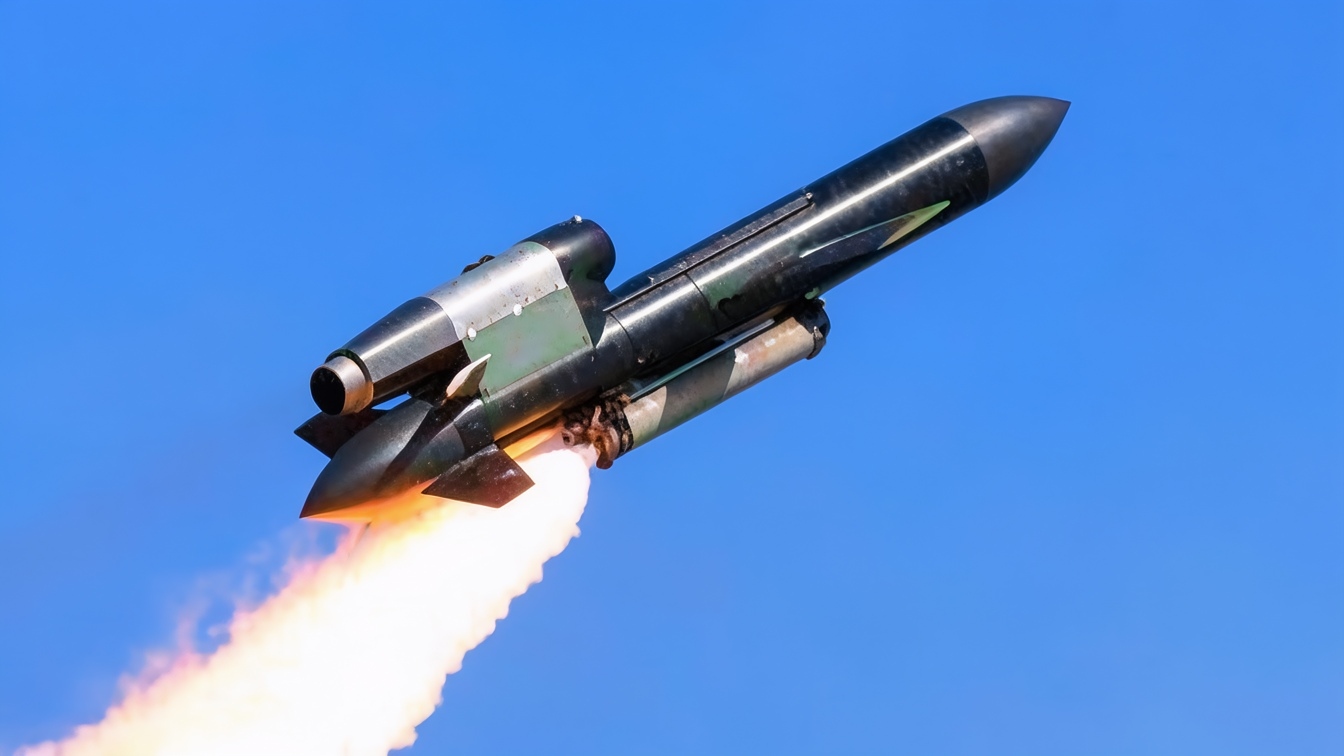
In an event that has generated some of the most dramatic video footage to date, for the second time in three days, Ukraine has sent a massive wave of drones to attack Moscow.
At least 194 Ukrainian drones were intercepted on approach to the Russian capital, making it the largest attack of its kind since the start of the full-scale war in February 2022.
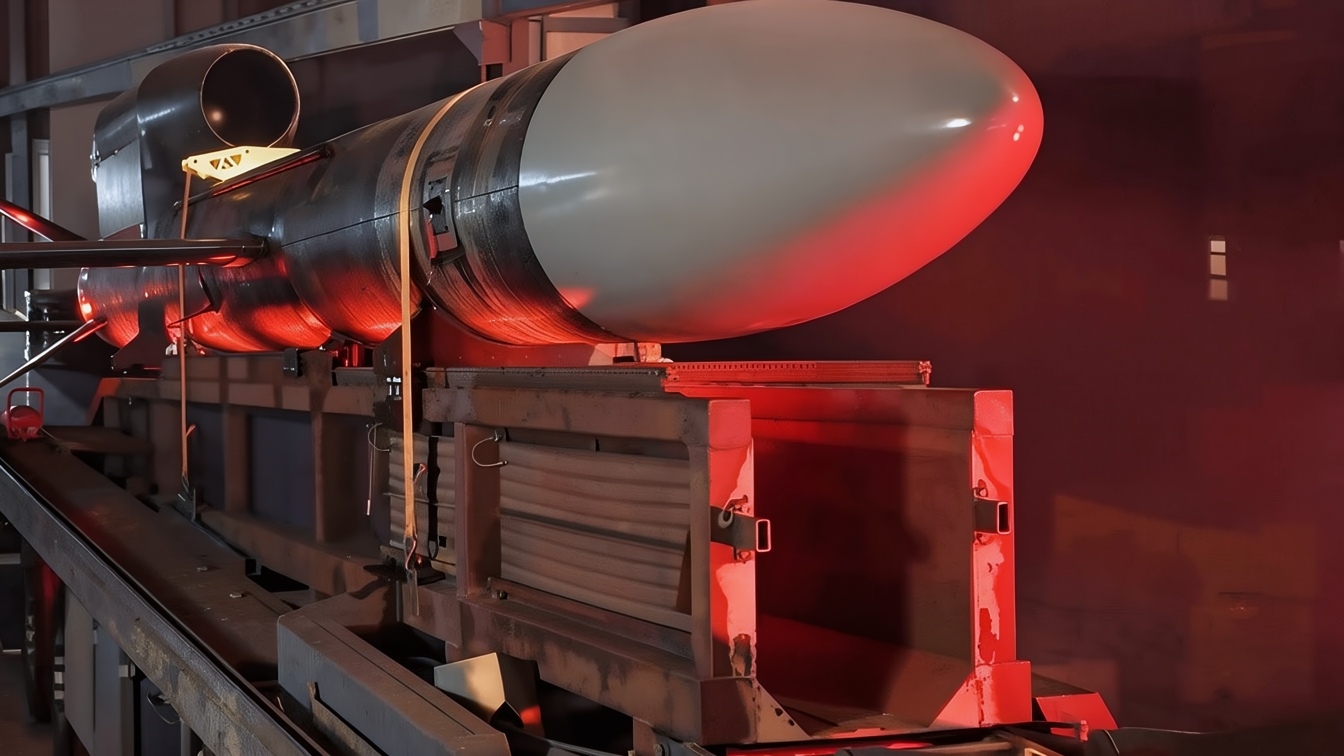
Ukraine Cruise Missile 2026. Image Credit: Creative Commons.
One of the main targets of this attack, which was also struck during the previous drone assault, is the Gazprom Neft-owned Moscow Oil Refinery.
At least five fires (other sources said they had seen seven or more) were reported burning at the facility, located 15 kilometers from the Kremlin in the Kapotnya district.
This refinery’s design enables it to process and refine approximately 12 million metric tons of crude oil per year.
This refinery is of critical importance to the Russian capital and the entire surrounding region.
This site supplies up to 40 percent of Moscow’s petrol demand and about 50 percent of its diesel fuel needs.
The refinery also supplies jet fuel to Moscow’s four major airports, all of which had to close and suspend air traffic for the second time in a week due to monstrous black smoke plumes filling the sky.
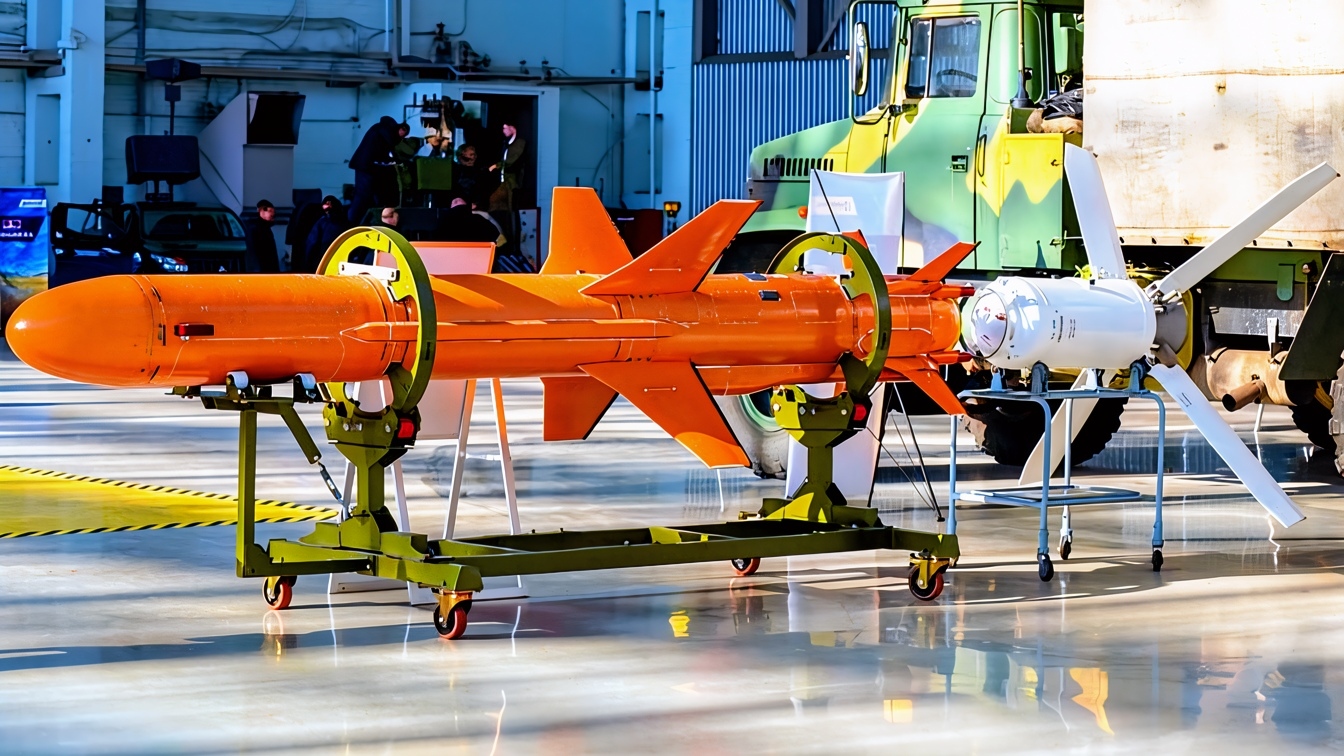
Neptune Cruise Missile Ukraine Government Photo
Blowing The Lid
One of the more spectacular video sequences was of a direct hit by a Ukrainian drone on one of the refinery’s oil storage tanks.
The resulting explosion propelled the massive oil tank cover dozens of feet into the air, spinning like a flying saucer.
That footage has generated countless internet memes in which the tank’s cover is the centerpiece of whatever humorous image is presented.
Fires were also reported at the rest of the facility’s tank farm as well.
Other footage photographed by locals shows one of the tanks exploding after being struck by one of the Russian defenders’ own air defense missiles that were fired in an attempt to shoot down a Ukrainian UAV and missed its target.
In the meantime, Ukrainian media reports that intelligence analysts from the CyberBoroshno project, after reviewing the available footage from the scene, also determined that a significant number of primary and secondary oil-refining units were struck.
“Today, the integrated crude oil processing unit, which includes the second AVT-6 unit, was hit. Therefore, we can conclude that over the course of several days, Ukrainian drones have struck 100 percent of the primary oil refining capacity at the Moscow Oil Refinery and completely halted refining operations,” the analysts have concluded.
Hapless Air Defense
The Russian Air Defense Forces (PVO) have come in for extensive criticism on two counts.
The number one question is how they have failed to bring down any significant number of the Ukrainian missiles and drones launched at Moscow.
Ukrainian drones managed to break through the multi-layered air defense system built up around Moscow over the years of the full-scale war and hit a target only 15 kilometers from the Kremlin.
The foundation of the capital’s air defense network is made up of about a hundred Pantsir-S1 anti-aircraft missile and gun systems and a small number of Tor air defense systems.
They are then supplemented by two dozen S-400 batteries. The Russians have additionally reinforced their air defense with mobile fire groups.
There is, according to military sources that have spoken on condition of anonymity, an explanation for their poor performance.
“What the Ukrainians were doing on the first strike against Moscow – other than hitting the refinery and other targets – was mapping the entirety of the capital’s air defenses.
Therefore, these drones fired in this second attack in the same week were programmed to avoid any air corridors where they could easily be shot down.”
But the second major criticism concerns the PVO units being simply unprepared.
Many Ukrainian drones are reaching their targets because the PVO batteries near the refinery appear not to have had enough ammunition to mount much of any defense to begin with.
Intercepted radio calls between what appear to be two different units of defenders report their weapons are empty, and they have no ammo to shoot with.
The reaction of the Russian public in general and the residents of Moscow in particular makes it clear that this attack is a very real turning point in their perception of Putin’s handling of the conflict with Ukraine.
This successful hit against the refinery “fundamentally alters the structural stability of the Russian rear areas,” according to Roman Parkhanov, the deputy commander of Ukraine’s 1st Separate Center of Unmanned Systems. The concept of a “secure Moscow” has ended, he said.
It is now replaced by a new domestic reality where the capital must adapt to the long-term conditions and rules imposed by active warfare.
This is a fundamental change in the public’s perception of the atmosphere. The consequences for Russian President Vladimir Putin could prove fatal.
About the Author: Reuben F. Johnson
Reuben F. Johnson has thirty-six years of experience analyzing and reporting on foreign weapons systems, defense technologies, and international arms export policy. Johnson is the Director of Research at the Casimir Pulaski Foundation. He is also a survivor of the Russian invasion of Ukraine in February 2022. He worked for years in the American defense industry as a foreign technology analyst and later as a consultant for the U.S. Department of Defense, the Departments of the Navy and Air Force, and the governments of the United Kingdom and Australia. In 2022-2023, he won two awards in a row for his defense reporting. He holds a bachelor’s degree from DePauw University and a master’s degree from Miami University in Ohio, with a specialization in Soviet and Russian studies. He lives in Warsaw.


