

Russia’s Advance Is Slowing: Russia’s offensive in eastern Ukraine is moving more slowly than at any point in more than a year, according to a new assessment by the Institute for the Study of War (ISW). The news comes as Moscow continues to suffer enormous personnel losses on the battlefield and continued economic disruption caused by Ukraine’s long-range strike campaign.
New data published by the Washington-based ISW this week suggests that Russia’s territorial gains have collapsed in the first half of 2026, despite numerous offensives across the front in Donetsk.
At the same time, Ukrainian officials claim that Russia lost almost 40,000 troops during June alone. Meanwhile, Kyiv’s sophisticated missile and drone campaign is still wreaking havoc in Russia, striking oil refineries and military infrastructure, taking out communications facilities, and destroying logistics hubs.
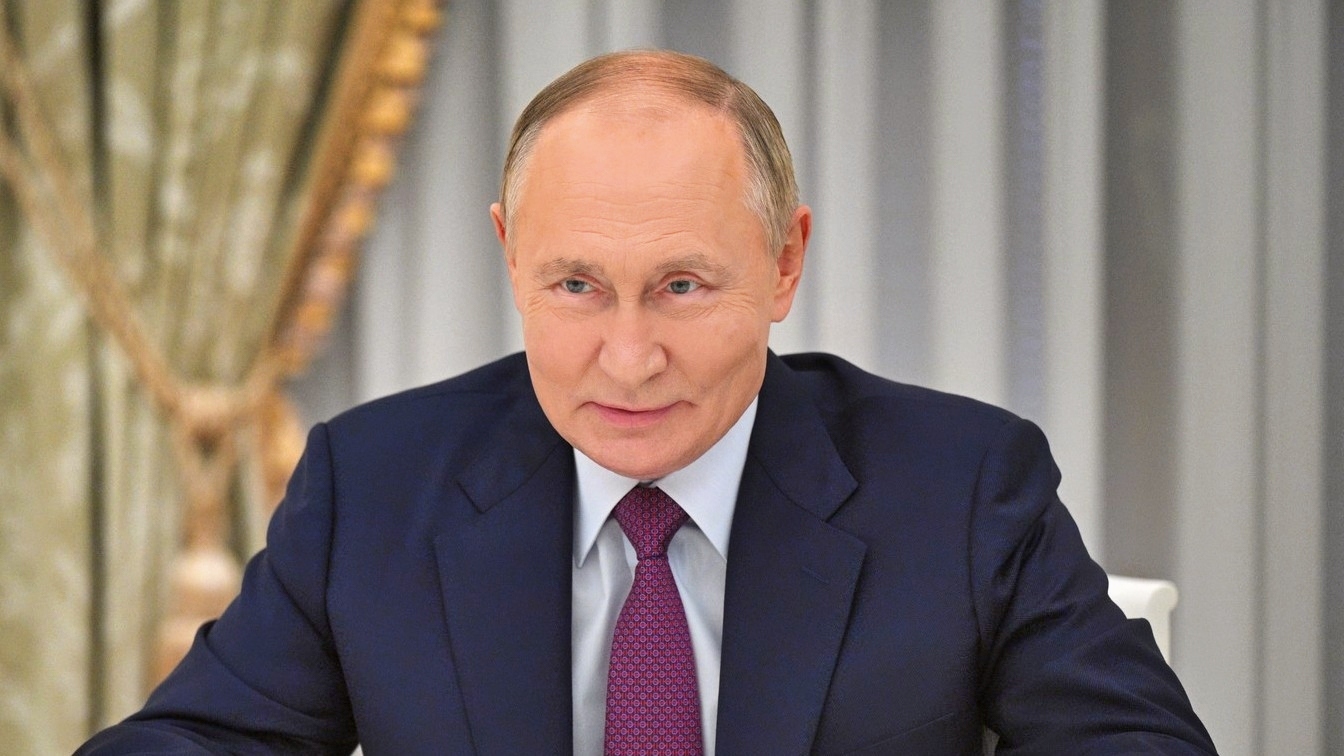
Putin 2024. Image Credit: Russian Federation.
In short: Russia is facing diminishing returns on the front lines, and its economy is at risk of collapse unless Ukrainian strikes are intercepted and stopped entirely.
The news from the battlefield also comes as Russian President Vladimir Putin is being forced to publicly acknowledge that Ukrainian strikes, which he has labeled acts of “terror,” are causing major fuel shortages across Russia – and as Moscow looks to partners beyond its borders to fill domestic fuel supply gaps.
What the ISW Said
“Russia’s spring-summer 2026 offensive has failed to achieve operationally significant gains thus far, and Russian forces’ rate of advance in June 2026 is a fraction of the rate of advance that Russian forces achieved in June 2025. ISW has observed evidence to assess that Russian forces seized or infiltrated 30.42 square kilometers in June 2026 and advanced or infiltrated at an average pace of 1.01 square kilometers per day,” the ISW reports.
“Russian forces comparatively seized 481.25 square kilometers in June 2025, advancing at an average pace of 16.04 square kilometers per day. Russia’s gains have been largely gradual and creeping for over a year, and even Russia’s faster average rate of advance in 2025 was at a foot pace,” the report continues.
According to the ISW, Russia’s rate of advance has been steadily decreasing since November of last year, and Russian forces have also been unable to reverse Ukrainian counterattacks from the Kupyansk and Oleksandrivka directions that took place between late 2025 and spring 2026. It means that Russia’s main territorial gains have focused only on Donetsk Oblast – particularly near Kostyantynivka.
The figures paint a pretty depressing picture for the Russian side and suggest that the offensive is becoming less efficient by the week. Russia is still capable of pushing forward in some localized areas by committing large numbers of troops and equipment, but those advances aren’t producing the kind of breakthroughs they once did or that could fundamentally alter the course of the war.
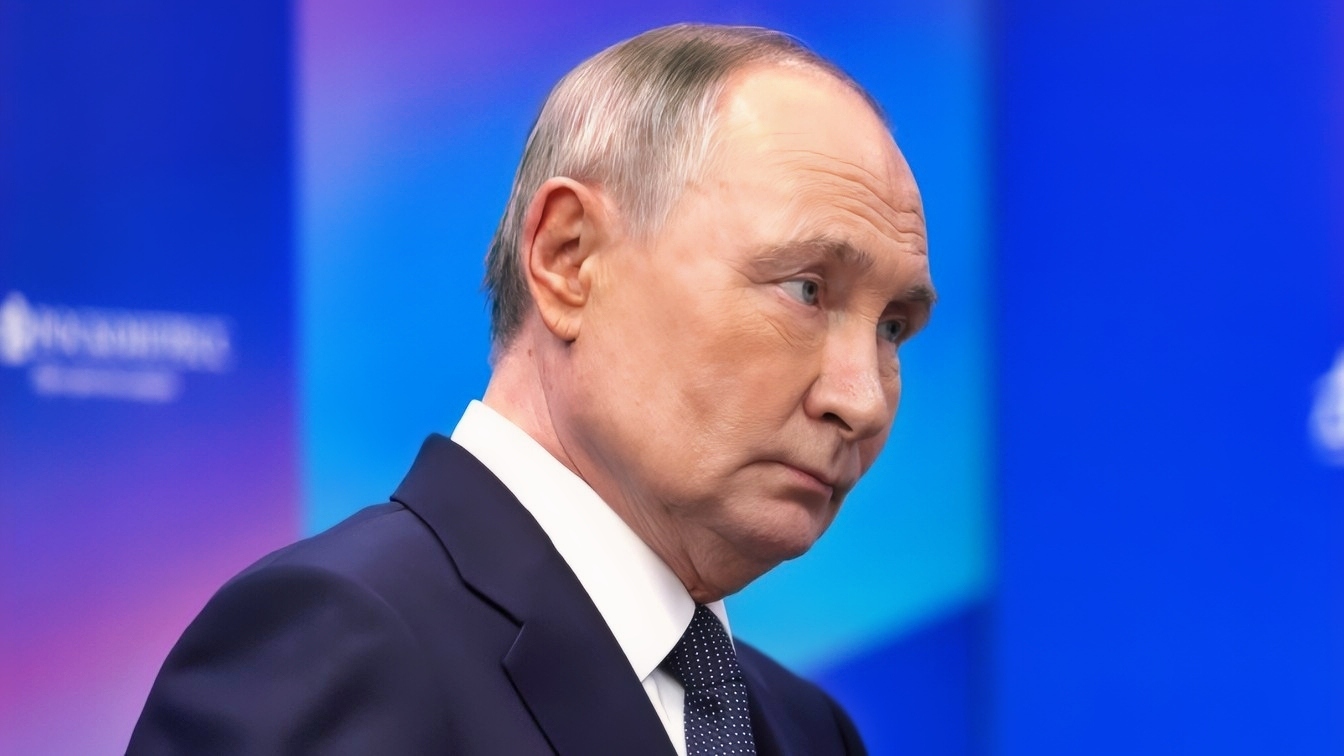
Putin in March of 2025 Russian Federation Photo
Instead, Moscow is now expending enormous manpower and resources for very small, incremental gains measured in meters rather than kilometers. And the continued concentration of fighting around Kostyantynivka suggests that Russian commanders are being forced to narrow their ambitions and focus their best units on just a handful of sectors rather than maintaining broad pressure across the rest of the front. If Putin’s goal is to reclaim what he sees as Russian territory, then at this pace, his military will run out of resources, and his country’s economy will collapse before he reaches his intended goal.
Casualties Reach Extraordinary Levels
Russia is losing troops at a shocking pace, too.
Ukraine’s General Staff estimates Russian forces suffered 39,490 casualties during June alone. While battlefield casualty figures are hard to independently verify, Western intelligence agencies have consistently concluded that Russian losses remain exceptionally high.
According to estimates from the Center for Strategic and International Studies (CSIS), total Russian military casualties since the full-scale invasion began have reached approximately 1.4 million killed and wounded. Those kinds of numbers make the conflict one of the bloodiest conventional wars fought by a major military power since the Second World War.
“Russia has lost the military initiative in Ukraine as costs continue to mount. The Russian military has suffered 1.4 million battlefield casualties and as many as 450,000 deaths since its February 2022 full-scale invasion, according to new CSIS data,” a July 1 CSIS report reads.

Russian President Vladimir Putin (R) meets with North Korea’s leader Kim Jong Un in Vladivostok, Russia April 25, 2019.
“Russia’s territorial control in Ukraine shrank in the spring of 2026, with a net loss of roughly 400 square kilometers in April and May. In addition, Ukraine has orchestrated an increasingly successful campaign of short-, medium-, and long-range strikes against Russian military and economic targets using AI-enabled systems and a new paradigm for air power.”
With territorial gains slowing and the Russian economy on the brink, the Kremlin could soon be pushed to take drastic action – and given that Putin seems unlikely to make concessions to Ukraine, Western intelligence agencies and governments are now preparing for one of the worst possible outcomes: an incursion into NATO territory via Poland.
About the Author: Jack Buckby
Jack Buckby is a British researcher and analyst specializing in defense and national security, based in New York. His work focuses on military capability, procurement, and strategic competition, producing and editing analysis for policy and defense audiences. He brings extensive editorial experience, with a career output spanning over 1,000 articles at 19FortyFive and National Security Journal, and has previously authored books and papers on extremism and deradicalization.


