

Let me be unequivocally clear from the outset: I fully support taking proactive military action against the Islamic Republic of Iran. For over four decades, Tehran has posed a clear and present threat to global stability, continuously destabilizing the Middle East, sponsoring proxy terror, and maintaining a blood-stained record of complicity in the deaths of hundreds of Americans. The necessity of confronting this fanatic regime—particularly as it inched dangerously close to the nuclear threshold—is unassailable.
Iran and the Powell Doctrine
Yet, as we pass the six-month mark since the initiation of joint U.S.-Israeli military strikes on February 28, 2026, the strategic execution of this campaign warrants profound scrutiny. In previous analyses, I have frequently invoked the Powell Doctrine—the set of tenets developed by the late General Colin Powell to guide the deployment of decisive military force.
Today, looking in the rearview mirror of the past half-year, it is imperative to analyze our recent history through Powell’s lens. By examining his principles, we uncover a stark reality: while the justification for striking Iran was morally and strategically sound, the administration’s failure to adhere to the Powell Doctrine has jeopardized the ultimate success of the mission. A conflict meant to neutralize a regime’s nuclear ambitions risks deteriorating into a protracted stalemate.

A U.S. Air Force B-52H Stratofortress assigned to the 2nd Bomb Wing prepares to depart for a Bomber Task Force mission at Barksdale Air Force Base, La., May 18, 2025. These bomber missions are representative of the U.S. commitment to our allies and enhancing regional security. (U.S. Air Force photo by Airman 1st Class Jaiyah Lewis)
Among the most critical tenets of the Powell Doctrine is the question: Is the action supported by the American people? Gaining that support requires making a clear, factual, and persuasive public case before the first shots are fired.
To understand the magnitude of the administration’s failure on this front, we must contrast early 2026 with the lead-up to the 2003 invasion of Iraq. One can rightfully criticize the 2003 intelligence assessments regarding Iraqi weapons of mass destruction as flawed, exaggerated, or the product of institutional groupthink. However, the coalition leadership—not just the U.S. leadership—at the time genuinely believed those assessments to be fact. More importantly, they understood the democratic necessity of persuasion. The Bush administration undertook a massive, months-long public campaign—culminating in Colin Powell’s own presentation to the United Nations—to present that intelligence to the American people and the world.
In the case of Iran in 2026, there was near-zero case made to the American people. To be clear, the need for operational security and the element of surprise is a bedrock military necessity; protecting our warfighters often requires keeping the public—and a notoriously leaky Congress—in the dark regarding the specific timing of an operation. However, this tactical reality does not excuse the complete absence of a foundational strategic case. The administration claimed they were preempting an “imminent threat” that required immediate action that very night in February, yet they presented no declassified intelligence assessments, intercepted communications, or satellite imagery to prove it.
In fact, what little information has surfaced suggests the exact opposite. Just days after the strikes, the International Atomic Energy Agency (IAEA) confirmed it saw “no structured program to manufacture nuclear weapons.” Subsequent independent analyses confirmed that major uranium enrichment facilities remained completely crippled from the earlier June 2025 strikes. Even more damning, intelligence leaks from within the Pentagon itself subsequently revealed there was zero evidence indicating Iran was actually preparing to launch a first strike on U.S. forces. Without a genuine, ticking-clock threat, there was no justification for rushing into a kinetic strike before doing the grueling work of satisfying the other tenets of the Powell Doctrine.

A U.S. Air Force B-52H Stratofortress strategic bomber assigned to the 69th Expeditionary Bomb Squadron flies within the U.S. Central Command area of responsibility, Nov. 15, 2024. The B-52H provides strategic options and flexibility to U.S. and coalition senior leaders with the aircraft’s ability to employ a wide range of weapons with precision and deliver a decisive response to adversaries who threaten peace and security across the region. (U.S. Air Force photo)
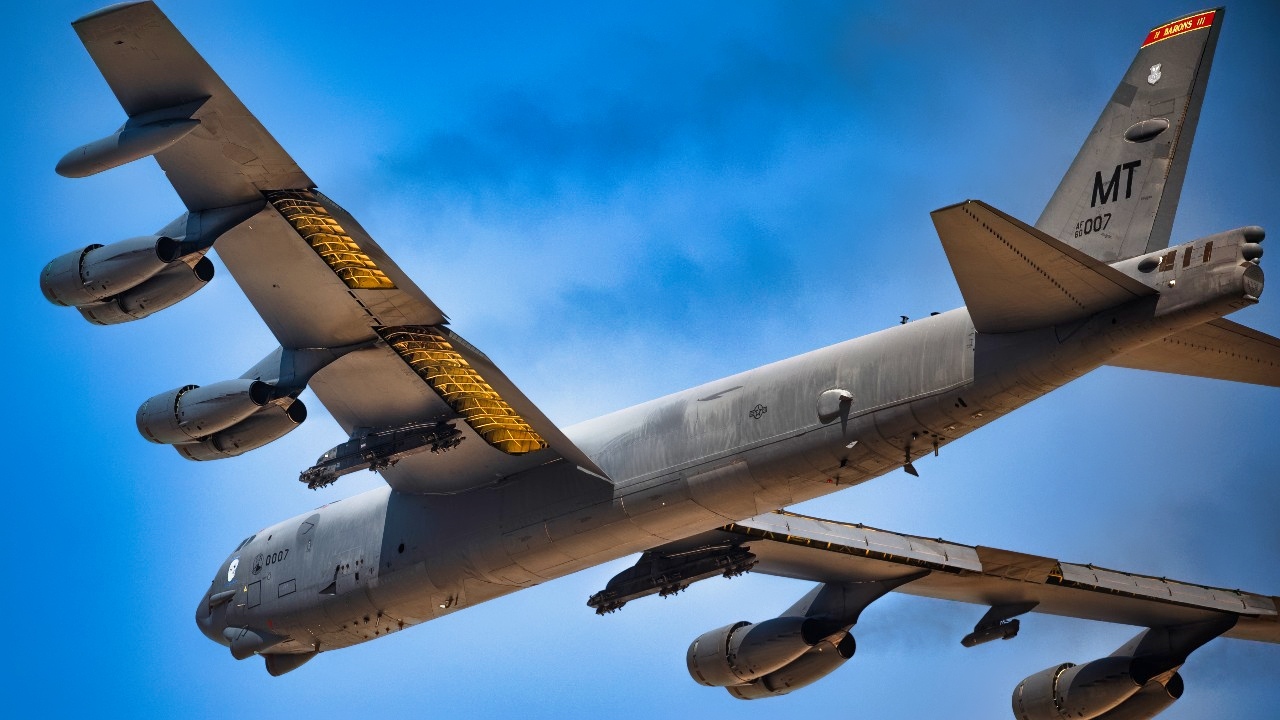
A U.S. Air Force B-52H Stratofortress strategic bomber assigned to the 69th Expeditionary Bomb Squadron flies within the U.S. Central Command area of responsibility, Nov. 15, 2024. The B-52H provides strategic options and flexibility to U.S. and coalition senior leaders with the aircraft’s ability to employ a wide range of weapons with precision and deliver a decisive response to adversaries who threaten peace and security across the region. (U.S. Air Force photo)
Instead of treating the public like adults, the administration repeatedly promised a quick end to the conflict and a rapid containment of the resulting economic fallout. When a government refuses to level with the American people or articulate its broader roadmap, it creates an information vacuum, leaving observers to deduce the true overarching strategy based solely on the military’s actions. It is this exact lack of transparent messaging that leads me to conclude, while giving benefit of the doubt, the initial airstrikes of Operation Epic Fury and Roaring Lion were never intended as a decisive blow, but rather a shaping operation. The bombing campaign was necessary to degrade Iran’s anti-access/area denial (A2/AD) operational capacity—blunting its coastal defense cruise missiles, fast attack craft, and air defenses—to ensure the safety of the U.S. Navy in imposing a physical blockade. Consequently, the administration’s seemingly true intent comes into focus: both the kinetic strikes and the naval blockade are shaping efforts meant to facilitate an economic “D-Day” (Operation Economic Outcast). That economic strangulation appears to be their ultimate strategy—a reality they failed to explicitly communicate because it demands a level of time, sacrifice, and strategic patience they were unwilling to ask of the public.
This failure to build public consensus is not merely an academic critique; it poses a direct operational threat to the campaign’s survival. This operation will inevitably span the upcoming midterm elections. If, as historical trends suggest, the opposition party takes control of the House of Representatives, the operation’s future will be heavily scrutinized under the leverage of the “power of the purse.” The stated endstate of ensuring Iran “Never” achieves a nuclear weapon requires sustained funding and unwavering political will. Just as President Bill Clinton famously struggled with the definition of the word “is,” partisan shifts in Washington will likely result in a politically expedient redefinition of the word “Never.” If the campaign’s fate is left to a negotiated settlement under a divided government, a genuinely permanent halt to Iran’s nuclear ambitions becomes an exceedingly unlikely outcome.
Powell also asked: Do we have genuine broad international support? The answer in 2026 was a resounding no.
The coalition was virtually non-existent compared to previous American military campaigns. While a handful of nations—specifically Australia, Canada, Ukraine, and Albania—offered swift public backing, the broader international community balked. Major European allies like France, Germany, and the United Kingdom notably stopped short of endorsing the strikes, opting instead for joint statements urging restraint. At the United Nations, the response was one of alarm, not solidarity. The Security Council convened emergency meetings, and UN Secretary-General António Guterres explicitly condemned the military escalation, stating it undermined international peace and security.

A U.S. Air Force B-52 Stratofortress departs after being refueled by KC-135 Stratotanker over the Pacific Northwest July 18, 2024. The 92nd Air Refueling Wing and 141st ARW’s ability to rapidly generate airpower at a moment’s notice was put to the test when Air Mobility Command’s Inspector General team conducted a no-notice Nuclear Operational Readiness Inspection, July 16–18, 2024. During the NORI, Airmen demonstrated how various capabilities at Fairchild AFB enable units to generate and provide, when directed, specially trained and equipped KC-135 Stratotanker aircrews to conduct critical air refueling of U.S. Strategic Command-assigned strategic bomber and command and control aircraft. (U.S. Air Force photo by Staff Sgt. Lawrence Sena)

A B-52H Stratofortress taxis down the runway at Minot Air Force Base, N.D., Sept. 16, 2021. The bomber is capable of flying at high subsonic speeds at altitudes up to 50,000 feet. (U.S. Air Force photo by Airman 1st Class Zachary Wright)
Most crucially, within the very region under threat, the diplomatic vacuum was absolute. Beyond the State of Israel—a nation facing an existential threat from Iranian proxies and nuclear rhetoric, and thus possessing obvious skin in the game—not a single Middle Eastern nation publicly supported or endorsed the initiation of U.S.-Israeli military action. This regional isolation was not accidental; it was the result of regional pragmatism. In the weeks preceding the strikes, Gulf Arab states—including Saudi Arabia, the United Arab Emirates, Qatar, Bahrain, Kuwait, and Oman—alongside Jordan, actively lobbied Washington against kinetic action. These nations, acutely aware of their geographic vulnerability to Iranian retaliation against their oil infrastructure and desalination plants, prioritized diplomacy. They warned of the severe risks of regional escalation, and in practical terms, this opposition materialized as a denial of their airspace for the operation, severely complicating U.S. logistics and strike routing.
Furthermore, Oman, which had a long history of quietly mediating U.S.-Iran talks, expressed explicit dismay. Muscat warned that the sudden kinetic action fatally undermined ongoing negotiations and urged the United States not to deepen its military entanglement. Had the United States first done the rigorous work of making a comprehensive intelligence case to the American public, it might have built the momentum required to forge a much broader global coalition. Transparency at home creates diplomatic leverage abroad. Instead, we failed to lay the groundwork to convince our European and regional partners that the long-term threat of a nuclear Iran outweighed the temporary chaos of a military confrontation.
The true cost of our diplomatic isolation is measured in missed opportunities. Had we secured robust international backing, earlier multilateral economic efforts might have proven far more effective in altering the regime’s calculus. More importantly, a broad military coalition would have provided the combined leverage, resources, and geographic access necessary to meaningfully set the conditions for and empower the internal resistance within Iran. By acting alone, we forfeited the chance to transform an American military shaping operation into a globally backed campaign for regime collapse.
Finally, the Powell Doctrine insists that force be used only after all non-violent policy means have been fully exhausted, and that when force is applied, it must be overwhelming and decisive in achieving a clear political objective.
On the first point, the administration has a strong defense. The “maximum pressure” campaign originally launched by the Trump administration and conceptually maintained in various forms since was arguably as tough as it could have been without crossing the threshold into outright armed conflict. Sanctions, diplomatic isolation, cyber disruptions, and financial strangulation had reached their logical limits. The non-violent toolkit was indeed fully exhausted.
However, on the second point—applying decisive force to achieve a permanent objective—the strategy falters terribly. It is now clear that Operation Epic Fury was not a decisive operation meant to permanently erase Iran’s nuclear knowledge or decapitate the regime. It was merely a shaping operation designed to mitigate risk to our naval assets and limit Iran’s military responses to Operation Economic Outcast. While suffocating the regime financially through a total blockade is a powerful tool, it is a strategy of attrition, not decision. It will take significant time to realize its full impact. I genuinely hope it succeeds in forcing the tyrannical theocrats to the negotiating table. But history and the fanatical nature of the Islamic Revolutionary Guard Corps (IRGC) suggest otherwise.
I harbor deep doubts that the United States will ever achieve the permanent end state of a denuclearized Iran without decisive military action that physically removes the regime from power. A negotiated settlement with the current fanatic regime leaves the ideological infrastructure of terror and the ambition for a bomb intact, merely pausing the clock until Western resolve falters or political power shifts in Washington, D.C. The opposition within Iran—the brave citizens who have bled in the streets protesting for their basic human rights—is clearly outgunned by the state’s sprawling security apparatus.
Unless the IRGC is fractured enough to turn its weapons upon itself, the regime will not voluntarily abandon its core ideological tenets while this U.S. administration still has the power to change it. Achieving a lasting victory requires recognizing that half-measures do not work against ideological zealots. If “Never” is truly the goal, it must be secured through either the commitment of U.S. forces to definitively shatter the regime’s grip on power, or a massive, unprecedented covert and overt campaign to enable and arm resistance forces within Iran to do the job themselves.
Colin Powell left us with a framework not to prevent America from fighting, but to ensure that when we do fight, we win decisively. He understood that military force is a blunt instrument that must be wielded with overwhelming public backing, allied consensus, and a commitment to absolute victory.
What Happens Next on Iran?
I do not believe this was a war of choice. The U.S. military action against Iran in early 2026 was morally justified and strategically necessary. But by failing to build a factual case for the American people, alienating our regional partners, and settling for a shaping operation rather than pursuing the decisive defeat of the regime, we have violated the core tenets of the Powell Doctrine.
We are now embroiled in a protracted conflict of economic attrition, racing against the clock of our own domestic political cycles. If we do not pivot toward a strategy of decisive victory, the Iranian threat will survive this campaign, and the solemn promise of “Never” will become just another empty political slogan.
About the Author: Stephen D. Cook
Stephen D. Cook is a retired U.S. Army Special Forces Lieutenant Colonel with 25 years of service. A combat veteran decorated for both heroism and valor, he is the author of the field manuals When We’re Finished and Choose the Heavier Ruck, and the techno-thriller precision-strike trilogy leading with In the Shadows of the Sky. His work explores the intersection of elite military decision-making, intuition, and disruptive leadership. He is based in St. Augustine, Florida. This first appeared in RealClearDefense.


