

Russia Knocks Out Power For Over Quarter Million Ukrainian Households – Russian missile and drone attacks have knocked out power for more than 280,000 Ukrainian households. Strikes on Friday, October 30, that continued overnight into Saturday caused extensive damage to power plants, electrical substations, gas infrastructure, and railway stations across the country.
Ukrainian President Volodymyr Zelenskyy confirmed the massive scale of the damage on Saturday, announcing that approximately 200,000 households in Dnipro and the surrounding Dnipropetrovsk region had been left without power. A further 80,000 households in the Kyiv region also lost power.
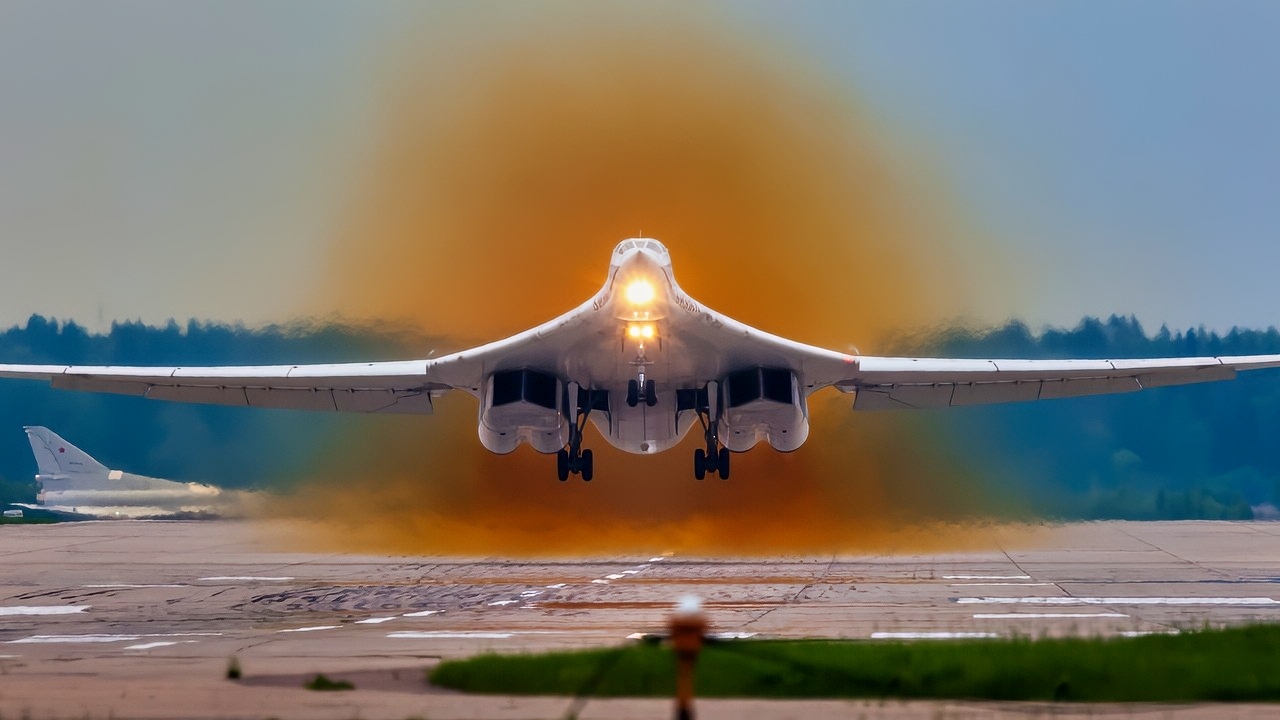
Tu-160 Bomber from Russia. Image Credit: Creative Commons.

Tu-160M Bomber Air Force. Image Credit: Creative Commons.
The attacks came after a number of days of intense bombardment by the Russians, targeting cities and critical infrastructure. There was also a deadly strike against a railway station in Dnipro on Thursday, October 29.
It’s a troubling sign for Kyiv as temperatures begin to fall, winter approaches, and Ukraine’s damaged energy network already struggles to cope.
Russia Hits Power Plants and Substations
Interfax-Ukraine reported on October 31 that President Zelenskyy confirmed Russian Shahed drones had struck a combined heat and power plant in Kyiv on Friday night. Additional attacks also hit four electrical substations in the Dnipropetrovsk region overnight.
A drone also struck a combined heat and power plant in Shostka, a city in the northern Sumy region, early on Saturday morning.
“Last night, Russian ‘shaheds’ struck a combined heat and power plant in Kyiv. In the Dnipro region, Russia hit four electrical substations in a single night. In the early morning, a Russian drone struck a combined heat and power plant in Shostka. Russia also hit railway infrastructure in Dnipro and Kharkiv. Russia also attacked a gas distribution facility in the Dnipro region,” Zelenskyy said in a statement on X.
“These Russian strikes have created a difficult situation with electricity supplies across our regions. Around 200,000 households in Dnipro and the region are without electricity. Another 80,000-plus households in the Kyiv region are also without power. Repair crews are working to deal with the aftermath of the strikes and doing everything they can to restore electricity supplies,” he continued.
The attacks were not limited to electricity generation and distribution; Russian forces also targeted a gas distribution facility in Dnipropetrovsk and railway infrastructure in Dnipro and Kharkiv, further disrupting the country’s transport and energy networks.
The Ukrainian Air Force reported that Russian forces launched 134 drones against Ukrainian targets overnight, including the newer jet-powered attack drones. Ukrainian defenses reportedly intercepted or destroyed 105 drones, but strikes were still recorded at 20 locations. Falling debris was also reported in another 10 areas.
In his statement, Zelenskyy also said that Russia was deliberately targeting civilian infrastructure and continues to do so on a daily basis.
“And everyone who does not want to see this Russian escalation spread further into Europe must help Ukraine,” he said. “Strong steps that will really lead toward peace are needed — sanctions against the aggressor and new support packages for Ukraine.”
Russia Damages Over 800 Pieces of Equipment
The latest strikes are part of a much larger Russian campaign against Ukrainian energy infrastructure that has only intensified in recent months.
On Friday, October 30, Ukraine’s Energy Minister Denys Shmyhal told the Ukrainian parliament that Russian forces had carried out over 350 attacks against the country’s energy infrastructure over the previous two months. He said that the strikes had damaged more than 800 pieces of equipment at power generation facilities and substations.
Hromadske reported that 350 pieces of equipment have also been destroyed or damaged beyond repair.
As Ukraine struggles with a shortage of critical interceptors to protect against Russian jet-powered drones and ballistic missiles, it is attempting to protect its remaining energy equipment using reinforced structures.
Ukraine has also installed additional defenses around 235 transformers. According to Shmyhal, the measures have so far proven effective against ballistic missile attacks, but repairing any unprotected facilities could still take months based on the current rate of Russian strikes.
The government is therefore facing increasingly difficult challenges, including repairing existing infrastructure while protecting it from further attacks—and dealing with the likelihood that Russia will continue to intensify its strikes.
UN Investigator Accuses Russia of Crimes Against Humanity
The attacks have prompted international scrutiny, with a United Nations independent commission concluding on October 26 that Russia had committed crimes against humanity during its sustained campaign against energy infrastructure. The commission investigated the experiences of 255 people in nine regions of Ukraine and determined that the attacks had deliberately deprived civilians of heating and other essential services. The findings are just the latest instance of international pressure being applied to Moscow as Ukraine braces for a difficult winter, but it seems unlikely to deter Putin from continuing the strikes.
Russia maintains that its military operations are targeting infrastructure connected to Ukraine’s war effort.
About the Author: Jack Buckby
Jack Buckby is a British researcher and analyst specializing in defense and national security, based in New York. His work focuses on military capability, procurement, and strategic competition, and he produces and edits analysis for policy and defense audiences. He brings extensive editorial experience, with a career output spanning over 1,000 articles at National Security Journal, and has previously authored books and papers on extremism and deradicalization.


