

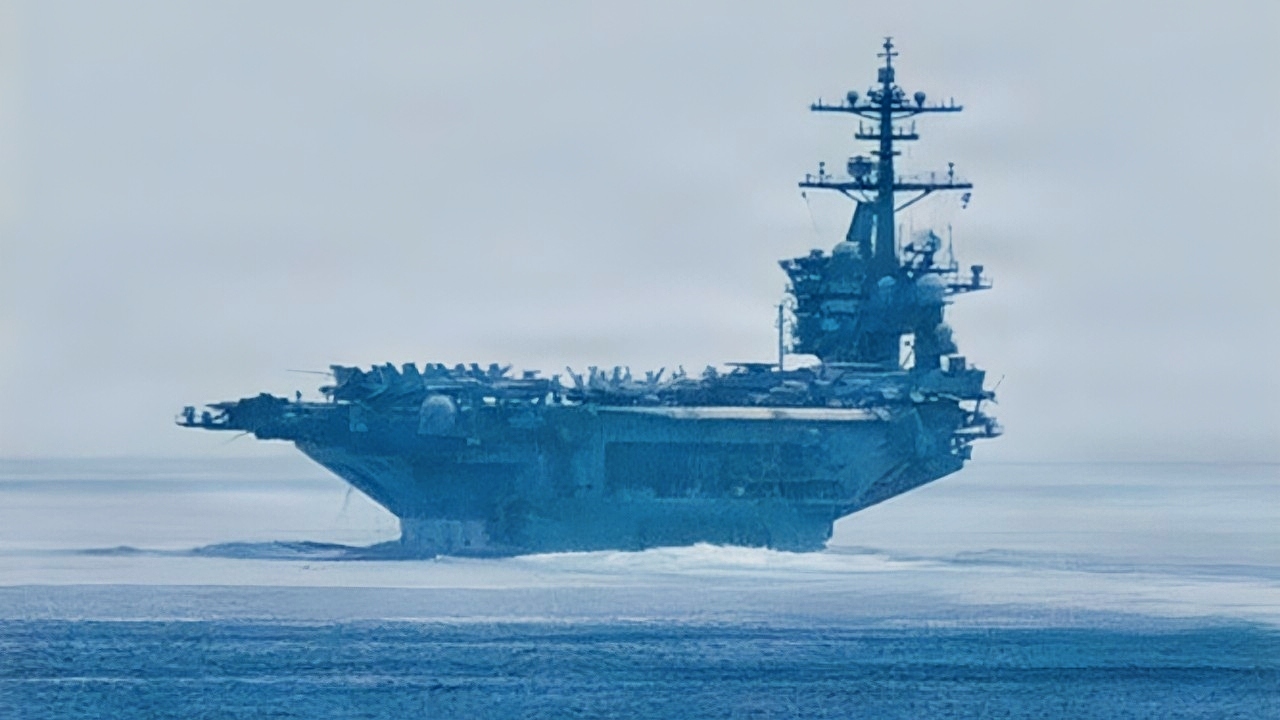
U.S. Clears Iranian Mines in Strait of Hormuz – U.S. Navy SEALs spent four months secretly clearing Iranian mines from the Strait of Hormuz. They carried out bold nighttime missions with divers, unmanned vessels, and underwater robots as Washington sought to reopen the key shipping route.
The operation began around April and continued for months without being publicly disclosed, according to the Financial Times, which reported that small teams of Navy personnel worked from rigid-hull inflatable boats while unmanned surface vessels and submersibles equipped with sonar searched for mines.
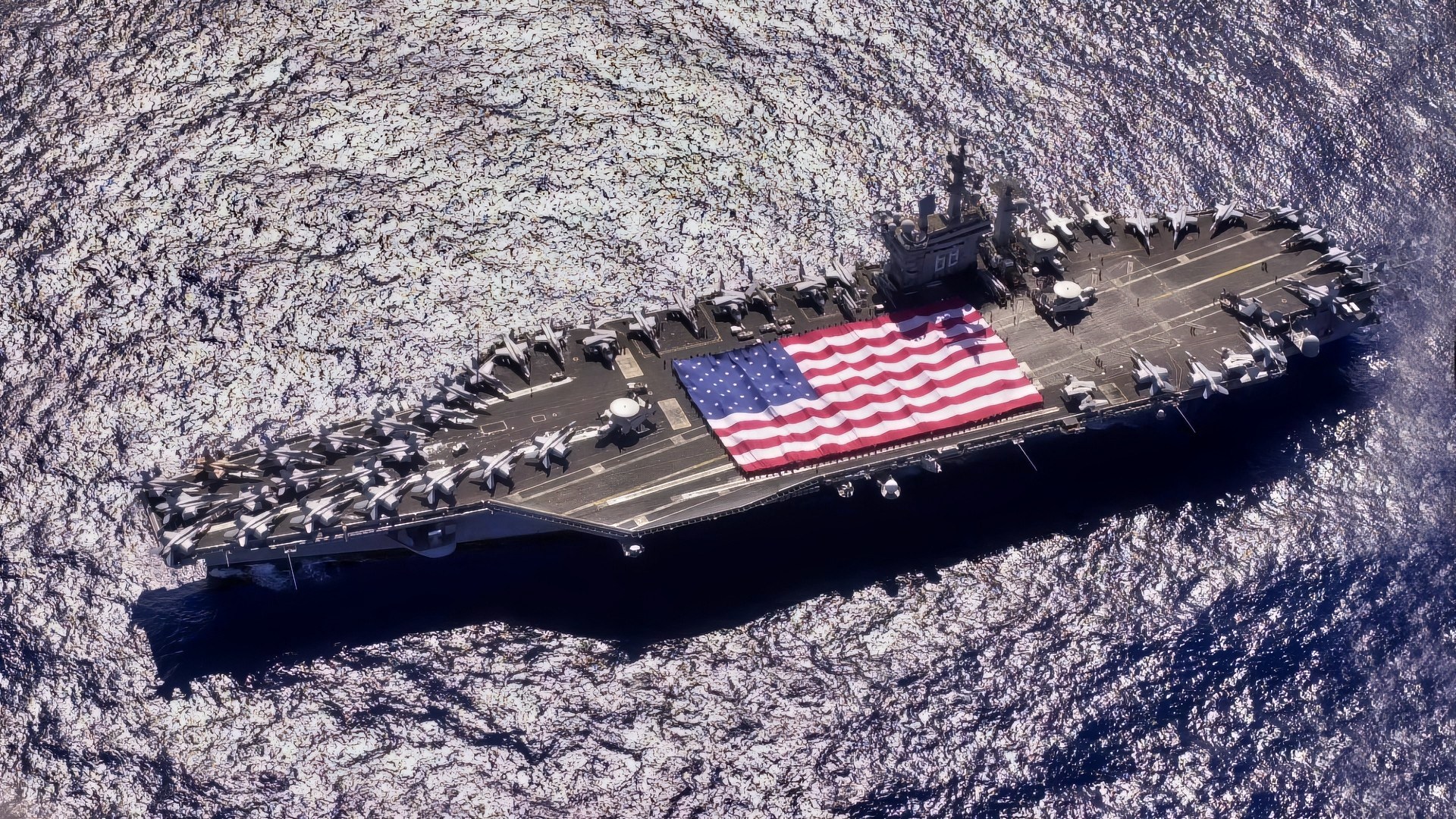
Pacific Ocean (November 3, 2003) — During Tiger Cruise aboard USS Nimitz (CVN 68), Nimitz and Carrier Air Wing Eleven personnel participate in a flag unfurling rehearsal with the help of fellow tigers on the flight deck. The Nimitz Carrier Strike Force and Carrier Air Wing Eleven (CVW-11) are in route to Nimitz homeport of San Diego, California after an eight-month deployment to the Arabian Gulf in support of Operation Iraqi Freedom. U.S. Navy photo.
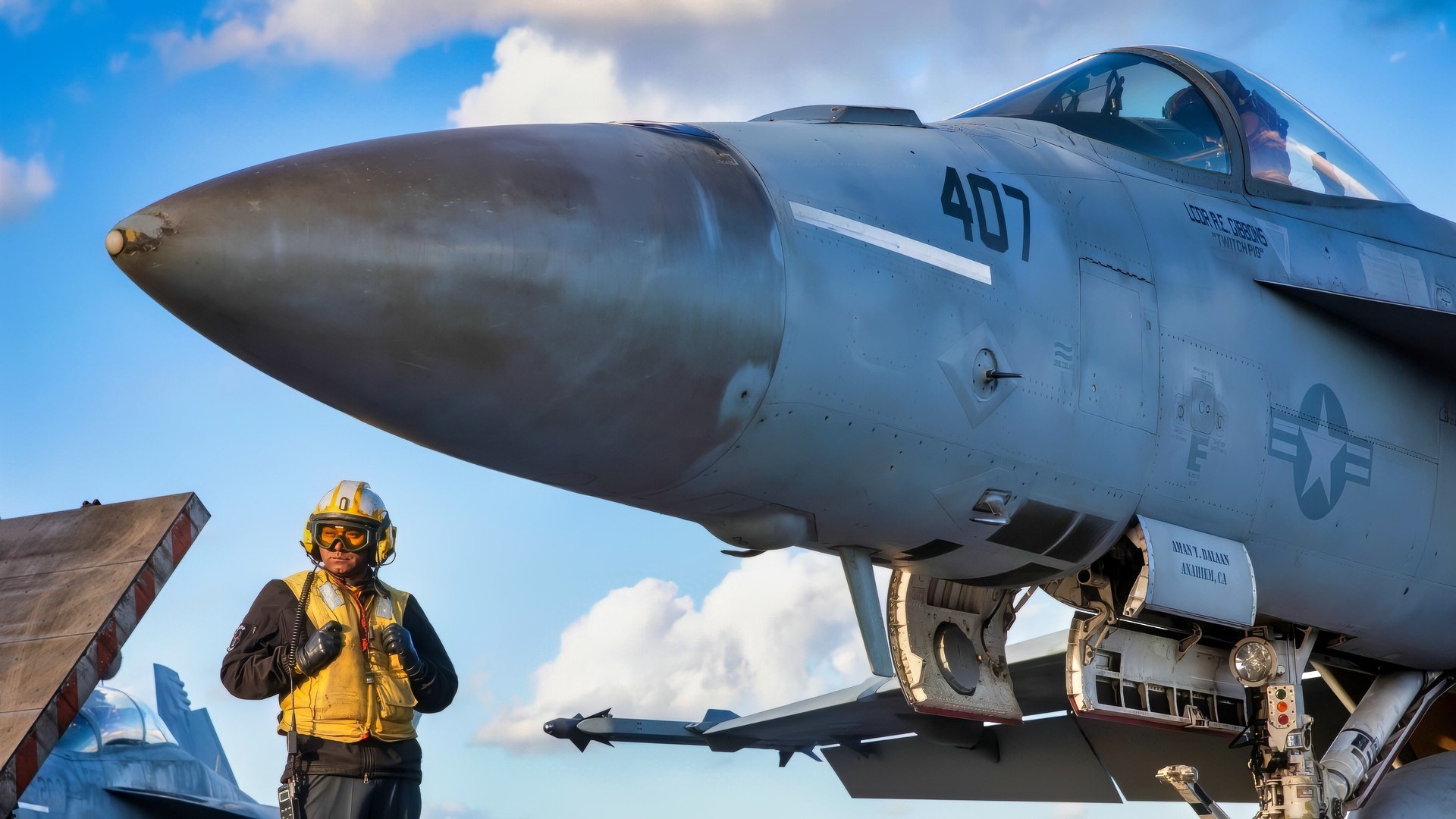
Aviation Boatswain’s Mate (Aircraft Handling) 1st Class Jose Mejiacastro, assigned to Air Department aboard the world’s largest aircraft carrier, USS Gerald R. Ford (CVN 78), prepares to signal to a Carrier Air Wing 8 F/A-18E Super Hornet attached to Strike Fighter Squadron 87 on the flight deck, Sept. 26, 2025. Gerald R. Ford, a first-in-class aircraft carrier and deployed flagship of Carrier Strike Group Twelve, is on a scheduled deployment in the U.S. 6th Fleet area of operations to support the warfighting effectiveness, lethality and readiness of U.S. Naval Forces Europe-Africa, and defend U.S., Allied and partner interests in the region. (U.S. Navy photo by Mass Communication Specialist 2nd Class Mariano Lopez)
Iran Admits Laying Mines
Iran has acknowledged laying mines after the U.S.-Israel war began on February 28. The International Maritime Organization estimated in June that roughly 80 mines had been deployed along major shipping routes.
“That is usually followed up by a navy diver who’s got to get in the water and approach the mine,” retired U.S. Navy Capt. Bill Hamblet told the FT. The diver would then attach an explosive charge and destroy it.
Nitya Labh, an associate fellow at Chatham House, described the work to the newspaper as “active bomb detonation underwater.”
No American casualties have been reported in connection with the operation.

Littoral Combat Ship Gun Close. Image Credit: Stephen Silver/National Security Journal.

Littoral Combat Ship Deck National Security Journal Image by Stephen Silver.
President Donald Trump said last week that “all mines” in the Strait’s international waters had been removed or destroyed. A senior U.S. official subsequently told Al Jazeera that Hormuz was “fully open” and under U.S. Navy control.
Shipping Data Still Down
Reuters reported Tuesday that only seven commodity vessels passed through Hormuz on Monday, down from eight on Sunday, according to Kpler. Some ships travel with their transponders off to avoid detection and therefore do not appear in official tallies.
But Washington is not merely concerned with removing mines already in the water, but preventing Iran from putting them back there.
Ethan Connell, a mine warfare expert and assistant director of Taiwan Security Monitor, noted that “Iran is certainly trying to re-mine.”
U.S. Energy Secretary Chris Wright acknowledged Sunday that normal shipping has not returned.
“We are not [at] pre-conflict levels,” Wright told CNN. Asked whether tankers could safely transit the Strait, he said: “If they want to work with the United States Navy, I think they can.”
Wright estimated that some 9 million barrels of oil a day were transiting the strait. He also claimed that regional flows now include “two-thirds or more of pre-conflict flows,” if alternative pipeline capacity was factored in. According to the Associated Press, Wright’s estimate of Strait traffic is higher than tanker-tracking data would suggest.

Littoral Combat Ship. Image Credit: Creative Commons.
Economic Warfare
Tehran also seems to be gearing up to impose new restrictions.
The new secretary of Iran’s Supreme National Security Council, Mohsen Rezaei, has said Tehran would set up a “maritime exclusion zone” stretching from the U.S. blockade perimeter toward Hormuz and into the Persian Gulf.
“Economic warfare will be met by a maritime exclusion zone,” Rezaei wrote Tuesday, adding that Iran had “fundamentally recalibrated” its approach toward U.S. warships and bases.
The threats came after a new round of direct U.S.-Iranian exchanges. U.S. forces struck a trio of Iranian oil tankers on September 5 after Washington said Iran fired ballistic missiles at American warships. Iran subsequently claimed to have hit an unmanned U.S. vessel attempting to enter Hormuz, an assertion the U.S. military dismissed as a “total lie.”
Prior to the current conflict, around one-fifth of global oil and liquefied natural gas shipments moved through the Strait.
Hamblet says that Iran’s “strongest card” is convincing the world that it can threaten the Strait.
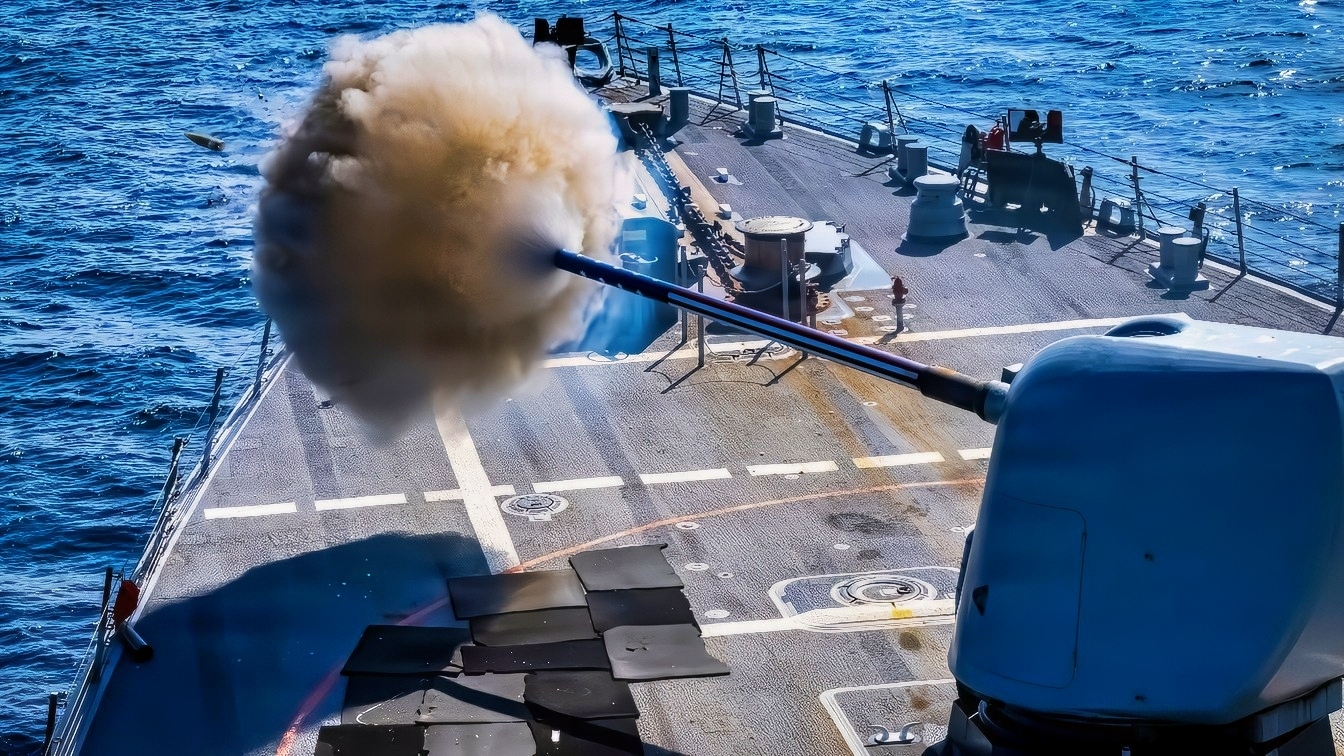
PACIFIC OCEAN (April 27, 2026) U.S. Navy Arleigh Burke-Class guided-missile destroyer USS John Paul Jones (DDG) 53, fires its Mk.45 5-inch deck cannon during a live fire exercise, April 27, 2026. John Paul Jones, part of the Theodore Roosevelt Carrier Strike Group, is underway in the U.S. 3rd Fleet area of operation conducting advanced training to bolster strike group readiness and capability. (U.S. Navy photo by Mass Communications Specialist 2nd Class Ryan Holloway)
Will Tehran Double Down?
Trump told Fox News last month that “They [Iran] should put up the white flag of surrender.”
He has since stressed that no talks with Iran were ongoing, nor were any scheduled. He also heated up the rhetoric by imposing a slew of new sanctions on Iran. Trump has also quipped that the U.S. could bomb Oman, a U.S. partner in the region, if it “gets in the way” of Washington’s strategy.
‘Strike and Get Struck’
Earlier this week, Iran said it could soon target U.S.-linked energy infrastructure in the Middle East if Washington strikes further more of its assets in the region. “Strike our assets and you get struck,” Iranian Parliament Speaker Mohammad Baqer Qalibaf wrote via social media on Monday. “The oil and gas production chain here is sprawling, accessible, and exposed. American oil and gas companies across these waters and facilities share that exposure,” Reuters reported.
About the Author: Georgia Gilholy
Georgia Gilholy is a journalist based in the United Kingdom who has been published in Newsweek, The Times of Israel, and the Spectator. Gilholy writes about international politics, culture, and education.


