


Over the weekend, U.S. envoys Steve Witkoff and Jared Kushner visited Russia and Ukraine, and their visit to Kyiv on Sunday marked their first trip to Ukraine since Russia’s 2022 invasion.
According to Al Jazeera, Kushner and Witkoff met with Ukrainian President Volodymyr Zelensky to try to kickstart stalled peace talks.
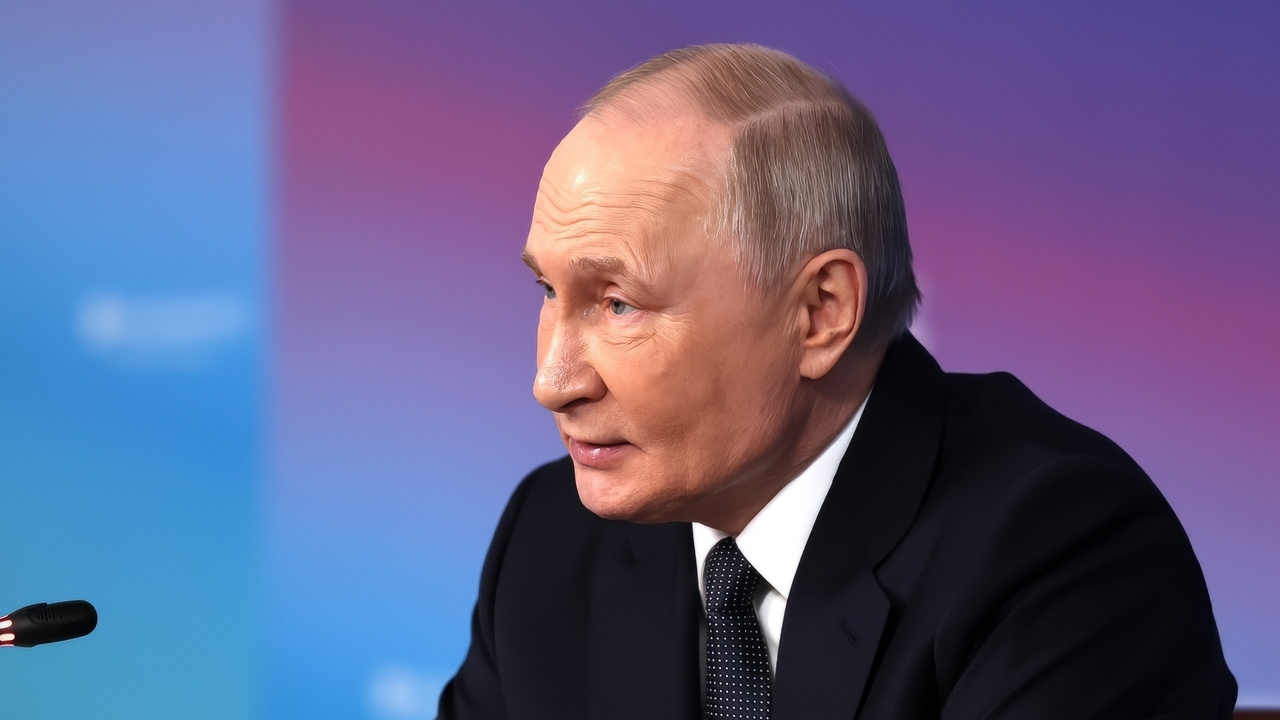
Vladimir Putin in Murmansk (2025-03-27). Image Credit: Creative Commons.
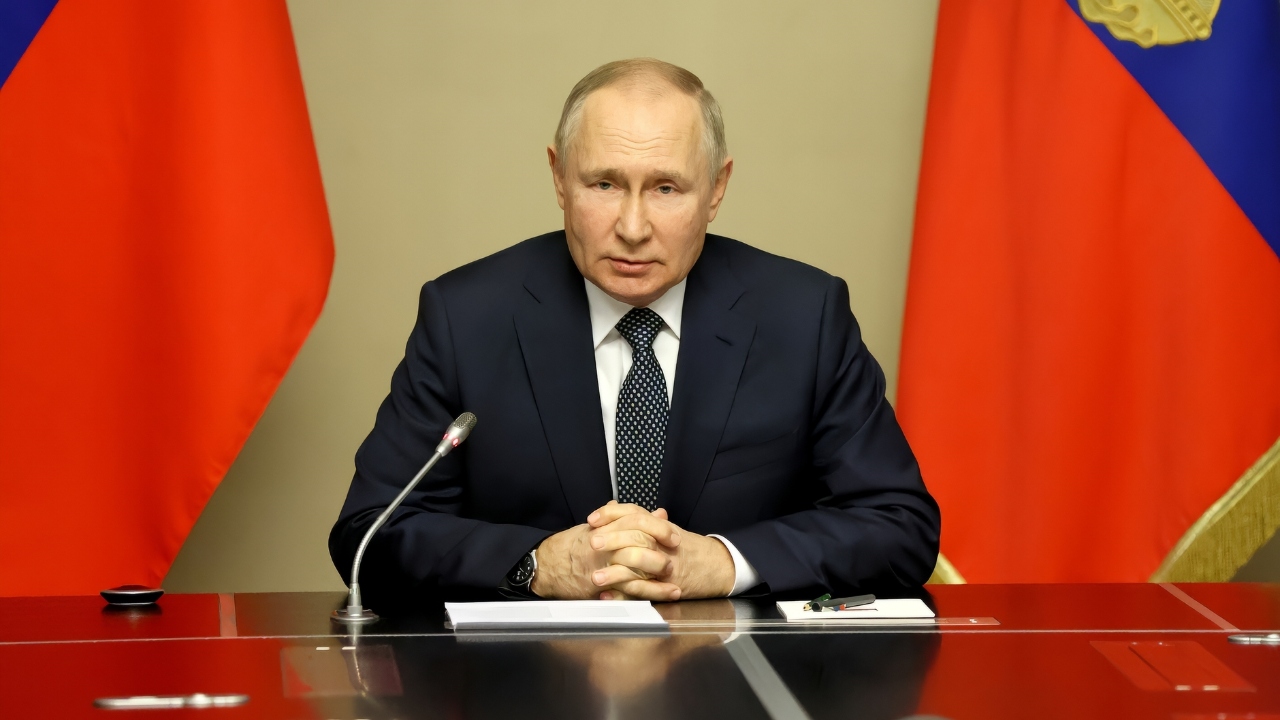
Putin November 2022. Image Credit: Creative Commons.
“It is very important that the delegation has arrived to see us. We have been waiting a long time for Steve and Jared, Witkoff and Kushner,” Zelensky said after the meeting, per the report.
“To us, it is very important to do everything so that this war ends.”
Witkoff described the talks as “a very meaningful discussion, substantive, important, and we are very encouraged, and we look forward to continuing this as long as it takes.”
However, not long after the diplomats left Ukraine, Kyiv was hit with a major new attack from Russia, consisting of missiles and drones.
Explosions Ring Out
According to a CNN report, a “three-day halt” had been agreed between the two countries while the diplomats visited the region.
Ukraine had first announced that it would not attack while the American diplomats were in Moscow, with Russia later agreeing to the three-day pause on strikes in Ukraine.
The Russian strikes on Ukraine on Tuesday indicated that this pause had expired once the envoys were back home.
Ukrainian Interior Minister Ivan Vyhivskyi, per CNN, said that five people were killed and 25 more wounded in the attacks on Ukraine, which were carried out using drones, ballistic and cruise missiles.
“The moment the U.S. president’s peace envoys left, Putin launched another massive, horrific attack against Kyiv,” Andrii Sybiha, Ukraine’s foreign minister, wrote in a Tuesday social media post. “His ballistic missiles speak louder than his words on diplomacy.”
Russia’s defense ministry, per CNN, described the Tuesday strikes as “a massive strike using ground and air-based precision-guided weapons and attack drones.” As for the targets, the ministry claimed the targets were “facilities belonging to Ukraine’s military-industrial complex, logistics and warehousing centers.”
However, Zelensky was clear in a social media post that civilian areas had also been hit.
“It was a complex attack that the Russians tried to plan to cause as much harm to life as possible – ballistic missiles, cruise and anti-ship missiles, and jet-powered ‘shaheds,’” the Ukrainian leader said.
“There is significant damage to residential buildings and other civilian infrastructure in the capital.” This included “critical infrastructure” in Kyiv and a market in the Odesa area.
Zelensky added that Ukrainian forces stopped 175 aerial targets during the attack, “but unfortunately, not all of them.” He went on to once again call for additional anti-missile aid from Ukraine’s Western allies.
Kyiv’s mayor Vitali Klitschko said, per CNN, that an “educational institution” was hit in the attack.
What Comes Next?
Does this mean that the push towards peace talks is over? That remains unclear at this point.
CNN reported that a Kremlin source said Putin and President Donald Trump spoke on the phone for an hour after Witkoff and Kushner left Moscow, in talks that the source called “constructive and frank.”
Yuri Ushakov, a Putin aide, told Russian media that Trump is “interested in achieving a breakthrough during his presidency.” And Kremlin spokesperson Dmitry Peskov said at a press briefing Tuesday that Russia “welcomes all efforts toward a peaceful resolution in Ukraine.”
This is clearly true, as Trump spent much of the 2024 presidential campaign promising to end the war, possibly on the first day of his new presidency.
This didn’t happen, of course, and a peaceful settlement to the long war soon proved elusive, and it remains so today.
Zelensky called for a “trilateral meeting” among Russia, Ukraine, and the U.S.
“If all parties agree, we would also like to hold this in the autumn,” the Ukrainian president said, per CNN.
The New York Times, in its coverage of American diplomats’ visit to Kyiv, wrote that future negotiations would likely not follow a straight line.
The Trump Administration, the newspaper said, “had allowed the peace process to enter such a deep freeze that the trip was just a preliminary step — talks about how to resume talks.”
About the Author: Stephen Silver
Stephen Silver is an award-winning journalist, essayist, and film critic, and contributor to the Philadelphia Inquirer, the Jewish Telegraphic Agency, Broad Street Review, and Splice Today. The co-founder of the Philadelphia Film Critics Circle, Stephen lives in suburban Philadelphia with his wife and two sons. For over a decade, Stephen has authored thousands of articles that focus on politics, national security, technology, and the economy. Follow him on X (formerly Twitter) at @StephenSilver, and subscribe to his Substack newsletter.


