

On Tuesday, following the Houthis’ attack on oil infrastructure in Saudi Arabia, the price of oil surged, with Brent Crude going as high as $99 before trading at around $98.5 a barrel as of Tuesday afternoon. It’s the first time oil has reached that mark since July.
This has already been reflected in U.S. gas prices, with GasBuddy stating in its weekly report that while average gas prices had dropped a couple of cents from a week before, they had reached $4.09 per gallon, which represented a 10.6-cent increase from a month earlier and 90.8 cents per gallon from a year ago. Both average gas and diesel prices hit record highs on Labor Day.
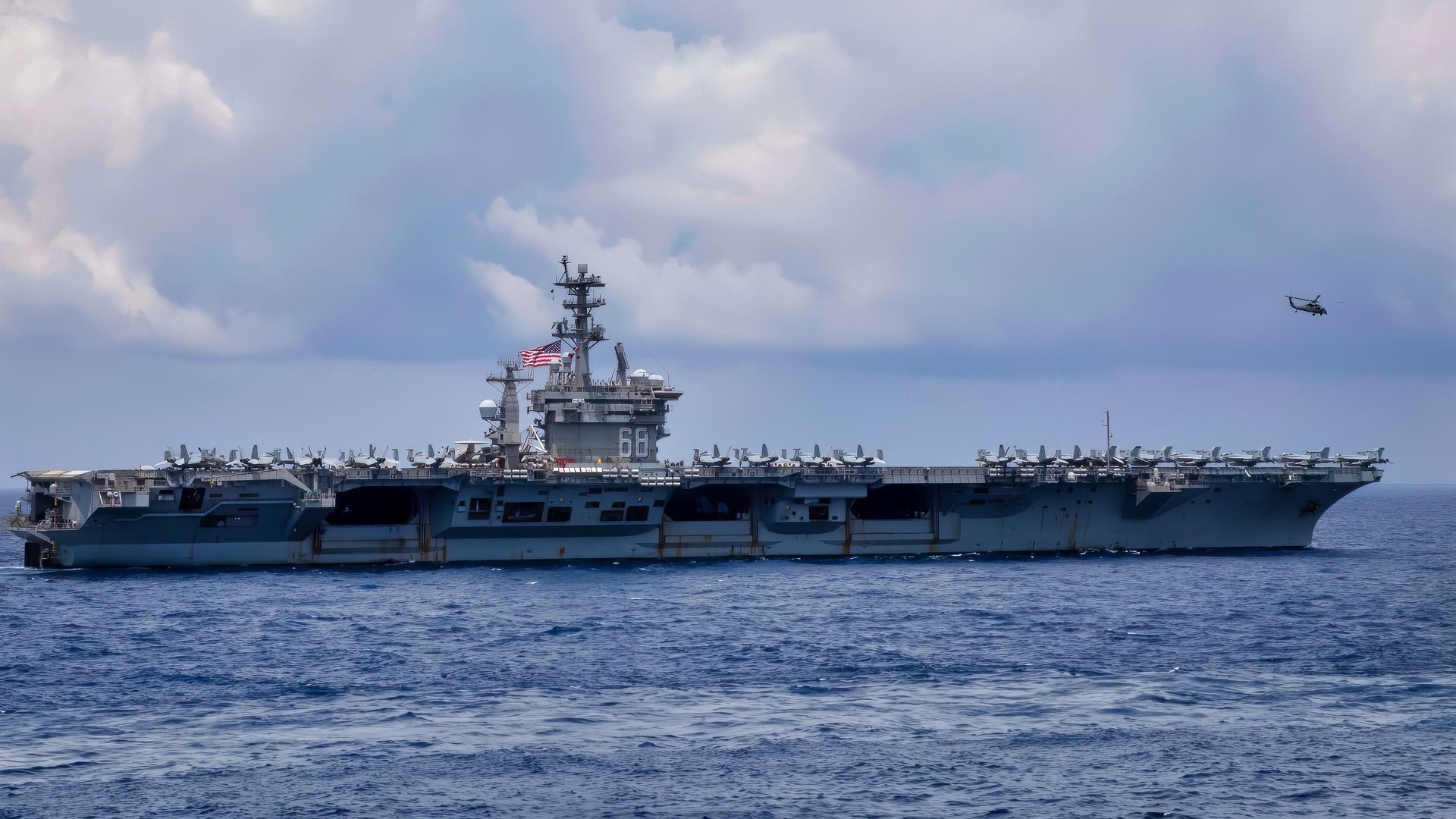
(Feb. 15, 2023) U.S. Navy aircraft carrier USS Nimitz (CVN 68) flies the battle ensign during expeditionary strike force operations with the Nimitz Carrier Strike Group including the Arleigh Burke-class guided-missile destroyer USS Decatur (DDG 73). Nimitz Carrier Strike Group (NIMCSG) and Makin Island Amphibious Ready Group (MKI ARG) with embarked 13th Marine Expeditionary Unit (MEU) are conducting combined ESF operations, demonstrating unique high-end war fighting capability, maritime superiority, power projection and readiness. Operations include integrated training designed to advance interoperability between the two groups while simultaneously demonstrating the U.S. commitment to our alliances and partnerships in the Indo-Pacific region. (U.S. Navy photo by Mass Communication Specialist 2nd Class David Negron)

USS Harry S. Truman Aircraft Carrier U.S. Navy Image.
“Average gasoline prices rose in nearly three out of five states over the last week, while diesel surged in every state—with some climbing nearly 50 cents per gallon in just seven days,” Patrick De Haan, head of petroleum analysis at GasBuddy, said in the weekly report.
It’s likely that the impact of the attacks in Saudi Arabia had not yet been priced in by Tuesday.
On Tuesday afternoon, De Haan posted on X that average diesel prices were just 10 cents away from reaching $6 per gallon for the first time ever.
Trouble For Trump?
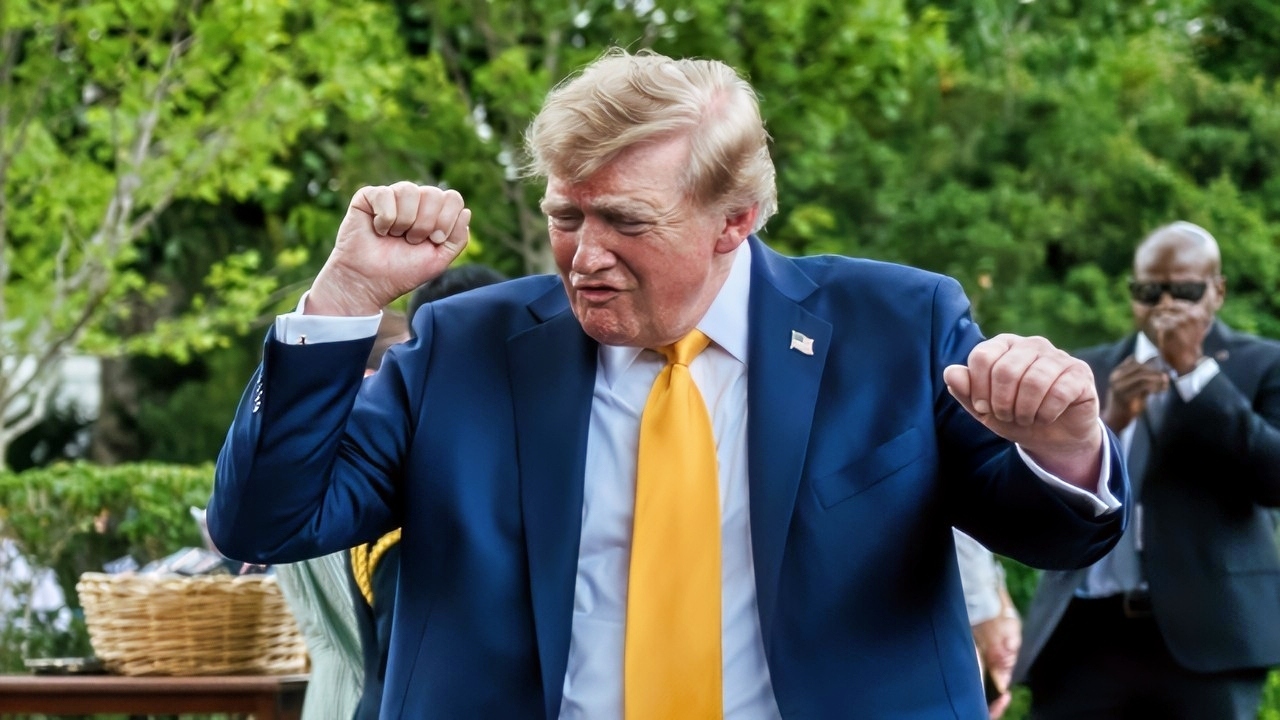
With the midterm elections now less than two months away, President Donald Trump’s party is facing potential political consequences for that gas price surge.
As noted by Newsweek, the president, as recently as Monday night, had “ tied victory over Iran to rapidly falling oil and gasoline prices,” declaring in a Truth Social post that oil prices would “drop precipitously” once the U.S. wins the war in that country. “Three Dollars a gallon, but ultimately, below Two Dollars a gallon,” he predicted.
Around the same time as that declaration, the Houthis attacked Saudi oil sites, causing a disruption to global oil supply. And with the Saudis threatening retaliation, the war in the Middle East could soon escalate and affect oil markets even more.
The Wall Street Journal reported last week on the political problem rising gas prices posed for the president, noting that Trump came into office vowing to deal with inflation and lower prices than during the Biden presidency. Instead, gas prices have risen, as a direct result of a war that Trump himself launched. And members of his party will have to answer questions about that issue on the campaign trail.
And The Hill reported last week that Trump was “under pressure to avoid an escalatory spiral” ahead of the midterms. A reporter asked him about the war ahead of the midterm elections.
“I don’t think it will be very much longer,” Trump said of the war, per The Hill. “And I’m not affected by the election. Number one, I’m not running, but my party’s running, and I’m going to help my party. But I think my party respects the fact that we’re not allowing Iran to have a nuclear weapon.”
Whether voters feel the same way is a whole separate question. And Reuters reported, also last month, that Trump’s advisers are hoping to avoid escalations in military actions, at least until after the midterm elections.
Also last week, Vice President JD Vance said he didn’t know if the war would be over by the midterms, with Vance adding that “I wouldn’t call it a war right now.”
“I think the reality is: I don’t know the answer to that question,” Vance said in that briefing. “You would have to ask the Iranians.” The vice president went on to question the reports last week that a U.S. strike had hit a wedding party near the Strait of Hormuz.
Contradicting Pete
Newsweek also noted that Defense Secretary Pete Hegseth had commented back in late July that the Houthis were sitting out the war because they had “felt the weight of American power.” This was presumably a reference to the series of U.S. strikes on the Houthis in early 2025, which led to the Signalgate scandal.
However, the Houthis, who had earlier threatened to blockade Saudi oil traffic coming through the Red Sea, have asserted themselves in a huge way.
About the Author: Stephen Silver
Stephen Silver is an award-winning journalist, essayist, and film critic, and contributor to the Philadelphia Inquirer, the Jewish Telegraphic Agency, Broad Street Review, and Splice Today. The co-founder of the Philadelphia Film Critics Circle, Stephen lives in suburban Philadelphia with his wife and two sons. For over a decade, Stephen has authored thousands of articles that focus on politics, national security, technology, and the economy. Follow him on X (formerly Twitter) at @StephenSilver, and subscribe to his Substack newsletter.


