

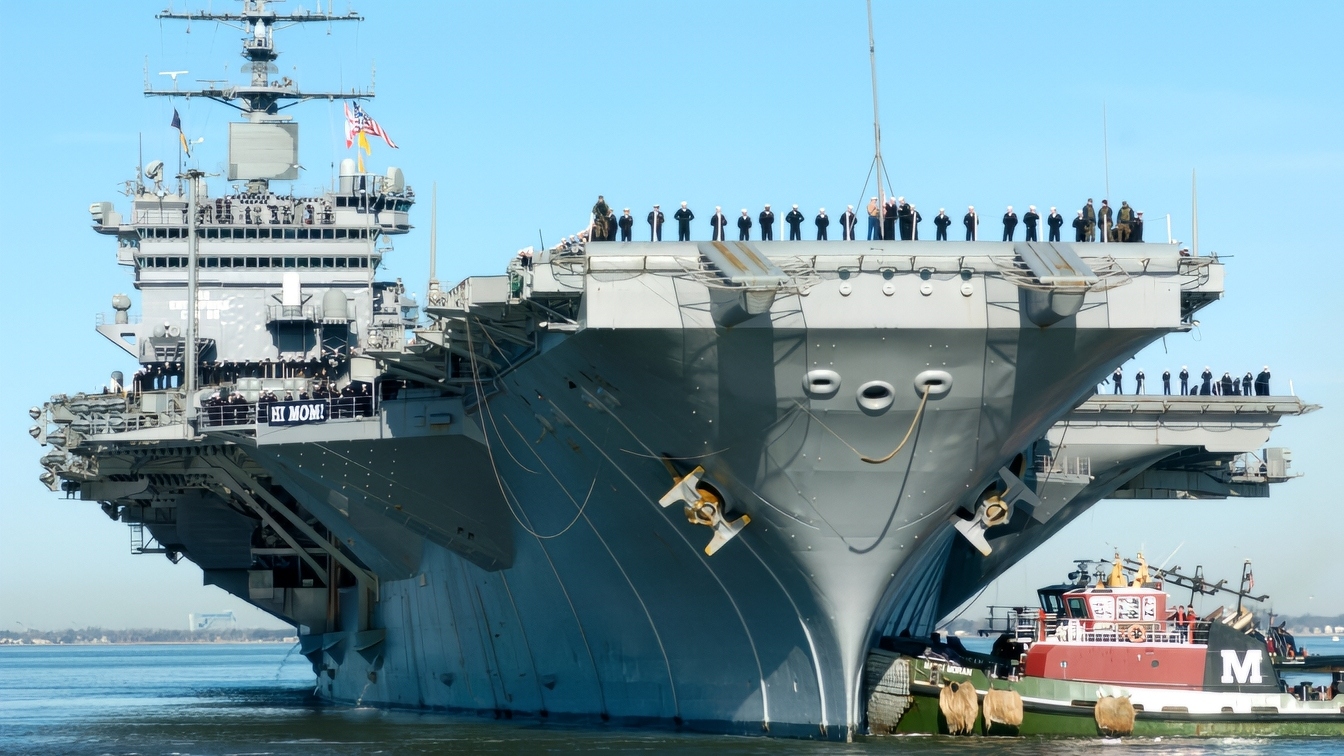
Eight Reactors, One Hull, and a $1.4 Billion Bill: Why Scrapping the USS Enterprise Costs So Much – The USS Enterprise, CVN-65, was the first nuclear-powered aircraft carrier. Launched in 1958, it was the eighth vessel in the US Navy to bear the name Enterprise. Like her World War II predecessor, her crew nicknamed her “The Big E.”
The vessel had a long, distinguished career in modern U.S. Navy history, including the blockade of Cuba during the Cuban Missile Crisis; aerial combat and bombardment missions during the Vietnam War; the evacuation of the U.S. Embassy during the fall of Saigon; the bombing of Al Qaeda and Taliban installations after 9/11; and duty in the Persian Gulf in support of Operation Enduring Freedom.
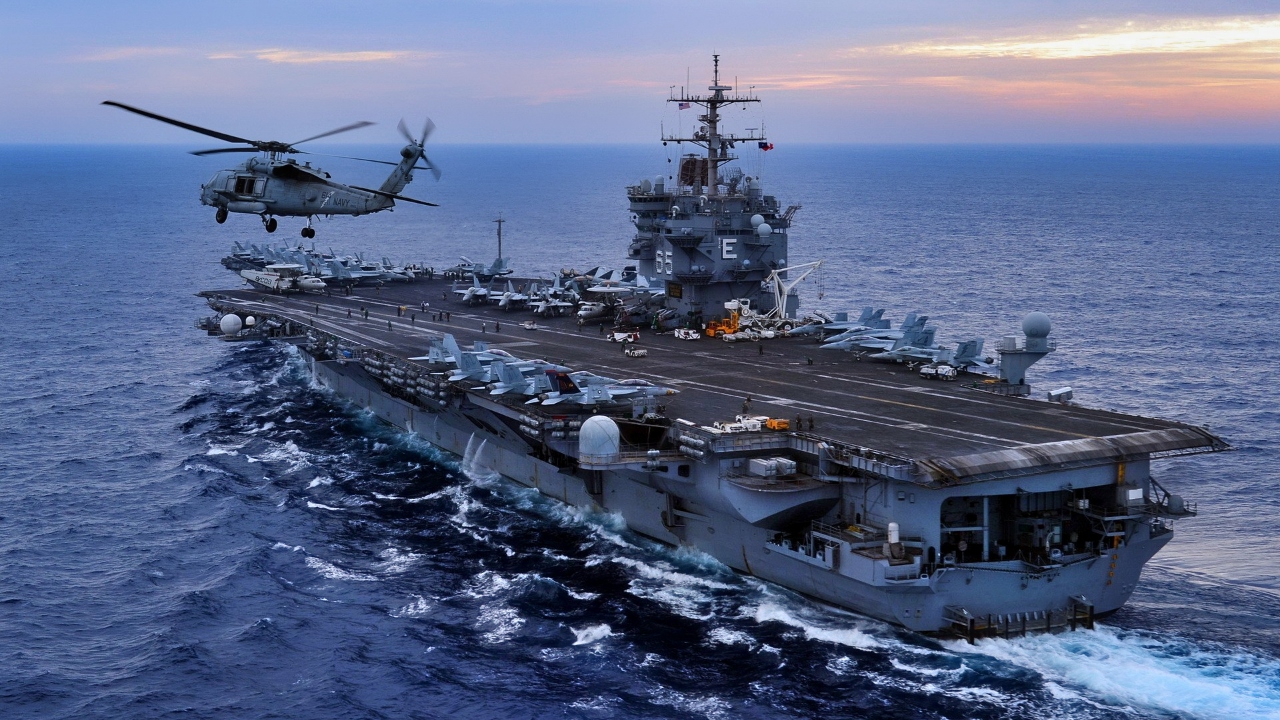
USS Enterprise. Image Credit: Creative Commons.
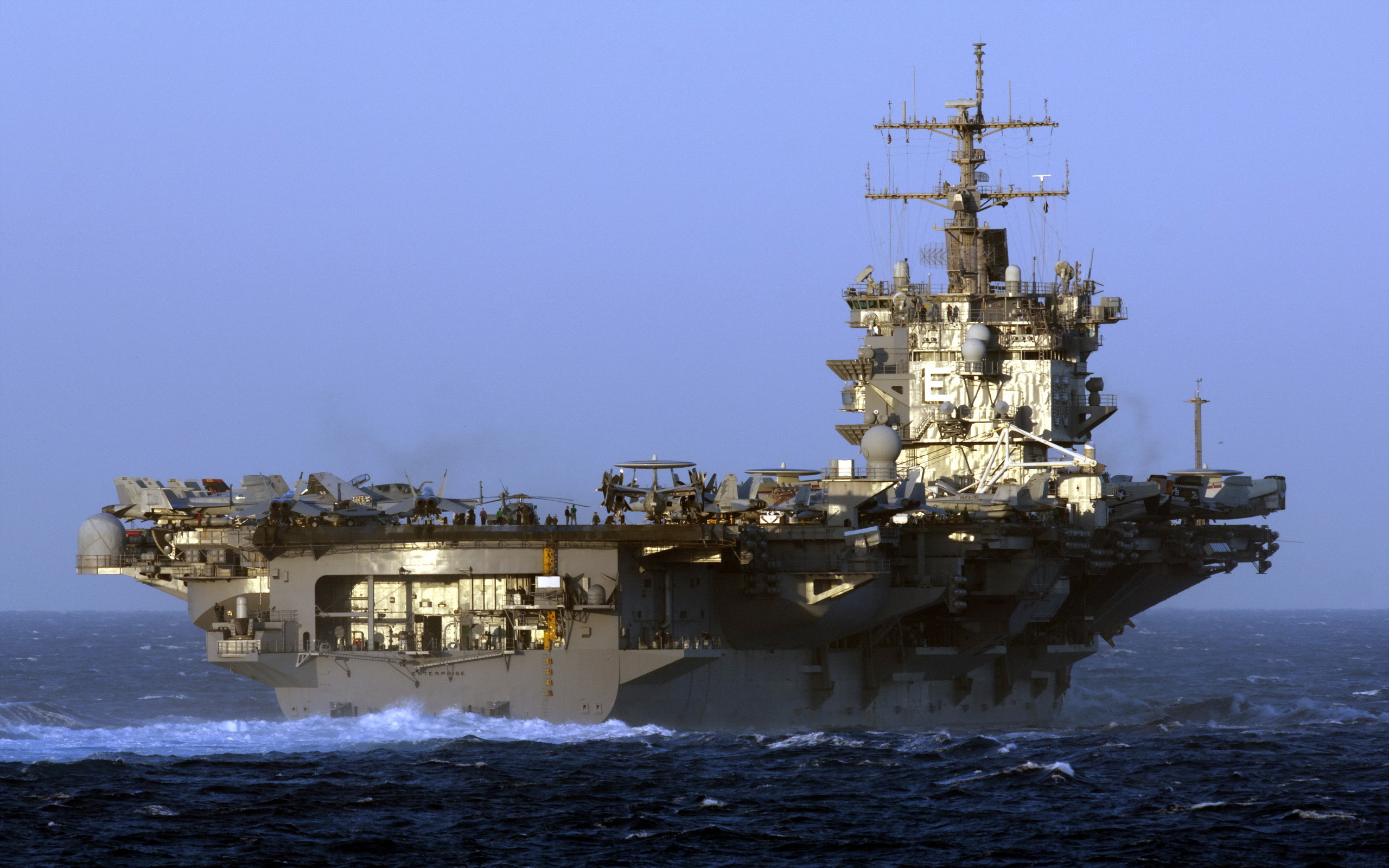
USS Enterprise. Image Credit: Creative Commons.
She made her final deployment in 2012 and was deactivated later that year. She was decommissioned in 2017 after her eight reactors were removed.
At the time of inactivation, the Big E was the third-oldest commissioned vessel in the United States Navy after the wooden-hulled USS Constitution and USS Pueblo (AGER-2).
The Navy built the USS Enterprise for $451 million. Getting rid of her will cost about three times that.
That’s not a typo, and it’s not all inflation. It’s what happens when you build the world’s first nuclear-powered aircraft carrier with eight reactors and then have to figure out how to take her apart half a century later. Nobody has ever done it before. The Enterprise is the test case, and the taxpayer is paying for the lesson.
The Bill, Line By Line to Retire Nuclear USS Enterprise
The numbers have finally settled. As USNI News reported in July, the Navy has spent about $902 million on inactivation work, including removing the nuclear fuel from all eight reactors.
Waste Control Specialists LLC, of Andrews, Texas, will serve as the licensed facility for the disposal of low-level radiological and mixed hazardous waste.
The Navy also considered a no-action alternative in which it would store the Enterprise long-term.
The Navy established the first Nuclear-Powered Aircraft Carrier (CVN) Inactivation and Disposal Program Office (PMS 368) within Program Executive Office Aircraft Carriers (PEO CVN).
The Navy spent another $111 million just to keep the ship tied up at Newport News while it made up its mind. Then there’s the $418.5 million dismantling contract awarded to NorthStar Maritime Dismantlement Services.
Add those together and you get roughly $1.43 billion. The breakdown puts it at $1,431,497,668, down to the dollar. The Enterprise was commissioned in 1961 at $451.3 million. You get the idea.
Removing Eight Reactors Is A Big Problem
Every Nimitz-class carrier runs on two reactors. The Enterprise had eight A2W plants because, in the late 1950s, the Navy was building a nuclear carrier for the first time, and the reactor technology of the day couldn’t push a 1,123-foot ship to 30-plus knots with fewer. It worked. She served 51 years and remained one of the fastest ships in the fleet the whole time.
However, eight reactors also mean eight sets of reactor vessels, piping, shielding, and radiologically contaminated compartments that all have to come out. Defueling alone took years. The ship left active service in December 2012 and wasn’t formally decommissioned until February 2017, once the fuel was out.
The Government Accountability Office saw this coming. Back in 2018, The War Zone covered a GAO report warning that the job was “more akin to decommissioning a nuclear power plant” than scrapping a warship. GAO put the total at up to $1.5 billion, and it noted that no government or private shipyard had ever attempted anything on this scale.
Why You Can’t Just Do It The Submarine Way
The Navy knows how to dispose of nuclear submarines. It has done it more than a hundred times at Puget Sound Naval Shipyard. The reactor compartment is cut out of the hull in one piece, sealed, and shipped by barge up the Columbia River to the Department of Energy’s Hanford Site in Washington, where it is buried in a trench. It’s a proven assembly line.
The original plan was to do the same with the Enterprise. In 2012, the Navy’s environmental assessment called for cutting out the reactor compartments and sending them to Hanford. However, a carrier isn’t a submarine.
As Christian Orr explained, the Enterprise’s reactor spaces are far too large to be lifted out as a single block. You have to take the hull apart around them.
Puget Sound was also already buried in submarine and carrier maintenance. Pulling a crew off that work to spend a decade scrapping the Enterprise would have hurt fleet readiness, and GAO said so.
The Navy went back to the drawing board and started a new environmental impact statement to look at commercial options. That study took years too, and the ship sat at the pier costing money the whole time.
The group set up the multi-billion-dollar effort to dismantle and dispose of the former USS Enterprise (CVN 65) and to inactivate, dismantle, and dispose of the USS Nimitz (CVN 68)-class aircraft carriers.
Lessons learned from Enterprise will inform potential disposal options for the 10 Nimitz-class ships in the aircraft carrier fleet as they retire over time.
The Contract Fight Added Its Own Chapter
The Navy finally went commercial. In June 2025, it awarded NorthStar a $536.7 million contract to tow the ship to Mobile, Alabama, and take her apart there. Waste Control Specialists in Texas would handle the low-level radioactive and mixed hazardous waste. It was billed as the first commercial dismantling of a U.S. nuclear-powered warship.
Then HII ShipCycle protested. According to Forbes, the Court of Federal Claims found the Navy’s decision to exclude HII’s bid was “arbitrary and capricious,” and it noted that the bid was significantly cheaper.
The Navy rebid the work. NorthStar won again in July 2026, this time for $418.5 million, about $118 million less than the first award. For once, a legal fight saved the taxpayer money.
The work is now scheduled to wrap up by September 2030. That’s almost 18 years after the Enterprise made her last deployment.
Why It Matters Beyond One Ship
Say what you want about the price tag. That’s beside the point. The Enterprise is the prototype for everything that comes next. The USS Nimitz is due to leave service in 2027, and nine more Nimitz-class carriers will follow her over the next couple of decades. Each has two reactors instead of eight, but each will go through the same process of inactivation, defueling, storage, and dismantling.
In my opinion, the real value of the Enterprise’s expensive exit is the playbook. If the Navy and NorthStar get this right in Mobile, the Nimitz-class disposals should be faster, cheaper, and more predictable. If they don’t, the Navy is looking at a string of billion-dollar bills for ships that no longer sail.
The Big E was the first of her kind in 1961. She’s the first of her kind again.
About the Author: Steve Balestrieri
Steve Balestrieri is a National Security Columnist. He served as a US Army Special Forces NCO and Warrant Officer. In addition to writing on defense, he covers the NFL for PatsFans.com and is a member of the Pro Football Writers of America (PFWA). His work was regularly featured in many military publications.


