

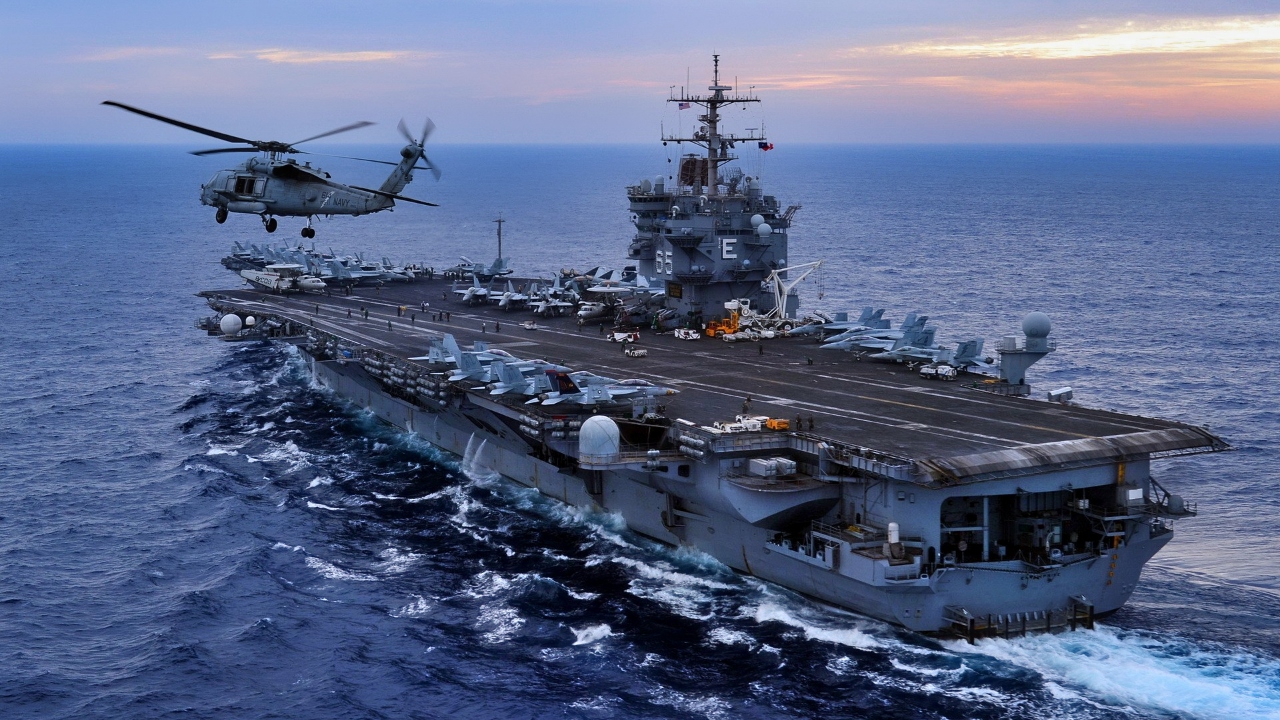
The USS Enterprise (CVN-65) was the world’s first nuclear-powered aircraft carrier. Launched in 1958, it served the U.S. Navy for 51 years. The Big E participated in the Cuban Missile Crisis blockade, the Vietnam War, the fall of Saigon evacuation, and post-9/11 operations. The Enterprise is the only aircraft carrier ever built with 8 nuclear reactors. All other nuclear carriers have only 2 reactors. The Navy decommissioned the Enterprise in 2017. The Navy will now pay $536.7 million to dismantle the Big E at NorthStar Maritime Dismantlement Services in Mobile, Alabama. The Enterprise cannot be made into a museum because its 8 reactors are too deeply integrated. It also cannot be used in a SINKEX because residual radiological waste remains aboard. 18 tons of steel will be saved for the new USS Enterprise (CVN-80), a Ford-class supercarrier set to enter service in the early 2030s.
Aircraft Carrier USS Enterprise (CVN-65) Had Eight (8) Nuclear Reactors and Won’t Be Easy to Retire
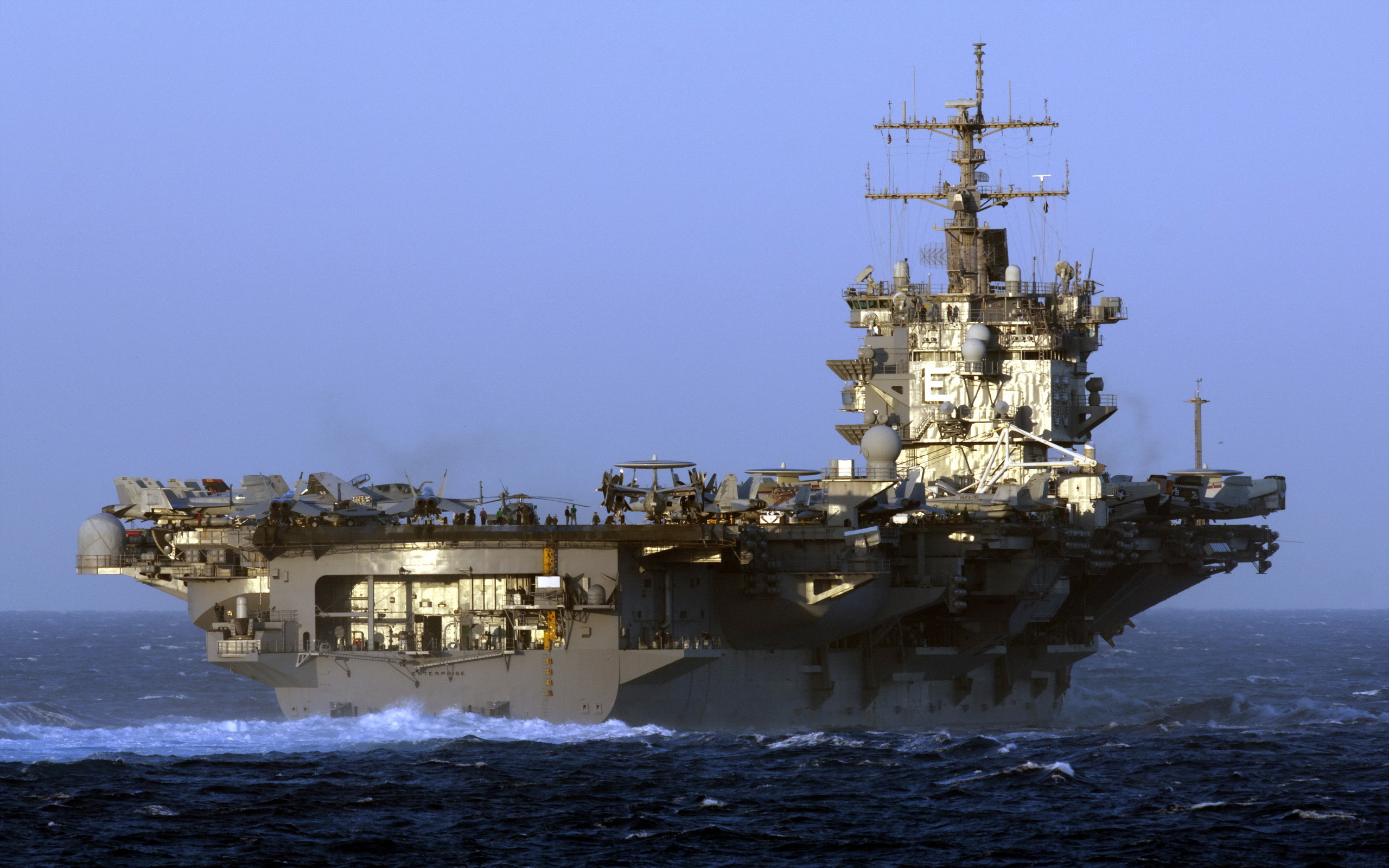
USS Enterprise. Image Credit: Creative Commons.
The USS Enterprise, CVN-65, was the first nuclear-powered aircraft carrier. Launched in 1958, it was the eighth vessel in the US Navy to carry the Enterprise name. Like her World War II predecessor, her crew nicknamed her “The Big E.”
The vessel had a long, distinguished career in modern U.S. Navy history, including the blockade of Cuba during the Cuban Missile Crisis; aerial combat and bombardment missions during the Vietnam War; the evacuation of the U.S. Embassy during the fall of Saigon; the bombing of Al Qaeda and Taliban installations after 9/11; and duty in the Persian Gulf in support of Operation Enduring Freedom.
She made her final deployment in 2012 and was deactivated later that year. She was decommissioned in 2017 after removing her eight reactors.
At the time of inactivation, the Big E was the third-oldest commissioned vessel in the United States Navy after the wooden-hulled USS Constitution and USS Pueblo (AGER-2).

U.S. Navy Aviation Boatswain’s Mate Aircraft Handling 2nd Class Kyle Darmanin, from Mooresville, North Carolina, assigned to air department’s flight deck crash and salvage division, signals an F/A-18E Super Hornet, attached to Strike Fighter Squadron (VFA) 27, on the flight deck of Nimitz-class aircraft carrier USS George Washington (CVN 73) while underway in the Timor Sea in support of Talisman Sabre 2025, July 14, 2025. Talisman Sabre is the largest bilateral military exercise between Australia and the United States advancing a free and open Indo-Pacific by strengthening relationships and interoperability among key allies and partners, while enhancing our collective capabilities to respond to a wide array of potential security concerns. (U.S. Navy photo by Mass Communication Specialist 2nd Class Tyler Crowley)
It Isn’t Cheap To Scrap A Nuclear Powered Supercarrier
The Enterprise has been sitting in the HII Shipyard in Newport News, VA, for over a decade while the Navy decided the best way to dismantle it. In late fall 2023, the Navy decided to relocate the Enterprise to a private shipyard, the NorthStar Maritime Dismantlement Services in Mobile, Alabama, for dismantling and scrapping.
According to Naval News, the dismantlement and disposal effort will be executed under a $536.7 million firm-fixed-price contract with NorthStar, a Vermont-based company, rather than the other two alternatives, which would last 15 years and cost up to $1.5 billion.
Waste Control Specialists LLC, of Andrews, Texas, will serve as the licensed facility for the disposal of low-level radiological and mixed hazardous waste.
The Navy also considered a no-action alternative in which it would store the Enterprise long-term.
The Navy established the first Nuclear-Powered Aircraft Carrier (CVN) Inactivation and Disposal Program Office (PMS 368) within Program Executive Office Aircraft Carriers (PEO CVN).
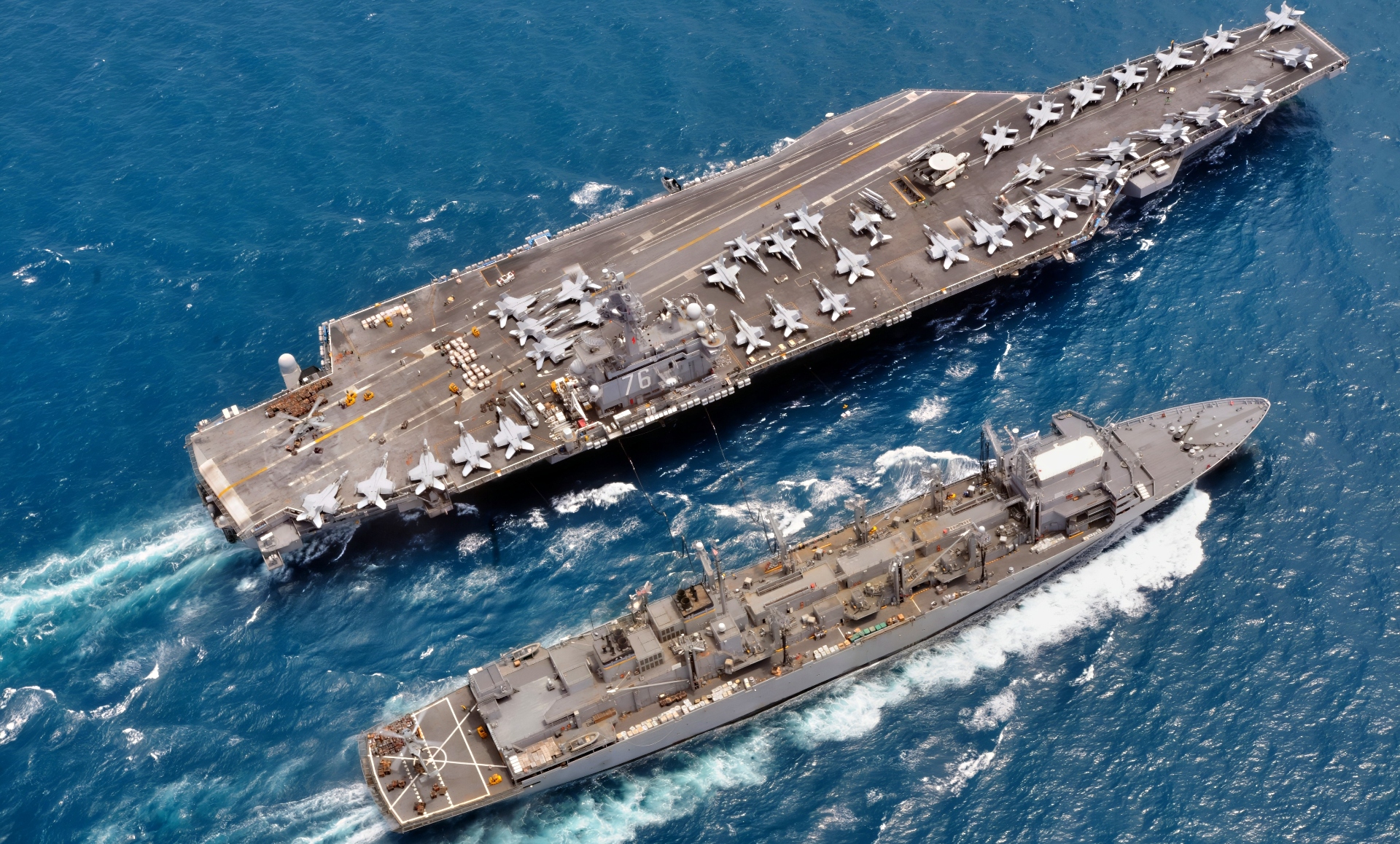
(August 15, 2008) With SH-60 helicopters moving pallets of supplies both USS Ronald Reagan (CVN 76) and USNS Bridge (T-AOE 10) work together during a replenishment at sea or RAS. With Reagan’s six galleys and approximately 4,100 Sailors it takes a lot of produce to feed that many folks and the Nimitz-class aircraft carrier got what it needed from USNS Bridge to do so.
The Ronald Reagan Carrier Strike Group is on a routine deployment in the 7th Fleet area of responsibility. Operating in the Western Pacific and Indian Ocean, the U.S. 7th Fleet is the largest of the forward-deployed U.S. fleets covering 52 million square miles, with approximately 50 ships, 120 aircraft and 20,000 Sailors and Marines assigned at any given time.
U.S. Navy photo by Senior Chief Mass Communication Specialist (SW/NAC) Spike Call
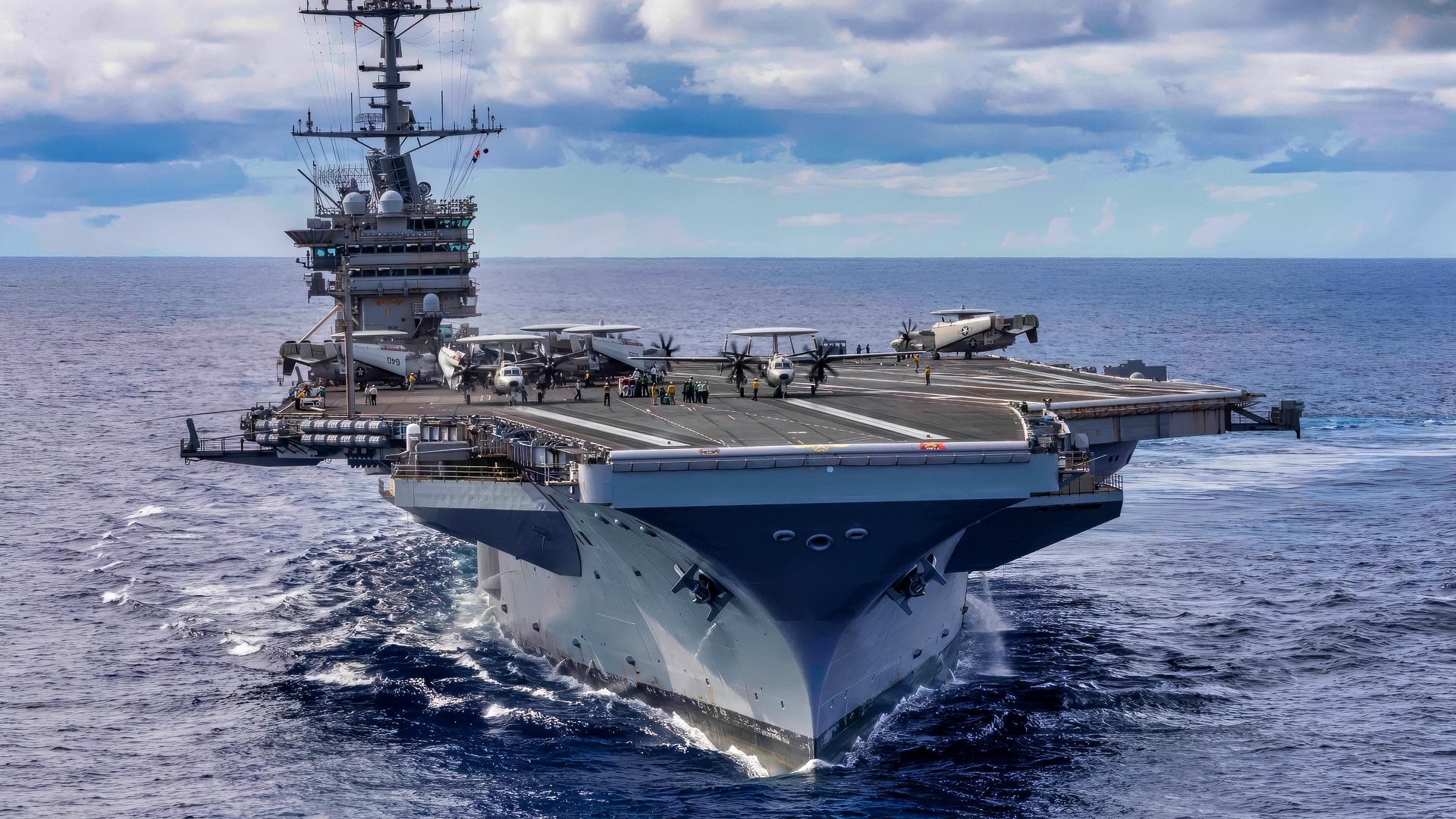
250923-N-FY193-1405 ATLANTIC OCEAN (Sept. 23, 2025) The Nimitz-class aircraft carrier USS Harry S. Truman (CVN 75) conducts carrier qualifications in the Atlantic Ocean. Truman is currently underway carrying out routine operations that support the Navy’s commitment to readiness, innovation, and future fleet lethality. (U.S. Navy photo by Mass Communication Specialist 2nd Class Mike Shen)
Lessons Learned From Enterprise Will Help In The Future
This group set up the multi-billion-dollar effort to dismantle and dispose of the former USS Enterprise (CVN 65) and the future inactivation, dismantlement, and disposal of USS Nimitz (CVN 68)-class aircraft carriers.
Lessons learned from Enterprise will inform potential disposal options for the 10 Nimitz-class ships in the aircraft carrier fleet as they retire.
SINKEX Was Not a Consideration For the Enterprise
The Navy has a way of disposing of old ships: it provides the vessels for target practice during active-duty training of ships and aircraft. The Navy calls these operations SINKEXs.
However, with the Enterprise and other nuclear-powered aircraft carriers, they can’t be used for a SINEX. Although the reactors and nuclear fuel rods have been removed, the Navy’s Puget Sound Naval Shipyard and Intermediate Maintenance Facility said in a statement that there are still “legacy radiological and hazardous wastes” on board.
CVNs Can’t Be Museums Due To Reactor Removal
Many former crewmen and citizens would love to see the carriers turned into museums for the public to enjoy for generations to come. But this can’t be done either. Andy Burns, a former surface warfare officer and flight officer, explained why this isn’t feasible.
He said that nuclear-powered ships are built around their reactors and the associated machinery. Removing the reactors without essentially taking the ship apart is impossible. For obvious reasons, the Navy doesn’t want to (and can’t, per federal environmental laws and regulations) simply leave them in place.
Nuclear subs are built in sections that are disassembled when decommissioned, and their reactors are removed, sealed, and shipped to a long-term, secure storage facility in eastern Washington.
“Enterprise will probably have to be similarly disassembled, and unlike the Nimitz class boats, she has eight reactors. That process will be so invasive that reassembling her afterward would be cost-prohibitive, if not practically impossible,” he added.
The original aircraft carrier, named the Enterprise (CV-6) from World War II fame, was hoped to be turned into a museum ship, but funding fell short, and she was eventually scrapped.
The Navy’s Experience With Removing Reactors, But Not Carriers’
The Navy has removed and disposed of 142 reactor compartment packages since 1986, so this isn’t completely new. However, they have never had to do so with a 1,100-foot-long supercarrier.
Because submarines are built in sections, the workers in the shipyard cut out the sections of a submarine that house the reactor. And, the subs have just a single reactor; the Enterprise has eight.
Follow-on carriers of the same class have only two reactors. Nuclear power plants inside an aircraft carrier were still in their infancy when construction began in 1958.
The Enterprise will still take a long time to disassemble, but the work done on her scrapping will make things easier for the other carriers, thanks to lessons learned.
And the Big E won’t be completely gone. The Navy is saving 18 tons of steel from the scrapping that will go into the third Gerald R. Ford-class nuclear-powered supercarrier, CVN-80, which will be named USS Enterprise.
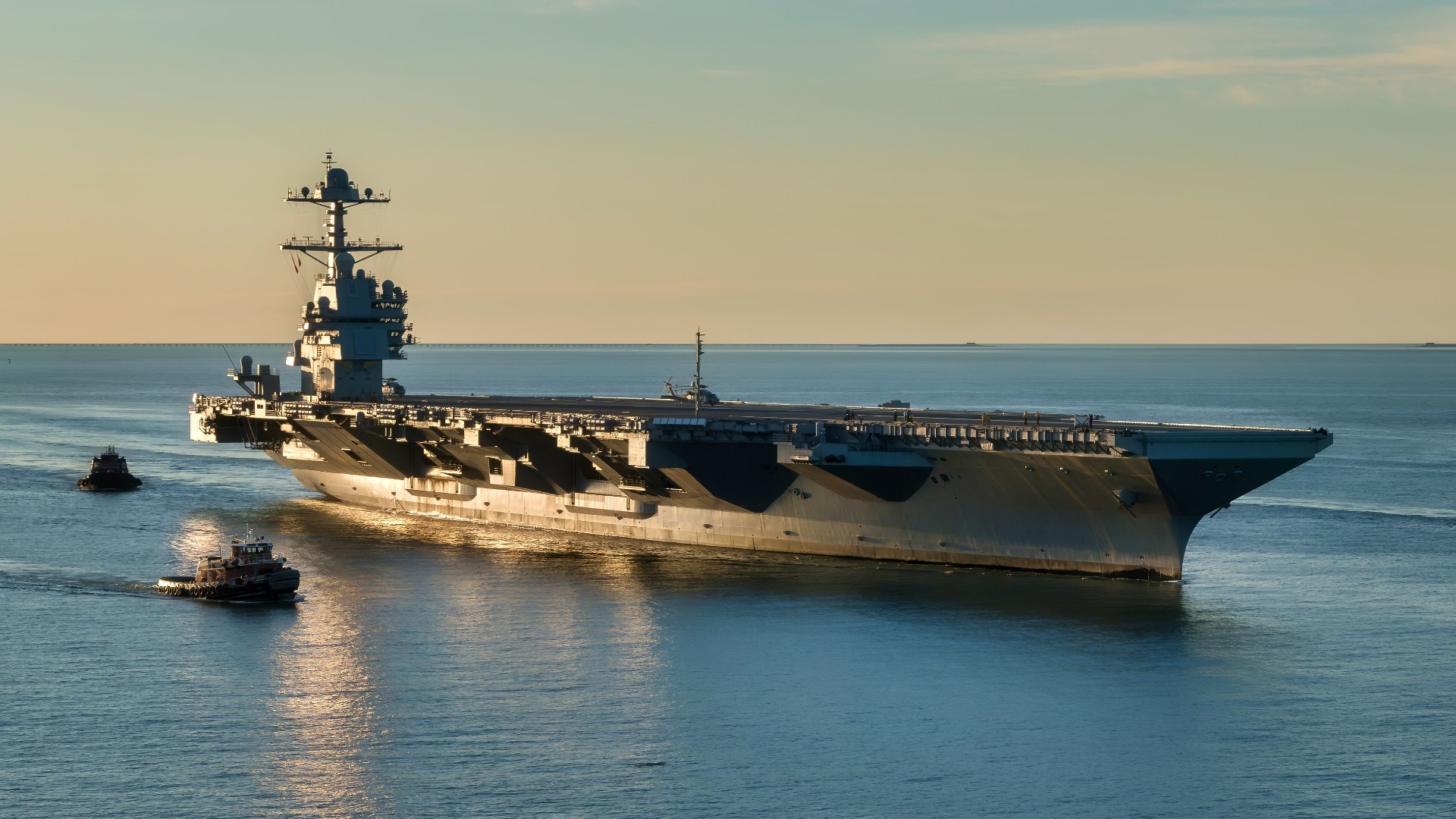
(April 14, 2017) The aircraft carrier Pre-Commissioning Unit (PCU) USS Gerald R. Ford (CVN 78) pulls into Naval Station Norfolk for the first time. The first-of-class ship – the first new U.S. aircraft carrier design in 40 years – spent several days conducting builder’s sea trails, a comprehensive test of many of the ship’s key systems and technologies. (U.S. Navy photo by Matt Hildreth courtesy of Huntington Ingalls Industries/Released)
The newest Enterprise is currently under construction at Huntington Ingalls Industries’ Newport News Shipbuilding in Newport News, Virginia. The Enterprise CVN-80 is set to enter service in the early 2030s.
About the Author: Steve Balestrieri
Steve Balestrieri is a National Security Columnist. He served as a US Army Special Forces NCO and Warrant Officer. In addition to writing on defense, he covers the NFL for PatsFans.com and is a member of the Pro Football Writers of America (PFWA). His work was regularly featured in many military publications.


