

As it considers the U.S. counterproposal, Iran has written a letter to America: Last week, Iran, speaking through Qatari mediators, offered a seven-day ceasefire that would reopen the Strait of Hormuz in exchange for the U.S. unfreezing access, dropping sanctions, and lifting its blockade.
President Donald Trump had publicly rejected the overture over the weekend. But now, a new report says that Iran claims it has received official feedback from the U.S. side through the mediation process.
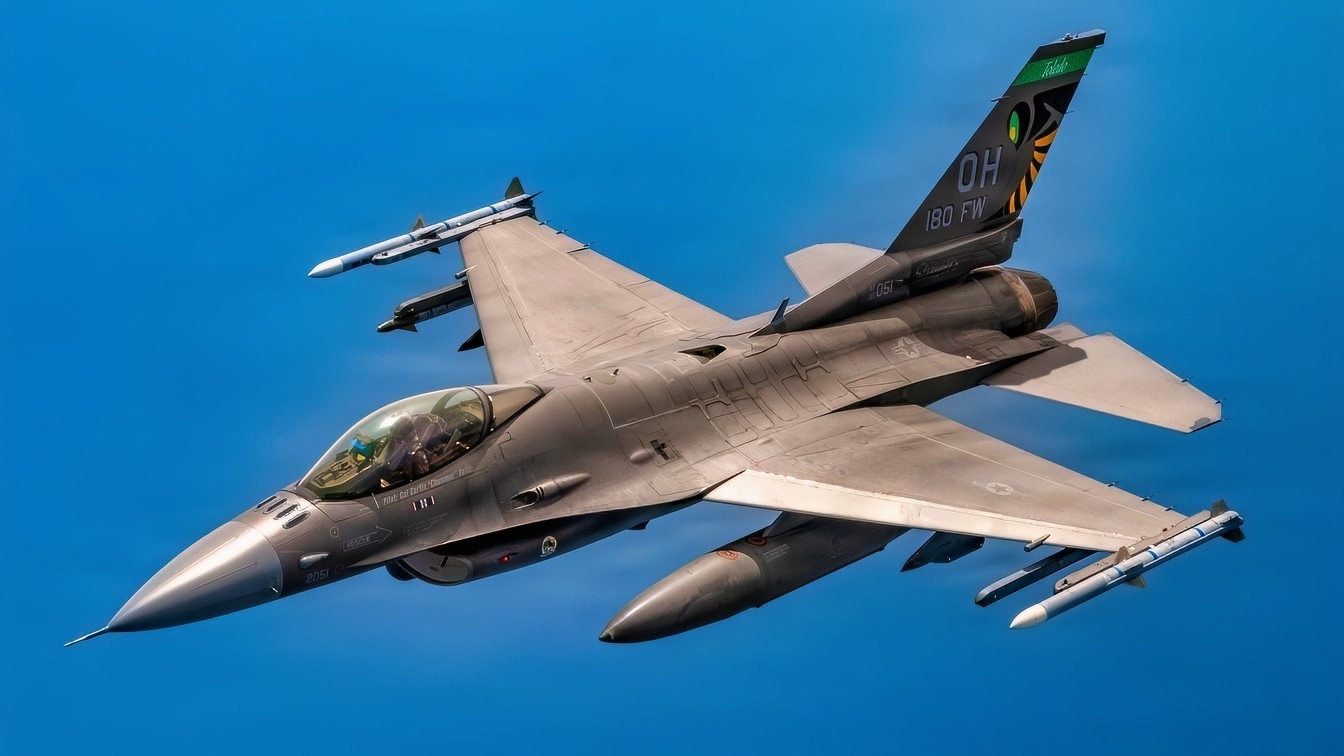
An F-16 Fighting Falcon, assigned to the 180th Fighter Wing, flies alongside a KC-135 Stratotanker with the 121st Air Refueling Wing over the skies of Canada, May 20, 2026. The F-16 Fighting Falcon can fly more than 500 miles, but the KC-135 can extend its radius beyond that and deliver airpower anywhere, anytime, globally. (U.S. Air National Guard photo by Airman 1st Class Taylor Warehime)
According to Reuters, Iranian Foreign Minister Abbas Araghchi received the U.S. response to Iran’s offer. One official briefed on the talks told Reuters that the main sticking point was “sequencing.”
The report added that after Trump publicly rejected the proposal, Qatar stepped in to mediate further, including a meeting with Araghchi and his delegation as they left the United States. The Iranian officials had made a rare visit to the U.S. to attend the U.N. General Assembly, where President Masoud Pezeshkian addressed the Assembly.
Where the Offer Currently Stands
Reuters reported that a document circulating with Iran’s current offer aims to bring the two sides to an “enhanced version” of the Memorandum of Understanding, a ceasefire agreement from June that collapsed the following month. The report said part of the offer includes “concrete steps” on Iran’s nuclear ambitions.
Trump, one report this week said, is asking for inspectors to be let into the country.
The IRGC’s View
However, another report Wednesday indicated that Iran’s Islamic Revolutionary Guard Corps is in a less-than-conciliatory mood. Per CBS News, the IRGC said this week that the only way for the war to end is for the United States to give up and leave the region altogether.
Indeed, the IRGC has released an “open letter,” addressed to the American people, presented as the words of Brigadier General Hossein Mohebbi, the IRGC’s spokesman. The lengthy letter addresses the “honorable people” of the United States and specifically names America’s scholars, students, and media members as its ideal recipients.
The first ask of the letter is for such people to distance themselves from Israel, the U.S. ally that the U.S. joined with to launch the war back in February.
America and Iran can live in peace, the letter says, if the U.S. agrees to “separate themselves from Israeli regime,” an ask that, the IRGC makes clear, would entail the “occupiers of Palestine” leaving the country.
The letter goes on to accuse the U.S. of launching an “unprovoked war,” referencing both the Minab elementary school attack and the strike that killed longtime Supreme Leader Ali Khamenei, both in February. It lists the death toll suffered by Iran before declaring that, despite this, the U.S. and Israel have suffered “a crushing defeat,” and Iran has won a victory. The letter states this despite the U.S. using a military budget hundreds of times Iran’s.
Why “Death to America”?
“Death to America” has been a frequent chant in Iran, going back to the revolution in 1979 and the subsequent hostage crisis that resulted from the seizure of the U.S. embassy.
Mohebbi’s letter states that the “Death to America” chant does not, contrary to popular belief, “express any ill will” to the American people themselves, but rather toward the nation’s “diabolical ruling elite” and to the “men enthroned at the White House,” who, in IRGC’s view, oppress Americans and Iranians alike.
In the letter, the IRGC accuses Trump and the United States of using ever-shifting rationalizations and objectives in the war, including regime change, nuclear disarmament, taking control of Kharg Island, and therefore Iran’s oil, among others.
The letter goes on to say that the U.S. in the war has “scored no wins,” while the war has also failed to divert attention from Israel’s war in Gaza.
The letter also includes a “brief list” of America’s wrongs in the region, going back 73 years to the 1953 coup, attributed to the CIA along with Britain, that overthrew Premier Mohammad Mosaddegh and installed the Shah. The list goes on to include the accusation that the U.S. backed insurgents from its embassy before the hostage crisis, as well as U.S. support for Iraq in the Iran/Iraq War in the 1980s and later sanctions, leading up to the wars of recent years.
About the Author: Stephen Silver
Stephen Silver is an award-winning journalist, essayist, and film critic, and contributor to the Philadelphia Inquirer, the Jewish Telegraphic Agency, Broad Street Review, and Splice Today. The co-founder of the Philadelphia Film Critics Circle, Stephen lives in suburban Philadelphia with his wife and two sons. For over a decade, Stephen has authored thousands of articles that focus on politics, national security, technology, and the economy. Follow him on X (formerly Twitter) at @StephenSilver, and subscribe to his Substack newsletter.


