


Seven months after the war in the Middle East began, Iran still claims control over the Strait of Hormuz.
Over the past several months, both sides have made reopening the vital waterway a top priority, as the Strait’s closure continues to devastate the global shipping market.
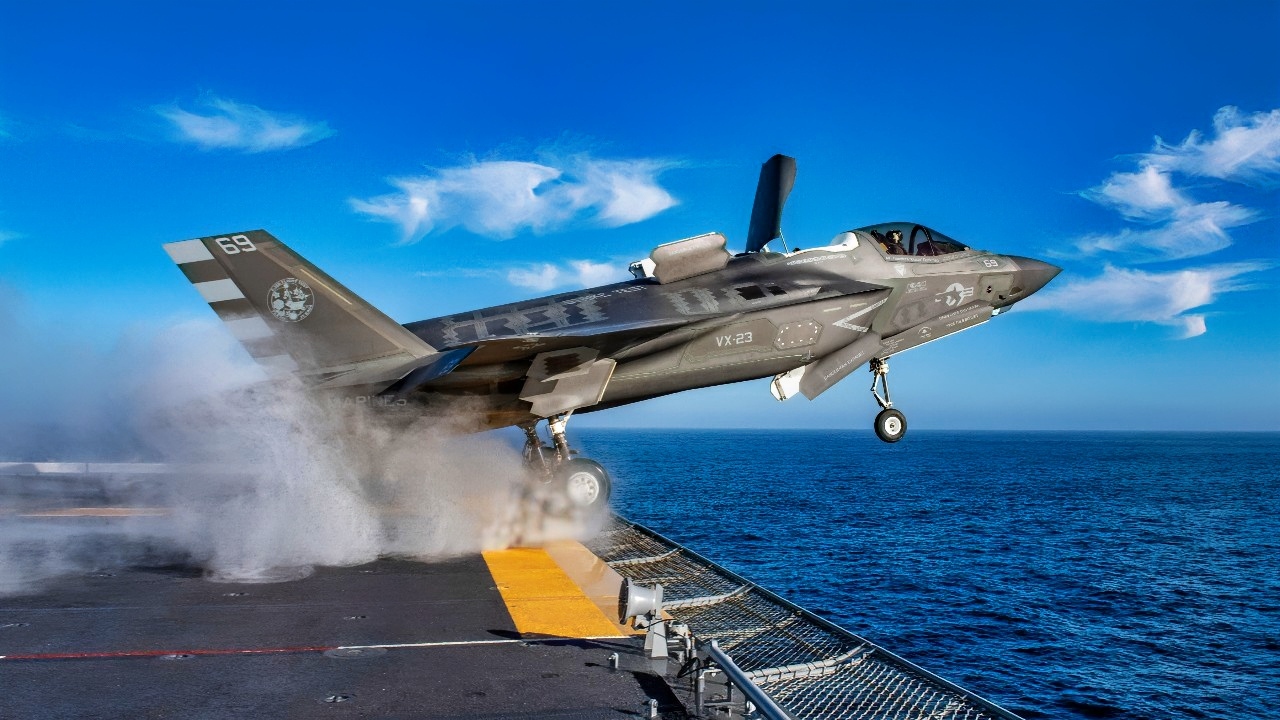
A joint team consisting of F-35 Patuxent River Integrated Test Force flight test members, U.S. Sailors and Marines, and the crew of the Japan Maritime Self-Defense Force Izumo-class multi-functional destroyer JS Kaga (DDH-184) are executing developmental sea trials in the eastern Pacific Ocean to gather the necessary data to certify F-35B Lightning II short takeoff and vertical landing aircraft operations. While aboard the MSDF’s largest ship, the Pax ITF flight test team has been gathering compatibility data for analysis in order to make recommendations for future F-35B operational envelopes, further enhancing the Japanese navy’s capabilities. The results of the testing will contribute to improved interoperability between Japan and the United States, strengthening the deterrence and response capabilities of the Japan-U.S. alliance and contributing to peace and stability in the Indo-Pacific region. Japan is an F-35 Joint Program Office foreign military sales customer planning to purchase 42 F-35Bs. The F-35 Joint Program Office continues to develop, produce, and sustain the F-35 Air System to fulfill its mandate to deliver a capable, available, and affordable air system with fifth-generation capabilities.
Unfortunately, after months of on-and-off fighting and diplomatic talks, the US and Iran are still stuck in a limbo state, unable to reach a compromise that would reopen Hormuz.
Recently, Iran’s Foreign Ministry submitted a proposal to the US outlining conditions that must be met before the Strait can reopen.
According to the country’s Foreign Minister, Hormuz will remain closed until the US meets Iran’s conditions.
What are Iran’s Demands?
Both sides remain in a diplomatic headlock over the Strait.
According to Iranian news media, Washington made “some proposals through a mediator” after rejecting Tehran’s previous diplomatic proposal. “The era of wasting time and dictating unilateral demands is over,” said Mohammad Bagher Ghalibaf, adding that Iran’s position remains “clear and definite.” He continued that “the Strait of Hormuz will not open until our seven conditions based on the Islamabad memorandum are met,” and that Iran is “present on the military battlefield and will confront them with new surprises.”
The seven conditions Ghaibaf refers to are part of a proposal Tehran submitted to the US in late September.
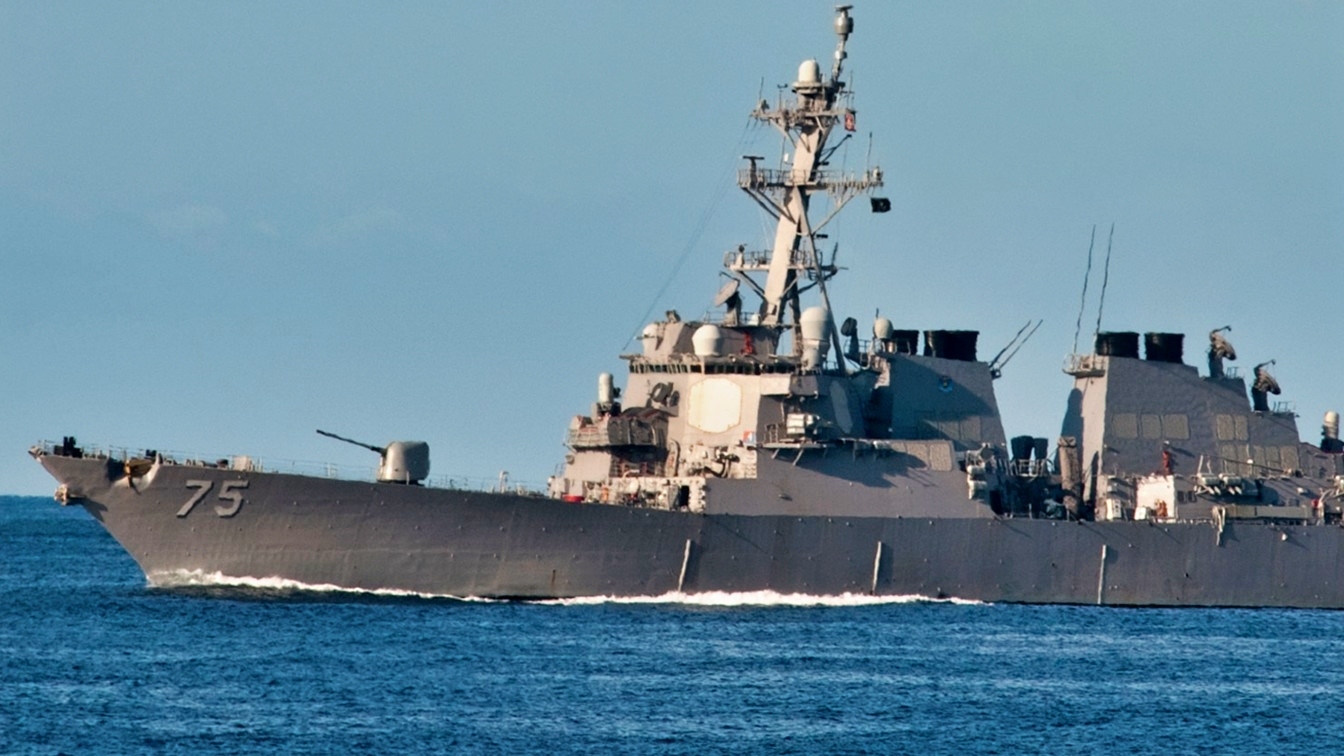
Arleigh Burke Class guided-missile destroyer USS Donald Cook is underway for a scheduled deployment in the U.S. Navy’s 5th and 6th fleet areas of responsibility. Donald Cook departed Naval Station Norfolk Monday, September 19th. (U.S. Navy photo by Petty Officer 3rd Class Scott Pittman)
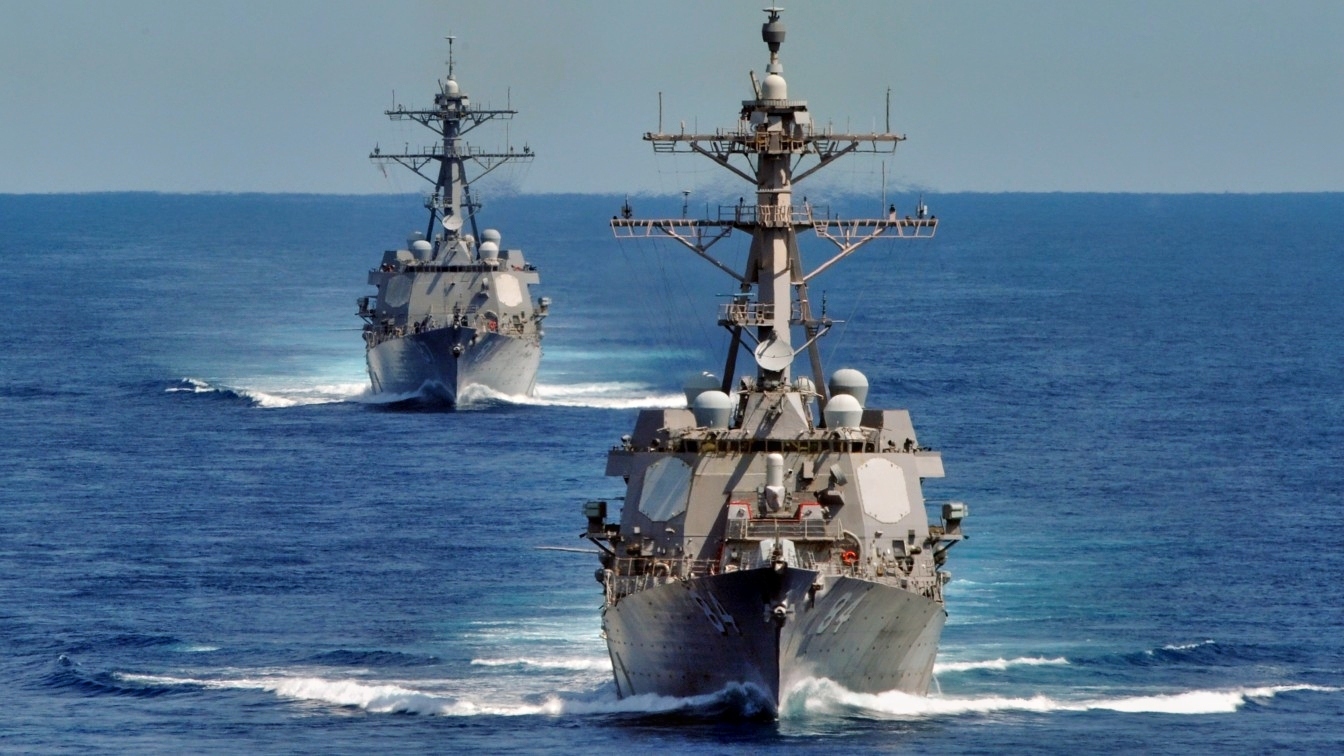
The Arleigh Burke-class guided-missile destroyers USS Bulkeley, right, and USS Mason participate in a strait transit exercise. Bulkeley and Mason are part of the Enterprise Carrier Strike Group and are conducting work-ups and flight operations in preparation for an upcoming deployment. (U.S. Navy photo by Seaman Jared M. King)
The conditions for ending the war and reopening Hormuz are as follows: An end to the war on all fronts, including, in particular, Lebanon.
The release of its frozen funds that run into billions of US dollars. An end to the naval blockade on Iranian ports.
An end to US interference in Iran’s internal affairs.
An end to US cooperation with “the opponents of our revolution.” Finally, an end to all US attacks on Iranian territory. The proposal was reportedly sent to the US via Qatari intermediaries and currently remains the basis for any negotiations.
Trump Focused on Iran’s Nuclear Program
Needless to say, if Trump accepted Iran’s demands as they stand, it would represent a clear strategic defeat for the US, even if Tehran were to compromise on its nuclear program.
Trump rejected Iran’s demands earlier, stating that the proposal only offered to open “some aspects” of the Strait of Hormuz. “It’s just not good enough, nearly,” Trump said during an interview with TIME magazine. On September 22, at the United Nations General Assembly (UNGA), the President threatened to take further action against Tehran. “I have a big decision to make,” Trump said. He asked whether a deal would allow Iran to “rebuild and create a far greater country,” or “do I annihilate the Islamic Republic and do it quickly?”
Although the Strait of Hormuz is still a priority for the US, Tehran’s nuclear program is the most pressing issue for the Trump administration.
Iran’s Foreign Minister, Abbas Araghchi, met with Qatari mediators in late September to discuss some US proposals after the UNGA meeting.
According to one US official, the talks showed some positive signs, although both sides still have a long way to go before they can agree on a comprehensive resolution. “Iran has indicated they are flexible on the nuclear issues, but the sides remain apart on the timing of the commitments and who takes which steps first,” the official said.
They continued, stating that they were skeptical about the prospects of a peaceful resolution to the conflict in the short term.
The US maintains that Tehran first violated the Memorandum of Understanding (MoU), originally signed in June, while Iran claims Washington first violated the ceasefire.
What is Actually Happening in Hormuz?
The actual situation in Hormuz is difficult to determine. Just a week ago, reports indicated that traffic through the Strait was surging back to prewar levels.
According to data from the maritime tracker agency Keplr, traffic increased dramatically in September, with roughly 10 million barrels of crude oil passing per day in the month’s latter half.
Analysts attributed the rise to Iran’s weakening hold on the vital waterway.
In contrast, others linked it to more tankers using approved Iranian routes or passing under protection from US warships.
Regardless, shipping through the Strait notably increased throughout September.
At the same time, Iran appears to be trying to reassert its control over the Strait.
From September 30 to today, the UK Maritime Trade Operations (UKMTO) Center reported ten separate attacks on shipping vessels in Hormuz.
Likewise, Brent crude prices have remained high, even in September, when oil flow was supposedly nearing prewar levels.
Oil prices have hovered at around $97 to $100 per barrel over the past month. Meanwhile, other reports suggest that global oil supplies are running thin as the war in the Middle East continues to halt trade and target oil infrastructure.
Overall, the fog of war over the Strait of Hormuz is thick, and it remains unclear who controls the valuable waterway.
However, two things are certain: Iran is still attacking tankers, and oil prices are still high.
About the Author: Isaac Seitz
Isaac Seitz, a Defense Columnist, graduated from Patrick Henry College’s Strategic Intelligence and National Security program. He has also studied Russian at Middlebury Language Schools and has worked as an intelligence Analyst in the private sector.


