
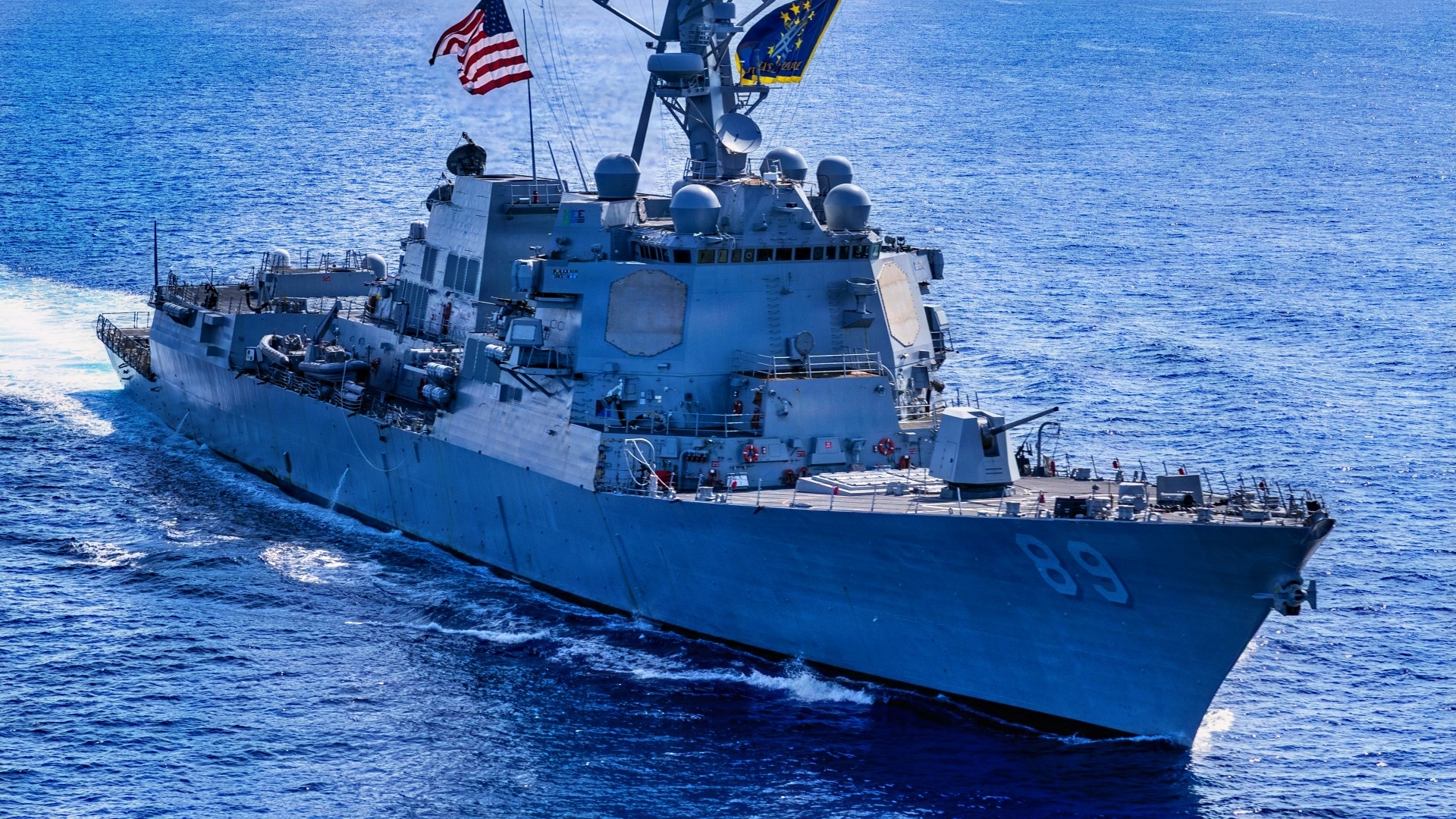
U.S. Fighter Jet Strikes Cargo Ship As Iran Blockade Intensifies – The U.S. military struck a commercial cargo vessel in the Gulf of Oman on Saturday, October 10. Washington is stepping up efforts to prevent ships from entering or leaving Iranian ports and to show Tehran that, as its economy worsens, it won’t be able to force oil out of its ports, through the Strait of Hormuz, and into international waters.
The operation comes as new evidence suggests that vessels continue to attempt to evade the American blockade, and as Iran intensifies its own attacks on commercial shipping through the Strait of Hormuz.
The latest development comes only days after President Donald Trump announced that he would not launch new military strikes against Iran before the November 3 midterm elections.
The latest operation, which saw an American fighter jet disable a Panama-flagged cargo vessel, suggests that even as Washington rules out a return to large-scale strikes, it will continue its existing maritime traffic enforcement campaign to Iran’s disadvantage.
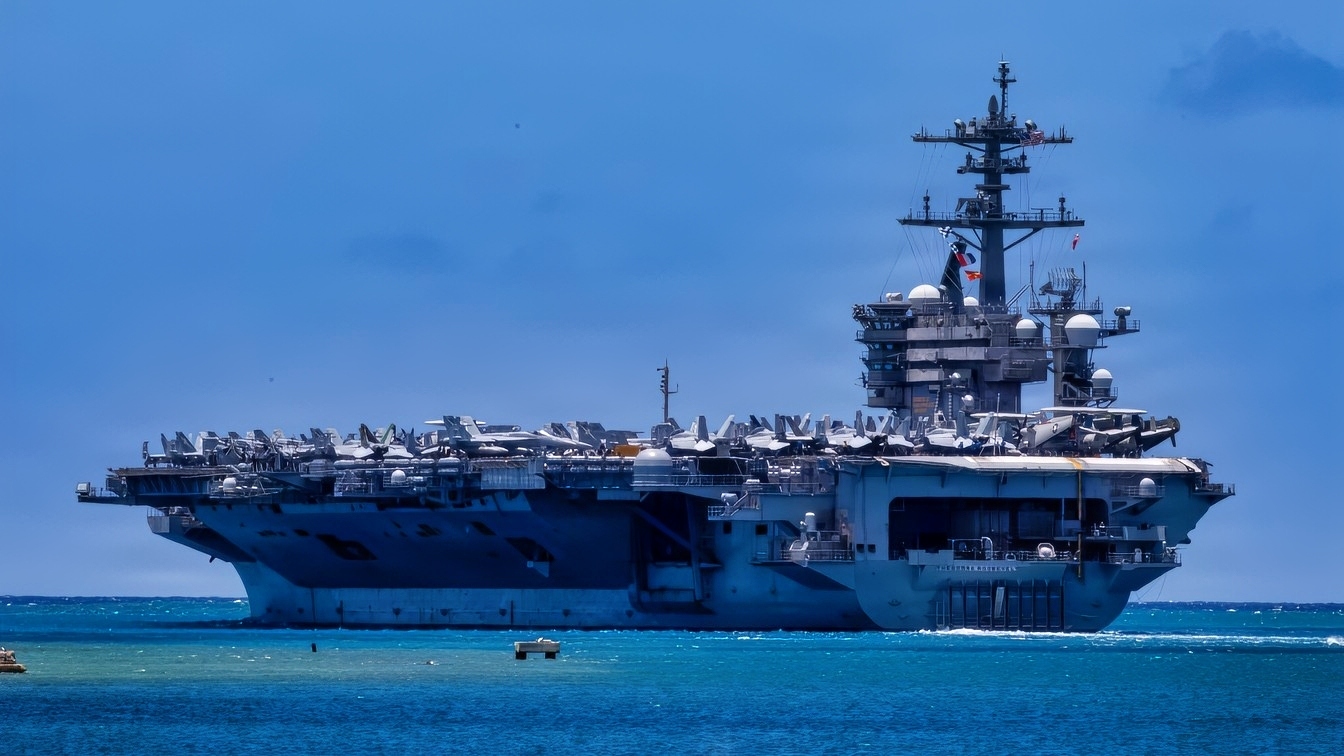
U.S. Navy Nimitz-class aircraft carrier USS Theodore Roosevelt (CVN 71) departs Joint Base Pearl Harbor-Hickam, Hawaii, to begin the sea phase of Exercise Rim of the Pacific 2026, July 7, 2026. Thirty nations, over 30 surface ships, five submarines, 15 national land forces, more than 206 aircraft and 30,000 personnel are participating in RIMPAC in and around the Hawaiian Islands, June 24 to July 31. The world’s largest international maritime exercise, RIMPAC provides a unique training opportunity while fostering and sustaining cooperative relationships among participants critical to ensuring the safety of sea lanes and security on the world’s oceans. RIMPAC 2026 is the 30th exercise in the series that began in 1971. (U.S. Navy photo by Mass Communication Specialist 1st Class Kyle Carlstrom)
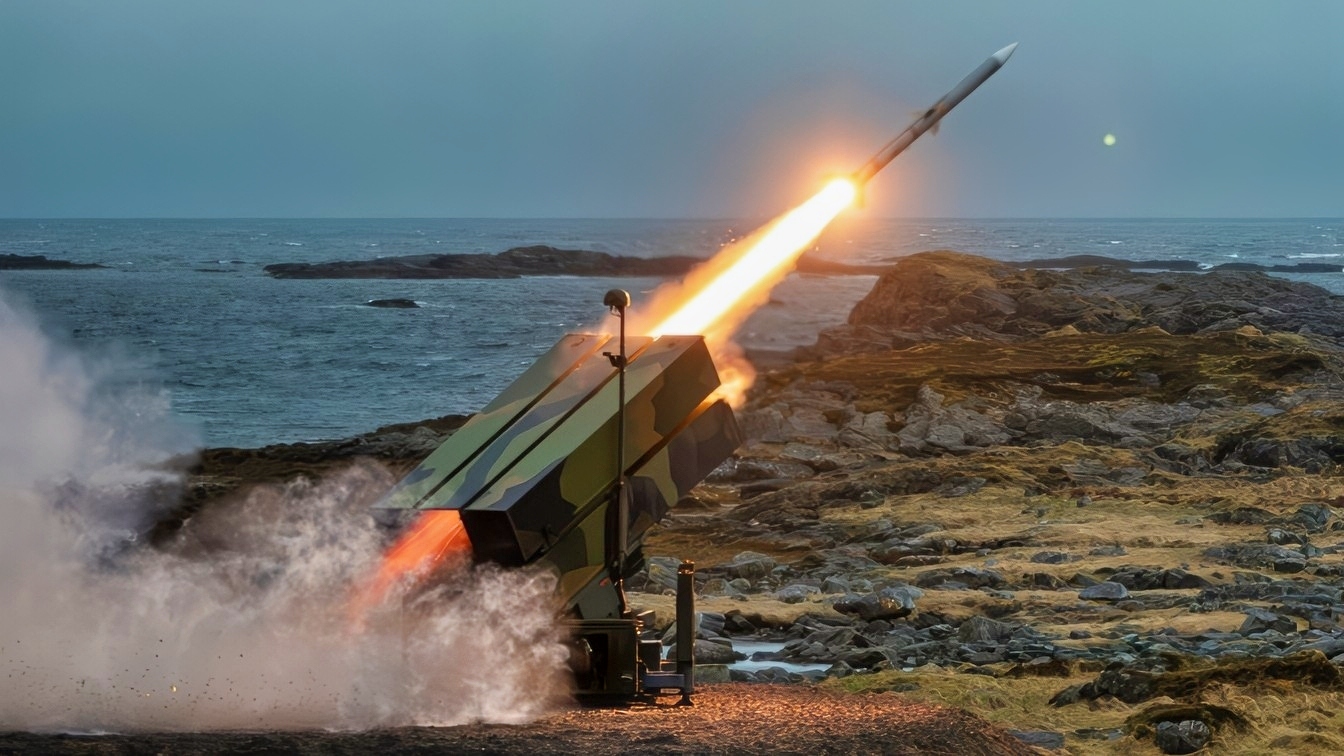
The Norwegian Army fires a National Advanced Surface-to-Air Missile System (NASAMS) from the Andøya Space Range in Andøya, Norway against a simulated threat in support of exercise Formidable Shield 2023, May 10, 2023. Formidable Shield is a biennial integrated air and missile defense (IAMD) exercise involving a series of live-fire events against subsonic, supersonic, and ballistic targets, incorporating multiple Allied ships, aircraft, and ground forces working across battlespaces to deliver effects. (Courtesy photo by Royal Norwegian Navy)
Meanwhile, new incidents reported on Sunday, October 11, suggest the conflict over commercial shipping is escalating, with Iran stepping up efforts to stop ships passing through the Strait of Hormuz, even when under U.S. naval protection and traveling through U.S.-approved sea lanes.
U.S. Fighter Jet Disables Vessel
U.S. Central Command confirmed on Saturday that American forces struck the M/V Ocean Molica, which is also known as the Arika Sun, after its crew ignored repeated instructions to stop.
The vessel had departed an Iranian port and was attempting to travel through the Gulf of Oman when American forces intervened.
According to CENTCOM, a fighter jet fired a precision-guided weapon at the ship’s stern, destroying its ability to propel itself through the water.
The military said no crew members were injured.
It is the fourth time that American forces have disabled a commercial ship since the blockade resumed on July 14.
The U.S. military also released new footage that appears to show the strike.
The incident is part of a campaign to ensure that Iran cannot sell oil and generate revenue to support its strikes against commercial ships and energy infrastructure in neighboring countries, but it still attracted criticism from Democrats, including Senator Chris Murphy, who questioned the purpose of spending billions of dollars on military operations against commercial vessels.
“What is this all for? Why are taxpayers paying billions to hit commericals [sic] ships? Apparently the goal is to gain leverage in order to convince the Iranians to let us pay them billions to return everything to the way it all was before the war. What a disaster,” Murphy asked on X.
More Than 130 Ships Turned Around
The strike may have been one of only a handful of actual military confrontations required to enforce the blockade, but many more ships have been turned around.
According to a CENTCOM statement on October 10, U.S. forces have turned around 135 ships since July 14. The statement also confirmed that four vessels were disabled after refusing to comply with orders, and 10 tankers were destroyed after being found to be linked to the Islamic Revolutionary Guard Corps’ oil smuggling network.
The figures also suggest that attempted violations are continuing despite the clear risk of military action, indicating that Tehran is eager to get oil out onto the international market even at great cost.
On October 5, CENTCOM announced that American forces had redirected their 130th commercial vessel, meaning that five additional ships have been turned around in just the last several days.
“The U.S. military remains intensely focused on this mission,” said Adm. Brad Cooper, CENTCOM commander in the October 5 statement. “We will swiftly act against any vessels trying to run the blockade. Our forces are highly trained, professional, and lethal.”
“CENTCOM forces resumed the blockade against ships attempting to enter or depart Iranian ports July 14 at the Commander in Chief’s direction. In addition to redirecting 130 vessels, American forces have disabled three ships that refused to comply,” the statement also reads. “Over the past 12 weeks, CENTCOM has destroyed 13 commercial vessels that were violating the blockade or part of the Islamic Revolutionary Guard Corps’ multibillion-dollar shadow network.”
The administration’s original blockade began on April 13 but was suspended on June 18. During that first operation, American forces redirected more than 140 ships and disabled nine vessels that refused to comply.
CENTCOM Issues Fresh Warning
Following Saturday’s strike, CENTCOM issued a new warning to commercial vessels operating near the Strait of Hormuz, urging crews to monitor maritime notices and contact American naval forces on radio channel 16 before attempting to pass through the strait.
About the Author: Jack Buckby
Jack Buckby is a British researcher and analyst specializing in defense and national security, based in New York. His work focuses on military capability, procurement, and strategic competition, and he produces and edits analysis for policy and defense audiences. He brings extensive editorial experience, with a career output spanning over 1,000 articles at National Security Journal, and has previously authored books and papers on extremism and deradicalization.


