


President Donald Trump’s approval rating has fallen to 31 percent, according to a Reuters/Ipsos poll released on October 19, 2026.
This marks the lowest approval rating Reuters/Ipsos has recorded during either of Trump’s two presidential terms and is one point below his previous low, recorded two weeks earlier.
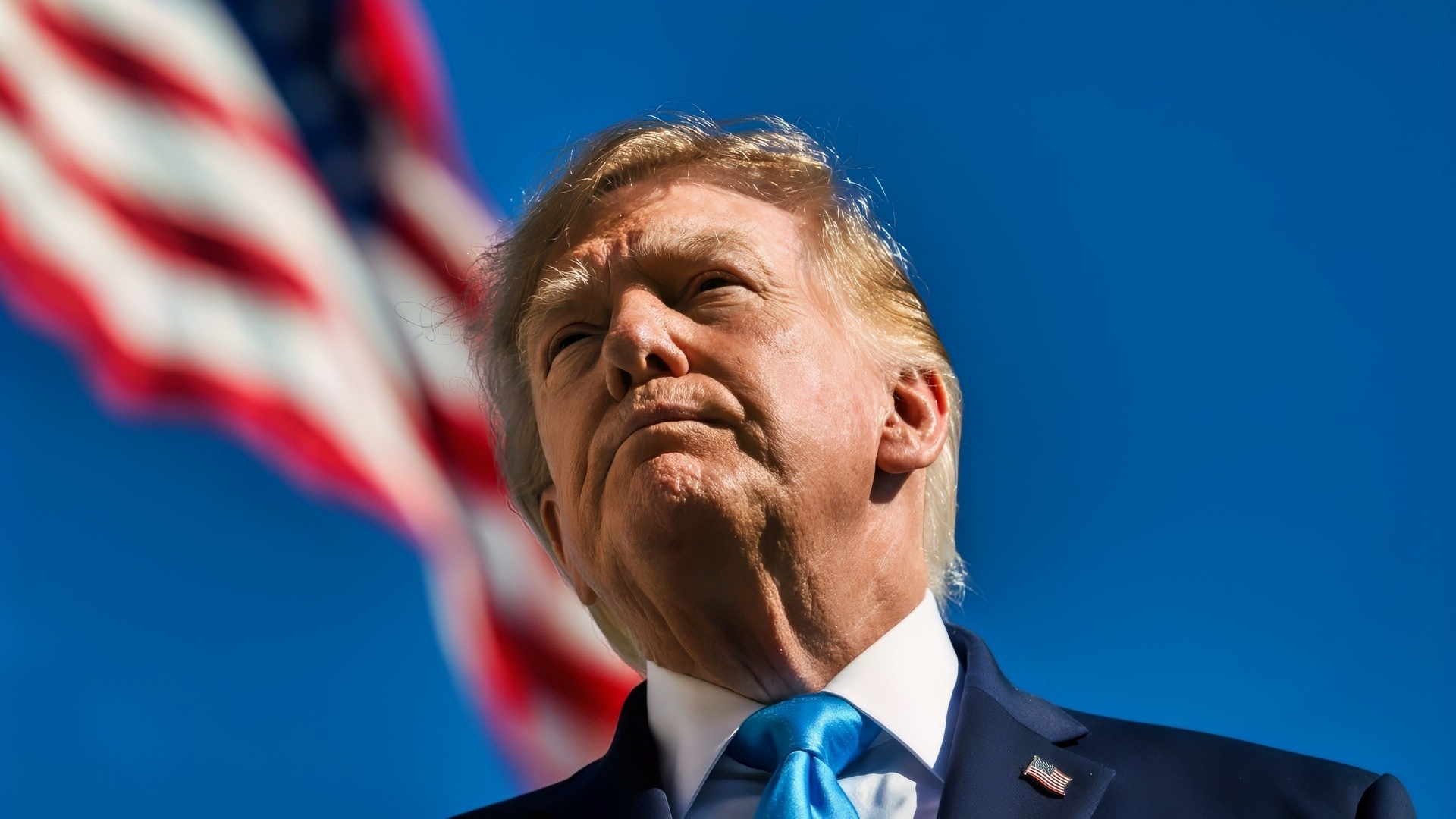
President Donald J. Trump boards Marine One on the South Lawn of the White House, Monday, October 5, 2026, en route Joint Base Andrews for a trip to Nebraska. (Official White House Photo by Daniel Torok)

President Donald J. Trump disembarks Marine One at Joint Base Andrews, Maryland on Saturday, October 10, 2026, and boards Air Force One en route Campbell Army Airfield in Fort Campbell, Kentucky. (Official White House Photo by Molly Riley)
The results come as early voting begins in several states ahead of the November 3 midterm elections. Republicans now face the difficult task of retaining control of Congress, despite an unpopular president.
One might think he’s doing everything he can to save his presidency and the GOP.
Yet he seems to have handed the world a giant clue he won’t, as he just doubles down on the same policies and rhetoric.
Survey Says…
The four-day Reuters/Ipsos survey questioned 1,679 American adults with a reported margin of error of plus or minus two percentage points.
According to the poll, Trump’s job approval stood at just 31 percent, down from 32 percent two weeks earlier.
The decline places Trump at his lowest level in the pollster’s tracking across both administrations. Importantly, the one-point decline is smaller than the poll’s margin of error.
Meanwhile, on the generic congressional ballot, Democrats led Republicans by 12 percentage points, the largest Democratic advantage Reuters/Ipsos has recorded during the current election cycle.
Generic ballot polling asks voters which party they would prefer to control Congress (rather than evaluating individual candidates).
The results suggest Republicans face a difficult national environment, though local conditions ultimately determine the outcomes.
Consistent with Other Polls
The Reuters/Ipsos findings follow two other unfavorable polls released October 18.
In the first, Washington Post/ABC News/Ipsos found Trump’s approval at 33 percent, the lowest recorded by that polling series during his current presidency and a four-point decline from July 2026 (and an eight-point decline from October 2025).
For the first time in a decade, the poll found that Democrats were more trusted than Republicans to handle the economy.
The second poll, from NBC News/SurveyMonkey, put Trump’s approval at 34 percent, a low for his second term.
Meanwhile, 51 percent strongly disapproved of his job performance and approval among Latino respondents stood at just 31 percent.
Seventy-one percent believed the country was not on the right track. On the generic congressional ballot, Democrats held a ten-point advantage.
Polling Averages
Individual surveys can produce unusually high or low readings due to sampling variation and methodology. But polling averages provide a broader measure of public sentiment.
As of October 19, RealClearPolitics found a 38.9 percent approval and 59.3 percent disapproval.
The New York Times found a 37 percent approval and 61 percent disapproval.
The Silver Bulletin found 37.5 percent approval and 59.9 percent disapproval. These averages are higher than the Reuters/Ipsos 31 percent figure.
Still, every poll shows Trump with a large net-negative approval rating.
RealClearPolitics puts his net approval at approximately -20.4 percentage points; the New York Times average at -24 points; and the Silver Bulletin at -22.4 points.
The consistent negative ratings across multiple aggregators reinforce the conclusion that Trump is not well liked at the moment.
Midterm Worries
Midterm elections are scheduled for November 3, 2026, just two weeks after the polling releases.
Republicans currently hold narrow congressional majorities, but historically the president’s party often loses seats in midterms, and low presidential approval can create additional difficulties for candidates associated with the incumbent administration.
Democrats’ 10- to 12-point lead on the generic ballot suggests a favorable environment for the opposition.
However, national polling does not determine control of Congress, as individual races are based on local candidates and issues.
Root of the Dissatisfaction
The Washington Post/ABC/Ipsos poll found Democrats more trusted than Republicans on the economy.
This is potentially significant because economic stewardship has historically been a major Republican campaign argument.
Relatedly, the NBC/SurveyMonkey poll found that 71 percent of Americans believe the country is headed in the wrong direction.
These findings may affect voter enthusiasm and turnout, but ultimately, it’s all speculation.
Pundits can poll and take guesses all they like.
Polls are just snapshots.
The voters will make their true choices on election day.
About the Author: Harrison Kass
Harrison Kass is a writer and attorney focused on national security, technology, and political culture. His work has appeared in Tablet, City Journal, The Hill, The Spectator, and The Cipher Brief. He holds a JD from the University of Oregon and a master’s in Global & Joint Program Studies from NYU—more at harrisonkass.com.


