
The Trump administration is reportedly preparing for a protracted war with Iran, after initially indicating in February that the strikes would amount to a short-term conflict.
The admission came from U.S. Ambassador to the United Nations Mike Waltz, who acknowledged in a Friday interview that Washington could be stuck in a confrontation with Tehran well into 2027, with no agreement on Iran’s nuclear program or a return to normal shipping through the Strait of Hormuz.
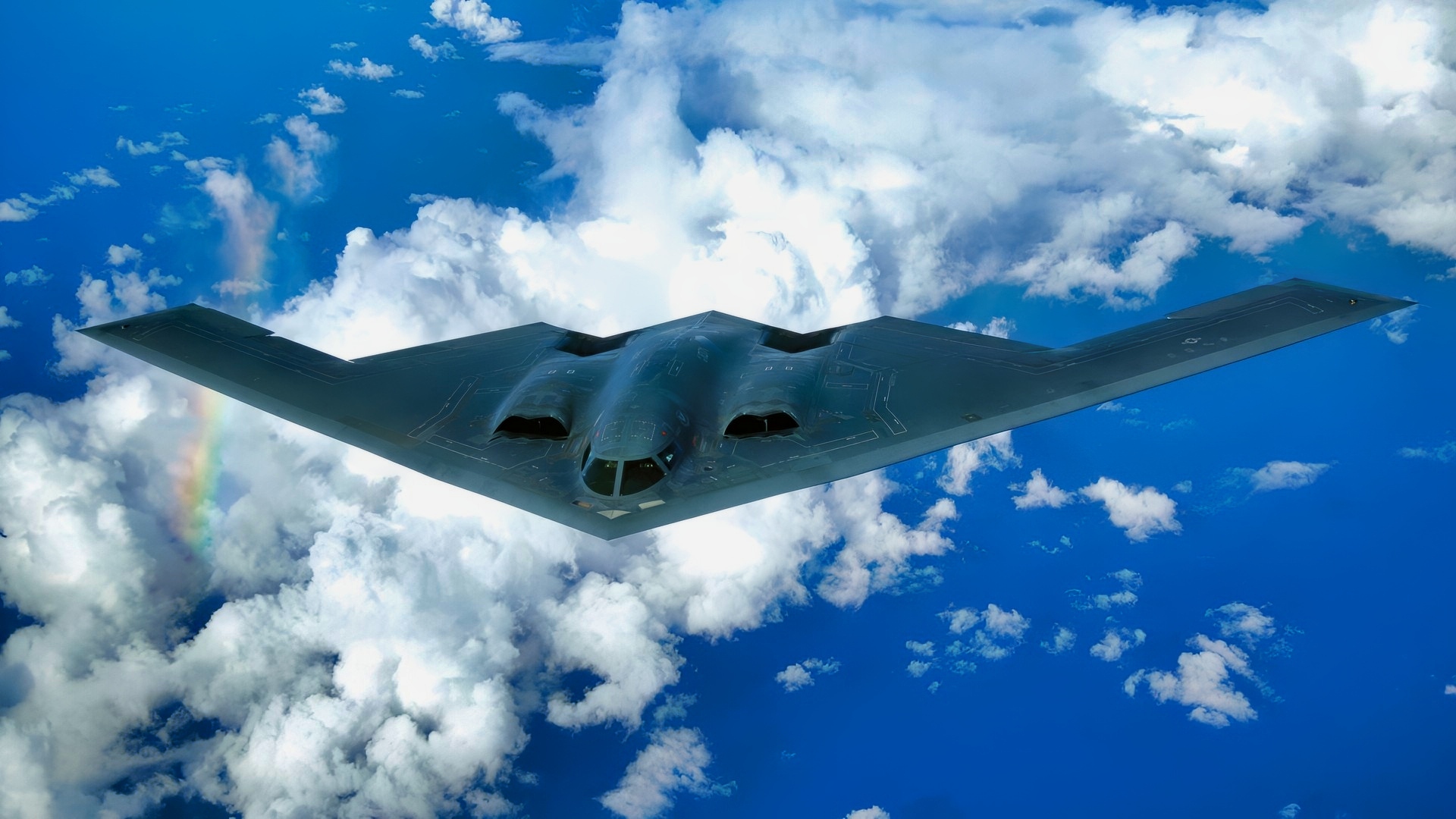
A B-2 Spirit soars after a refueling mission over the Pacific Ocean on Tuesday, May 30, 2006. The B-2, from the 509th Bomb Wing at Whiteman Air Force Base, Mo., is part of a continuous bomber presence in the Asia-Pacific region. (U.S. Air Force photo/Staff Sgt. Bennie J. Davis III)
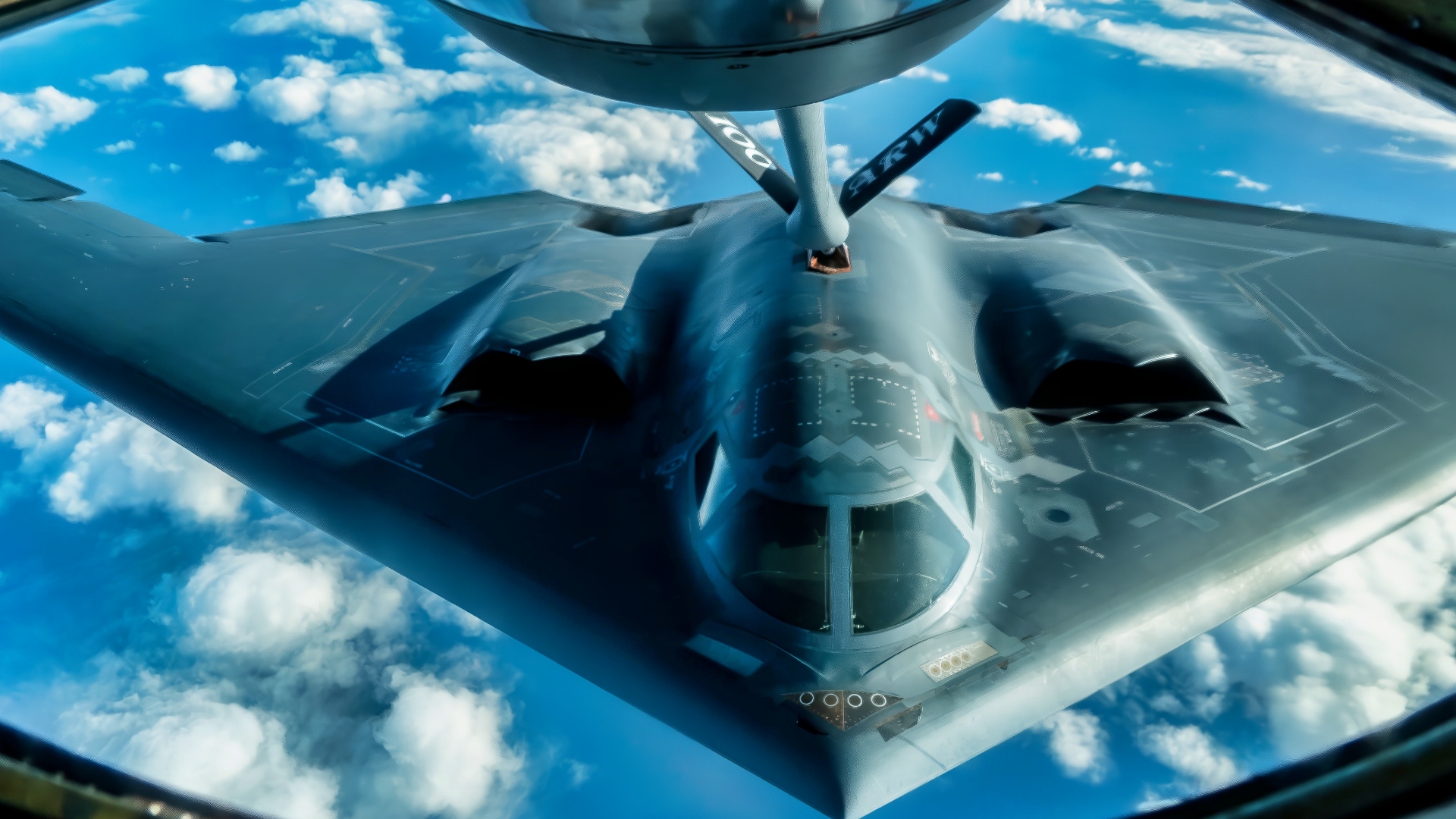
A U.S. Air Force B-2 Spirit assigned to the 509th Bomb Wing from Whiteman Air Force Base, Missouri, receives fuel from a 100th Air Refueling Wing KC-135 Stratotanker during Global Thunder 20, Oct. 28, 2019. Global Thunder is an annual command and control exercise that provides training opportunities for all of U.S. Strategic Command’s mission areas, tests joint and field training operations, and has a specific focus on nuclear readiness. (U.S. Air Force photo by Staff Sgt. Trevor T. McBride)
Waltz also confirmed that the Trump administration has no plans to end its blockade of Iranian ports, and that it will remain in place indefinitely if necessary, even as the economic consequences of the war continue to undermine the president’s popularity and his ability to enact the agenda he promised during the 2024 presidential campaign.
The comments were published by the Financial Times and come as reports suggest the president is considering another major round of airstrikes against Iranian targets after the election.
Meanwhile, figures from the Iranian government published on Friday suggest that the U.S. naval blockade is causing significant harm to the nation’s economy.
Waltz Admits the War Could Drag On
Speaking to the Financial Times, Waltz acknowledged that the United States could be locked in a conflict with Iran until this time next year, with no diplomatic breakthrough or return to normal oil shipping through the Strait of Hormuz — suggesting the American and global economies could face even more turmoil.
The ambassador also insisted that Washington has the military and economic resources to keep up the pressure campaign against Tehran for as long as it takes to ensure the regime gives up its nuclear ambitions.
“I’m not going to put out hypotheticals. One would hope that they’ll come to the table in a meaningful way before that,” Waltz said, adding that “the president and the US Navy can maintain this blockade for the foreseeable future.” He also said that the White House is still “tightening” its economic sanctions campaign against Tehran.
Waltz also said that Washington would not consider its operation a success or its objectives achieved until Iran’s stockpile of highly enriched nuclear material had been eliminated and that Tehran accepts a “meaningful agreement” on its domestic uranium enrichment processes.
The comments could be interpreted as a watering down of President Trump’s insistence that Iran end its nuclear program.
However, a meaningful reduction in enrichment would mean no enrichment to weapons-grade levels.
The comments come after almost eight months of conflict that have severely disrupted the global energy market, with no indication that the two governments are close to resolving their disagreements.
Plans for More Strikes
Reports this week also describe how the Trump administration appears to be weighing another military offensive against Iran that could begin soon after the November 3 midterm elections.
According to a report by The Atlantic published on October 22, Treasury Secretary Scott Bessent believes that the Iranian economy is collapsing under the weight of American sanctions and the U.S. naval blockade.
Israeli Prime Minister Benjamin Netanyahu has also reportedly urged President Trump to join Israeli forces in launching another major round of attacks intended to topple the regime.
The New York Times reported on October 21 that American and Israeli military officials have developed detailed plans for a new campaign, this time short and intensive, that could last approximately three days.
The operation is understood to involve targeting Iranian nuclear facilities and energy infrastructure, as well as the IRGC’s stockpiles of missiles and drones.
U.S. officials told the outlet that American and Israeli aircraft have been conducting joint exercises over Iraq as a rehearsal for the potential strikes.
Defense Secretary Pete Hegseth also met with Netanyahu in Israel this week to discuss the plans.
ABC News also reported on October 22 that two Israeli sources told the outlet that Israel and the United States are preparing joint strikes. However, the White House insisted that no offensive would begin before November 3.
Multiple major sources have since confirmed that American forces are being positioned for a potential attack in early November, although the preparations could also reasonably be interpreted as an effort to pressure Tehran into making concessions through diplomatic channels.
U.S. Withdraws Personnel
Washington is also taking steps to protect American personnel if Iran escalates the conflict into a wider regional war.
On Wednesday, October 21, the State Department ordered all non-essential diplomatic personnel and their families to leave Saudi Arabia.
The order came after attacks by Iran-backed Houthi forces.
The decision also came as reports indicated that American military personnel were being repositioned at bases throughout the Middle East — similar to what was seen before the first wave of strikes in February.
About the Author: Jack Buckby
Jack Buckby is a British researcher and analyst specializing in defense and national security, based in New York. His work focuses on military capability, procurement, and strategic competition, and he produces and edits analysis for policy and defense audiences. He brings extensive editorial experience, with a career output spanning over 1,000 articles at National Security Journal, and has previously authored books and papers on extremism and deradicalization.


