

Polls in recent weeks consistently show Democrats are likely to win next week’s midterm elections. The biggest question may be how big the margin of victory will be in the House of Representatives.
An NPR/PBS/Marist poll released Tuesday looked at where the midterm elections stand a week before the vote.

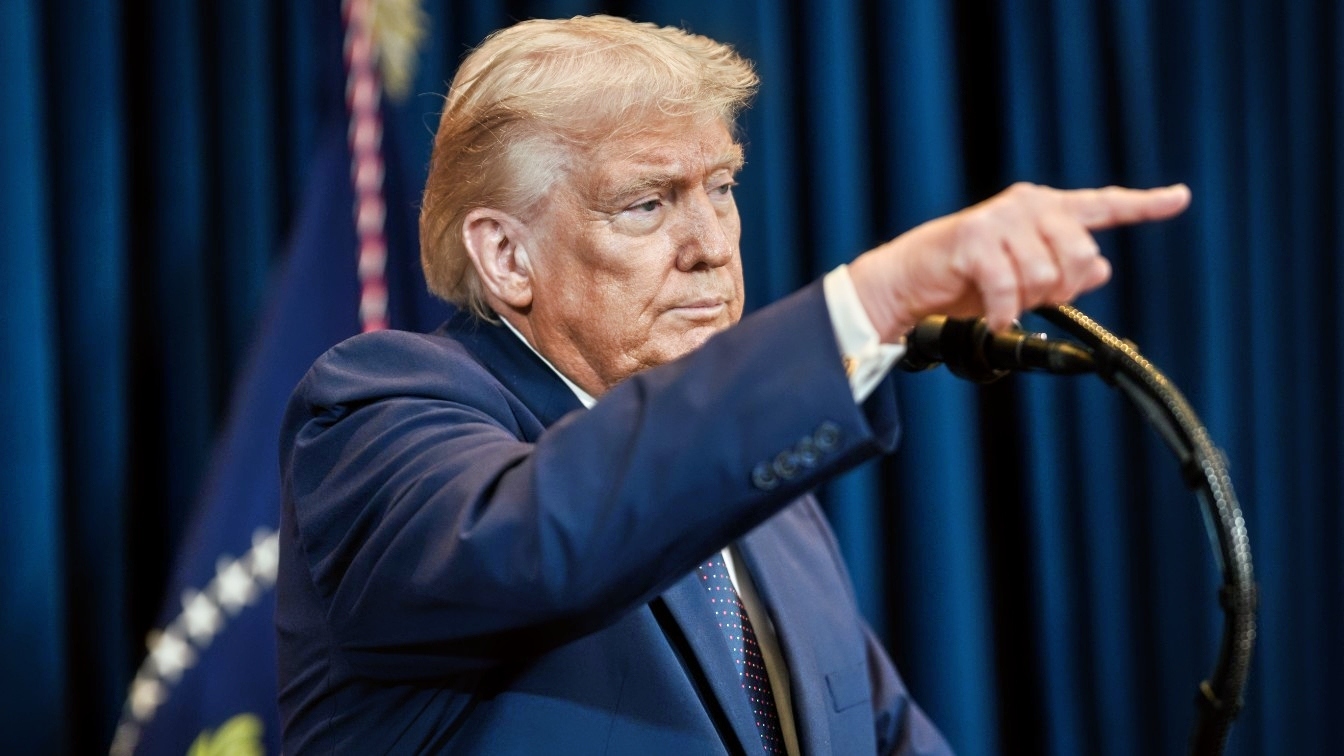
President Donald Trump attends the National Prayer Breakfast, Thursday, February 6, 2025, at the U.S. Capitol in Washington, D.C. (Official White House Photo by Molly Riley.)

President Donald J. Trump attends Superbowl LIX between the Philadelphia Eagles and the Kansas City Chiefs, Sunday, February 9, 2025, at Caesars Superdome in New Orleans, Louisiana. (Official White House Photo by Daniel Torok)
Marist found that Democrats lead on the generic ballot for the House, with 52 percent saying they plan to vote for the Democrat in their district for Congress and 44 percent for the Republican.
When only registered voters are included, the lead widens to ten points, with 8 percent for the Republican.
Among likely independent voters, 52 percent plan to vote for the Democrat, compared with 39 percent who back the Republican.
Also, 51 percent of respondents expect the Democrat to win in their district, compared with 46 percent who expect the Republican to.
The biggest reason is their opinion of the president.
The Last Trump Election
President Donald Trump isn’t on the ballot next Tuesday, but the election still seems very much about him.
Trump, after all, has told his base to vote as if he were on the ballot and has centered the party’s messaging on himself this fall.
It doesn’t seem to be working.
“With negative views toward President Donald Trump permeating the electoral landscape, a plurality of likely voters say their congressional vote is one in opposition to the president,” the Marist poll says.
Marist found that 40 percent of likely voters approve of Trump.
By comparison, 59 percent disapprove, and likely voters are more than twice as likely to strongly disapprove of the president’s performance as to approve strongly.
Among registered voters, 38 percent approve, and 61 percent disapprove.
That likely voter number is actually a better result for Trump than the RealClearPolitics average, which finds that 38 percent approve of Trump’s performance and 60.1 percent disapprove.
The NPR/Marist poll is part of that average, in which every poll listed shows Trump’s approval rating underwater.
In the NPR/Marist survey, 44 percent of likely voters said their vote is “mainly a vote against President Trump,” while 21 percent said it is mainly for the president. Just over a third of respondents, 35 percent, say the president is “not influencing their vote very much.”
On enthusiasm, 84 percent of likely voters told Marist they are either “enthusiastic or very enthusiastic” about voting in the midterms.
By party, 91 percent of Democrats say they’re at some level of enthusiastic, while 86 percent of Republicans say they are.
Can You Trust the Election Results?
When it comes to election integrity, something the president has emphasized often, the Marist poll found that 77 percent of voters are “confident or very confident that their state or local government will conduct fair and accurate elections,” with Democrats far more likely to consider elections safe than is the case with Republicans or independents.
Also, 81 percent of likely voters say that if their favored candidate is “said to have lost after the votes are counted, that candidate should definitely or probably accept the election results.”
Is the Wave Limited?
NPR, in its analysis of the poll, found that while Democrats remain highly favored next Tuesday, “there are indications of why a potential wave could be limited.”
The poll found that the cost of living remains “top of mind overall” for voters heading to the polls in this year’s midterms.
NPR found that, in part because of this year’s Congressional gerrymandering and past polling misses, “there is a notable degree of nervousness among Democrats.”
Another issue for the Democrats is that while they’re winning the enthusiasm battle, “several of their key pillar groups are not very enthusiastic to vote,” NPR said. These include younger voters, college-educated women, and non-white voters, all of whom disapprove of Trump’s performance.
The poll did find, however, that people who voted for Kamala Harris in 2024 are 15 points more enthusiastic about voting in this year’s midterm elections than those who voted for Trump in 2024.
About the Author: Stephen Silver
Stephen Silver is an award-winning journalist, essayist, and film critic, and contributor to the Philadelphia Inquirer, the Jewish Telegraphic Agency, Broad Street Review, and Splice Today. The co-founder of the Philadelphia Film Critics Circle, Stephen lives in suburban Philadelphia with his wife and two sons. For over a decade, Stephen has written thousands of articles on politics, national security, technology, and the economy. Follow him on X (formerly Twitter) at @StephenSilver, and subscribe to his Substack newsletter.


