

Recently, President Donald Trump has expressed confidence in ongoing negotiations with Iran, saying that he saw “positive momentum” toward ending the conflict in the Middle East once and for all.
A few weeks ago, it was speculated that the U.S. would resume strikes against Iran after the midterm elections. Now that the elections have passed, Trump has taken a different tone toward the war, pursuing diplomatic negotiations instead.

Puget Sound Naval Shipyard, Wash. (Aug. 14, 2003) — Illustration of USS Ohio (SSGN 726) which is undergoing a conversion from a Ballistic Missile Submarine (SSBN) to a Guided Missile Submarine (SSGN) designation. Ohio has been out of service since Oct. 29, 2002 for conversion to SSGN at Puget Sound Naval Shipyard. Four Ohio-class strategic missile submarines, USS Ohio (SSBN 726), USS Michigan (SSBN 727) USS Florida (SSBN 728), and USS Georgia (SSBN 729) have been selected for transformation into a new platform, designated SSGN. The SSGNs will have the capability to support and launch up to 154 Tomahawk missiles, a significant increase in capacity compared to other platforms. The 22 missile tubes also will provide the capability to carry other payloads, such as unmanned underwater vehicles (UUVs), unmanned aerial vehicles (UAVs) and Special Forces equipment. This new platform will also have the capability to carry and support more than 66 Navy SEALs (Sea, Air and Land) and insert them clandestinely into potential conflict areas. U.S. Navy illustration. (RELEASED)
Despite the President’s push toward diplomacy, Iran is not yet ready to end the war on America’s terms.
Tehran has listed seven conditions that the U.S. must meet before negotiations on its nuclear program or the Strait of Hormuz can begin.
What Does Iran Want?
According to Mohsen Rezaei, Iran’s security chief, Tehran is waiting to hear back from the U.S. regarding its seven demands.
A full list of the demands has not yet been made public.
However, based on the Islamabad Memorandum of Understanding and previous Iranian statements, the seven demands are likely as follows:
-A complete end to hostilities on all fronts, including Lebanon.
-Lifting the U.S. naval blockade.
-Lifting sanctions against Iran.
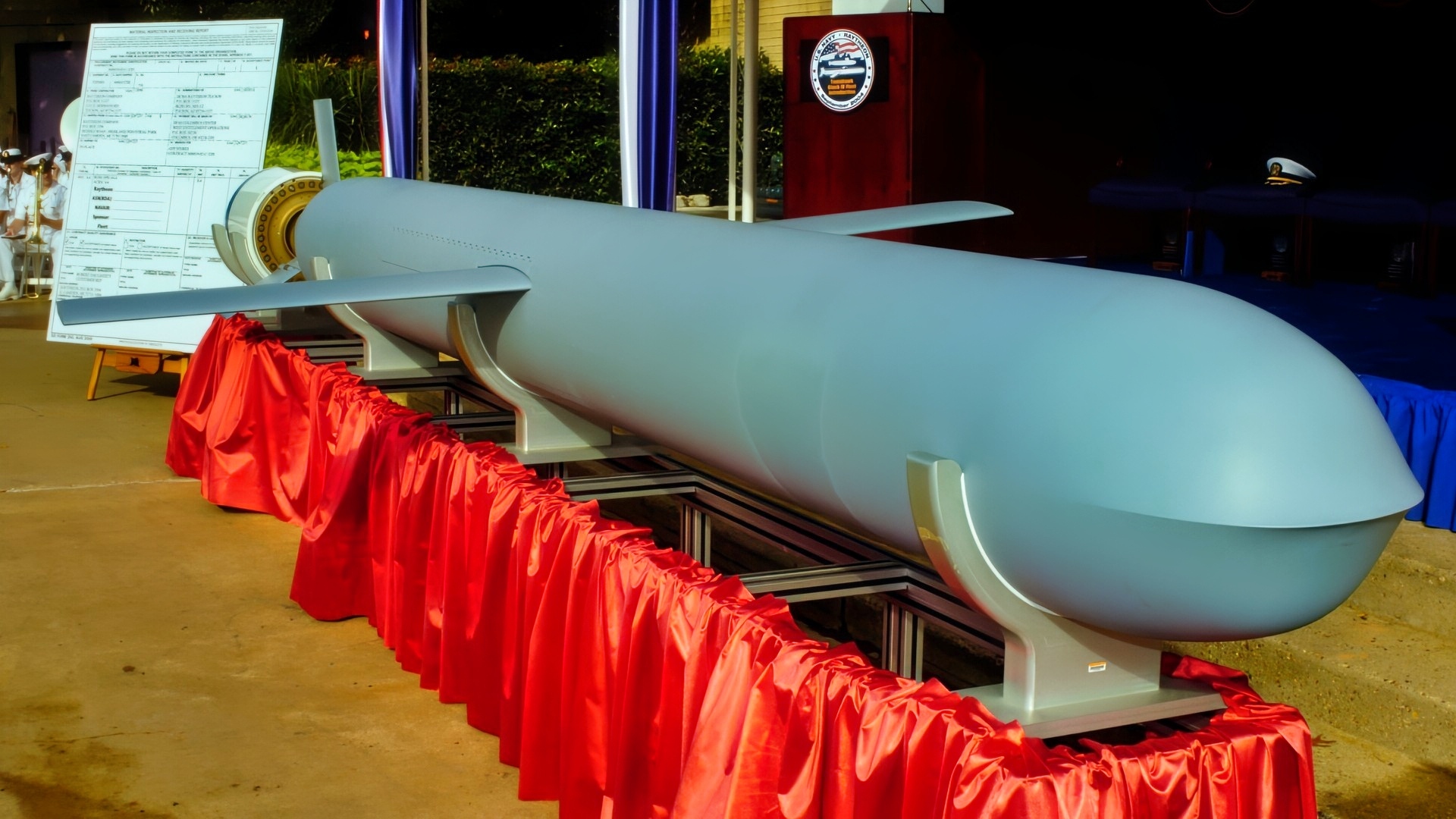
Tomahawk Block IV Missile. Image Credit: Creative Commons.
-Release of frozen assets.
-Reduction of the U.S. military presence in the region.
-Compensation for war-related damages.
-Guarantees that no future attacks will be made against Iranian territory.
This list is purely speculative but is consistent with previous demands from Tehran.
While some points may not be on the official list, it has been confirmed that the Iranian demands include lifting the U.S. blockade and a cessation of hostilities on all fronts, including Lebanon.
Iran’s Foreign Minister, Abbas Araghchi, said the Strait of Hormuz could reopen within two days if the U.S. accepts Tehran’s demands. “The conflict with Iran will not be resolved through military means, nor by intensifying sanctions,” the Foreign Minister told Iranian State News. “The only solution is to adopt a language of respect, engage in diplomacy, and address Iran’s demands and conditions—which were outlined in the two-day proposal and remain on the table.” Rezaei denied any claims that talks were underway between Washington and Tehran.
Speaking with Lebanon’s state news outlet, Al Mayadeen TV, on Tuesday, the security chief said that the claim “about continuing negotiations or holding a meeting in Qatar is a pure lie.” He said Washington was making such claims only to ease economic pressure and bring oil prices down.
Looking For an Exit Route
Oil prices have indeed fallen in November, likely because of Trump’s comments.
In an interview with CNN, the president said that renewed strikes against Iran are “highly unlikely” due to Iran’s degraded military capabilities and high inflation. “They’re a failing nation,” Trump said. “It just came out, you saw this year, 301% inflation. Highly unlikely it will be necessary. I would, if necessary, but we hit them really hard. I hit them so hard. You don’t know how hard I hit them.”
The President also said that the U.S. was seeing positive momentum on the diplomatic front.
On Monday, Trump met with Qatar’s Prime Minister, Sheik Mohammed bin Abdulrahman bin Jassim Al Thani, at the White House and said afterward that the war in Iran was “effectively over.”
As a result, oil prices have fallen as Trump tries to distance the U.S. from the war.
Brent crude, which remained above $100 per barrel throughout October, has fallen to $94 per barrel, the lowest level in almost ten weeks.
However, prices are slowly rising again as news reports indicate that several tankers have been struck around the Strait of Hormuz.
According to the UK Maritime Trade Operations (UKMTO) center, five tankers have been struck since November 8.
Preliminary reports suggest that several tankers struck naval mines while sailing outside the IRGC’s approved navigational route.
Other maritime monitoring agencies reported at least 37 separate attacks against ships in or around the Strait in November so far.
What Now?
For the time being, the U.S. remains certain that further escalatory strikes against Iran are unnecessary. Speaking on the sidelines of the G7 meeting in Paris, Secretary of State Marco Rubio reiterated the President’s stance that further military action is not needed. “The economic campaign is so devastating that right now there is no need for major combat operations,” he said. “That’s what I told our allies here today.”
Previously, the Secretary of State told reporters that there was little progress being made toward negotiations because Iran’s demands were too outrageous and unacceptable for the U.S.
With military action currently off the table and diplomacy making little progress, the war in Iran is currently in a strange limbo state. Although the U.S. reportedly launched some small-scale military strikes against targets on Qeshm Island, it has refrained from any large-scale attacks against Tehran or other major IRGC assets.
Trump will likely maintain the U.S. Navy’s blockade against Iran, while Tehran will continue its attacks against civilian tankers near the Strait of Hormuz.
As things currently stand, it is difficult to imagine Washington capitulating to Iran’s demands, or vice versa.
As a result, both sides are stuck in a diplomatic stalemate and unable to compromise.
The U.S. now finds itself stuck in a war that it is no longer willing to fight.
About the Author: Isaac Seitz
Isaac Seitz, a Defense Columnist, graduated from Patrick Henry College’s Strategic Intelligence and National Security program. He has also studied Russian at Middlebury Language Schools and has worked as an intelligence Analyst in the private sector.


