

There are no good choices left in Iran. Maybe there never were. That’s the bottom line of Katrin Bennhold’s analysis in The New York Times this week, and it’s hard to argue with. More than eight months into a conflict that began with American and Israeli airstrikes in late February, the President’s top advisers are clashing over how to end it. The administration is weighing escalation, narrower strikes and diplomacy, and each one of those paths carries a price tag the White House doesn’t want to pay.
On top of that, the man running the Pentagon just spent Tuesday fending off an impeachment vote. And the mullahs and IRGC in Iran can plainly see that isn’t a position of strength.

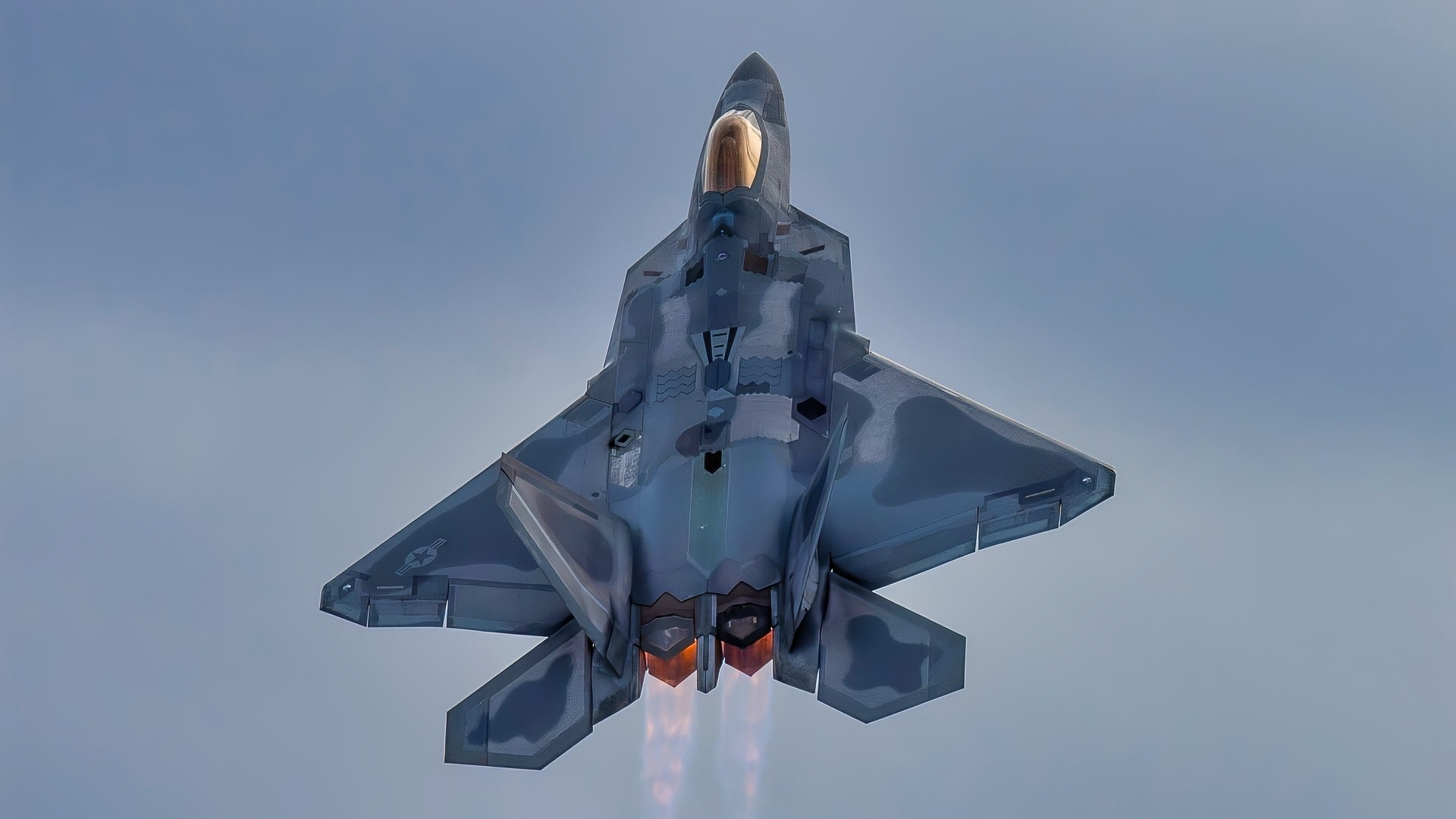
F-22 Raptor Sitting in AF Museum National Security Journal Photo. Image Credit: Harry J. Kazianis

F-22A Raptor in the Air Force Museum NSJ Photo.
The Midterms Changed The Math
Last week’s elections were a referendum on the conflict, and President Trump lost. Republicans lost both chambers of Congress as voters vented about living costs that have climbed right alongside the conflict.
The President himself admitted to “60 Minutes” that voters didn’t like the war, although he insisted he’d make the same call again.
That matters. A Democratic House and Senate in January means the end on funding, more War Powers votes, and a lot less room to maneuver.
The President can still order strikes.
However, paying for a sustained campaign just got much harder, if not downright impossible.
Three Doors Remain, And None Of Them Good
After meeting his national security team last Thursday, Trump said a decision was coming soon. According to Axios, the options boiled down to three: launch new strikes, keep strangling the regime economically, or cut a deal with significant concessions to Tehran.
Meanwhile, CENTCOM was finalizing preparations to resume major combat operations if ordered, which is normal operating procedure.
The Pentagon must plan for any contingencies.
Each door has a problem behind it.
Escalation means going after what’s left.
Planners have drawn up options like seizing Kharg Island, the terminal that handles roughly 90 percent of Iran’s crude exports, or wiping out its oil infrastructure from the air.
Taking Kharg Island likely requires ground forces and invites Iranian retaliation against energy targets across the Gulf.
Tehran has repeatedly threatened to widen the war if it gets hit again.
Wiping out its oil terminals would be relatively easy. It is a fixed installation, and Iran’s air defenses have been degraded.
But the Gulf nations don’t want to see that happen, as they are already shifting toward independent bilateral and regional diplomacy, alternative security arrangements, and pragmatic accommodations amid a strained U.S. security umbrella and ongoing conflicts.
Call it what you will, but they’re already trying to appease Iran.
Some nations (including the UAE) have weighed releasing frozen Iranian funds or facilitating arrangements to halt infrastructure attacks.
However,h the UAE also suspended direct economic and financial dealings with Iran following specific regional escalations and missile/shipping threats.
A deal isn’t any cleaner. Iran sent a nuclear proposal through Qatar, but it came with seven conditions, including lifting sanctions and paying war reparations.
No American president is signing another blank check to the Islamic Republic.
Not this one, anyway.
That leaves the middle option, which is where the White House appears to have landed. Secretary of State Marco Rubio told G7 foreign ministers in Paris that Trump chose a third way: keep the naval blockade and economic squeeze in place, and add a new effort called Operation Iron Gate to choke off the land routes Iran uses to move advanced weapons.
Trump declared this week that Iran “militarily is effectively over” and played down the need for new strikes.
The blockade is the best of three bad options.
However, blockades are slow, and Iran’s leadership doesn’t appear willing to wait. Supreme Leader Khamenei has reportedly ordered an end to the “no war, no deal” limbo. Strangulation only works if the other guy can’t hold his breath longer than you can.
The Aides Can’t Agree On The Mission
People inside the debate say the core problem is that Trump and his aides still can’t agree on what they’re trying to accomplish.
Vice President JD Vance was skeptical of a full-scale operation from the start.
Hegseth, fresh off the Maduro operation, was among the most gung-ho.
The two split publicly last week over whether the war is worth the resources.
Add Benjamin Netanyahu pressing Trump to resume strikes, and you get the idea.
A military commander always has to follow the commander’s intent.
If you can’t state the end state in one sentence, you don’t have a strategy.
Eight months in, Washington is still arguing about the sentence.
Hegseth Survives, For Now
Which brings us to Pete Hegseth. Rep. Thomas Massie (R-Ky.) reintroduced eight articles of impeachment this week, forcing a floor vote.
The first three articles accuse the Secretary of violating the 1973 War Powers Resolution by starting and continuing hostilities in Iran without congressional authorization.
Others cover the Caribbean boat strikes, the Maduro operation, and going after Sen. Mark Kelly for reminding troops of their right to refuse illegal orders.
On Tuesday, the House voted 211-204 to send the resolution to committee, effectively killing it.
Massie was the only Republican to vote with Democrats. Even some GOP critics of Hegseth said his conduct didn’t rise to the level of high crimes and misdemeanors.
Hegseth called the effort a farce and a stunt, labeled Massie disgruntled, and argued the articles tell service members their service was a crime.
While that isn’t necessarily true, it can undermine morale.
The War Powers question is real, and it isn’t going away. Sen. Thom Tillis has already said he’s likely to vote against Hegseth if impeachment reaches the Senate.
Presumptive Speaker Hakeem Jeffries has signaled support for an impeachment push, which is no surprise. Come January, the votes change.
Where Does Trump Go From Here
The President is stuck between a war voters rejected, a deal he can’t sign, and a blockade that buys time Iran may not give him. His Defense Secretary survived round one by seven votes, with a new Congress on the way.
There are no good choices on Iran.
There are only less bad ones, and they’re running out.
About the Author: Steve Balestrieri
Steve Balestrieri is a National Security Columnist. He served as a US Army Special Forces NCO and Warrant Officer. In addition to writing on defense, he covers the NFL for PatsFans.com and is a member of the Pro Football Writers of America (PFWA). His work was regularly featured in many military publications.


