
Iran is rejecting U.S. President Donald Trump’s claim that the United States has won the war with Iran, insisting that the Islamic Republic is stronger after the conflict than before, and warning that continued American military strikes will trigger retaliation.
Speaking to NPR on Wednesday, November 11, Hamidreza Gholamzadeh, a spokesperson for Iran’s delegation at the COP31 climate summit in Antalya, Turkey, claimed that Washington has not achieved its military objectives. The representative also said that Tehran is preparing for the fighting to continue.
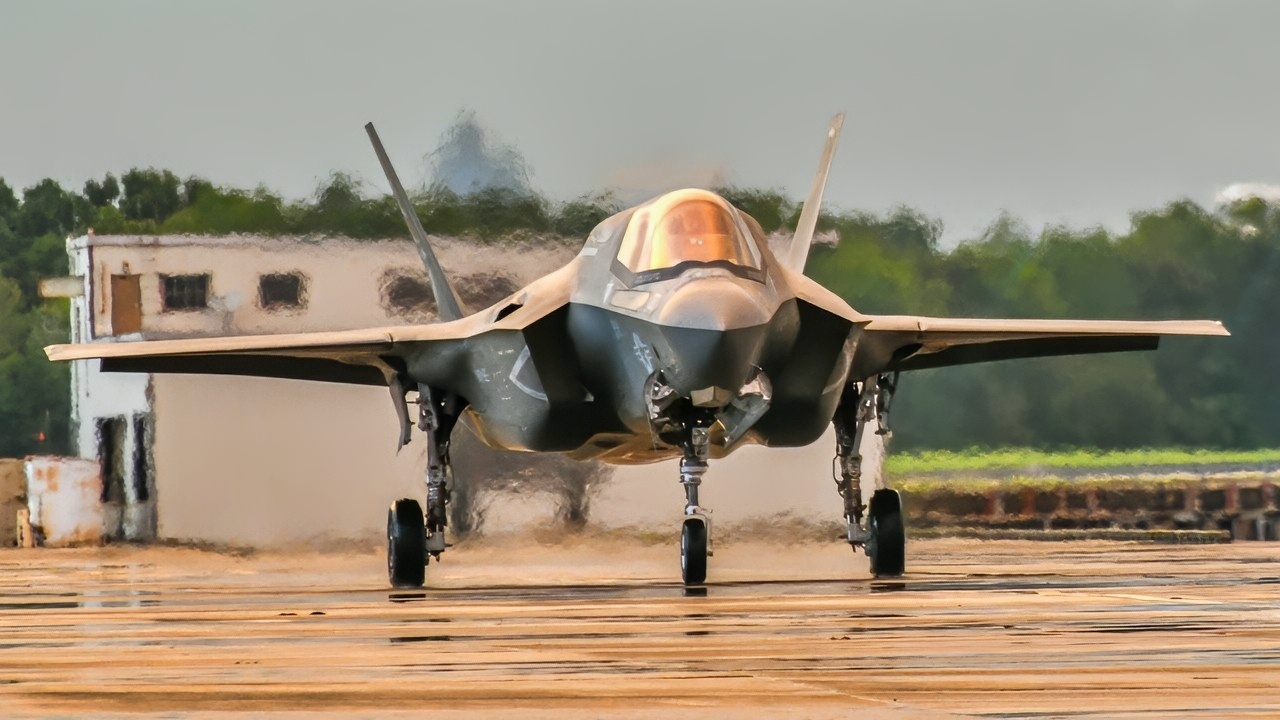
(Aug. 07, 2024) An F-35B Lightning II assigned to Marine Fighter Attack Squadron 122 at Yuma, Ariz., taxis after landing at Naval Air Station Jacksonville as part of the aircraft’s temporary transfer to Fleet Readiness Center Southeast (FRCSE). The jet is the first F-35 ever inducted into the depot and is part of a readiness improvement initiative to support corrosion mitigation efforts for the U.S. Marine Corps (USMC). (U.S. Navy photo by Toiete Jackson/Released)
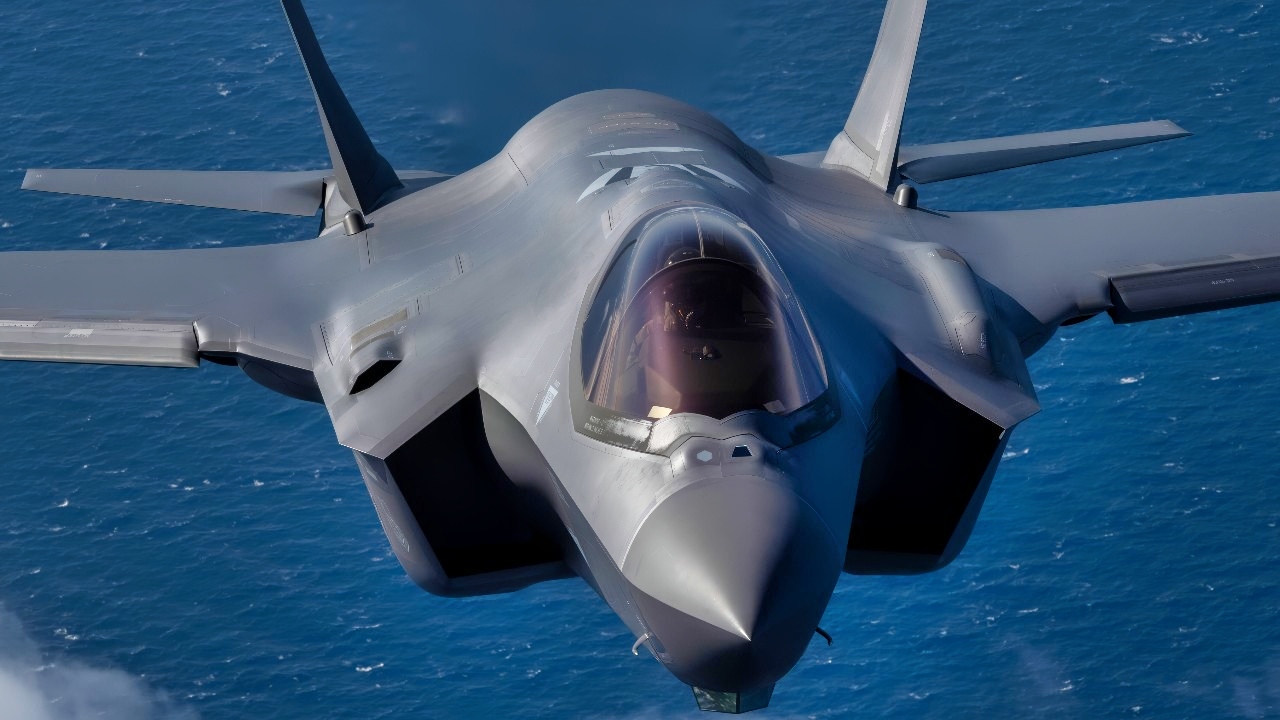
A U.S. Air Force F-35A Lightning II participating in NATO exercise Ramstein Flag 24 flies over the west coast of Greece, Oct. 4, 2024. Over 130 fighter and enabler aircraft from Greece, Canada, France, Hungary, Italy, Poland, Portugal, Romania, Spain, Sweden, United Kingdom and United States are training side by side to improve tactics and foster more robust integration, demonstrating NATO’s resolve, commitment and ability to deter potential adversaries and defend the Alliance. (U.S. Air Force photo by Tech. Sgt. Emili Koonce)
The comments come after President Trump again claimed that the U.S. won the war during a Veterans Day address at Arlington National Cemetery, even as the United States maintains its naval blockade on Iranian ports and Tehran continues to attack ships moving through the Strait of Hormuz.
Diplomatic efforts are also ongoing, with Qatar and regional U.S. allies working to secure a deal before Iran potentially launches strikes against U.S.-linked infrastructure in the Middle East.
Iran Says It Has Won the War
Speaking to NPR correspondent Hadeel Al-shalchi in Turkey, Gholamzadeh claimed that the United States intended to overthrow the Iranian regime when it first launched strikes in February, and noted that it has failed to achieve that goal.
The official said that Washington’s failure to overthrow the regime means that Tehran has, in fact, won.
Gholamzadeh also claimed that the conflict gave Iran an opportunity to prove its military capabilities, and warned that the country is preparing to defend itself with more devastating strikes against a broader set of targets if Washington returns to its military campaign against the country.
“The Americans and the Israelis turned this war into an existential war for Iran. So Iran has no other choice but to fight to the end, and to win this war. So another mistake would be a huge, bigger mistake from the previous ones,” Gholamzadeh said.
When asked about rising oil prices and President Trump’s claims that oil is moving freely through the Strait of Hormuz, Gholamzadeh challenged Washington’s claims.
“Iran is completely sure that it can close the Strait of Hormuz forever,” he said. “But the Americans need to impose a ship blockade with the presence of naval forces here, and they are thousands of miles away from their homeland.”
Trump Declares Victory Anyway
On Wednesday, November 11, President Trump again claimed that U.S. military operations have weakened Iran to the extent that the United States can claim victory.
Speaking during a Veterans Day address at Arlington National Cemetery, President Trump defended his administration’s decision to initiate the war and again said that further fighting will not be necessary.
“America did not start a war with Iran,” he said, adding, “Iran has been waging war on America since 1979.
This should have been taken care of a long time ago.”
“Under this administration, and it was about time, somebody fought back,” he continued. “All of us fought back.
We fought back.
And we seriously fought back. And we won. Just a question of when we want to end it.
We want to make sure we have a total victory, not a 93% victory.
It’s going to be total. It’ll take them 25 years to rebuild what we have destroyed, and hopefully we won’t have to destroy any more of that country.”
The comments came after a November 9 meeting with Qatari Prime Minister Sheikh Mohammed bin Abdulrahman Al Thani.
Following that meeting, President Trump announced that he had agreed that further major strikes against Iran were unnecessary and unlikely for the time being.
The president, in the meantime, refuses to lift the U.S. naval blockade, which prevents Iran from exporting oil to global customers.
Iran Threatens American Bases
On Wednesday, Iran issued new threats to American bases.
Mohsen Rezaei, the secretary of Iran’s Supreme National Security Council, warned that Tehran will follow through on threats to attack American military installations outside the Middle East if those facilities are used to launch strikes against Iran.
Speaking to Al Mayadeen, Rezaei specifically identified American bases in European countries as potential targets.
The Iranian security official also said that Tehran will take steps to strike distant installations that Washington previously considered beyond Tehran’s reach, putting European allies in Tehran’s crosshairs officially.
Rezaei also rejected proposals for transferring Iran’s stockpile of enriched uranium outside of the country, insisting that the material will be required to power nuclear submarines.
The threats come as the Trump administration continues to insist that Tehran must abandon any intention to build nuclear weapons before an agreement can be reached.
For now, the two sides are unwilling to compromise on their demands, meaning the conflict could remain unresolved for some time — but Secretary of State Marco Rubio said that the situation should not be considered a “stalemate,” with Iran’s economy continuing to struggle as the U.S. ramps up its economic sanctions campaign.
About the Author: Jack Buckby
Jack Buckby is a British researcher and analyst specializing in defense and national security, based in New York. His work focuses on military capability, procurement, and strategic competition, and he produces and edits analysis for policy and defense audiences. He brings extensive editorial experience, with a career output spanning over 1,000 articles at National Security Journal, and has previously authored books and papers on extremism and deradicalization.


