

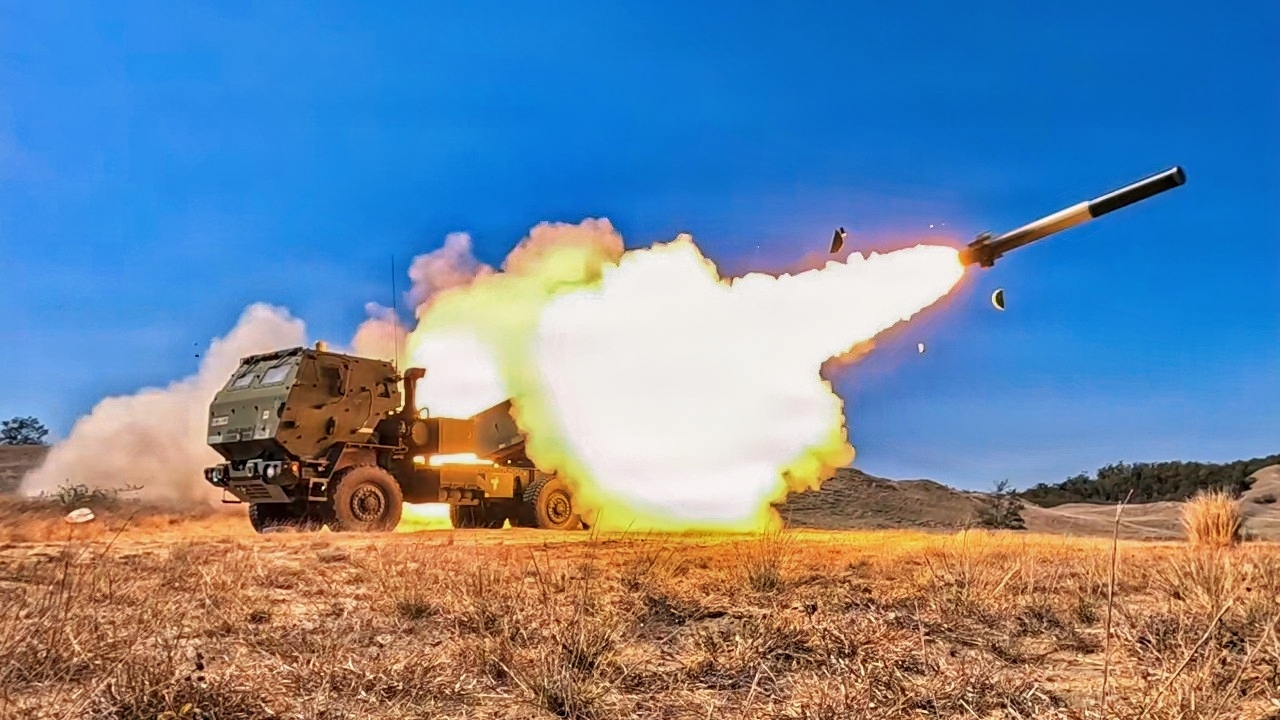
With a third aircraft carrier, the USS Theodore Roosevelt, set to arrive around November 15 along with another amphibious landing craft, the USS Makin Island, fears abound that the Americans are buying time until their forces are in position to launch another round of strikes.
No Serious Military Option
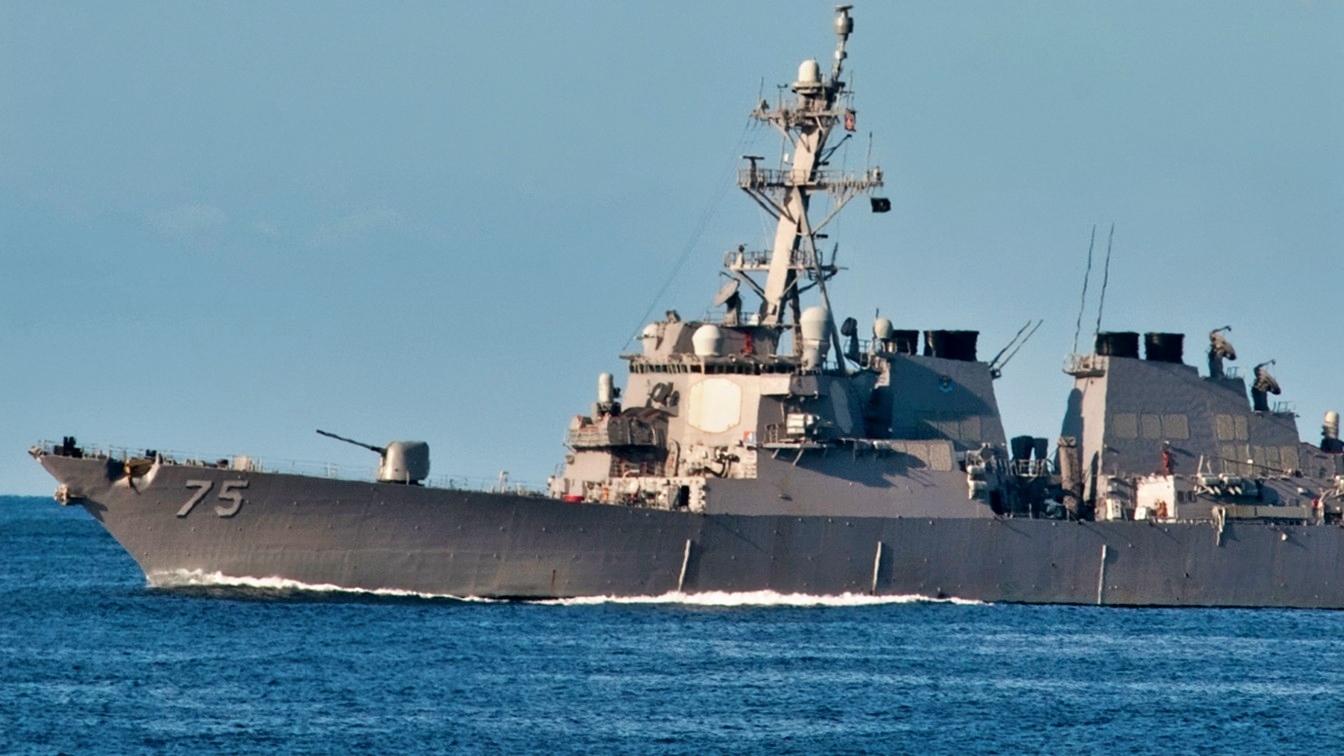
Arleigh Burke Class guided-missile destroyer USS Donald Cook is underway for a scheduled deployment in the U.S. Navy’s 5th and 6th fleet areas of responsibility. Donald Cook departed Naval Station Norfolk Monday, September 19th. (U.S. Navy photo by Petty Officer 3rd Class Scott Pittman)
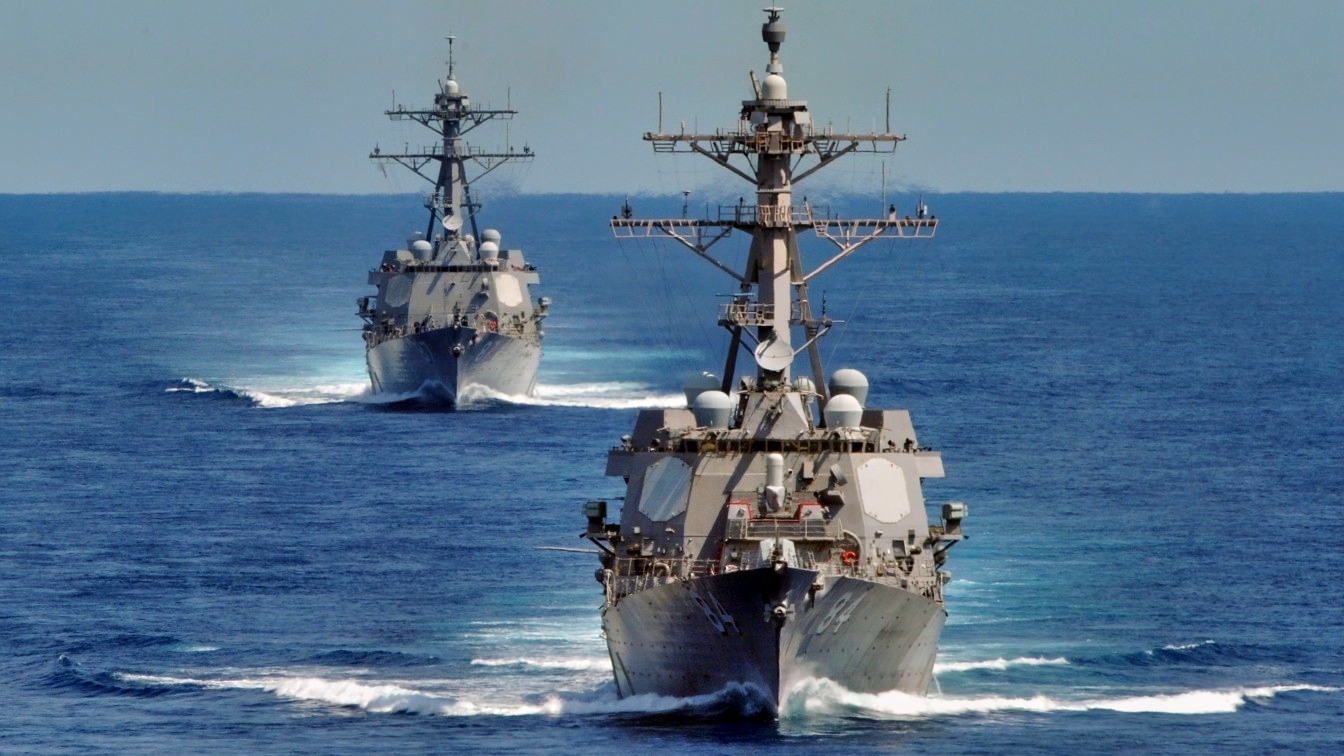
The Arleigh Burke-class guided-missile destroyers USS Bulkeley, right, and USS Mason participate in a strait transit exercise. Bulkeley and Mason are part of the Enterprise Carrier Strike Group and are conducting work-ups and flight operations in preparation for an upcoming deployment. (U.S. Navy photo by Seaman Jared M. King)
In fact, before the disastrous Midterms (for the president and his party), there was talk about the president initiating a wide-ranging airstrike campaign along with the Israeli Air Force (IAF) immediately after the Midterms.
That never happened.
And it seems to be a matter of great concern and confusion whether the Trump administration will initiate strikes immediately after the carrier arrives.
Even if airstrikes commenced, what would be the point?
US military stockpiles of critical munitions are drastically depleted. Yes, shorter-range, “dumb” bombs are available.
But those carry risks to pilots and warships if the president wants the US military to conduct another wide-ranging set of airstrikes against a sweeping target set–that purportedly includes civilian targets, like water, energy, and road infrastructure.
There’s no indication, however, that another round of strikes would be anything more than a giant pyrotechnical display.
It would have little impact on changing the facts on the ground, and it might even militate the Islamic Republic of Iran to retaliate in such a way that it pushes the world into a true world war.
Iran has already demonstrated a remarkable capacity to both withstand the kind of massive air campaigns that the US and Israelis like to subject enemies to.
What’s more, the Iranians have a demonstrated capability to consistently threaten their neighbors and destroy the remaining US military facilities in the region–as well as the possible damage done to US Navy warships (even aircraft carriers).
That said, the president has allowed some semblance of diplomacy to lead his ongoing Iran policy. Then again, we’ve seen this pattern play out.
Remember, up until the day the war started, the Americans were engaged–via the Qataris–with Iran in negotiations.
Then, the Americans and Israelis attacked the Iranians while negotiations were ongoing. That’s why the Iranians are wary of another round of diplomacy, especially as more American military assets arrive in theater.
But it does seem like President Trump himself, having been obliterated by the Democratic Party in the Midterm elections, appears to be looking for an alternative to direct strikes.
Right now, Vice President JD Vance is spearheading the diplomatic track with Iran.
Diplomacy and Economic Warfare Over Actual War?
At the same time, Trump seems to be in favor of maintaining American forces in the region to enforce his much-ballyhooed blockade, as part of a wider economic warfare strategy directed against Iran.
These policies would take longer to affect the Islamic Republic.
But the diplomatic and economic warfare strategies would avoid a US military escalation.
That’s on the American side, though.
Two other factors might upend these carefully laid plans by the Trump administration.
The biggest factor is Iran.
Iran’s leadership is entirely different in both makeup and disposition than it was before the war.
Before the Americans and Israelis launched their unprovoked war against Iran, the Islamic Republic was led by a man, Ayatollah Ali Khamenei, who was no friend of the United States–but who vehemently opposed nuclear weapons–who is gone.
His successors are scared that nuclear weapons are the one thing that will shield their regime from further US and Israeli attacks.
What Does Iran Do?
The economic warfare strategy, while it has caused serious damage to the Americans and the global economy, has done severe damage to the Islamic Republic at a time in which the government there is fighting desperately to survive.
If Iran plays the game as the Americans want them to, and goes along with the diplomatic track and lets the Americans conduct economic warfare on them, it just might eventuate in the complete collapse of the Islamic Republic. Tehran is not stupid.
The leaders there understand this reality.
So, Washington should be concerned that if it doesn’t prioritize real diplomacy, as the vice president wants to do, and instead uses diplomacy to buy time to intensify economic warfare on the Iranians, the Iranians are unlikely to play along with the Trump administration.
Instead, the Iranians may decide to escalate militarily now.
At the same time, they have the advantages, prompting all manner of unintended–and uncontrollable–escalations (and this is where we get into nightmare scenarios involving MOABs, ground attacks, and possibly nuclear weapons).
The Netanyahu Factor
Another factor is the increasingly isolated and desperate Israeli government under embattled Prime Minister Benjamin Netanyahu, who is undoubtedly set to be given the boot if the current election outcome holds, and his chief rival, Gadi Eisenkot, can form a coalition government with himself as prime minister.
If that happens, Netanyahu would not only be out of power, but he would also likely face legal problems over alleged corruption charges.
Elements of the IAF have been under the impression since before the elections that they were going to be ordered soon to restart bombardment of Iran alongside the Americans.
That has not happened yet.
The delay is apparently due to a combination of factors involving the Americans, including Trump reassessing his political strategy after the disastrous Midterms, the time it takes for the Theodore Roosevelt to reach the Middle East, and the munitions shortage in the US arsenal.
But Israel has already been shown to have gotten the Americans into the war at the time and place of Israel’s choosing.
So, if Netanyahu believes the walls are closing in around him, with Eisenkot not yet able to fully form a coalition government to replace Netanyahu, the embattled Israeli prime minister might decide that he has nothing left to lose but to restart the war, thereby ensuring that the Israeli people cannot replace Netanyahu as their leader.
Nevertheless, on the American side, if Trump is left to his own devices, I contend that Americans will opt for diplomacy and economic warfare rather than restarting the conflict.
And if they do, the only real concern will be how the Iranians respond–which is unpredictable at this point.
About the Author: Brandon J. Weichert
Brandon J. Weichert is the Senior National Security Editor. He also manages The Weichert Brief on Substack. Weichert is the co-host of The Mario Nawfal Show on Twitter/X. He is the author of four bestselling national security books, most recently A Disaster of Our Own Making: How the West Lost Ukraine (Encounter Books). His next book, Fortress Americas: A New Monroe Doctrine (Tucker Carlson Books), is due out December 8. Follow him via Twitter/X @WeTheBrandon.


