


Israel’s security cabinet has reportedly instructed the military to increase preparations for possible strikes against Iran, in a directive reported on November 11 by Israeli public broadcaster KAN.
Tehran responded to the prospect of renewed hostilities by threatening to expand retaliation beyond the Middle East. Iranian security chief Mohsen Rezaei warned that US military installations in Europe could become targets if Washington launches another war.
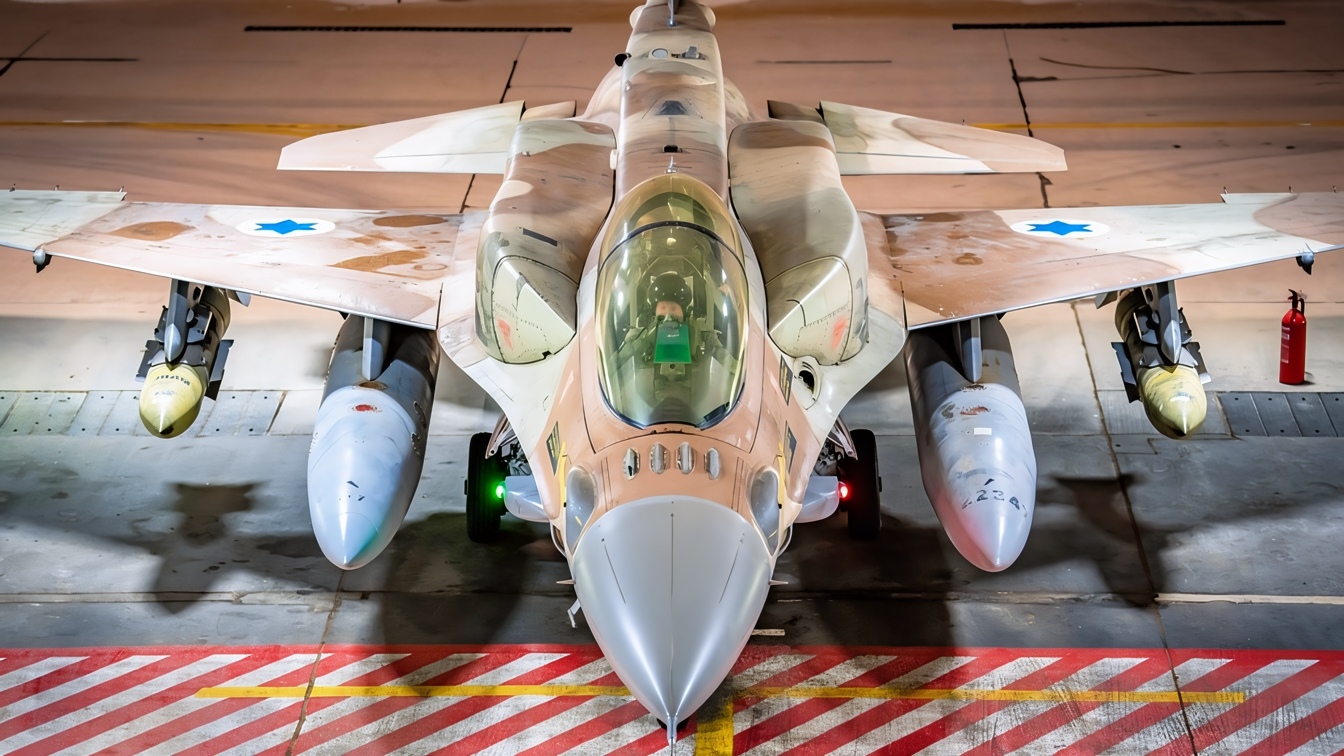
Israeli F-16I Fighter. Image Credit IDF

F-16I Sufa. Image Credit: Creative Commons.
These developments come as the Trump administration pursues diplomacy while maintaining economic and military pressure. So both sides appear to be signaling a readiness to escalate, even though negotiations remain on the table.
Israel’s Preparations
According to KAN, Israel’s security cabinet, chaired by Prime Minister Benjamin Netanyahu, directed the military to step up preparations for potential operations against Iran. KAN warned that the directives could result in activities capable of triggering another war.
However, no reports currently indicate that Israel has made a final decision to attack or that a specific strike date has been selected.
Israeli opposition leader Gadi Eisenkot urged Netanyahu not to deploy the military without a direct and immediate threat.
The warning carries political significance because Netanyahu is serving as caretaker prime minister following the October elections in which his coalition lost its parliamentary majority.
Meanwhile, President Isaac Herzog has tasked Eisenkot with attempting to form a new government.
Netanyahu has maintained that the campaign against Iran should continue until Tehran’s government collapses.
Iran Threatening US Bases
Iran’s Supreme National Security Council secretary, Mohsen Rezaei, issued an unusually expansive warning, stating: “If the US launches another war against Iran, every military base involved in the aggression from West Asia to Europe will be a legitimate target for lethal strikes.” Rezaei added there would be “No safe distance. No haven. No immunity.” The warning suggests Tehran wants Washington to consider the possibility of retaliation beyond its installations in the Persian Gulf.
Iran possesses a substantial ballistic missile and drone arsenal, but its ability to strike particular European bases would depend on range, launch location, defenses, and operational circumstances.
The statement is meant as a deterrent threat.
Diplomacy Continues
Qatar is reportedly facilitating a diplomatic effort to avoid renewed fighting between the US and Iran.
President Donald Trump has warned that military operations could resume if diplomacy fails, with Iranian officials expressing frustration with the prolonged purgatory-like condition in which there is neither full-scale war nor lasting peace.
Al Jazeera reported ongoing discussion within Tehran about potentially appointing Rezaei as chief negotiator, though the appointment has not been confirmed.
Parliament Speaker Mohammad Bagher Ghalibaf, identified as Iran’s current lead negotiator, has called for establishing “sustainable deterrence” if negotiations fail, adding that the main obstacle to an agreement is Iran’s lack of trust in Washington.
Iranian officials have also denied that direct talks are currently underway. Both sides appear to be using military threats as negotiating leverage, but that approach increases the danger of miscalculation.
The Strait of Hormuz
The Strait of Hormuz remains one of the most consequential disputes between Washington and Tehran. The narrow passage connects the Persian Gulf with international shipping routes and is vital to global oil and liquefied natural gas trade.
Ghalibaf declared that Hormuz would “never return” to its prewar status. Iran has rejected restoring unrestricted passage without concessions from Washington.
US Central Command says American forces continue working to maintain commercial navigation while enforcing a naval blockade against Iran.
The simultaneous claims of keeping shipping open and maintaining a blockade reflect the competing objectives of protecting third-party trade while restricting Iranian commerce.
This all carries strategic significance, as continued disruption would threaten energy markets and create recurring opportunities for military confrontation.
Washington’s Position
Trump has maintained that renewed military action remains possible if Iran crosses American red lines.
However, recent statements from Washington suggest the administration would prefer to avoid a large-scale campaign, with Secretary of State Marco Rubio arguing that economic pressure is sufficiently effective to make major new strikes unnecessary.
The US has continued to enforce its sanctions and a maritime blockade while exploring diplomatic options.
About the Author: Harrison Kass
Harrison Kass is a writer and attorney focused on national security, technology, and political culture. His work has appeared in Tablet, City Journal, The Hill, The Spectator, and The Cipher Brief. He holds a JD from the University of Oregon and a master’s in Global & Joint Program Studies from NYU—more at harrisonkass.com.


