

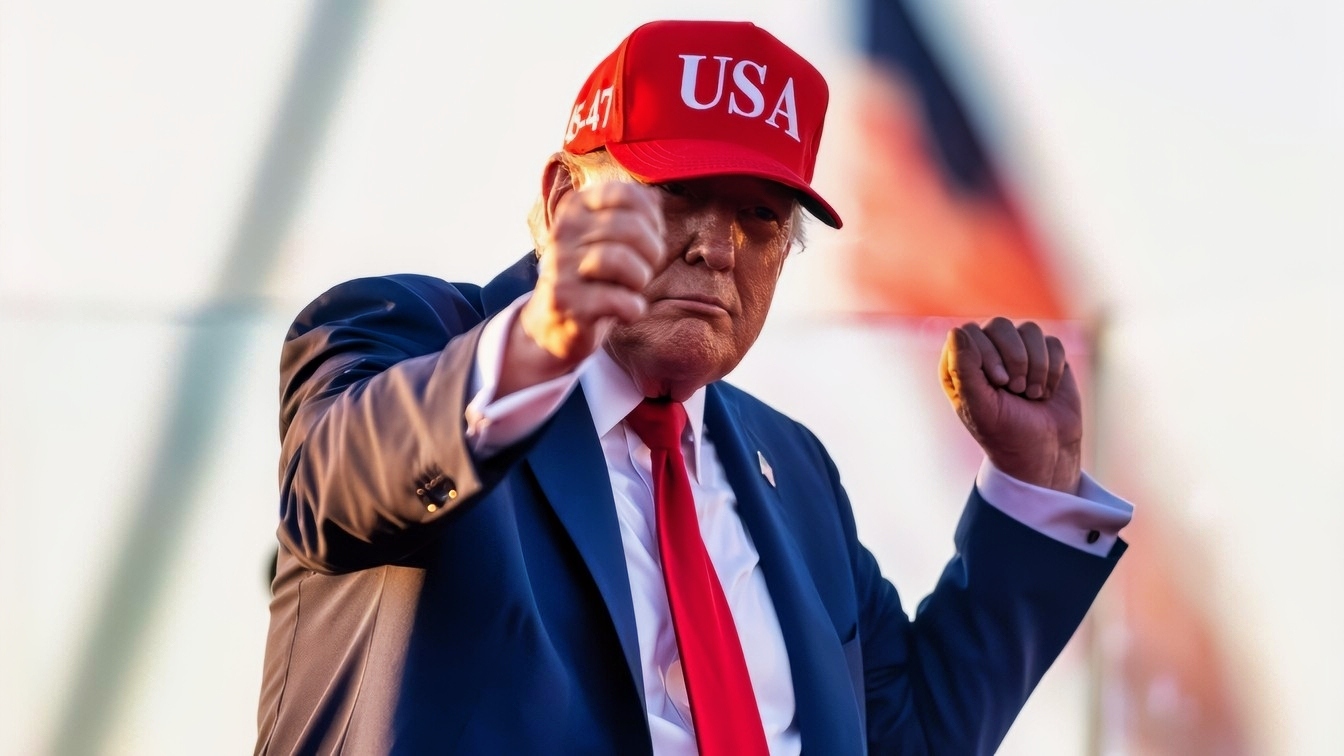
Donald Trump just declared the Iran deal unnecessary. Again. “We don’t need a deal with Iran. Those days have long since passed,” the president wrote on Truth Social on Thursday, in a post that moved to allegations of corruption in Democratic-run states.
He also pulled Vice President JD Vance off the Iran file and told him to focus on domestic fraud investigations. Trump’s logic is simple. The U.S. already holds Iran’s money and controls the Strait of Hormuz, so why sign anything?

A B-52H Stratofortress sit parked on the flight line at Minot Air Force Base, North Dakota, Aug. 8, 2022. The B-52 is capable of dropping or launching gravity bombs, cluster bombs, precision-guided missiles and joint direct attack munitions. (U.S. Air Force photo by Airman Alysa Knott)
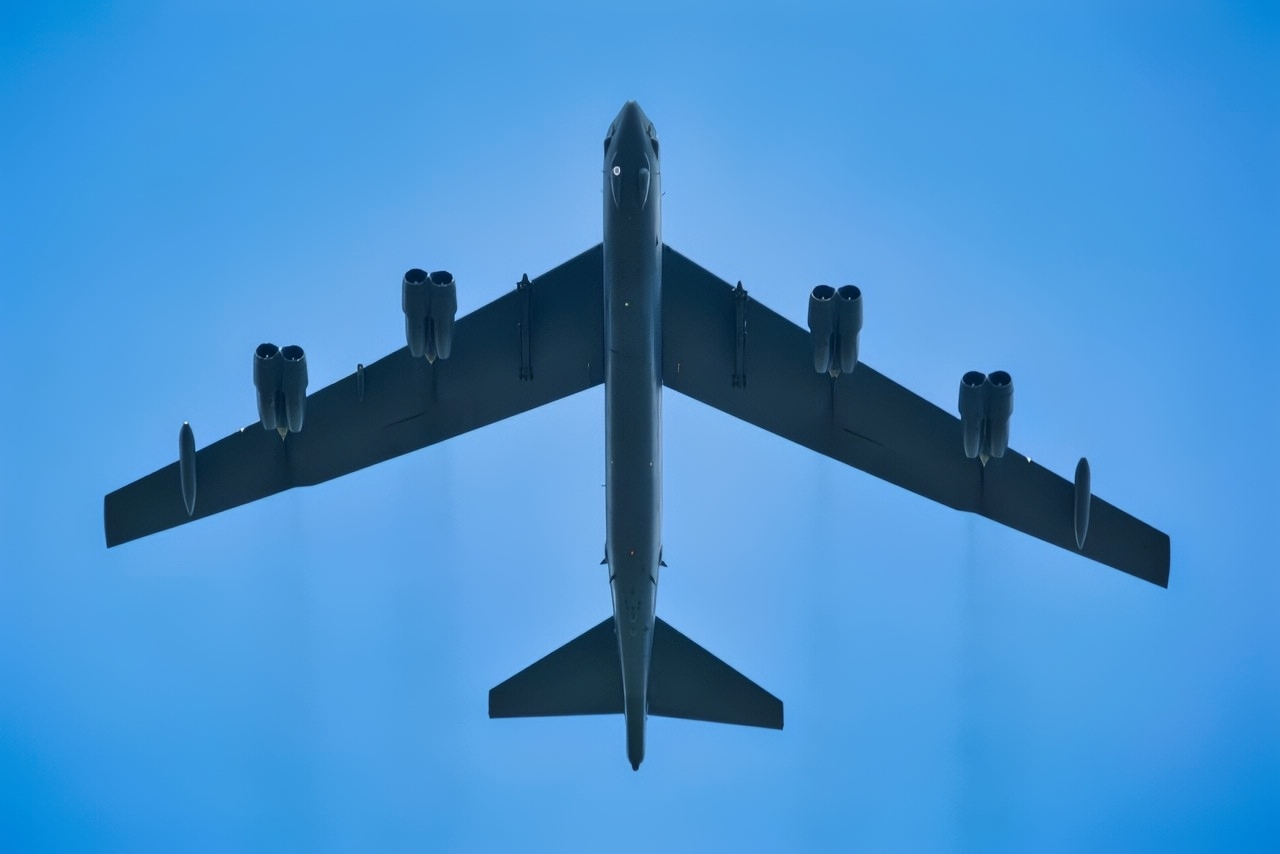
Military service members, veterans, and citizens of Guam gathered for the Memorial Day Commemoration at the Guam Veterans Cemetery. The Ceremony consisted of a fly over from a B-52H Stratofortress, a musical performance from the Guam Territorial Band & Cantate, guest speaking from the honorable Eddie Baza Calvo, a Fallen Soldier Gravesite Tribute, and the playing of Taps. (U.S. Marine Corps photo by Lance Cpl. Jacob Snouffer/Released)
Say what you will about the post.
Nine months into a conflict that began on February 28 with the killing of Supreme Leader Ali Khamenei, the question was never whether Trump needs a piece of paper.
The question is how this ends. Declaring a deal unnecessary doesn’t answer it. Newsweek laid out five scenarios for what comes next. And each deserves some attention.
Trump’s Absolutes Have A Short Shelf Life
The first scenario is the simplest.
The deal happens anyway.
This president said back in April that Iran “doesn’t have to make a deal.” In August, he said Tehran was “not going to make the kind of a deal that I feel is necessary.”
A month later, at the UN, he predicted an agreement after the midterms. You get the idea.
The framework of a deal is ready.
Qatar submitted a 48-hour, two-stage plan on November 6. On day one, Washington would lift the naval blockade and release a portion of Iran’s frozen assets, and Iran would invite IAEA inspectors into its bombed nuclear sites.
On day two, Hormuz reopens. Foreign Minister Abbas Araghchi says Tehran’s own two-day version is still live.
However, Iran’s plan kicks the nuclear question down the road, and that gap is the whole ballgame.
In this scenario, expect Washington to sell this as an Iranian capitulation. Secretary of State Marco Rubio is betting the economic pain gets them there eventually.
The Deal Nobody Has To Sign
This scenario fits Trump’s rhetoric best.
There would be no signing ceremony or grand bargain.
Just quiet, reciprocal steps.
Iran eases attacks on the tankers.
Washington eases enforcement. The nuclear file gets parked. One preliminary proposal reported by The Wall Street Journal had U.S. carriers pulling back, and the blockade partly eased in exchange for Iran letting 25 tankers through the strait.
Trita Parsi of the Quincy Institute has suggested the blockade could “imperceptibly wither away” on its own.
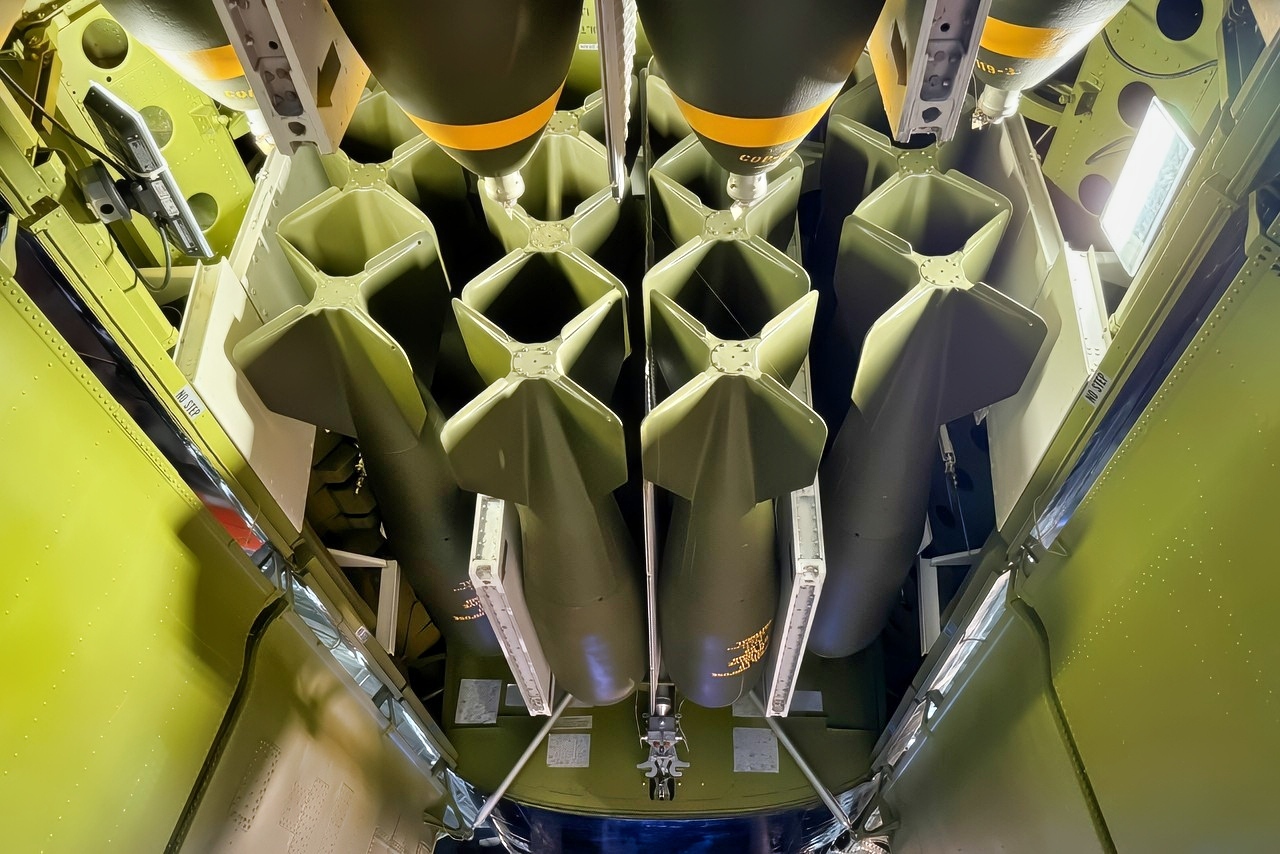
Bombs Inside the B-52 Bomber. Photo taken by Harry J. Kazianis/National Security Journal.
Trump could then say, truthfully, that he never made a deal. That has real appeal for a White House that just watched the war cost Republicans dearly in the midterms. Vance himself reportedly blamed the GOP losses on the war.
No War, No Peace Is The Trade-Off The US Has Chosen
Scenario three is the one the administration says it already picked.
At the G7 foreign ministers’ meeting in Paris on Tuesday, Rubio told allies that Trump weighed going back to war or cutting a deal and chose a third path: strangle the regime economically.
“We won’t do a stupid deal,” Rubio said in the room, according to Axios. Afterward, he told reporters the economic campaign is “so devastating that right now there is no need for major combat operations.”
That means the naval blockade stays, and a new operation dubbed Task Force Iron Gate goes after the land routes Iran uses to move advanced weaponry and technology.
However, “status quo” is a generous term. U.S. forces have struck air-defense sites on Qeshm Island at least twice this month.
A blockade costs far less than a war. It also never actually ends one. And it only works if Tehran sits still. Axios reports Iran’s supreme leader has ordered an end to the no-war, no-deal limbo and demanded a clear conclusion. That’s a regime looking for an exit or a fight, and it gets to pick which.
The Shadow War Is Already Ongoing
The fourth scenario consists of Iran deploying mines, drones, proxies, sabotage, and cyber.
Iran would continue to inflict enough pain to raise the cost, never enough to trigger a full American air campaign.
The U.S. answers with limited strikes framed as self-defense. Rinse and repeat.
None of that is hypothetical.
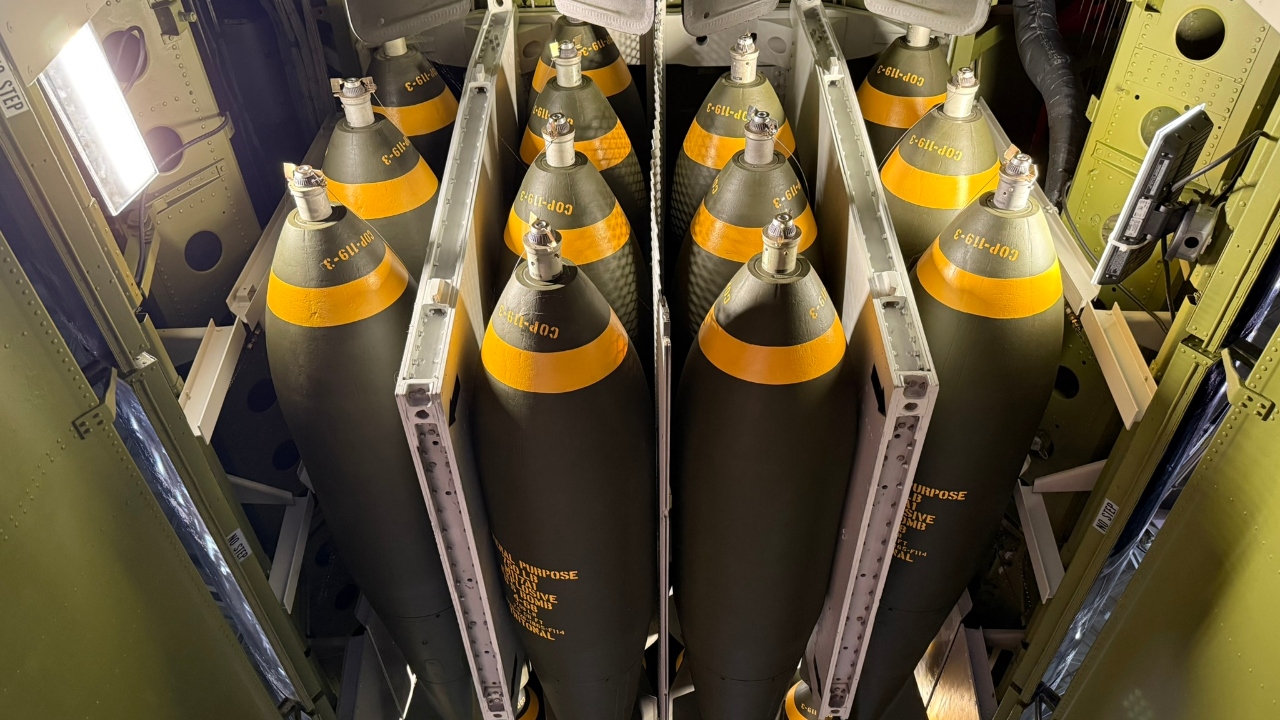
B-52 Bomber Bombs. Image Credit: National Security Journal.
October was the worst month for ship attacks since the war began.
Noam Raydan of the Washington Institute counted at least 34 confirmed Iranian attacks on vessels last month, 19 of them on crude tankers.
The Justice Department has charged three alleged Iran-backed operatives over nearly 20 attacks or attempts in the U.S. and Europe.
And when Rubio asked the G7 for help guarding shipping, he walked away with no commitments.
However, following the G7 meetings in Paris, foreign ministers representing Canada, France, Germany, Italy, Japan, the UK, the US, and the European Union issued a formal declaration demanding an end to Iranian attacks on civilian shipping, rejecting transit restrictions and fees, and backing maritime security efforts, including a separate French-British maritime initiative to help verify mine clearance.
But they have not committed to send any naval vessels to ensure the safe passage of shipping.
The Nuclear File Is The Tripwire
The fifth scenario is the big war coming back.
The triggers are easy to list.
A mass-casualty strike on U.S. troops. One tanker attack too many.
Or evidence that Tehran is sprinting for a bomb.
The last one is the real tripwire. IAEA chief Rafael Grossi told the UN Security Council last month that his inspectors still cannot verify that Iran hasn’t diverted nuclear material.
The agency’s last count put the stockpile at 440.9 kilograms enriched up to 60 percent, a short technical hop from the 90 percent used in a weapon. That’s 972 pounds of material nobody outside Iran can see.
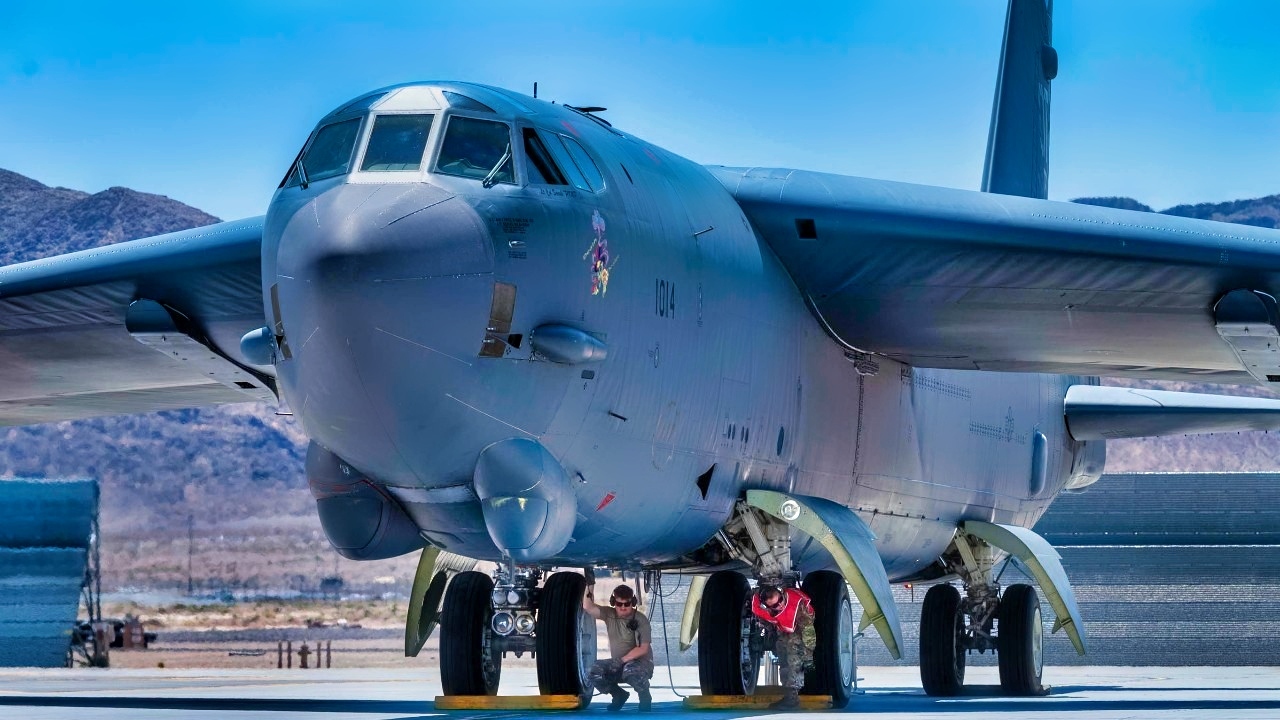
U.S. Air Force Tech. Sgt. Jacob Durham, left, and Staff Sgt. Kenneth Garris, crew chiefs assigned to the 307th Aircraft Maintenance Squadron, Barksdale Air Force Base, Louisiana, prepare to launch a B-52H Stratofortress in support of U.S. Air Force Weapons School Integration (WSINT) at Nellis Air Force Base, Nevada, June 3, 2025. WSINT serves as the culminating exercise for U.S. Air Force Weapons School students, bringing together air, space, and cyber forces in realistic, mission-critical training scenarios that mirror the complexities of modern warfare. (U.S. Air Force photo by William R. Lewis)
Meanwhile, Iran’s Assembly of Experts has said reviewing a withdrawal from the Non-Proliferation Treaty is now unavoidable.
Trump says the U.S. is “locked and loaded.” However, he also said this week that going back to war is “highly unlikely.” Both things can be true, right up until they aren’t.
So Which One Is It?
The likeliest near-term future is a mixture of the middle three scenarios.
A blockade that tightens on paper and leaks in practice.
A deal-shaped arrangement that nobody calls a deal.
A shadow war that keeps flaring in the strait and beyond.
Any one of those flare-ups could tip us into scenario five.
That’s the risk with “no deal necessary.” It sounds like strength, and the blockade is genuinely hurting Iran. However, it also hands the timing of the next escalation to the IRGC.
About the Author: Steve Balestrieri
Steve Balestrieri is a National Security Columnist. He served as a US Army Special Forces NCO and Warrant Officer. In addition to writing on defense, he covers the NFL for PatsFans.com and is a member of the Pro Football Writers of America (PFWA). His work was regularly featured in many military publications.


