

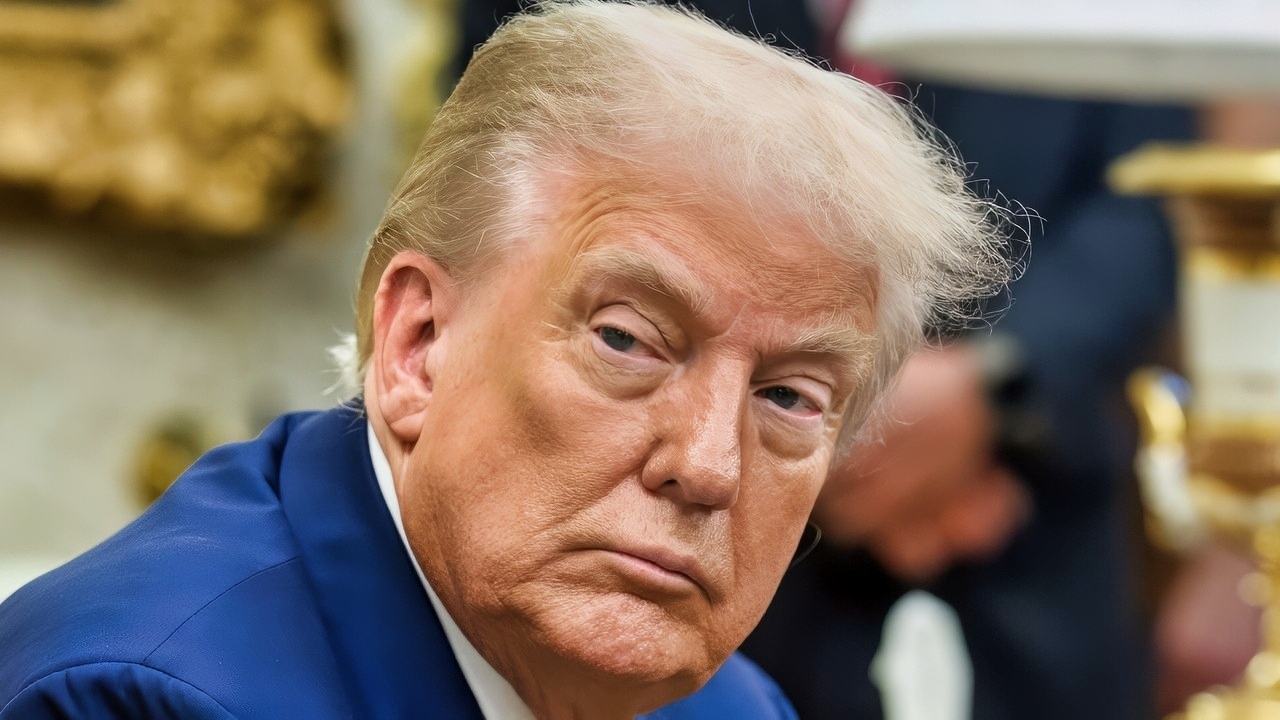
President Donald Trump just took the Iran file away from his vice president. In a Truth Social post on Thursday, Trump declared, “We don’t need a deal with Iran. Those days have long since passed.”
He then told JD Vance to put his “complete and total attention” on what the president called the “Massive Corruption and Crime taking place in Democrat run Cities and States throughout the U.S.”

A U.S. Air Force B-1B Lancer assigned to the 34th Expeditionary Bomb Squadron, Ellsworth Air Force Base, S.D., descends after conducting aerial refueling with a KC-135 Stratotanker assigned to the 506th Expeditionary Air Refueling Squadron in support of Bomber Task Force 25-1 over the Pacific Ocean, Mar. 4, 2025. Bomber Task Force enhances readiness, to include joint and multilateral, to respond to any potential crisis or challenge in the Indo-Pacific. (U.S. Air Force photo by Airman 1st Class Alec Carlberg)

A U.S. Air Force B-1B Lancer assigned to the 345th Expeditionary Bomb Squadron, decends for landing at Ørland Air Base, Norway, during a Bomber Task Force Europe deployment, Aug. 9, 2025. The BTF mission highlights how we deliver effects rapidly across dynamic and contested environments through integrated training. (U.S. Air Force photo by Staff Sgt. Tambri Cason)
The Washington Post reported that Trump is dialing back diplomatic attempts to end the conflict and shutting down Vance’s dealmaking effort, opting instead to leave the naval blockade in place and keep squeezing the Iranian economy. When reporters asked the White House to clarify, the press office pointed back to the post.
That is a hard turn from where the administration stood less than two weeks ago.
The Deal That Was Supposed To Happen
On Nov. 2, the day before the midterms, Trump wrote that a deal with Tehran “could happen” and that Iran wanted a settlement as soon as possible. Vance told reporters the same day, “We’ve certainly made some progress.”
Trump went further, telling reporters, “I believe we’ll make a deal right after the election because it doesn’t make sense for them not to.”
Vance was working the problem hard. According to Axios, he spent two weeks in indirect talks, speaking almost daily with Qatari Prime Minister Sheik Mohammed bin Abdulrahman Al Thani and Pakistan’s army chief, Field Marshal Asim Munir.
He sent a letter to Mohsen Rezaei, secretary of Iran’s Supreme National Security Council and a close confidant of Supreme Leader Mojtaba Khamenei, proposing a return to direct negotiations.
On Wednesday, The Wall Street Journal reported that Vance was weighing face-to-face talks with a top Iranian security official.
Twenty-four hours later, the president closed the door.
Why Trump Believes He Holds The Cards
Trump’s argument comes down to leverage. “We’ve got their money, Hundreds of Billions of Dollars, and we’ve got their Strait,” he wrote, referring to the Strait of Hormuz.
Earlier in the week, he said the war “militarily is effectively over.” Secretary of State Marco Rubio has argued that economic pressure is working and makes renewed large-scale strikes unnecessary.
There is a logic to that, and it shouldn’t be waved away. Iran’s latest ceasefire proposal, passed through Qatari mediators, came with seven conditions.
Among them were ending the U.S. naval blockade of its ports, lifting sanctions, and releasing frozen Iranian funds.
Washington has refused to move on any of that until Tehran agrees to terms on its nuclear program first. If you believe the blockade is grinding the regime down, you don’t hand over the thing they want most to get them back to the table.
However, “we’ve got their Strait” is a stretch. Iran claims at least 12 tankers were hit in 12 days, and several commercial vessels have struck mines or taken fire over the past week.
CENTCOM says more than 4,000 ships have crossed with U.S. help, which is real work by real sailors. But maritime agencies still advise against transit, and insurers have either jacked up rates or walked away entirely.
Iran’s parliament speaker, Mohammad Bagher Ghalibaf, says the strait will never return to its prewar status.
Then, just hours after Trump’s post, Iran claimed it destroyed a U.S. military early-warning radar in Bahrain, calling it retaliation for an American strike on a telecommunications tower in Sirik in southern Iran.
CENTCOM rejected the Iranian claim, stating that the IRGC actually launched two one-way attack drones toward Bahrain, both of which were intercepted and shot down by U.S. forces. CENTCOM confirmed there were no injuries or damage.
The Politics Are Impossible To Miss
Say what you will about the vice president’s 2028 ambitions. That’s beside the point. The timing here tells the story.
Republicans got trounced in the Nov. 3 midterms, and Democrats will take control of Congress in January. Vance has pinned those losses on the war and its economic aftermath.
After the results came in, he wrote on X that anyone who thinks the war was worth losing the Senate for six years should say so openly.
That’s about as close to public dissent as a sitting vice president gets.
Corruption was also a top issue that broke in the Democrats’ favor, and incoming Democratic majorities have signaled heavy oversight of Trump’s business dealings.
Trump’s post flips that script, pointing the corruption issue squarely at Democratic-run cities and states and putting his vice president in charge of it.
It also takes away the biggest foreign policy portfolio Vance has had. He led the U.S. team at the April summit in Islamabad and helped land the June memorandum of understanding.
That MoU fell apart quickly because the two sides had very different ideas of who controlled Hormuz. Vance then led direct talks in Switzerland that ended with Tehran agreeing to let IAEA inspectors back into the country. None of that produced a final agreement.
Trump earlier stated that he would blame Vance if a deal failed. Now there’s no deal to fail.
The Arguments For And Against The Waiting Game
The administration believes that Iran’s economy and military have taken eight months of punishment; the blockade is working, and time is on its side.
Talking now only gives the regime more rope to stall. Gulf partners, including Saudi Arabia, have asked Trump to hold off on large-scale strikes, and the president says sustained pressure gets him there without them.
The counterargument is just as direct. Shutting down the diplomatic channel removes the off-ramp at the exact moment the shooting in and around Hormuz is picking back up.
An IRGC aerospace adviser has said an order to strike “enemies” without geographic limits will be carried out “at the appropriate time.” Pressure and talks were never mutually exclusive, and the one senior official with a working line into Tehran has just been reassigned to domestic politics.
Ghalibaf put it plainly this week: “The ball is now in the American court.”
Trump says we don’t need a deal. Tehran says it’s waiting on us. So, each side is trying to wait each other out.
About the Author: Steve Balestrieri
Steve Balestrieri is a National Security Columnist. He served as a US Army Special Forces NCO and Warrant Officer. In addition to writing on defense, he covers the NFL for PatsFans.com and is a member of the Pro Football Writers of America (PFWA). His work was regularly featured in many military publications.


