

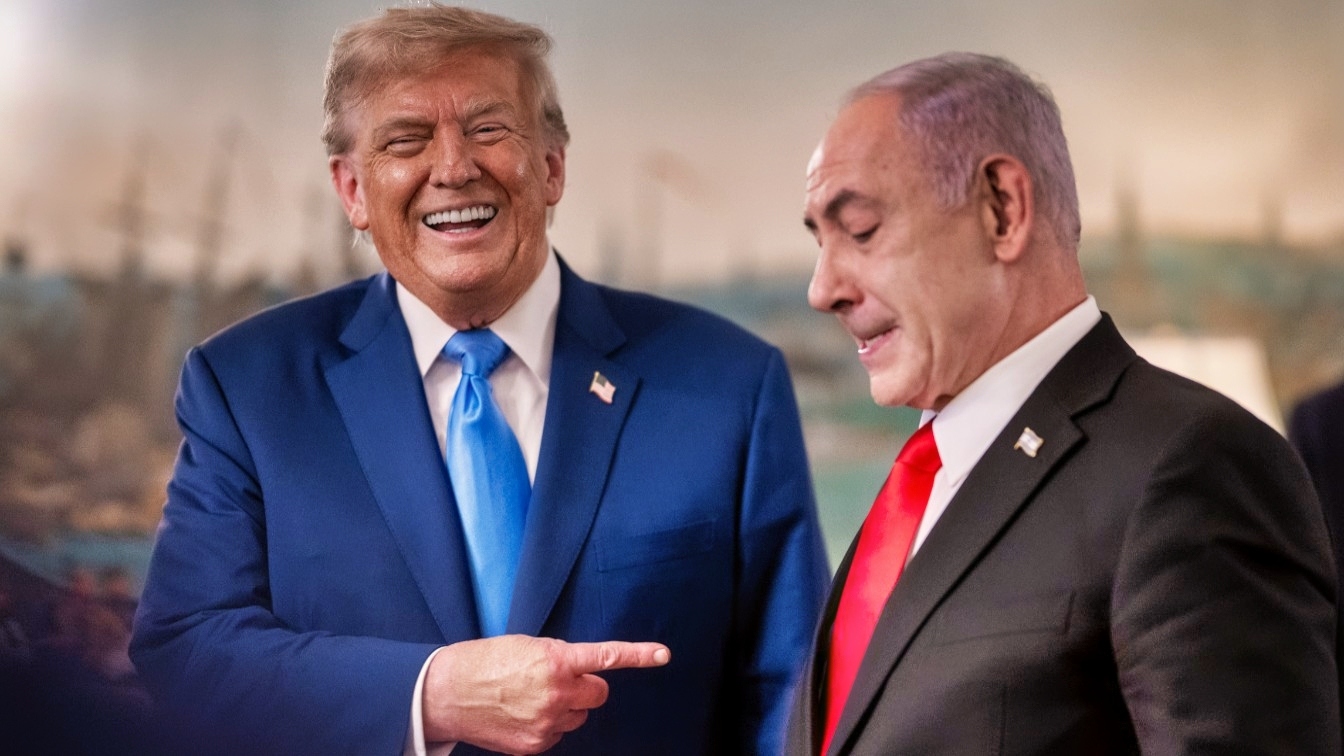
Israel wants another week of bombing. Washington isn’t sure it does. According to a New York Times report published Wednesday, President Trump is weighing another round of extensive military strikes on Iran, driven by new intelligence on Tehran’s capabilities and growing pressure from Israel to move quickly and aggressively.
Prime Minister Benjamin Netanyahu is pushing the United States to join a four-to-seven-day air campaign. The officials who briefed the Times were clear on one point. No decision has been made.

F-35I Adir High in the Sky. Image Credit: IDF/Creative Commons.

F-35I Adir Fighter. Image Credit: Israeli Air Force.
That matters. However, anyone who watched the run-up to Operation Epic Fury last winter knows how fast “no decision” can turn into B-2s lifting off from Whiteman.
The Israeli Case Rests On Rebuilt Arsenals
Israel’s argument is straightforward. Israeli intelligence assesses that Iran has made real progress rebuilding its missile and drone stocks and advancing its chemical and biological weapons programs.
Israel sent heavy hitters to make that case in person.
Mossad Director Roman Gofman traveled to Washington last week and met with CIA Director John Ratcliffe. Maj. Gen. Shlomi Binder, the chief of IDF Military Intelligence, has reportedly pressed his American counterparts to resume operations.
The other half of the pitch is timing.
The U.S. has a great deal of firepower in the region right now, and that window won’t stay open forever. Carriers rotate home. Bomber detachments go back to Missouri.
Interceptor stocks get counted and recounted. Israel Hayom reported that B-1 and B-2 bombers have been placed on 96-hour notice and that another Patriot battery has reportedly been positioned in Israel.

U.S. Air Force Senior Airman Colby Delia, 9th Expeditionary Bomb Squadron crew chief, and Airman 1st Class Olivia Ward, 9th Expeditionary Bomb Squadron crew chief, prepare for a B-1B Lancer to take off for a mission at Misawa Air Base, May 9, 2025. BTF missions provide opportunities to train and work with our allies and partners in joint and combined operations and exercises. (U.S. Air Force photo by Airman 1st Class Mattison Cole)

B-1B Lancer Bomber. Image Credit: Creative Commons.
Netanyahu’s office disputes that he pressured anyone.
A spokesman said the prime minister has always worked to safeguard Israel’s security. Say what you will about the phrasing.
When the Mossad chief and the head of military intelligence are both pressing in Washington at the same time, and Netanyahu’s position at home is described as fragile after last month’s elections, the message is hard to miss.
Trump’s Own Words Point Both Ways
The President has been sending conflicting messages.
Speaking to Fox News, Trump said U.S. intelligence indicated Iran was looking at chemical and biological weapons because the nuclear path had been blocked.
In the same interview, he said contacts with Tehran continue and that the Iranians want to make a deal. He wants one that lasts.
Asked about keeping forces in the region, he said he would finish it off one way or another.
That’s the ambiguity in one sentence.
It’s also a pattern. Trump has at times called the war over and at other times kept further attacks on the table to stop Iran from getting a nuclear weapon. In April, he indefinitely called off renewed attacks, and Iran promptly seized two ships in the Strait of Hormuz. That’s how Tehran reads hesitation.
The Times also reported that Trump told Vice President JD Vance to stop chasing a negotiated settlement and lean on economic pressure instead. Trump denied Vance had been sidelined and said he was doing a very good job.

Vice President JD Vance gives remarks at a Sports Council announcement, Thursday, July 31, 2025, in the Roosevelt Room of the White House. (White House Intern Photo by Julian Casciano)
Meanwhile, a White House official told Reuters that the economic pressure campaign has been so devastating to Iran that there’s no need for major combat operations.
So which is it? Probably both, and probably on purpose. Ambiguity is a tool. It keeps Tehran guessing. However, it also keeps the American public guessing, and the public has already rendered a verdict on this war.
The Midterms Changed The Math
The conflict began on February 28, nearly eight months ago. Trump promised a quick victory. What voters got was a ceasefire on April 7, a U.S. naval blockade ten days later, and a June deal that critics argued left Iran in a stronger position: it survived a superpower’s assault, flexed its control over Hormuz, and walked away with sanctions waivers.
By September, Iran’s president was saying Tehran would return to the ceasefire agreement if the U.S. did. That tells you where things stood.
Voters noticed. Higher prices and the missing quick win were front and center in the midterms, and Republicans lost.
Inside the administration, officials are now split over how solid the intelligence is and whether another offensive makes sense in that political climate—some question whether the threat justifies a new round at all.
The markets noticed too. Oil rose Thursday after the report, and a loaded tanker was hit by an unidentified projectile while sailing outbound through the Strait of Hormuz on Wednesday. Gold, oddly enough, slid to a nearly 14-month low.
A “Week-Long” Bombing Campaign Frequently Isn’t
We have all seen how a four-to-seven day “short, sharp” campaign, which looks good on a briefing slide, ends up being neither.
However, Epic Fury was supposed to be decisive too. American bombers flew 18 round-trip missions from the United States to hit Iran. B-1s and B-2s hammered hardened underground missile facilities. Eight months later, we’re talking about Iran rebuilding the very arsenals those crews struck.
That’s no knock on the aircrews. They did their jobs.
The problem is that air power alone won’t win a conflict.
Yes, it destroys things, but Iran has shown it can rebuild things.
Without a clearly defined political objective, another week of strikes buys time. Maybe a year. Maybe less.
However, the chemical and biological piece is a genuine concern if the intelligence holds up. And the regime isn’t sitting quietly.
Last week, Iranian commanders threatened to kill Trump and strike U.S. targets worldwide, and the Justice Department indicted alleged members of an Iran-linked network tied to a wave of attacks in Europe.
A regime that behaves like that while chasing chem-bio capability is one you can’t ignore.
Nobody serious doubts Iran is a threat.
What remains to be seen is whether a four-to-seven-day campaign, launched on Israel’s timeline, with a divided administration and a skeptical public, accomplishes something the first round didn’t.
In my opinion, that’s the question Trump needs answered before the bombers move.
Watch The Bombers, Not The Podium
If B-2s start moving and tanker tracks fill up over the Atlantic, the decision has been made, whatever the White House says publicly. Watch the interceptor inventories, which were already taxed by last year’s 12-day war before this one started. And watch Vance. If the Vice President resurfaces on diplomacy, the strike option is cooling. Israel wants another week of bombing. Trump hasn’t said no. He hasn’t said yes, either.
About the Author: Steve Balestrieri
Steve Balestrieri is a National Security Columnist. He served as a US Army Special Forces NCO and Warrant Officer. In addition to writing on defense, he covers the NFL for PatsFans.com and is a member of the Pro Football Writers of America (PFWA). His work was regularly featured in many military publications


